
You can smell it before you see it, a savory aroma that cuts through the lively noise of a Philadelphia sports bar. It is the scent of hot crinkle-cut fries, seasoned with a distinct blend of spices, served alongside a cup of warm, liquid gold. For years, I believed this particular cheese sauce was a magic confined to restaurant kitchens.
My attempts to recreate it at home ended in a grainy, separated mess. The flavor was never quite right. After many trials and conversations with fellow food enthusiasts, I pieced together the method. The secret is not a long list of ingredients, but a specific technique and a key component.
This article provides a complete guide to making Chickie and Pete’s cheese sauce recipe. We will walk through the simple steps, analyze the core ingredients, and explore how to adapt it for various dietary needs. You will learn why this specific combination creates such a unique and beloved dip.
How to Make Chickie and Pete’s Cheese Sauce Recipe
This recipe focuses on the classic, smooth white cheese dip that made Chickie & Pete’s famous. The process is straightforward, but precision with heat and ingredient selection is important for the correct texture.
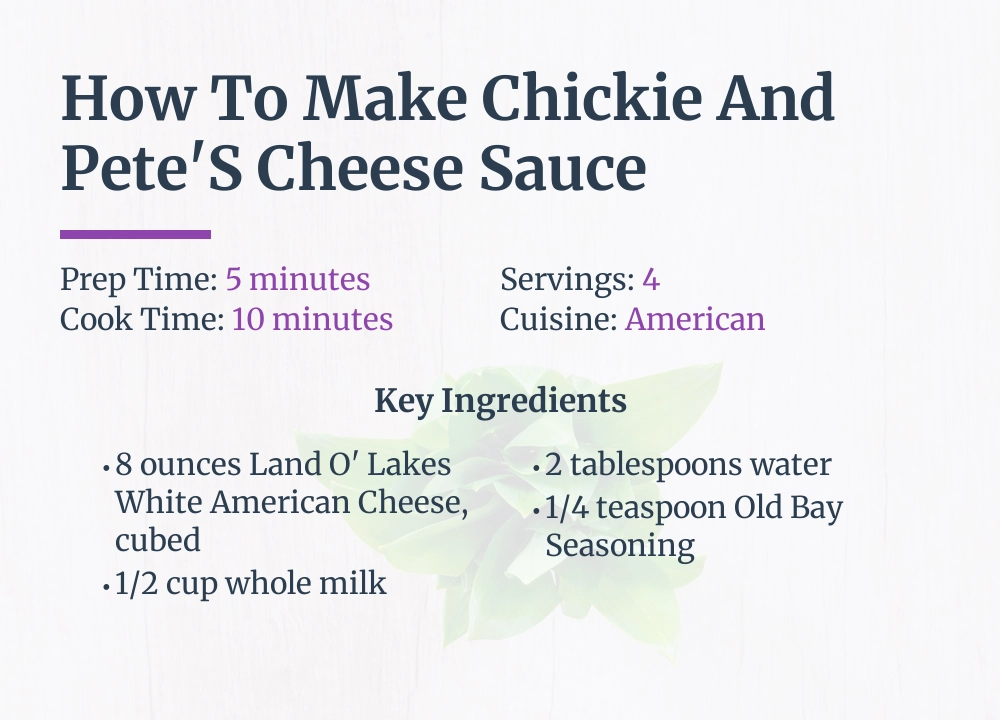
Recipe Details
- Prep Time: 5 minutes
- Cook Time: 10 minutes
- Servings: 4
- Course: Appetizer, Side Dish
- Cuisine: American
- Diet: Vegetarian
Ingredients
- 8 ounces Land O’ Lakes White American Cheese, cubed
- 1/2 cup whole milk
- 2 tablespoons water
- 1/4 teaspoon Old Bay Seasoning
Instructions
- Cut the block of white American cheese into small, half-inch cubes. This increases the surface area and helps it melt evenly.
- Combine the milk and water in a medium-sized saucepan. Place the saucepan over medium heat until the liquid is warm but not boiling.
- Reduce the heat to low. Gradually add the cubed cheese to the warm liquid, stirring constantly with a spatula.
- Continue stirring until the cheese is completely melted and the sauce is smooth. This should take about 5 minutes.
- Remove the saucepan from the heat and stir in the Old Bay Seasoning. The sauce will thicken slightly as it cools.
- Serve immediately with crinkle-cut fries dusted with additional Old Bay.
Nutrition
- Calories: 215 kcal
- Protein: 12 g
- Fat: 16 g
- Carbohydrates: 4 g
- Sugar: 3 g
- Fiber: 0 g
- Sodium: 890 mg
- Cholesterol: 50 mg
Cooking Method
The primary method for this sauce is stovetop melting. It uses indirect heat from a water and milk base to gently coax the cheese into a liquid state without breaking. Constant stirring is required to ensure even heat distribution and to prevent the proteins in the cheese from seizing up and becoming oily.
Tools Needed
- Medium saucepan
- Spatula or whisk
- Measuring cups
- Knife and cutting board
The Core Ingredients and Their Roles
Understanding the function of each component is the first step toward mastering this recipe. Altering any one of them changes the final product’s flavor and texture significantly.
American Cheese
Land O’ Lakes White American Cheese is the non-negotiable foundation. American cheese is a processed cheese product, which gives it a distinct advantage for sauces. It contains emulsifying salts like sodium citrate.
These salts prevent the fats and proteins from separating when heat is applied. This results in the exceptionally smooth, meltable consistency that yellow cheddar or other natural cheeses struggle to achieve without additional help. The “white” variety provides the signature pale color.
Milk and Water
The liquid component is a blend of whole milk and water. Whole milk contributes richness and a creamy mouthfeel due to its fat content. Using a lower-fat milk will produce a thinner, less robust sauce.
Water is included to slightly dilute the dairy intensity and, more importantly, to help control the temperature. It provides a buffer, preventing the cheese from getting too hot too quickly, which is a common cause of a broken, greasy sauce.
Old Bay Seasoning
This is the flavor signature. Old Bay is a blend of celery salt, black and red pepper, paprika, and other spices. A small amount stirred in at the end provides the subtle, savory kick that distinguishes this cheese dip from a standard queso.
It connects the sauce directly to its most famous pairing: Crab Fries. The seasoning on the fries echoes the hint of Old Bay in the dip, creating a harmonious flavor experience.
Selecting Your Cheese and Alternatives
While the specific brand is important for an exact copy, you can explore other options if it is unavailable. The goal is to find a cheese that melts smoothly.
The Best Cheese for Melting
For a nearly identical result, seek out any high-quality white American cheese from a deli counter. This is often superior to pre-wrapped individual slices. If you must use yellow American cheese, the flavor will be similar, but the color will be different.
For a from-scratch approach using natural cheese, you can create a sodium citrate solution. Dissolve a teaspoon of sodium citrate in the milk and water base before adding a blend of mild cheddar and Monterey Jack. This method mimics the processing effect.
Avoiding Common Cheese Mistakes
Do not use pre-shredded cheese. These products are coated with anti-caking agents like potato starch or cellulose, which prevent them from clumping in the bag but also prevent them from melting smoothly into a sauce.
Avoid boiling the liquid. High, direct heat causes the cheese proteins to over-coagulate, forcing out the fat and resulting in a grainy, oily puddle. Low and slow is the rule.
Nutritional Information and Dietary Adjustments
As a dietitian, I view recipes through a lens of both enjoyment and nutritional awareness. This sauce is a condiment, best enjoyed in moderation as part of a varied diet.
Breaking Down the Nutrition
The primary sources of calories are fat from the cheese and milk, and protein from the dairy. The sodium content is notably high, originating from the cheese itself and the Old Bay seasoning.
If you are monitoring your sodium intake, you can reduce the added Old Bay or use a low-sodium version of American cheese. The carbohydrate content is minimal, making it a potential option for low-carb eating patterns when paired appropriately.
Creating a Vegan Version
A plant-based version of this sauce is achievable. The key is to replicate the melting properties of American cheese. Start with a store-bought vegan American cheese block or shreds.
Gently heat unsweetened, unflavored plant-based milk, such as oat or cashew milk, with water. Proceed with the same melting technique. You may need to add a pinch of turmeric for color and adjust seasonings to taste.
Managing Lactose and Other Allergies
For a lactose-free version, use lactose-free American cheese and lactose-free whole milk. The recipe process remains the same.
For a gluten-free diet, this sauce is naturally compliant. Always check the label on your Old Bay seasoning and cheese to confirm no gluten-containing additives are present, though this is rare.
The Story Behind the Sauce and Crab Fries
This cheese sauce is intrinsically linked to a specific food creation: Chickie & Pete’s World Famous Crabfries. The concept was not to put crab on fries, but to season fries with the same spices used on steamed crab.
The pairing of these seasoned fries with the creamy, mild cheese sauce created a perfect contrast. The crispy, spicy exterior of the fry is cooled and complemented by the rich, smooth dip. This combination became a staple at their Philadelphia locations and a must-have for fans attending a sporting event.
Its popularity turned a regional bar snack into a cultural icon. The copycat recipe allows that experience to be recreated anywhere, turning a simple family movie night into a special treat.
Expert Techniques for a Perfect Consistency
Many home cooks struggle with cheese sauce texture. Following these steps will help you avoid common errors.
Controlling Heat is Everything
Use a heavy-bottomed saucepan. It distributes heat more evenly than a thin pan, reducing the chance of hot spots that can burn the cheese. Keep the heat on the lowest setting once the cheese is added.
If your stove runs hot, you can even use a double boiler. This involves placing a heatproof bowl over a pot of simmering water, melting the cheese gently with steam.
Troubleshooting a Broken Sauce
If your sauce does separate and become oily, do not discard it. Remove it from the heat immediately. Add a tablespoon of cold milk and whisk vigorously. The cooler liquid can sometimes shock the emulsion back into place.
If that fails, you can start with a fresh tablespoon of milk in a clean pan and very slowly whisk the broken sauce into it. Prevention, however, is the best strategy.
Serving and Pairing Your Cheese Sauce
While crab fries are the classic vessel, this sauce’s utility extends far beyond.
Ideal Food Pairings
Serve it with crispy, crinkle-cut french fries for the authentic experience. The ridges hold the sauce and seasoning well. It also works as a dip for soft pretzels, a topping for a cheesesteak burger, or drizzled over steamed broccoli.
For a full spread, offer other dips like a spicy buffalo sauce or a cool ranch dressing alongside it. The cheese sauce provides a neutral, creamy base that balances sharper or tangier flavors.
Storage and Reheating Instructions
Store any leftover sauce in an airtight container in the refrigerator for up to three days. It will solidify when cold. To reheat, place it in a saucepan with a splash of milk.
Warm it over low heat, stirring constantly until it becomes smooth and liquid again. Microwaving is possible but risky, as it can heat unevenly and cause separation. Use short bursts of low power and stir thoroughly between each.
Frequently Asked Questions
What is Chickie and Pete’s cheese sauce made of?
The core ingredients are white American cheese, milk, water, and a small amount of Old Bay seasoning. The specific type of cheese is important for achieving the correct smooth and creamy texture.
Why is my cheese sauce grainy and oily?
This happens when the cheese is heated too quickly or at too high a temperature. The proteins in the cheese tighten and squeeze out the fat. To fix it, always melt cheese over low heat and avoid letting the mixture boil.
Can I make this cheese sauce with cheddar?
You can, but the result will be different. Natural cheddar does not melt as smoothly and can become greasy. For a smoother cheddar sauce, you would need to add an emulsifier like sodium citrate or a roux made from butter and flour.
What are the best fries to use with this sauce?
Frozen crinkle-cut fries are the traditional choice. Their shape and crispy texture hold up well against the thick sauce. You can bake or air-fry them according to package directions and then dust them generously with Old Bay seasoning before serving.
How can I make a lighter version of this recipe?
Use 2% milk and a reduced-fat American cheese. Be aware that the sauce may be slightly less creamy and have a different mouthfeel. The flavor will still be very similar to the original.
Is this cheese sauce gluten-free?
Yes, the basic recipe is naturally gluten-free. Always check the labels on your cheese and Old Bay seasoning to confirm that no gluten-containing ingredients have been added during manufacturing.