
The line of cars wrapped around the building every Saturday was a local landmark. Inside, the consistent request from my family was not just for the chicken, but for those extra containers of Honey Roasted BBQ Sauce. That specific flavor, a balance of sweet and smoky with a creamy texture, became a weekly ritual.
Recreating this sauce at home became a personal project. After numerous tests with different ingredient ratios, the version presented here delivers that familiar taste. You can make a larger quantity for a fraction of the cost, and you control every component that goes into it.
This guide provides the complete recipe and a detailed analysis of its components. We will examine the nutritional profile, explore ingredient functions, and discuss adaptations for various dietary needs. The goal is to give you everything required to replicate this condiment successfully in your own kitchen.
How to Make Chick-fil-A Honey Roasted BBQ Sauce
This recipe uses a straightforward mixing method. The key to achieving the right consistency and melded flavor is in the gentle cooking and cooling process. No specialized equipment is needed, making it accessible for any home cook.
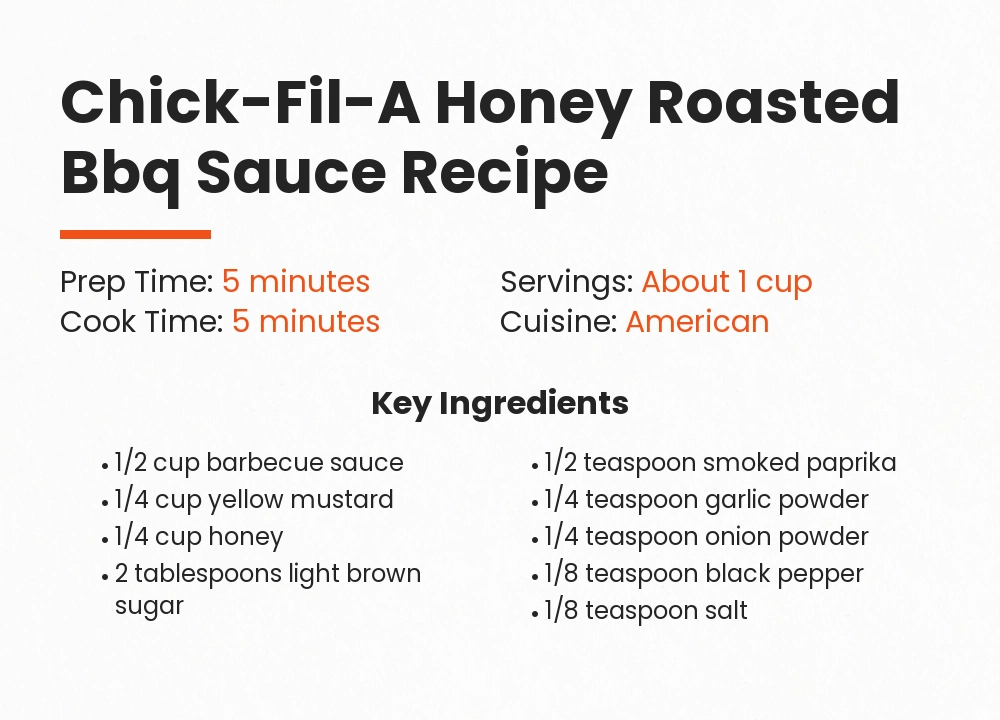
Recipe Details
- Prep Time: 5 minutes
- Cook Time: 5 minutes
- Servings: About 1 cup
- Course: Condiment, Sauce
- Cuisine: American
- Diet: Gluten-Free, Vegetarian
Ingredients
- 1/2 cup barbecue sauce
- 1/4 cup yellow mustard
- 1/4 cup honey
- 2 tablespoons light brown sugar
- 1 teaspoon apple cider vinegar
- 1/2 teaspoon smoked paprika
- 1/4 teaspoon garlic powder
- 1/4 teaspoon onion powder
- 1/8 teaspoon black pepper
- 1/8 teaspoon salt
Instructions
- Add all ingredients to a small saucepan. Use a whisk to combine them thoroughly until the mixture is smooth and the brown sugar has dissolved into the liquid.
- Place the saucepan over medium-low heat. Warm the sauce for 4-5 minutes, stirring frequently. Do not allow it to reach a boil; the goal is to heat it just enough to meld the flavors.
- Remove the saucepan from the heat. Let the sauce cool to room temperature. As it cools, it will thicken slightly to a dip-able consistency.
- Transfer the cooled sauce to an airtight container. A glass jar or a plastic squeeze bottle works well for storage and serving.
Nutrition
- Calories: 45 kcal
- Protein: 0.3 g
- Fat: 0.1 g
- Carbohydrates: 11 g
- Sugar: 10 g
- Fiber: 0.2 g
- Sodium: 180 mg
- Cholesterol: 0 mg
Values are per tablespoon and are estimates. They can vary based on the specific brands of ingredients you select.
Cooking Method
The method for this sauce is gentle heating, not a vigorous boil. This approach allows the sugars to integrate without caramelizing or burning. It also helps the powdered spices rehydrate and release their full flavor into the liquid base.
Stirring consistently prevents the sugars from sticking to the bottom of the pan. A non-reactive saucepan, such as one made from stainless steel, is recommended to avoid any metallic taste from the acidic ingredients.
Tools Needed
- Small saucepan (1 to 2-quart capacity)
- Whisk
- Measuring cups and spoons
- Spatula for scraping
- Airtight container or squeeze bottle for storage
Ingredient Analysis and Selection
Each component in this recipe serves a specific purpose. Understanding their roles helps you make informed substitutions and troubleshoot any issues with the final product.
Barbecue Sauce
The barbecue sauce forms the foundational flavor. A classic, smoky, and slightly sweet tomato-based sauce works best. Avoid varieties labeled as “Kansas City” which are often very thick and sweet, or “Carolina” which are vinegar-forward.
The ingredient list on a store-bought sauce can include tomato paste, vinegar, sweeteners, and natural smoke flavor. For a cleaner version, you can seek out brands with simpler ingredient lists. The choice of base sauce directly influences the final salt and sugar content.
Yellow Mustard
Yellow mustard provides tanginess and a distinct sharpness that balances the sweetness. Its bright yellow color comes from turmeric, which also contributes to the sauce’s final hue. The vinegar in the mustard further enhances the acidic profile of the sauce.
Using Dijon mustard will create a different flavor, as it is made with white wine and has a smoother, more complex taste. For the closest copycat result, standard yellow mustard is the necessary choice.
Honey
Honey is a primary sweetener that offers a floral depth that granulated sugar cannot. It also contributes to the sauce’s glossy appearance and smooth mouthfeel. The type of honey used will subtly affect the taste; clover honey is a mild and versatile option.
In terms of food science, honey is hygroscopic, meaning it attracts and retains moisture. This quality helps prevent the sauce from drying out and helps maintain its texture over time.
Light Brown Sugar
Light brown sugar introduces molasses notes, which complement the smoky paprika. The small amount of molasses in brown sugar adds a layer of caramel-like flavor that enhances the “roasted” character implied in the sauce’s name.
This sugar dissolves easily in the warm liquid. If you only have dark brown sugar, you can use it, but be aware it will impart a stronger molasses flavor and a darker color to the finished sauce.
Apple Cider Vinegar
Apple cider vinegar is used to brighten the overall flavor profile. Its acidity cuts through the richness of the sugars and provides a slight tang. The fruity undertones of apple cider vinegar are more compatible with this recipe than the sharper taste of distilled white vinegar.
Spices: Paprika, Garlic, Onion
Smoked paprika is essential. It provides the smoky aroma and flavor without any actual grilling. Sweet paprika can be used in a pinch, but the result will lack the characteristic smokiness.
Garlic powder and onion powder are used for their consistent, dry texture and concentrated flavor. They disperse evenly throughout the sauce, unlike fresh garlic or onion, which would introduce unwanted moisture and texture.
Nutritional Perspective
As a condiment, this sauce is intended to be used in moderation. A single tablespoon provides a significant amount of flavor without an excessive calorie load. The primary nutritional considerations are its sugar and sodium content.
The sugars come from multiple sources: honey, brown sugar, and the barbecue sauce itself. These are simple carbohydrates that provide quick energy but should be monitored within a balanced diet. The sodium content is derived from the prepared barbecue sauce, mustard, and added salt.
There is no fat or cholesterol in this recipe, making it a suitable addition for those managing cardiovascular health. The minimal fiber and protein mean its main nutritional impact is from its micronutrients and flavor enhancement of other foods.
Dietary Adaptations
This recipe is naturally gluten-free and vegetarian. With a few adjustments, it can be adapted to fit other dietary patterns without sacrificing the core flavor profile.
Vegan Version
To make a vegan copycat sauce, replace the honey with an equal amount of maple syrup or agave nectar. Verify that the brand of barbecue sauce you use is also vegan, as some may contain honey or other animal-derived ingredients.
The mustard and all other spices are naturally plant-based. This simple swap allows you to enjoy the same taste while adhering to a vegan diet.
Low-Sugar and Keto Version
Reducing the sugar content requires a multi-step substitution. Use a sugar-free barbecue sauce as the base. Replace the honey and brown sugar with a combination of keto-friendly sweeteners like erythritol or allulose.
You may need to add a small pinch of xanthan gum to help replicate the thickness that the sugars normally provide. The flavor will be different, but it can achieve a similar sweet and tangy balance.
Low-Sodium Version
To lower the sodium, start with a low-sodium or no-salt-added barbecue sauce. Omit the added salt from the recipe. You can also use a low-sodium mustard to further reduce the total sodium content per serving.
Historical Context of American Dipping Sauces
Dipping sauces have a long history in American food service, evolving from simple gravies and jus to the complex, branded condiments of today. Fast-food chains have played a major role in popularizing specific sauce flavors, turning them into cultural touchstones.
The creation of signature sauces allows a restaurant chain to build a unique brand identity. Chick-fil-A’s suite of sauces, including the Polynesian, the classic Chick-fil-A Sauce, and the Honey Roasted BBQ, are designed to complement their core product: chicken.
This practice encourages customer loyalty and creates a point of differentiation from competitors. The Honey Roasted BBQ Sauce fits into a broader category of sweet and smoky sauces that are particularly popular in the southeastern United States.
Common Preparation Mistakes
Avoiding these common errors will ensure your sauce turns out correctly on the first attempt. Most issues relate to heat management and ingredient measurement.
Overheating the Sauce
Applying too much heat can cause the sugars to caramelize excessively or burn. This results in a bitter taste and an overly thick, sticky texture. Keep the heat at medium-low and do not let the sauce simmer vigorously.
Inaccurate Measurements
This is a balanced emulsion of sweet, sour, and smoky flavors. Using heaping tablespoons of powdered spices can make the sauce taste dusty or overpowering. For consistency, use level measurements for all dry ingredients.
Skipping the Cooling Step
The sauce will be thin and the flavors less integrated immediately after heating. Allowing it to cool completely is not optional for achieving the proper thickness and a harmonious flavor profile. Patience in this step is important.
Serving and Pairing Suggestions
While designed for chicken, this sauce’s utility extends far beyond. Its versatility makes it a valuable condiment to keep on hand for a variety of meals.
It is an excellent dip for chicken nuggets, tenders, and sandwiches. Try it as a spread on a grilled chicken sandwich instead of mayonnaise. It can also serve as a dipping sauce for french fries, sweet potato fries, or onion rings.
For a non-traditional use, consider it as a glaze. Brush it over chicken breasts or pork chops during the last few minutes of baking or grilling. The sugars will create a glossy, caramelized coating.
Storage and Shelf Life
Store the homemade sauce in an airtight container in the refrigerator. A glass jar with a tight-fitting lid or a dedicated squeeze bottle are both excellent options. Proper storage prevents the sauce from absorbing other odors from the fridge.
Because this recipe lacks commercial preservatives, its shelf life is shorter than the store-bought version. It will maintain its best quality for up to two weeks when refrigerated. Always check for any signs of spoilage, such as an off smell or mold, before use.
This sauce does not freeze well. The emulsion can break upon thawing, resulting in a separated and watery texture. It is best prepared in small batches that can be used within the recommended time frame.
Frequently Asked Questions
Can I make this sauce without cooking it?
Yes, you can mix the ingredients without heating. However, the flavors will be more distinct and less blended. The gentle heating process helps the sugars dissolve completely and allows the spices to meld into the sauce for a smoother, more unified taste.
My sauce is too thin. How can I thicken it?
If your sauce is too thin after cooling, it may be due to the specific barbecue sauce used. You can simmer it over low heat for a few additional minutes to reduce and concentrate it further. Allow it to cool again to check the final consistency.
Is Chick-fil-A Honey Roasted BBQ Sauce gluten-free?
According to the company’s allergen information, their Honey Roasted BBQ Sauce is considered gluten-free. This homemade copycat recipe is also gluten-free, provided you use a barbecue sauce that is certified or labeled as gluten-free.
What is the difference between this and Chick-fil-A Sauce?
Chick-fil-A Sauce is a honey mustard and barbecue sauce hybrid with a notably creamy, mayonnaise base. The Honey Roasted BBQ Sauce is a smoother, more traditional barbecue sauce variant with a prominent smoky and sweet honey flavor, without the creamy element.
Can I use fresh garlic and onion instead of powder?
Using fresh aromatics is not recommended. Fresh garlic and onion will introduce too much water and a sharp, raw flavor that can overpower the sauce. They also do not integrate smoothly, leaving small pieces in the final product.
Why did my sauce separate?
Separation can occur if the sauce is heated too quickly or aggressively. The emulsified ingredients in the barbecue sauce can break. To fix it, let the sauce cool and then whisk it vigorously to recombine. If that fails, a small amount of yellow mustard can often help re-emulsify it.