
You have probably faced the challenge of preparing a meal that feels special without requiring hours in the kitchen. I encountered this myself during a busy week when family visits were imminent. The solution emerged from combining two beloved classics: the hearty Philly cheesesteak and comforting cheese-filled pasta. This cheesesteak tortellini in rich provolone sauce recipe became an instant hit, delivering restaurant-quality taste with straightforward steps.
This dish brings together thinly sliced beef, tender tortellini, and a luxuriously smooth cheese sauce. It answers the common question of how to create a satisfying, complete dinner that appeals to all ages. You will find that the method is adaptable, and the results are consistently impressive. Let me guide you through making this a regular in your meal rotation.
By the end of this article, you will know exactly how to execute this recipe and understand the nuances that make it work. We will cover everything from ingredient selection to nutritional insights, ensuring you have all the knowledge needed.
How to Make Cheesesteak Tortellini in Rich Provolone Sauce Recipe
This section provides the complete recipe with precise details. Follow these steps to achieve a perfectly balanced dish with al dente pasta and a creamy, cheesy sauce.
Recipe Details
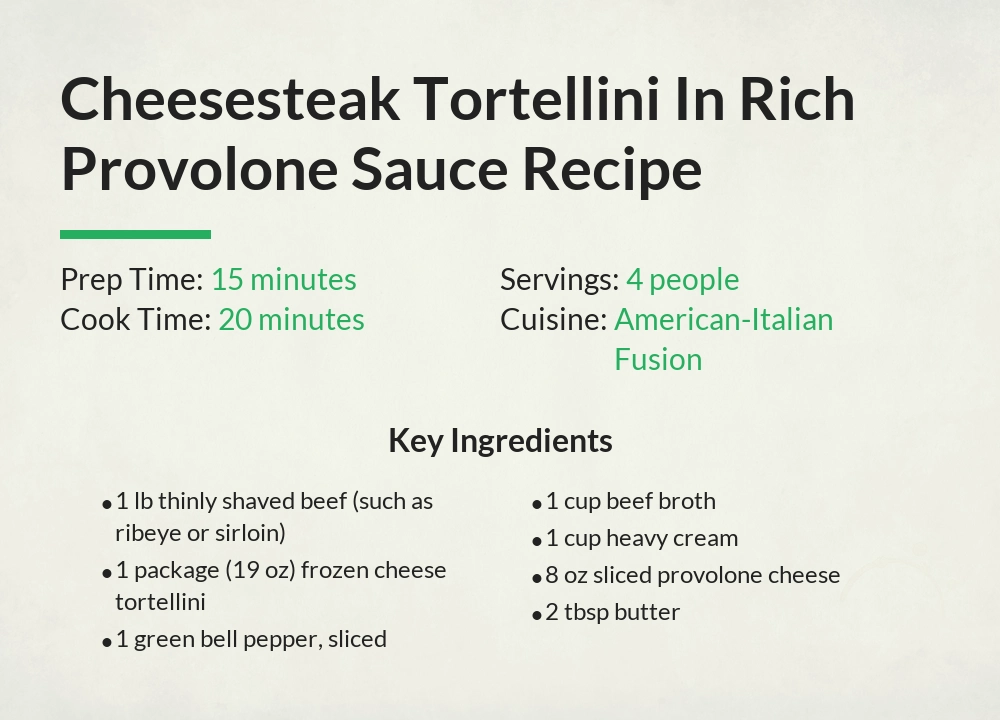
- Prep Time: 15 minutes
- Cook Time: 20 minutes
- Servings: 4 people
- Course: Main Dish
- Cuisine: American-Italian Fusion
- Diet: Contains Dairy, Meat
Ingredients
- 1 lb thinly shaved beef (such as ribeye or sirloin)
- 1 package (19 oz) frozen cheese tortellini
- 1 green bell pepper, sliced
- 1 onion, thinly sliced
- 2 cloves garlic, minced
- 1 cup beef broth
- 1 cup heavy cream
- 8 oz sliced provolone cheese
- 2 tbsp butter
- 1 ½ tsp Montreal steak seasoning
- 1 tsp Dijon mustard
- 1 tbsp olive oil
- Salt and black pepper to taste
- Chopped fresh parsley for garnish
Instructions
- Bring a large pot of salted water to a boil. Add the frozen cheese tortellini and cook according to package directions until al dente, usually about 3-4 minutes. Drain and set aside.
- While the pasta cooks, heat a large sauté pan or frying pan over medium-high heat. Add olive oil and butter until the butter melts.
- Add the sliced green bell pepper and onion to the pan. Sauté for 5-7 minutes until they become crisp-tender and slightly caramelized.
- Push the vegetables to one side of the pan. Add the thinly shaved beef in a single layer. Sprinkle with Montreal steak seasoning. Cook for 2-3 minutes per side until seared and no longer pink.
- Stir in the minced garlic and cook for 30 seconds until fragrant. Combine everything in the pan.
- Pour in the beef broth and heavy cream. Add the Dijon mustard. Bring the mixture to a simmer, stirring occasionally.
- Reduce the heat to low. Gradually add the sliced provolone cheese, stirring constantly until the cheese melts and the sauce becomes smooth and rich.
- Add the cooked tortellini to the sauce, tossing gently to coat everything evenly. Heat through for 1-2 minutes.
- Season with salt and black pepper as needed. Garnish with chopped fresh parsley before serving.
Nutrition
- Calories: 650 kcal
- Protein: 35 g
- Fat: 40 g
- Carbohydrates: 45 g
- Sugar: 6 g
- Fiber: 3 g
- Sodium: 900 mg
- Cholesterol: 120 mg
Cooking Method
This recipe uses a combination of boiling for the tortellini and sautéing for the beef and vegetables. The sauce is built in the same pan used for sautéing, which helps to incorporate all the flavors. The key is to maintain medium heat for the vegetables and high heat for searing the beef, then reducing to low when adding cheese to prevent separation.
Tools Needed
- Large pot for boiling pasta
- Large sauté pan or frying pan
- Cutting board and sharp knife
- Measuring cups and spoons
- Wooden spoon or spatula for stirring
- Colander for draining pasta
Understanding the Core Ingredients
Each component in this dish plays a specific role in texture and taste. Knowing why certain ingredients are chosen can help you make informed substitutions and improvements.
Beef Selection and Preparation
Thinly shaved beef is essential for quick cooking and tender bites. I recommend using ribeye or sirloin for their marbling, which adds richness. You can find this pre-sliced in many grocery stores, or partially freeze a steak and slice it thinly yourself. The high heat sear locks in juices without overcooking.
Montreal steak seasoning enhances the beef with its blend of spices like garlic, pepper, and coriander. If unavailable, you can mix black pepper, garlic powder, and a pinch of paprika. The goal is to complement the beef without overshadowing the cheese sauce.
Provolone Cheese in the Sauce
Provolone cheese melts smoothly, contributing a mild, slightly tangy flavor to the sauce. I prefer using sliced provolone for even melting, but shredded works too. Avoid pre-shredded cheeses with anti-caking agents, as they can make the sauce grainy. The combination with heavy cream and beef broth creates a balanced, velvety texture.
American cheese is sometimes added for extra creaminess due to its emulsifying properties. If you include it, use about 4 ounces torn into pieces. This helps stabilize the sauce and prevent oil separation.
Tortellini Varieties and Cooking
Cheese tortellini, whether fresh or frozen, provides a stuffed pasta element that pairs well with the beef. Fresh tortellini cooks faster, usually in 2-3 minutes, so adjust boiling times accordingly. Cooking to al dente ensures the pasta holds its shape in the sauce. I have found that frozen varieties are convenient and yield consistent results.
If you cannot find cheese tortellini, alternatives like mushroom or meat-filled tortellini can work. The key is to use a pasta that complements the hearty beef and rich sauce without becoming mushy.
Vegetables and Aromatics
Green bell pepper and onion are traditional in cheesesteak recipes, offering sweetness and crunch. Sautéing them until crisp-tender brings out their natural sugars. Garlic adds depth, but be careful not to burn it, as it can turn bitter. You can add other vegetables like mushrooms or red bell peppers for variation.
Nutritional Perspective on This Dish
As a dietician, I analyze meals for their macronutrient balance and potential health impacts. This recipe provides a substantial amount of protein from the beef and tortellini, which supports muscle maintenance and satiety. The fat content comes mainly from the cheese and cream, contributing to energy levels and flavor absorption.
Carbohydrates in the tortellini offer quick energy, while the vegetables add fiber and vitamins. To reduce calories, you could use half-and-half instead of heavy cream or increase the vegetable ratio. The sodium level can be managed by using low-sodium broth and controlling added salt.
For those monitoring intake, this dish is hearty and should be portioned appropriately. Pairing it with a green salad can add freshness and nutrients, making the meal more balanced. Understanding these elements allows you to enjoy the dish while aligning with your dietary goals.
Adapting the Recipe for Different Diets
Many people have dietary restrictions, and this recipe can be modified without losing its essence. Here are practical swaps based on common needs.
Gluten-Free Version
Use gluten-free tortellini, which is available in some specialty stores. Ensure that the beef broth and seasonings are certified gluten-free. The cooking method remains the same, but check pasta packaging for specific boiling instructions to avoid overcooking.
Dairy-Free or Vegan Adaptation
Replace the provolone cheese with vegan cheese slices that melt well. Substitute heavy cream with canned coconut cream or a unsweetened plant-based cream. For the beef, use sliced seitan or marinated portobello mushrooms. Sauté them similarly to achieve a meaty texture.
Lower-Carb and Keto Options
Swap tortellini for zucchini noodles or low-carb pasta alternatives. Increase the beef portion and reduce or omit the bell peppers and onions if desired. Use a sauce made with cream cheese and broth instead of heavy cream to lower carbohydrate content further.
Historical Roots of Cheesesteak and Pasta Fusion
The Philly cheesesteak originated in Philadelphia in the 1930s, typically made with sliced beef, cheese, and onions on a roll. Its popularity stems from its simplicity and robust flavor. Tortellini, on the other hand, has Italian origins, often associated with stuffed pasta in broths or creamy sauces.
Combining these two concepts reflects modern fusion cuisine, where comfort foods are reimagined. This recipe borrows the savory elements of cheesesteak and integrates them into a pasta dish, creating a cross-cultural meal that honors both traditions. It showcases how culinary evolution embraces convenience and flavor experimentation.
Avoiding Common Cooking Errors
Even experienced cooks can encounter issues with this recipe. Here are typical mistakes and how to prevent them for perfect results every time.
Overcooking the Beef
Thinly shaved beef cooks quickly, so avoid leaving it in the pan for more than a few minutes. Overcooking makes it tough and dry. Sear it briefly on high heat, just until it loses its pink color, then remove it from direct heat when adding to the sauce.
Sauce Breaking or Curdling
If the heat is too high when adding cheese, the sauce can separate. Always melt cheese over low heat and stir constantly. If it does break, you can sometimes rescue it by adding a tablespoon of cold cream and whisking vigorously.
Mushy Tortellini
Boiling the pasta beyond al dente leads to a soft texture that falls apart in the sauce. Follow package directions precisely and drain immediately after cooking. Rinsing is not necessary, as the starch helps the sauce adhere.
Ideal Pairings and Serving Ideas
This dish stands well on its own, but complementary sides can enhance the meal. Garlic bread or rolls are classic choices, soaking up the extra sauce. A simple green salad with a vinaigrette dressing adds acidity to cut through the richness.
For beverages, consider a light beer or a crisp white wine like Sauvignon Blanc. If serving for a family dinner, include steamed broccoli or roasted Brussels sprouts for additional vegetables. The goal is to create a balanced plate that satisfies without overwhelming.
Storing and Reheating Leftovers
Store leftovers in an airtight container in the refrigerator for up to 3 days. Reheat gently in a saucepan over low heat, adding a splash of broth or cream to refresh the sauce. Avoid microwaving on high, as it can make the pasta rubbery and the sauce separate.
Freezing is possible but may alter the texture of the cream-based sauce. If freezing, do so without the pasta or use a freezer-safe container and thaw in the refrigerator before reheating.
The Role of Emulsification in the Sauce
The creaminess of the provolone sauce relies on emulsification, where fat and liquid combine smoothly. Provolone cheese contains proteins and fats that melt into the cream and broth, creating a stable mixture. Stirring constantly during addition helps distribute the cheese evenly and prevents clumping.
Dijon mustard acts as a mild emulsifier due to its acidity and compounds, aiding in sauce consistency. Understanding this process allows you to adjust ingredients confidently, such as using different cheeses or liquids while maintaining a cohesive sauce.
Frequently Asked Questions
What is cheesesteak tortellini in rich provolone sauce?
It is a pasta dish that combines elements of a Philly cheesesteak, including sliced beef, bell peppers, and onions, with cheese-filled tortellini in a creamy provolone cheese sauce. It serves as a hearty main course.
Why is this recipe important for family dinners?
This recipe offers a complete meal in one pan, reducing cleanup time. It appeals to both adults and children with its familiar flavors and can be prepared quickly on busy weeknights.
How does the sauce achieve its creaminess?
The creaminess comes from melting provolone cheese into a base of heavy cream and beef broth. Constant stirring over low heat ensures a smooth, rich texture without graininess.
Can I use different types of cheese?
Yes, you can substitute provolone with mozzarella, American cheese, or a blend. Each cheese will alter the flavor and melting properties, so adjust gradually to achieve the desired consistency.
How can I make this dish healthier?
Use lean beef, whole wheat tortellini, and reduce the amount of heavy cream by substituting with low-fat milk or additional broth. Increase the proportion of vegetables like bell peppers and onions.
What are the best sides to serve?
Garlic bread, a green salad, or steamed vegetables like broccoli pair well. These sides add texture and balance to the rich, creamy pasta.
How long does it take to prepare?
Total time is around 35 minutes, with 15 minutes for preparation and 20 minutes for cooking. It is designed for efficiency without compromising flavor.
Can I freeze leftovers?
Yes, but the sauce may separate upon thawing. Reheat slowly on the stove with added liquid to restore creaminess. For best results, consume within one month.
What if I don’t have provolone cheese?
You can use other melting cheeses like fontina, gouda, or a combination of cheddar and cream cheese. The sauce might have a slightly different flavor but will still be delicious.
Is this recipe suitable for kids?
Yes, its mild cheese flavor and tender pasta are generally well-liked by children. You can omit or reduce spices like black pepper or chili flakes to suit their preferences.