
The first time I tasted Cheerwine barbecue sauce at a North Carolina roadside stand, the flavor profile stopped me mid-bite. That unique combination of sweet cherry soda depth with sharp vinegar tang created a sauce that was both familiar and entirely new. I knew I needed to recreate this experience in my own kitchen.
After numerous tests and adjustments, this formula achieves that perfect balance. The result is a versatile cherry soda-based glaze that works with multiple cooking methods and protein types. Let me guide you through creating this Southern specialty with the same hands-on approach that worked in my own kitchen.
How to Make cheerwine barbecue Sauce recipe
This section provides the complete formula with precise measurements and methodology. Follow these instructions exactly for consistent results that capture the authentic flavor profile.
Recipe Details
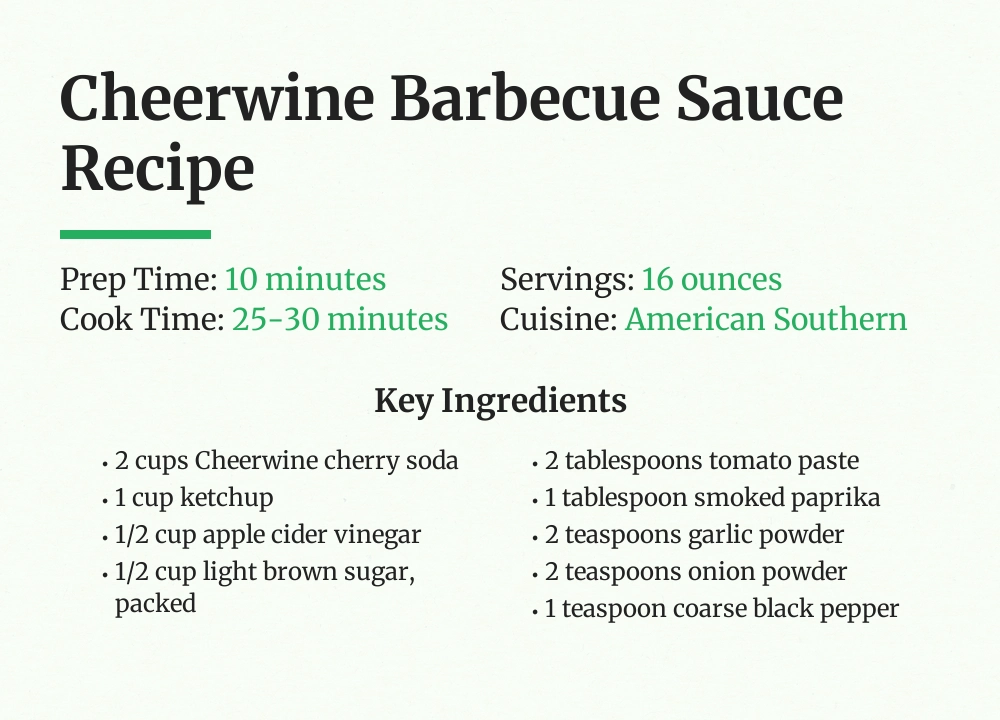
- Prep Time: 10 minutes
- Cook Time: 25-30 minutes
- Servings: 16 ounces
- Course: Condiment, Sauce
- Cuisine: American Southern
- Diet: Gluten-Free Adaptable
Ingredients
- 2 cups Cheerwine cherry soda
- 1 cup ketchup
- 1/2 cup apple cider vinegar
- 1/2 cup light brown sugar, packed
- 1/4 cup Worcestershire sauce
- 2 tablespoons tomato paste
- 1 tablespoon smoked paprika
- 2 teaspoons garlic powder
- 2 teaspoons onion powder
- 1 teaspoon coarse black pepper
- 1/2 teaspoon crushed red pepper
- 1 teaspoon Meat Church Holy Cow BBQ rub (optional)
- 1/2 teaspoon salt
Instructions
- Combine Cheerwine, ketchup, apple cider vinegar, and brown sugar in a medium saucepan. Use a whisk to integrate these foundation ingredients completely.
- Add Worcestershire sauce, tomato paste, and all dry seasonings to the liquid base. The tomato paste will initially resist incorporation but will dissolve with continued stirring.
- Place the saucepan over medium-high heat until the mixture reaches a boil. This initial high heat helps develop flavor complexity through caramelization.
- Reduce heat to maintain a gentle simmer once boiling occurs. Stir occasionally to prevent sticking while the sauce reduces.
- Continue simmering for 25-30 minutes until the sauce thickens to a glaze-like consistency. The final texture should coat the back of a spoon without running off quickly.
- Remove from heat and allow the mixture to cool for 15 minutes before transferring to a 16-ounce Mason jar or other airtight container.
Nutrition
- Calories: 45 kcal
- Protein: 0.3 g
- Fat: 0.1 g
- Carbohydrates: 11 g
- Sugar: 10 g
- Fiber: 0.2 g
- Sodium: 210 mg
- Cholesterol: 0 mg
Cooking Method
This preparation uses a reduction technique that intensifies flavors through liquid evaporation. The simmering process allows sugar caramelization while mellowing the vinegar’s sharpness. This creates a balanced sauce with both immediate flavor impact and subtle background notes.
Tools Needed
- Medium saucepan (2-3 quart capacity)
- Whisk
- Measuring cups and spoons
- 16-ounce Mason jar or glass container for storage
Ingredient Purpose and Selection
Each component in this formula serves multiple functions beyond basic flavor. Understanding these roles helps you make informed substitutions when necessary.
Cheerwine Soda
The namesake ingredient provides both sweetening and distinctive cherry notes that differentiate this from standard barbecue sauces. The carbonation initially helps distribute other ingredients evenly before cooking. As the liquid reduces, the cherry flavor becomes more pronounced while the sweetness caramelizes.
Apple Cider Vinegar
This acidic component balances the soda’s sweetness while tenderizing meat proteins during marination. The fermentation compounds in quality apple cider vinegar contribute subtle fruit notes that complement the cherry foundation. Always use raw, unfiltered varieties for the best flavor dimension.
Worcestershire Sauce
This fermented condiment adds umami depth through its anchovy and tamarind content. The savory qualities prevent the sauce from becoming cloyingly sweet. For vegetarian adaptation, use mushroom-based Worcestershire alternatives that provide similar savory characteristics.
Tomato Products
Ketchup and tomato paste work together to establish the sauce’s body and acidic base. Ketchup brings sweetness and viscosity while tomato paste contributes concentrated tomato flavor and additional thickening power. The combination creates a stable emulsion that won’t separate during storage.
Nutritional Considerations
While barbecue sauce typically functions as a condiment rather than a primary food, understanding its nutritional profile helps with meal planning. The values provided represent a single tablespoon serving.
Sugar Content Management
The majority of carbohydrates come from natural and added sugars in the Cheerwine, ketchup, and brown sugar. These sugars serve important functional purposes beyond sweetness, including texture development and caramelization. For reduced sugar versions, substitute diet Cheerwine and sugar-free ketchup, though the final consistency will be thinner.
Sodium Sources and Reduction
Primary sodium contributors include Worcestershire sauce, ketchup, and added salt. These elements are crucial for flavor balance against the sweet components. To lower sodium content, reduce added salt by half and use low-sodium ketchup. The Worcestershire sauce should remain at full quantity for proper flavor development.
Fat and Protein Content
The minimal fat content makes this suitable for various dietary approaches. The trace protein comes primarily from the tomato products and Worcestershire sauce. Unlike cream-based sauces, this formula contains no cholesterol, making it appropriate for heart-healthy eating patterns when used in moderation.
Dietary Adaptations
This versatile recipe accommodates several dietary needs with simple ingredient substitutions that maintain the essential flavor character.
Gluten-Free Version
The standard recipe is naturally gluten-free when using certified gluten-free Worcestershire sauce. Many commercial Worcestershire brands contain malt vinegar derived from barley. Read labels carefully or select products specifically labeled gluten-free to avoid cross-contamination issues.
Vegan Adaptation
Replace traditional Worcestershire sauce with vegan alternatives, as standard versions contain anchovies. Use mushroom-based Worcestershire or coconut aminos for similar umami effect. Verify that your sugar source is vegan, as some brown sugars use bone char during processing.
Low-Sugar Modification
Substitute diet Cheerwine and sugar-free ketchup to reduce carbohydrate impact. The sauce will be slightly thinner due to altered viscosity, so extend simmering time by 5-7 minutes. Consider adding 1/4 teaspoon xanthan gum dissolved in water for improved texture if needed.
Historical and Regional Context
Cheerwine barbecue sauce represents a fusion of North Carolina’s distinct culinary traditions. The soda itself originated in Salisbury, North Carolina in 1917, creating a natural pairing with the state’s vinegar-based barbecue heritage.
Eastern North Carolina barbecue traditionally features vinegar and pepper sauces without tomato elements. Western Carolina styles incorporate ketchup for sweetness and body. This recipe bridges these regional approaches by using both vinegar and tomato products, with Cheerwine providing a local sweetener alternative to molasses or honey.
The integration of soda into barbecue sauce reflects a broader Southern tradition of using soft drinks in cooking. The carbonation and sugar content make them effective tenderizers and flavor carriers for marinades and glazes. This particular combination has gained recognition through barbecue competitions and restaurant menus throughout the Carolinas.
Cooking Science Principles
Several chemical reactions occur during preparation that transform individual ingredients into a cohesive sauce with complex flavor development.
Reduction and Concentration
Simmering the liquid mixture evaporates water content, intensifying flavors and thickening the sauce through increased solids concentration. The Maillard reaction between sugars and amino acids creates new flavor compounds that weren’t present in the raw ingredients. This process typically begins around 285°F/140°C.
Emulsion Stability
The tomato paste and ketchup contain pectin and other natural thickeners that help maintain suspension of oil-soluble flavor compounds in the water-based liquid. The whisking action during initial mixing creates a temporary emulsion that becomes permanent through starch gelatinization during heating.
Acid-Sugar Balance
The relationship between the vinegar’s acidity and the various sugar sources creates a flavor profile that registers as both sweet and tangy simultaneously. This balance prevents flavor fatigue while cutting through the richness of fatty meats. The pH typically falls between 3.5-4.2, which also helps preserve the sauce.
Common Preparation Errors
Several frequent mistakes can compromise texture, flavor, or safety. Avoid these issues for optimal results.
Rushing the Reduction
Cooking at too high a temperature to speed up the process can cause caramelization before proper reduction occurs. This creates a burnt flavor and overly thick texture. Maintain a gentle simmer with occasional bubbles breaking the surface rather than a vigorous boil.
Inadequate Stirring
The sugar content makes the sauce prone to sticking and burning on the pan’s bottom. Stir every 5-7 minutes, making sure to scrape the entire bottom surface. Enameled cast iron or heavy-bottomed stainless steel pans distribute heat most evenly for this application.
Incorrect Storage
Transferring hot sauce directly to a glass jar can cause thermal shock and breakage. Always cool the mixture for at least 15 minutes before packaging. Refrigerate in airtight containers and use within three weeks for best quality and food safety.
Serving and Application Methods
This cherry soda-based sauce performs well across multiple cooking techniques and serving situations. Consider these applications for different results.
As a Glaze
Apply during the final 5-10 minutes of grilling or baking to create a caramelized coating. The sugar content browns quickly, so monitor closely to prevent burning. For chicken pieces, brush on after internal temperature reaches 145°F/63°C, then complete cooking to 165°F/74°C.
As a Marinade
The acidic components help tenderize tougher cuts while infusing flavor. Marinate beef or pork for 4-12 hours, poultry for 2-8 hours, and seafood for 30-60 minutes. Always discard used marinade that contacted raw meat rather than reusing as a sauce.
As a Table Sauce
Serve at room temperature alongside grilled meats, roasted vegetables, or as a dipping sauce. The flavors become more balanced after resting for 24 hours, making this an excellent make-ahead option for gatherings.
Protein Pairing Recommendations
Different meats interact with the sauce’s flavor profile in distinct ways. These pairing suggestions maximize complementary qualities.
Pork Applications
The sweet and tangy profile cuts through pork’s richness while complementing its natural sweetness. Use as a baste for pork shoulder during smoking, as a glaze for chops, or as a dipping sauce for pulled pork. The cherry notes particularly enhance pork’s flavor spectrum.
Poultry Uses
Chicken and turkey benefit from the sauce’s ability to add moisture and flavor to leaner white meat. The acidity helps tenderize while the sugar promotes browning. For chicken wings, toss in the sauce after cooking rather than glazing during preparation for maximum coverage.
Beef Pairings
Bolder beef flavors can handle the sauce’s sweetness when balanced with additional black pepper or chili heat. Skirt steak and flank steak absorb the marinade effectively due to their loose grain structure. Consider adding 1-2 additional teaspoons of crushed red pepper when preparing for beef.
Seafood Adaptations
Salmon’s oil content stands up well to the sweet and tangy profile. Reduce simmering time by 5 minutes when preparing sauce specifically for fish to maintain brighter acidity. Brush on during the final 3-4 minutes of cooking to prevent overpowering delicate seafood flavors.
Storage and Preservation
Proper handling maintains quality and ensures food safety through the product’s lifespan.
Refrigeration Guidelines
Store in airtight glass or plastic containers in the refrigerator for up to three weeks. The high acid and sugar content provides natural preservation, but contamination from repeated dipping with used utensils can introduce spoilage organisms.
Freezing Method
Portion the cooled sauce into ice cube trays for convenient single-use amounts. Once frozen solid, transfer cubes to freezer bags for up to six months. Thaw overnight in the refrigerator or gently warm in a saucepan directly from frozen state.
Food Safety Considerations
Always use clean utensils when removing sauce from storage containers to prevent cross-contamination. If mold develops on the surface, discard the entire batch rather than scooping it off. When marinating, keep meat refrigerated throughout the process and never reuse marinade that contacted raw protein.
Frequently Asked Questions
What is Cheerwine barbecue sauce?
Cheerwine barbecue sauce is a North Carolina-inspired condiment that combines the state’s signature cherry soda with traditional barbecue sauce ingredients. The result features distinctive cherry notes balanced with vinegar tang and spice elements.
Can I use a different cherry soda?
While other cherry sodas can substitute, the flavor profile will differ. Cheerwine has a unique cherry variety and less cloying sweetness than many alternatives. If substituting, reduce added sugar in the recipe by two tablespoons to account for typically sweeter formulations.
How long does homemade barbecue sauce last?
Properly stored in refrigeration, this sauce maintains optimal quality for three weeks. The high acid and sugar content provides natural preservation, but always check for off odors or mold before using beyond this timeframe.
Can I make this sauce without Worcestershire?
Worcestershire sauce contributes important umami depth, but you can substitute soy sauce or tamari at half the quantity. For gluten-free needs, use coconut aminos. The flavor will be slightly different but still balanced.
Why did my sauce become too thick?
Over-reduction causes excessive thickening. The sauce continues to thicken as it cools, so remove from heat when it lightly coats a spoon. If already too thick, whisk in warm water one tablespoon at a time until desired consistency returns.
Can I use this as a marinade for tough cuts?
The acidic components provide moderate tenderizing action suitable for medium-tough cuts like chuck roast or pork shoulder. For very tough cuts like brisket, additional enzymatic tenderizers or mechanical methods will be necessary for complete tenderization.
Is this sauce spicy?
The standard recipe provides mild heat that complements the sweet and sour notes. Adjust the crushed red pepper quantity to control spice level. For no heat, omit entirely. For additional warmth, increase to one teaspoon or add 1/4 teaspoon cayenne pepper.
What makes this different from Kansas City-style sauce?
Kansas City sauces typically feature molasses as the primary sweetener with thicker, sweeter profiles. This Carolina-inspired version uses cherry soda for sweetness and includes more vinegar for brighter, tangier character with fruit notes.