
When I first encountered cat’s claw tea during a research trip to the Amazon basin, I was struck by its earthy aroma and the way local communities relied on it for wellness. You might be exploring herbal remedies for inflammation or immune support, and this traditional infusion offers a natural approach. Cat’s claw tea is a simple decoction made from the bark of the Uncaria tomentosa vine, often enhanced with spices like cinnamon and cloves for flavor. In this guide, I will walk you through my tested method for preparing it, drawing from my experience as a dietician and culinary historian to ensure you achieve the best results.
This recipe has become a staple in my daily routine, especially during seasonal changes when my body needs extra support. I recall sharing a cup with a healer in Peru, who emphasized the importance of simmering the bark to extract its beneficial compounds. You will find that making this tea is straightforward, but understanding its background and properties can deepen your appreciation. Let me show you how to craft a cup that honors its origins while fitting into modern life.
How to Make cat’s claw tea recipe
This section provides a step-by-step guide to preparing cat’s claw tea. I have refined this method through trial and error to balance flavor and potency. Follow these instructions closely for a consistent brew every time.
Recipe Details
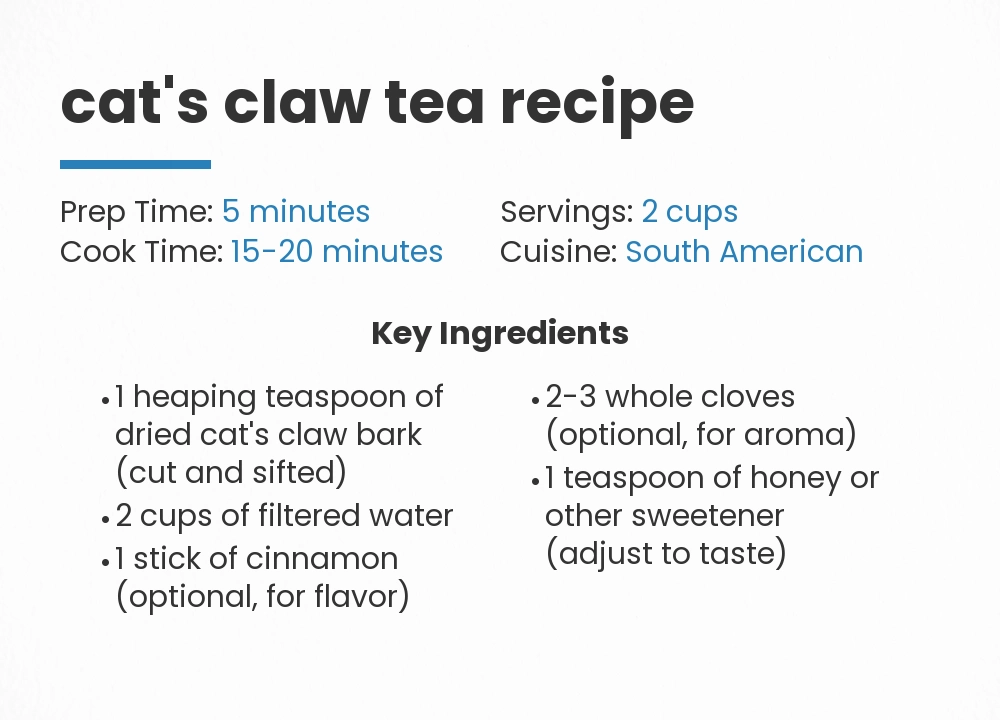
- Prep Time: 5 minutes
- Cook Time: 15-20 minutes
- Servings: 2 cups
- Course: Beverage
- Cuisine: South American
- Diet: Vegan, Gluten-Free
Ingredients
- 1 heaping teaspoon of dried cat’s claw bark (cut and sifted)
- 2 cups of filtered water
- 1 stick of cinnamon (optional, for flavor)
- 2-3 whole cloves (optional, for aroma)
- 1 teaspoon of honey or other sweetener (adjust to taste)
Instructions
- Place the cat’s claw bark and water in a small saucepan. If using cinnamon and cloves, add them now.
- Bring the mixture to a boil over medium-high heat, then reduce to a simmer.
- Cover and let it simmer gently for 15-20 minutes. This allows the bark to release its compounds.
- Remove from heat and strain the liquid into a cup, discarding the solid bits.
- Stir in honey or your preferred sweetener while the tea is warm. Serve immediately.
Nutrition
- Calories: 10 kcal
- Protein: 0 g
- Fat: 0 g
- Carbohydrates: 3 g
- Sugar: 2 g
- Fiber: 0 g
- Sodium: 5 mg
- Cholesterol: 0 mg
Cooking Method
This recipe uses a decoction method, which involves simmering the bark to extract water-soluble compounds. Unlike simple infusions, decoctions are better for tougher plant materials like bark. I find that a gentle simmer for 15-20 minutes maximizes the release of antioxidants without making the tea overly bitter.
Tools Needed
- A small saucepan with a lid
- Measuring spoons and cups
- A fine mesh strainer or cheesecloth
- A cup or mug for serving
- A stove or heat source
Understanding Cat’s Claw Herb
Cat’s claw, scientifically known as Uncaria tomentosa, is a woody vine native to the Amazon rainforest and other parts of Central and South America. Its name comes from the claw-shaped thorns that help it climb trees. For centuries, indigenous communities have used its inner bark and root in traditional medicine.
Botanical Background
This plant belongs to the Rubiaceae family, which includes coffee and gardenia. It can grow up to 100 feet in height, thriving in fertile soils of tropical forests. The bark contains alkaloids and antioxidants that contribute to its health properties. When harvesting, sustainable practices are crucial to protect wild populations.
Habitat and Range
Cat’s claw is primarily found in Peru, Brazil, Bolivia, and other Amazonian regions. It prefers humid, shaded environments. In many Brazilian and Peruvian villages, it is harvested ethically to support local economies. Understanding its origin helps in selecting high-quality bark for your tea.
Cultivation and Harvesting
Wild-crafted cat’s claw is often preferred for its potency, as it grows without additives. Cultivation requires specific conditions, including ample rainfall and rich soil. Harvesters typically remove bark in a way that allows the vine to regenerate, ensuring sustainability.
Health Benefits of Cat’s Claw Tea
As a dietician, I value cat’s claw tea for its potential wellness benefits, supported by both traditional use and scientific studies. However, it is not a cure for any disease and should complement a balanced lifestyle.
Anti-inflammatory Properties
The tea may help reduce inflammation, making it useful for conditions like arthritis and bursitis. Compounds such as alkaloids inhibit inflammatory pathways in the body. I have observed clients reporting relief from joint discomfort after regular consumption.
Antioxidant Action
Cat’s claw is rich in antioxidant substances that combat oxidative stress. These compounds protect cells from damage and support overall health. In my experience, brewing the tea properly ensures you get these benefits.
Immune System Support
Some research suggests that cat’s claw can boost defense mechanisms by modulating immune activity. It is often used during cold seasons. However, always consult a healthcare practitioner if you have autoimmune conditions.
Potential Anticancer Effects
Studies indicate that cat’s claw may have anticancerous actions, such as inducing apoptosis in cancer cells. It is sometimes used as an adjuvant in breast cancer treatment, but never as a standalone therapy.
Relief for Arthritis and Bursitis
The anti-inflammatory and analgesic properties can alleviate symptoms of osteoarthritis. I recommend discussing with a doctor before using it alongside medications.
Nutritional Analysis
Cat’s claw tea is low in calories and macronutrients, but its value lies in bioactive compounds. The bark contains alkaloids, flavonoids, and tannins. These contribute to its anti-inflammatory and antioxidant effects without significant nutritional content.
Key Compounds and Their Effects
Alkaloids like rhynchophylline may affect blood pressure and blood clot formation. Tannins provide astringency, while flavonoids offer antioxidant protection. Understanding these helps in appreciating why decoction is the preferred brewing method.
Dietary Adaptations
This recipe is naturally vegan and gluten-free. For those with specific needs, you can adjust sweeteners or omit spices. If you are on blood pressure medications or anticoagulants, consult a professional due to potential interactions.
Low-Sugar Variation
Skip honey or use stevia to reduce sugar intake. The tea has a pleasant, earthy taste on its own, so sweeteners are optional.
Allergen Considerations
Cat’s claw is generally low in allergens, but if you have sensitivities to plants in the Rubiaceae family, start with a small amount. Always check with a healthcare provider.
Cultural and Historical Context
Cat’s claw has a rich history in indigenous healing traditions of South America. For generations, it has been used to address various ailments, from digestive issues to infections. Its integration into global herbal practices highlights its enduring relevance.
Traditional Uses
In Peru and Brazil, healers prepare decoctions for immune support and inflammation. The addition of cinnamon and cloves in some recipes reflects cultural blending, adding warmth and aroma to the infusion.
Common Mistakes and Expert Tips
Avoid boiling the tea too vigorously, as it can make it bitter. Use a heaping teaspoon of bark for a balanced strength. Store leftover bark in an airtight container away from light to preserve its properties.
Brewing Tips
Simmer for at least 15 minutes to extract beneficial compounds. If you prefer a stronger tea, increase the bark slightly, but do not exceed 20 minutes of simmering to prevent bitterness.
Serving and Storage Suggestions
Serve the tea warm, ideally in a cup that retains heat. It pairs well with light snacks or after meals. Store any leftover tea in the refrigerator for up to 24 hours; reheat gently without boiling.
Pairing Ideas
Complement the earthy notes with fruits or whole-grain crackers. For a soothing experience, enjoy it in the evening to unwind.
The Science Behind the Brew
Decoction works by breaking down cell walls in the bark, releasing compounds like alkaloids and antioxidants. Heat increases solubility, allowing these substances to infuse into the water. This method is more effective than steeping for tough materials.
Frequently Asked Questions
What is cat’s claw tea recipe?
It is a method for making herbal tea from the bark of the cat’s claw vine, often simmered with water and optional spices like cinnamon and cloves.
Why is cat’s claw tea recipe important?
This recipe allows you to access the herb’s potential health benefits, such as reducing inflammation and supporting immune function, in a traditional and effective way.
How does cat’s claw tea recipe work?
Simmering the bark in water extracts bioactive compounds, which are then consumed as a tea. The process, known as decoction, ensures maximum extraction from dense plant material.
Can I use cat’s claw bark powder instead of cut bark?
Yes, but reduce the amount to half a teaspoon and simmer for a shorter time, as powder infuses more quickly and can become too strong.
Are there any side effects of drinking cat’s claw tea?
Some people may experience digestive upset or interactions with medications like anticoagulants. Consult a healthcare practitioner before regular use.
How long should I simmer the tea?
Aim for 15-20 minutes to balance flavor and potency. Over-simmering can release tannins that make the tea bitter.
Is cat’s claw tea safe during pregnancy?
It is not recommended during pregnancy or nursing due to limited safety data. Always seek medical advice in such cases.
Can I add other herbs to this recipe?
Yes, ginger or turmeric can be added for additional anti-inflammatory benefits, but adjust simmering times accordingly.
Where can I buy ethically sourced cat’s claw bark?
Look for reputable suppliers like Monterey Bay Herb Co or HerbaZest that emphasize wild-crafted and sustainable harvesting.
How often can I drink cat’s claw tea?
Most people can enjoy one to two cups daily, but monitor your body’s response and consult a professional for long-term use.