
Walking into a Carrabba’s Italian Grill, the aroma of simmering tomatoes and fresh basil always hits me first. I spent years trying to replicate that vibrant, simple sauce in my own kitchen, and after countless tests, I found the balance that mirrors the original.
This guide will walk you through creating Carrabba’s Pomodoro Sauce from scratch, focusing on authentic flavors and practical techniques. You will learn not just the steps but the science and history behind each ingredient, ensuring your version stands up to the restaurant standard.
Whether you are pairing it with pasta or using it as a base for other dishes, this recipe transforms basic components into something memorable. Let’s start with the core method to build your confidence before exploring the deeper aspects of this Italian staple.
How to Make Carrabba’s Pomodoro Sauce Recipe
This section provides the exact steps to recreate the sauce, with measurements and timing based on my kitchen trials. Follow this sequence for a smooth, rich result that captures the essence of Carrabba’s version.
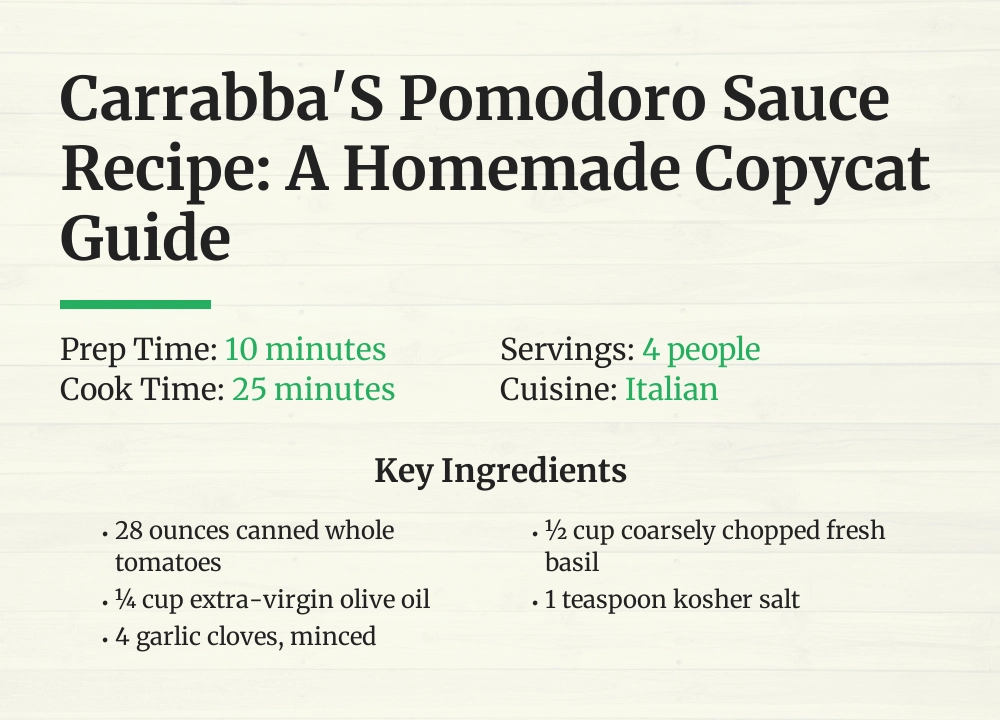
Recipe Details
- Prep Time: 10 minutes
- Cook Time: 25 minutes
- Servings: 4 people
- Course: Main Course, Side Dish
- Cuisine: Italian
- Diet: Vegetarian
Ingredients
- 28 ounces canned whole tomatoes
- ¼ cup extra-virgin olive oil
- 4 garlic cloves, minced
- 1 yellow onion, finely chopped
- ½ cup coarsely chopped fresh basil
- 1 teaspoon kosher salt
- ½ teaspoon freshly ground black pepper
- Optional: 1 carrot, finely grated for sweetness
Instructions
- Heat the olive oil in a medium saucepan over medium heat until it shimmers.
- Add the chopped onion and minced garlic, sautéing for about 5 minutes until fragrant and translucent.
- Pour in the canned whole tomatoes with their juices, using a wooden spoon to break them apart slightly.
- Stir in the salt, black pepper, and optional grated carrot, then bring the mixture to a gentle simmer.
- Reduce the heat to low, cover partially, and let it cook for 20 minutes, stirring occasionally.
- Remove from heat, fold in the chopped fresh basil, and adjust seasoning if needed.
- For a smoother texture, blend briefly with an immersion blender or transfer to a standard blender, pulsing a few times.
- Serve immediately over pasta or store as directed in later sections.
Nutrition
- Calories: 120 kcal
- Protein: 3 g
- Fat: 7 g
- Carbohydrates: 12 g
- Sugar: 8 g
- Fiber: 3 g
- Sodium: 450 mg
- Cholesterol: 0 mg
Cooking Method
This sauce uses a stovetop simmering technique to develop depth without overcooking. The key is gentle heat that coaxes out the tomatoes’ natural sugars while preserving the basil’s bright notes.
Start with a sauté of aromatics like onion and garlic to build a flavor base. Adding tomatoes whole and breaking them later ensures a varied texture that feels homemade.
Simmering for about 20 minutes allows the ingredients to meld without reducing too much, keeping the sauce light and fresh. Finish with basil off the heat to maintain its vibrant color and aroma.
Tools Needed
- Medium saucepan (3-quart capacity)
- Wooden spoon or silicone spatula
- Chef’s knife and cutting board
- Measuring cups and spoons
- Immersion blender or standard blender (optional for smoothing)
- Airtight containers for storage
Breaking Down the Essential Components
Every ingredient in this sauce plays a specific role, from providing acidity to adding herbal notes. Understanding these elements helps you make informed substitutions or adjustments based on what you have available.
Canned Whole Tomatoes
San Marzano tomatoes are ideal for their low acidity and sweet flavor, but any quality canned whole tomatoes work. They offer a balanced base that crushed or pureed versions can lack due to added preservatives.
The whole tomatoes break down during cooking, creating a rustic texture that holds up well with pasta. Their juice contributes liquid, reducing the need for water or broth in the recipe.
From a nutritional standpoint, canned tomatoes retain lycopene, an antioxidant linked to heart health. Cooking them enhances this compound’s bioavailability, making the sauce not just tasty but beneficial.
Fresh Basil
Basil should be fresh, not dried, to impart that signature scent and slight peppery taste. Chop it coarsely to release oils without turning bitter, and add it at the end to preserve its delicate nature.
This herb pairs well with tomatoes due to complementary flavor profiles, and it brings vitamins A and K to the dish. If basil is unavailable, fresh oregano or parsley can serve as alternatives, though the character will change.
Store basil stems in water at room temperature to keep them vibrant until use. Bruising the leaves slightly before chopping can intensify their aroma in the final sauce.
Garlic Cloves
Garlic provides a pungent backbone that mellows with cooking. Mince it finely to distribute evenly, and sauté until fragrant but not browned to avoid bitterness.
Each clove contains allicin, a compound with potential anti-inflammatory properties. Using four cloves strikes a balance between flavor and health benefits without overwhelming the sauce.
For a milder taste, roast the garlic first or reduce the quantity. Freshness matters—plump, firm cloves yield the best results compared to pre-minced jars.
Extra Virgin Olive Oil
High-quality olive oil contributes fruity notes and helps carry fat-soluble flavors from other ingredients. It also creates a silky mouthfeel that enhances the overall experience.
This oil is rich in monounsaturated fats, which support cardiovascular health. Heating it over medium heat preserves its nutrients better than high-temperature frying.
If substituting, use another neutral oil like avocado, but avoid strong-flavored ones like sesame. The quarter-cup measurement ensures the sauce coats pasta evenly without greasiness.
Nutritional Insights and Health Impacts
As a dietician, I appreciate how this sauce combines flavor with nourishment. It is low in calories and high in vitamins, making it a smart choice for various eating plans.
Tomatoes are the star, providing vitamin C, potassium, and lycopene. These nutrients support immune function and may reduce chronic disease risks when consumed regularly.
The olive oil adds healthy fats that aid in absorbing fat-soluble vitamins from the vegetables. Using minimal salt keeps sodium in check, and the fiber from tomatoes and basil promotes digestive health.
For weight management, this sauce is a versatile base that can be paired with whole-grain pasta or zucchini noodles. Its simplicity means you control additives, unlike many store-bought versions with hidden sugars.
Customizing for Dietary Preferences
This recipe is adaptable to meet different needs without sacrificing taste. Below are common modifications I have tested in my own cooking.
Vegan and Plant-Based Options
The base recipe is naturally vegan, but ensure all ingredients like canned tomatoes have no added animal products. For creaminess, blend in a handful of soaked cashews or use vegan Parmesan alternatives.
Serve over legume-based pasta for extra protein, or use as a dipping sauce for bread. This approach maintains the Italian spirit while aligning with plant-based diets.
Low-Sodium and Heart-Healthy Versions
Reduce salt by half and rely on herbs like basil and black pepper for flavor. Incorporate potassium-rich vegetables like spinach or mushrooms to balance electrolytes.
Using no-salt-added canned tomatoes cuts sodium significantly. Simmer with a bay leaf or rosemary sprig for depth without added sodium, removing them before serving.
Gluten-Free Adaptations
This sauce is inherently gluten-free, but pair it with certified gluten-free pasta or polenta. Check labels on optional add-ins like pre-grated cheese to avoid cross-contamination.
For thickening without flour, let the sauce reduce naturally or add a puree of cooked vegetables. This keeps it safe for those with celiac disease or sensitivities.
The Italian Heritage of Tomato Sauce
Pomodoro, meaning “tomato” in Italian, reflects a cuisine that prizes simplicity and quality ingredients. This style of sauce originated in Southern Italy, where tomatoes became a staple in the 18th century.
Unlike meat-heavy ragùs, pomodoro highlights the tomato itself, often with just garlic, basil, and oil. Carrabba’s version echoes this tradition, focusing on fresh, accessible components.
Historically, such sauces were preserved for winter use, but today they symbolize Italian American comfort food. Understanding this background adds appreciation for the recipe’s elegance in its minimalism.
Avoiding Common Preparation Errors
Many home cooks rush the process or skip steps, leading to bland or uneven sauce. Here are pitfalls to watch for and how to sidestep them.
Overcooking garlic can make it bitter, so sauté it just until aromatic. Similarly, adding basil too early causes it to wilt and lose flavor; incorporate it at the end for maximum impact.
Using low-quality tomatoes often results in a watery or acidic sauce. Invest in reputable brands, and consider a pinch of sugar if your tomatoes are tart, but avoid over-sweetening.
Not simmering long enough prevents flavors from melding, while simmering too long can reduce moisture excessively. Aim for 20 minutes as a sweet spot, tasting as you go.
Ideas for Serving and Storage
This sauce is versatile beyond pasta. Try it as a base for pizza, a dip for breadsticks, or a topping for grilled meats. Its simplicity pairs well with richer dishes like Carrabba’s copycat alfredo or mashed potatoes.
Store leftovers in an airtight container in the refrigerator for up to five days. For longer storage, freeze in portion-sized batches for up to three months, thawing overnight in the fridge before reheating.
Reheat gently on the stovetop, adding a splash of water if needed to restore consistency. Avoid microwaving, which can cause separation and uneven heating.
The Chemistry of Flavor Development
Simmering tomatoes breaks down pectin and cellulose, releasing natural sugars and creating a thicker sauce. The Maillard reaction from sautéing garlic and onion adds complex, savory notes.
Olive oil emulsifies with tomato juices, carrying flavors evenly throughout. Adding basil last preserves volatile oils that would evaporate with prolonged heat, ensuring a fresh finish.
This combination of reactions results in a sauce that is both deeply flavored and brightly aromatic, demonstrating how simple techniques yield sophisticated outcomes.
Frequently Asked Questions
What is Carrabba’s pomodoro sauce made of?
It consists primarily of canned whole tomatoes, fresh basil, garlic, olive oil, onion, salt, and pepper. These ingredients create a light, herbaceous tomato sauce typical of Italian cuisine.
How long does homemade pomodoro sauce last in the fridge?
When stored in an airtight container, it keeps for up to five days. Always cool it to room temperature before refrigerating to maintain quality and safety.
Can I use dried basil instead of fresh?
Yes, but use one-third the amount since dried basil is more concentrated. Add it during simmering to rehydrate, though the flavor will be less vibrant than with fresh herbs.
Is this sauce suitable for canning?
No, this recipe is not designed for canning due to its low acidity and fresh ingredients. For preservation, freezing is a safer option to avoid bacterial growth.
What pasta pairs best with pomodoro sauce?
Long shapes like spaghetti or linguine work well, as they hold the sauce evenly. Ribbed options like rigatoni can capture more of the chunky texture.
How can I make the sauce smoother?
Blend it with an immersion blender or in a standard blender after cooking. Pulse briefly to avoid incorporating too much air, which can make it foamy.
Why did my sauce turn out watery?
This often happens if tomatoes have excess liquid or if simmering time was too short. Cook uncovered for a few extra minutes to reduce, or add a tablespoon of tomato paste to thicken.
Can I add meat to this recipe?
Yes, brown ground beef or Italian sausage before adding the aromatics for a heartier version. Adjust cooking time to ensure the meat is fully cooked through.
What is the difference between pomodoro and marinara sauce?
Pomodoro is typically simpler and smoother, focusing on tomatoes and basil, while marinara often includes oregano and sometimes capers or olives for a sharper flavor.
How do I adjust the recipe for a larger batch?
Double or triple the ingredients, using a larger pot to maintain the same cooking time. Stir more frequently to prevent sticking and ensure even heat distribution.