
There is a specific quality to the alfredo sauce served at Carrabba’s Italian Grill that many find difficult to replicate. Its texture is consistently smooth, its flavor both rich and balanced. For years, this particular version stood as a benchmark in my own culinary memory.
After numerous attempts in a professional kitchen setting, I managed to deconstruct the method and ingredients that create its signature profile. This process involved more than just following a list; it required understanding the interaction between high-fat dairy, heat, and emulsification.
This guide provides a direct path to achieving that result in your own kitchen. You will learn not only the precise steps but also the science and history behind why this formula works so effectively.
How to Make Carrabba’s Alfredo Sauce
This section contains the complete formula for the sauce. Read through all instructions once before you begin cooking. Precision with measurements and temperature control is critical for the correct consistency.
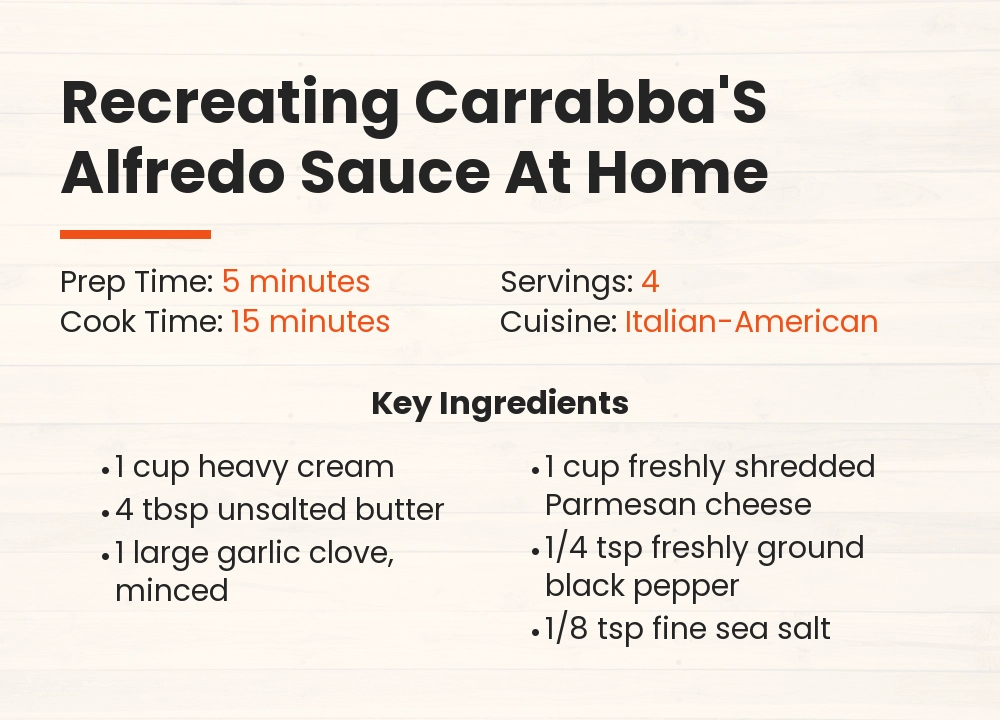
Recipe Details
- Prep Time: 5 minutes
- Cook Time: 15 minutes
- Servings: 4
- Course: Main Course, Side Dish
- Cuisine: Italian-American
- Diet: Vegetarian
Ingredients
- 1 cup heavy cream
- 4 tbsp unsalted butter
- 1 large garlic clove, minced
- 1 cup freshly shredded Parmesan cheese
- 1/4 tsp freshly ground black pepper
- 1/8 tsp fine sea salt
Instructions
- Add the heavy cream and unsalted butter to a medium saucepan.
- Place the saucepan over medium-low heat. Warm the mixture gently, stirring occasionally, until the butter has fully melted and the cream begins to simmer. Do not allow it to reach a rolling boil.
- Introduce the minced garlic clove to the pan. Stir continuously for about one minute until the garlic becomes fragrant.
- Gradually sprinkle in the freshly shredded Parmesan cheese while whisking constantly. Continue to whisk until the cheese is completely melted and the sauce is smooth.
- Season the sauce with the black pepper and salt. Stir to incorporate.
- Immediately remove the saucepan from the heat. The sauce will continue to thicken as it cools slightly.
- For serving, toss the sauce with one pound of freshly cooked fettuccine pasta. Add a splash of pasta water if needed to adjust the consistency.
Nutrition
- Calories: 485 kcal
- Protein: 11 g
- Fat: 48 g
- Carbohydrates: 3 g
- Sugar: 2 g
- Fiber: 0 g
- Sodium: 450 mg
- Cholesterol: 145 mg
Cooking Method
This sauce is prepared using a stovetop method that relies on gentle heating and constant emulsification. The primary technique involves melting fat into a dairy base and then incorporating cheese without breaking the sauce.
The process is a form of creating a stable emulsion, where the butterfat and cheese oils are suspended within the water content of the cream. This is achieved through controlled heat and mechanical agitation from whisking.
Tools Needed
- Medium saucepan (2-3 quart capacity)
- Whisk
- Measuring cups and spoons
- Box grater for cheese
- Garlic mincer
Ingredient Analysis and Selection
Every component in this recipe serves a distinct structural or flavor purpose. Substitutions can be made, but they will alter the final product’s texture and taste.
Heavy Cream
Heavy cream, also known as heavy whipping cream, contains a milk fat percentage between 36% and 40%. This high fat content is non-negotiable for achieving the luxurious mouthfeel associated with the original dish.
The fat molecules provide the foundation for the emulsion, coating the tongue and delivering a rich sensation. Lower-fat alternatives like half-and-half or whole milk will result in a thinner, less stable sauce that may separate more easily.
Unsalted Butter
Using unsalted butter is a deliberate choice for flavor control. Different brands of salted butter contain varying amounts of sodium. By starting with unsalted butter, you manage the salt level precisely with your own addition later.
Butter also contributes milk solids and water, which integrate into the cream base. It enhances the overall dairy flavor profile and contributes to the sauce’s glossy appearance.
Garlic
A single, fresh garlic clove is all that is required. The goal is a background note of aroma and flavor, not an overpowering garlic presence. Mincing the clove finely ensures it disperses evenly and cooks quickly in the hot cream.
The brief cooking time is just enough to remove the harsh, raw bite of the garlic and mellow its flavor, allowing it to blend seamlessly into the sauce.
Parmesan Cheese
The type of Parmesan cheese you use is the most critical variable. Pre-shredded, bagged cheese is coated with anti-caking agents like cellulose or potato starch.
These additives prevent the cheese from clumping in the bag but also prevent it from melting smoothly into a sauce. They can create a grainy, gritty texture. For a perfectly smooth sauce, you must purchase a wedge of real Parmigiano-Reggiano or a high-quality domestic Parmesan and shred it yourself just before use.
Nutritional Perspective
From a dietary standpoint, this is a high-energy, nutrient-dense preparation. It is rich in saturated fats, calcium, and protein. A single serving provides a significant portion of the daily value for calcium, which is vital for bone health.
The high fat content, while contributing to the sensory experience, also means the sauce is calorically concentrated. The protein comes almost exclusively from the Parmesan cheese, which is a complete protein source.
For those monitoring sodium intake, note that Parmesan cheese is naturally salty. The additional salt in the recipe should be adjusted to personal preference and dietary needs.
Adapting the Recipe for Dietary Needs
It is possible to modify this recipe to suit various dietary restrictions. However, each change will produce a different final product from the original.
Gluten-Free Adaptation
The sauce itself contains no gluten. To prepare a completely gluten-free meal, simply toss the sauce with your preferred gluten-free pasta. Look for brands that use a blend of rice, corn, and quinoa flours for the best texture.
Dairy-Free and Vegan Adaptation
Replicating a dairy-based cream sauce without dairy is challenging but feasible. Replace the heavy cream with raw cashew cream or a high-fat, unsweetened coconut cream.
Use vegan butter and a commercially available vegan Parmesan cheese alternative that melts well. The flavor profile will be different, but you can achieve a similar creamy consistency.
Lower-Fat Version
For a lighter version, you can use whole milk thickened with a small amount of cornstarch as a base. The result will be less rich and more prone to separation, so it should be served immediately.
Replace the butter with a smaller amount of olive oil. Use a strongly flavored, finely grated aged cheese so you can use less of it while maintaining a pronounced flavor.
The Story of Alfredo Sauce
The origins of Fettuccine Alfredo are often misunderstood. The dish was invented in Rome in the early 20th century by restaurateur Alfredo Di Lelio.
His original recipe was far simpler than the modern American version: fresh fettuccine tossed with copious amounts of young butter and Parmigiano-Reggiano. The heat from the pasta melted the ingredients into a creamy emulsion.
American soldiers stationed in Rome during World War II brought the concept back to the United States. To suit local tastes and ingredient availability, American chefs added heavy cream, creating the rich, cooked sauce we know today. Carrabba’s version is a refined example of this Italian-American culinary evolution.
Achieving Perfect Consistency and Flavor
Many home cooks encounter issues with their sauce breaking, becoming greasy, or turning out grainy. These problems are almost always preventable with the right technique.
Controlling Heat
The most common error is using excessively high heat. Cream and butter can separate if heated too aggressively. Always use a medium-low setting and be patient during the warming phase.
If your sauce does begin to separate, immediately remove it from the heat and whisk in one or two tablespoons of cold heavy cream. This can often bring the emulsion back together.
The Importance of Fresh Cheese
As noted, pre-shredded cheese is the primary cause of a grainy sauce. The cellulose powder used as an anti-caking agent does not dissolve in the fat and liquid of the sauce.
It remains as tiny, gritty particles. Shredding your cheese from a block just before incorporating it is the single most effective step for ensuring a velvety texture.
Seasoning at the Right Time
Always add salt and pepper at the end, after the cheese has melted. Salt can sometimes cause cheese to seize up or become stringy if added too early during the melting process.
Tasting at the end allows you to adjust for the saltiness of your specific Parmesan cheese, which can vary from brand to brand.
Serving and Pairing Suggestions
While classic fettuccine is the traditional partner for this sauce, its utility is much broader. The rich, creamy profile pairs well with a variety of proteins and vegetables.
Protein Additions
Grilled chicken breast or blackened chicken is a popular addition. For a seafood variation, seared sea scallops or large shrimp work exceptionally well. The sweetness of the scallops provides a pleasant contrast to the rich sauce.
You can also add crispy pancetta or bacon for a salty, smoky component.
Vegetable Pairings
To add color and nutrition, consider serving the pasta with a side of roasted broccoli or Brussels sprouts. The slight bitterness and caramelization of the vegetables cut through the sauce’s richness.
Sautéed bell peppers or mushrooms can also be stirred directly into the pasta for a more integrated dish.
Bread and Salads
No Carrabba’s-inspired meal is complete without bread for dipping. Their famous bread dip, made with herbs and olive oil, is a perfect starter.
A simple salad with a sharp, creamy Italian dressing provides a refreshing, acidic counterpoint to the main course. The vinegar in the dressing helps cleanse the palate between bites of the rich pasta.
Storing and Reheating Leftovers
Alfredo sauce is best enjoyed immediately. However, if you have leftovers, proper storage is key to maintaining quality.
Allow the sauce to cool completely before transferring it to an airtight container. Store it in the refrigerator for up to three days. The sauce will thicken significantly as it chills.
To reheat, place the desired amount in a saucepan over very low heat. Stir frequently and add a small splash of milk or cream to help loosen it to a saucelike consistency again. Avoid using a microwave, as it heats unevenly and is likely to cause separation.
Frequently Asked Questions
Can I make the alfredo sauce ahead of time?
You can prepare it a few hours in advance. Keep it warm in a makeshift double boiler, which involves placing the sauce pan over a larger pot of gently simmering water. This prevents it from cooling and thickening too much or breaking from direct heat.
Why did my sauce turn out oily?
An oily sauce indicates a broken emulsion, usually caused by excessive heat. The fat has separated from the water and dairy solids. Next time, use lower heat and avoid boiling. To fix it, try whisking in a tablespoon of cold cream off the heat.
What can I use if I don’t have heavy cream?
For a closer texture, a combination of whole milk and a smaller amount of cream cheese can work. Melt the cream cheese into warm milk before proceeding. The result will be thicker than milk alone but different from the original recipe.
Is this sauce suitable for freezing?
Freezing is not recommended. Cream-based sauces tend to separate and become grainy upon thawing. The water in the sauce forms ice crystals that break the emulsion, resulting in a undesirable texture when reheated.
How can I make my sauce thicker?
The primary thickeners are the reduction of the cream and the melted cheese. If your sauce is too thin after adding the cheese, continue to simmer it gently for a few more minutes while stirring. Avoid adding flour, as it will dull the flavor and create a pasty texture.
What is the difference between this and Olive Garden’s alfredo?
While both are Italian-American chain restaurant versions, they have distinct profiles. Carrabba’s sauce often has a more pronounced garlic flavor and a slightly richer, denser consistency. Olive Garden’s version can be a bit lighter and more buttery in emphasis.