
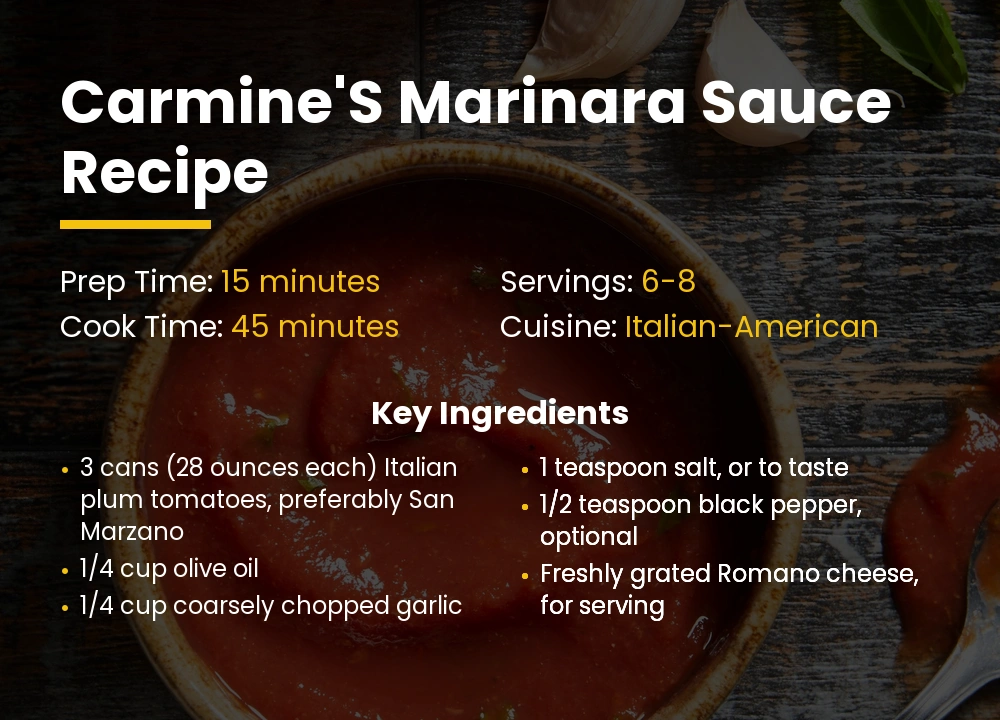
Recreating the iconic marinara from Carmine’s in New York City at home seemed impossible until I understood its simplicity. The balance of sweet tomatoes, rich garlic, and olive oil defines this sauce. After several tests in my kitchen, I found the exact method to capture that Sunday afternoon family meal feeling.
This recipe delivers the authentic Carmine’s experience without the wait. Let me walk you through each step, from selecting tomatoes to the final simmer.
How to Make Carmine’s Marinara Sauce Recipe
Recipe Details
- Prep Time: 15 minutes
- Cook Time: 45 minutes
- Servings: 6-8
- Course: Main Course, Side Dish
- Cuisine: Italian-American
- Diet: Vegetarian
Ingredients
- 3 cans (28 ounces each) Italian plum tomatoes, preferably San Marzano
- 1/4 cup olive oil
- 1/4 cup coarsely chopped garlic
- 1 teaspoon salt, or to taste
- 1/2 teaspoon black pepper, optional
- Freshly grated Romano cheese, for serving
Instructions
- Empty the canned tomatoes into a large bowl. Use clean hands or a utensil to crush them, leaving some chunks for texture.
- Heat the olive oil in a large pot or Dutch oven over medium heat. Add the coarsely chopped garlic and sauté for about 90 seconds until fragrant but not browned.
- Pour the crushed tomatoes and their juices into the pot with the garlic and oil. Stir well to combine.
- Bring the mixture to a gentle simmer, then reduce the heat to low. Let it cook uncovered for 40-45 minutes, stirring occasionally to prevent sticking.
- After cooking, season with salt and pepper to taste. The sauce will thicken and the flavors will meld together.
- Serve immediately over pasta with freshly grated Romano cheese, or allow it to cool for storage.
Nutrition
- Calories: 120 kcal
- Protein: 3 g
- Fat: 7 g
- Carbohydrates: 12 g
- Sugar: 8 g
- Fiber: 3 g
- Sodium: 300 mg
- Cholesterol: 0 mg
Cooking Method
This sauce uses a stovetop simmering method. The slow, uncovered cooking allows water to evaporate, naturally thickening the sauce and concentrating the tomato flavor. Unlike many recipes, it avoids onions, herbs, or lengthy reductions, relying instead on ingredient quality.
Tools Needed
- Large pot or Dutch oven
- Wooden spoon
- Large bowl
- Can opener
- Measuring cups and spoons
The Story Behind Carmine’s Signature Sauce
Carmine’s Family Style Italian Restaurant opened in New York City over 30 years ago, and their marinara became a legend. It’s rooted in Italian-American traditions where Sunday afternoons were for large family meals. The restaurants in Times Square, Upper West Side, Atlantic City, and Las Vegas all serve this same sauce, ensuring consistency.
I remember visiting during a busy period, facing increased order volume and a wait for another time slot. That experience motivated me to make the sauce at home, bringing the Carmine’s feeling to my table any day. Their focus on family-style sharing is captured in this recipe, designed to serve a crowd.
The sauce’s popularity stems from its sweeter and less acidic profile, a result of carefully selected tomatoes. It’s the foundation for many dishes, from pasta to dipping bread, embodying the authentic Carmine’s experience without any inconvenience of dining out.
Ingredient Deep Dive: Why Quality Matters
With only six ingredients, each one plays a critical role. Choosing the right components makes the difference between a good sauce and a great one.
San Marzano Tomatoes: The Heart of the Sauce
San Marzano tomatoes are Italian plum tomatoes grown in the volcanic soil near Naples. They have a sweeter and less acidic profile compared to other varieties, which is key to Carmine’s rich flavor. Look for “DOP San Marzano” on the label to ensure authenticity.
These tomatoes are packed in puree, not juice, contributing to a thicker, more luxurious texture. If unavailable, use high-quality Italian plum tomatoes, but expect a slightly different taste. The recipe calls for 28-ounce cans, and using three cans replicates the restaurant’s bulk preparation style.
Olive Oil and Garlic: The Aromatic Base
Extra virgin olive oil provides a fruity foundation that carries the garlic’s aroma. The ¼ cup measure might seem generous, but it’s essential for that lush, coating quality Carmine’s is known for. It also adds healthy monounsaturated fats.
Garlic should be coarsely chopped, not minced. This prevents burning during sautéing and allows it to melt slowly into the sauce, offering subtle flavor bursts. The ¼ cup amount delivers a robust but not overwhelming garlic presence.
Freshly Grated Romano Cheese
While not cooked into the sauce, serving with freshly grated Romano cheese is a Carmine’s trademark. Romano has a sharper, saltier edge than Parmesan, complementing the sweet tomatoes perfectly. It adds a layer of umami and richness when sprinkled on top.
Nutritional Insights from a Dietician Perspective
As a dietician, I value that this homemade sauce is nutrient-dense. Tomatoes are rich in lycopene, an antioxidant linked to heart health, and vitamins A and C. The olive oil contributes healthy fats that aid in nutrient absorption.
By making it yourself, you control the sodium, unlike many store-bought sauces. Using no-salt-added tomatoes can reduce sodium further if needed. The fiber from the tomatoes supports digestion, and the sauce is naturally cholesterol-free and low in calories.
Comparing this to processed options, you avoid added sugars, preservatives, and unnecessary fillers. It’s an all-natural choice that fits into various dietary patterns, including vegetarian and vegan if cheese is omitted.
Mastering the Technique: Tips for Perfect Results
Even a simple recipe benefits from attention to detail. Here are insights from my kitchen trials to help you avoid common mistakes.
Achieving the Right Texture and Flavor
When sautéing garlic, keep the heat at medium to prevent browning, which causes bitterness. Stir constantly until just fragrant. The coarse chop ensures it cooks evenly without turning bitter.
Simmer the sauce uncovered to allow evaporation, which thickens it naturally. Stir occasionally, especially near the bottom, to prevent scorching. The sauce is done when it coats the back of a spoon and the oil glistens on top.
Season with salt at the end, as tomatoes reduce during cooking. Taste after 30 minutes and adjust. For a smoother sauce, use an immersion blender, but Carmine’s version is intentionally chunky.
Adaptations and Variations
For a vegan version, omit the cheese or use a plant-based alternative. The sauce itself contains no animal products. To add depth, some enjoy a pinch of red pepper flakes with the garlic, but Carmine’s recipe sticks to simplicity.
If you prefer herb notes, fresh basil stirred in at the end or a teaspoon of dried oregano during cooking can be added. However, the original recipe relies solely on tomato and garlic harmony.
Serving, Storing, and Freezing Your Marinara
This sauce is versatile beyond pasta. Use it for pizza bases, in lasagna, or as a dip for breadsticks. It pairs well with robust pasta shapes like rigatoni or spaghetti.
To store, cool the sauce completely and transfer to airtight containers. It keeps in the refrigerator for up to 5 days. For longer storage, freeze in portions for up to 3 months. Freezing in mason jars or freezer bags works well.
When reheating, warm it slowly on the stovetop with a splash of water if it has thickened too much. Avoid microwaving, as it can heat unevenly and alter the texture.
Frequently Asked Questions
Can I use fresh tomatoes instead of canned?
Yes, but it requires more work. Use about 4 pounds of fresh Italian plum tomatoes. Blanch them to remove skins, then crush and cook. Canned tomatoes are preferred for consistency and convenience, especially San Marzano.
Why is my sauce too acidic?
If your sauce tastes acidic, you might have used tomatoes that aren’t San Marzano. To balance, add a pinch of sugar or a grated carrot during cooking. Carmine’s recipe relies on the natural sweetness of San Marzano tomatoes.
How can I make the sauce spicier?
Add red pepper flakes when sautéing the garlic. Start with ½ teaspoon and adjust to your preference. This adds heat without compromising the original flavor profile.
Is this sauce gluten-free?
Yes, all ingredients are naturally gluten-free. Ensure any pasta or bread served with it is gluten-free if needed for dietary restrictions.
Can I double the recipe for a crowd?
Absolutely. Use a larger pot and adjust cooking time slightly. This sauce scales well for batch cooking, making it ideal for family gatherings or freezing for future meals.
What’s the best pasta to serve with this sauce?
Traditional choices include spaghetti, linguine, or penne. Thicker pasta shapes hold the chunky sauce well, mimicking the Carmine’s dining experience.
How does this compare to other Carmine’s sauces?
Carmine’s offers various sauces, but their marinara is the most popular due to its simplicity. It serves as a base for many dishes, unlike their meat-based sauces like vodka or bolognese.
Can I add herbs like basil or oregano?
Carmine’s recipe doesn’t include herbs, but you can add them if you prefer. Fresh basil stirred in at the end or dried oregano during cooking can enhance the flavor, though it deviates from the authentic version.
Why is the garlic coarsely chopped instead of minced?
Coarse chopping prevents the garlic from burning quickly and allows it to melt into the sauce, providing a mellow, distributed flavor without bitter notes. It’s a key technique for this recipe.
How do I know when the sauce is done cooking?
The sauce is ready when it has thickened to your liking and the oil has slightly separated on top. It should coat the back of a spoon without dripping immediately, usually after 40-45 minutes of simmering.