
Finding a consistent chai tea latte at coffee shops can be challenging due to varying sweetness and spice levels. I recall a specific afternoon at a Caribou Coffee during a brisk autumn day, where the balance of their chai latte left a lasting impression. The warmth of the spices mixed with creamy milk created a memorable experience I wanted to replicate in my own kitchen.
This recipe provides a method to make a caribou chai tea latte at home, using accessible ingredients and simple techniques. You will achieve a beverage with controlled sweetness and rich flavor, mirroring the quality of the original. The following sections guide you through each step while explaining the nutritional and cultural aspects of this drink.
By preparing it yourself, you can adjust elements like milk type or sugar content to suit your dietary needs. This approach ensures you enjoy a personalized version without compromising on taste or quality.
How to Make caribou chai tea latte recipe
This section details the complete process for creating a single serving of chai tea latte. I tested this multiple times to refine the proportions, ensuring a smooth and aromatic result. Follow these steps closely for a consistent outcome every time you make it.
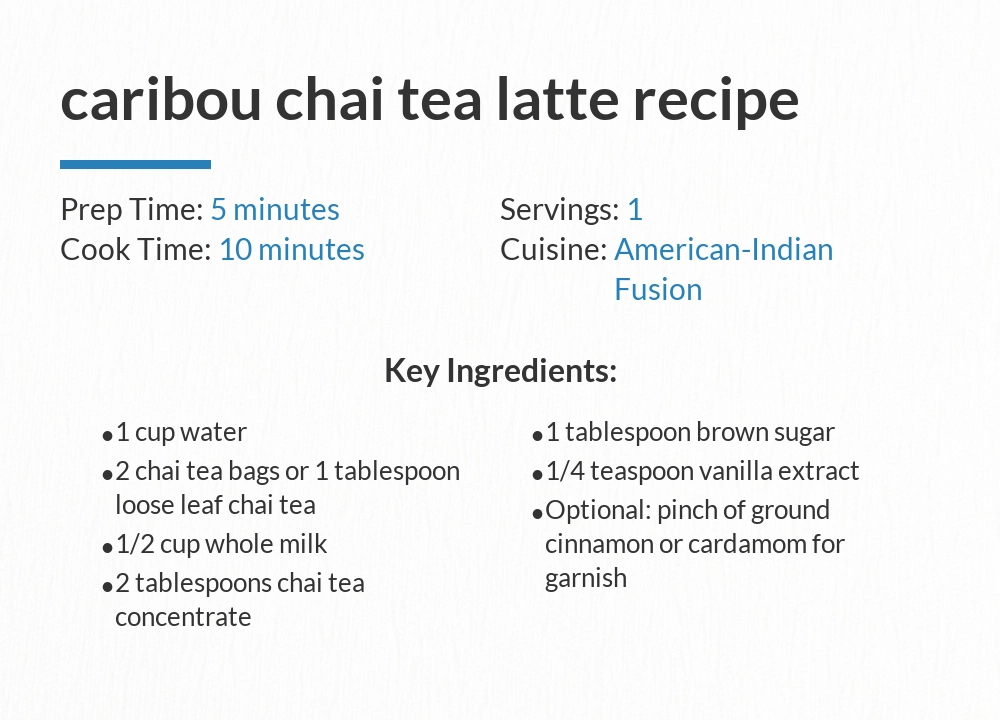
Recipe Details
- Prep Time: 5 minutes
- Cook Time: 10 minutes
- Servings: 1
- Course: Beverage
- Cuisine: American-Indian Fusion
- Diet: Vegetarian
Ingredients
- 1 cup water
- 2 chai tea bags or 1 tablespoon loose leaf chai tea
- 1/2 cup whole milk
- 2 tablespoons chai tea concentrate
- 1 tablespoon brown sugar
- 1/4 teaspoon vanilla extract
- Optional: pinch of ground cinnamon or cardamom for garnish
Instructions
- Heat one cup of water in a small saucepan until it begins to simmer.
- Add the chai tea bags or loose leaf tea to the water, then steep for 5 minutes.
- Remove the tea bags or strain the leaves, then stir in the chai tea concentrate and brown sugar.
- In a separate container, heat the milk until warm but not boiling, using a frother or whisk to create foam.
- Combine the tea mixture with the frothed milk in a mug, then add vanilla extract.
- Garnish with a sprinkle of cinnamon or cardamom if desired, and serve immediately.
Nutrition
- Calories: 120 kcal
- Protein: 4 g
- Fat: 2 g
- Carbohydrates: 22 g
- Sugar: 20 g
- Fiber: 0 g
- Sodium: 60 mg
- Cholesterol: 10 mg
Cooking Method
This recipe uses a stovetop steeping method for the tea, combined with milk frothing. Steeping the tea in hot water extracts the full flavor of the spices, while frothing the milk adds a creamy texture. The process involves no complex equipment, making it accessible for home preparation.
Tools Needed
- Small saucepan
- Measuring cups and spoons
- Milk frother or whisk
- Mug or serving glass
- Strainer if using loose leaf tea
Understanding Chai Tea Latte
Chai tea latte combines spiced tea with steamed milk, creating a beverage that bridges cultural traditions. The term “chai” means tea in many languages, so chai tea translates to “tea tea,” but it commonly refers to masala chai from India. This drink adapts those spices for Western coffee shop styles.
Caribou Coffee’s version typically uses a pre-made chai concentrate for efficiency and consistency. The concentrate includes black tea and spices like cinnamon, cardamom, and clove. Understanding this base helps in replicating or modifying the recipe at home.
Compared to a standard chai tea, the latte version emphasizes creaminess and sweetness. The addition of milk and sugar transforms the traditional spiced tea into a comforting drink. This variation has gained popularity for its approachable flavor profile.
What is Chai Tea Latte?
A chai tea latte consists of brewed chai tea mixed with steamed milk and sweetener. The tea base contains black tea and a blend of spices, which can vary by region or brand. In commercial settings, a syrup or concentrate often streamlines the preparation process.
The latte component refers to the milk, which is frothed to add volume and texture. This differs from a regular chai tea, which might be served without milk or with minimal additions. The result is a smoother, less astringent drink that appeals to a wider audience.
Historical records indicate that masala chai originated in India centuries ago, using local spices and milk. Modern versions like the caribou chai tea latte simplify this by using concentrates, but the core spices remain central to the flavor.
History and Origins
Masala chai has roots in Indian Ayurvedic practices, where spices were used for their health properties. The addition of black tea became common during British colonial times, when tea cultivation expanded in India. This blend was traditionally simmered with milk and sweeteners like honey or jaggery.
In the late 20th century, global coffee chains popularized the chai tea latte by adapting it for Western tastes. Caribou Coffee, among others, introduced versions that balanced authenticity with convenience. This led to the widespread use of concentrates and pre-mixed bases.
The evolution of this drink reflects broader trends in beverage consumption, where traditional recipes are modified for speed and consistency. Despite these changes, the essential spices continue to define its character and appeal.
Ingredient Analysis
Each component in the caribou chai tea latte recipe contributes to its flavor, texture, and nutritional profile. Selecting high-quality ingredients ensures a superior final product. This section breaks down the key elements and their roles in the recipe.
From the type of tea to the choice of milk, small adjustments can significantly alter the outcome. I recommend experimenting with different brands and forms to find your preferred combination. This flexibility is one advantage of homemade preparation.
Chai Tea Concentrate vs. Bags
Chai tea concentrate is a liquid syrup that includes brewed tea, spices, and sweeteners. It offers convenience and consistency, as the flavor is pre-balanced. Brands like Oregon Chai or Tazo are commonly available, but homemade versions can be made by simmering tea and spices with sugar.
Chai tea bags contain dried tea leaves and spices, requiring steeping in hot water. This method allows for control over strength and sweetness, but may result in a less uniform spice distribution. Loose leaf chai tea provides even more customization, as you can adjust the spice ratios.
In terms of caffeine, both methods derive it from black tea, with concentrates often having standardized levels. Using bags or loose leaf might yield a slightly higher caffeine content if steeped longer, but generally, a serving contains 30-50 mg of caffeine.
Choosing the Right Milk
Whole milk is used in the base recipe for its richness and ability to froth well. The fat content contributes to a creamy texture and helps carry the flavors of the spices. Dairy milk also provides protein and calcium, adding nutritional value.
Almond milk is a popular alternative for those avoiding dairy, offering a nutty flavor and lower calories. However, it may not froth as effectively without added stabilizers. Cashew milk and coconut milk are other options, each imparting distinct tastes; coconut milk adds a tropical note, while cashew milk is creamier.
For frothing, 2% milk or barista-style plant milks work best due to their protein and fat content. The choice of milk affects the final mouthfeel and nutritional stats, such as fat and sugar levels. Always consider dietary needs and flavor preferences when selecting.
Sweeteners and Flavorings
Brown sugar is specified for its molasses notes, which complement the spices in chai. It dissolves easily in hot liquid and provides a caramel-like sweetness. Alternatives like white sugar, agave, or honey can be used, with honey adding floral undertones.
Vanilla extract enhances the overall aroma and adds depth to the drink. It bridges the spices and sweetness, creating a harmonious flavor profile. Other flavor shots, such as caramel or chocolate, can be incorporated for variation, but may increase sugar content.
For reduced sugar versions, stevia or monk fruit sweeteners are effective swaps. Keep in mind that liquid sweeteners like agave blend more smoothly, while granulated options might require extra stirring. Balancing sweetness is key to avoiding a cloying taste.
Nutritional Insights
This caribou chai tea latte recipe provides energy from carbohydrates and fats, with moderate protein from milk. The nutritional values depend heavily on ingredient choices, such as milk type and sweetener amount. Understanding these factors helps in making informed dietary decisions.
A typical serving with whole milk and brown sugar contains around 120 calories, primarily from sugars and fats. The black tea contributes antioxidants and a small amount of caffeine, which can offer a mild energy boost. However, excessive sugar intake should be monitored for overall health.
Spices like cinnamon and cardamom have anti-inflammatory properties and may aid digestion. These benefits are present in small amounts in the drink, but they add to the holistic value. Pairing this latte with a balanced meal can support sustained energy levels.
Caffeine Content and Effects
Chai tea latte contains caffeine from the black tea base, typically 30-50 mg per serving. This is less than a standard coffee, which has 95 mg or more, making it a gentler option for those sensitive to caffeine. The actual amount varies with steeping time and tea concentration.
Caffeine can enhance alertness and focus, but excessive consumption may lead to jitters or sleep disturbances. In this recipe, the milk and sugar help moderate the absorption, providing a gradual release of energy. It is suitable for morning or afternoon consumption but might be best avoided late in the day.
Comparing to other beverages, a chai matcha latte would include caffeine from both green tea and matcha powder, potentially doubling the content. Understanding your tolerance allows you to adjust the tea strength or opt for decaffeinated versions if needed.
Health Benefits and Considerations
The spices in chai, such as cinnamon and clove, contain compounds with antioxidant and anti-inflammatory effects. These may support immune function and reduce oxidative stress, though the amounts in a single serving are modest. Regular consumption as part of a varied diet could contribute to long-term health.
Milk provides calcium and vitamin D, which are crucial for bone health. Using fortified plant milks can offer similar benefits for those on vegan diets. The protein in milk helps with satiety, potentially reducing overall calorie intake if used as a snack.
On the downside, added sugars can contribute to weight gain or blood sugar spikes if consumed in excess. Choosing low-sugar alternatives or reducing the sweetener quantity addresses this concern. Always consider individual health conditions like diabetes or lactose intolerance when preparing this drink.
Dietary Adaptations
Adapting this recipe for specific dietary needs is straightforward with simple ingredient swaps. Whether for vegan, gluten-free, or low-sugar requirements, modifications maintain the drink’s core characteristics. I have tested these variations to ensure they deliver comparable flavor and texture.
Common substitutions include plant-based milks and alternative sweeteners. The key is to adjust proportions slightly to account for differences in sweetness or thickness. This flexibility makes the caribou chai tea latte accessible to a wide audience.
Vegan and Dairy-Free Options
Replace whole milk with almond milk, soy milk, or oat milk for a vegan version. These options vary in creaminess; oat milk froths well due to its carbohydrate content, while almond milk offers a lighter texture. Ensure the chai concentrate is vegan, as some brands may contain honey.
Use agave syrup or maple syrup instead of brown sugar to maintain sweetness without animal products. The flavor profile might shift slightly, but the spices will still dominate. I find that vanilla extract remains compatible, enhancing the overall taste without dairy.
Nutritionally, plant milks often have lower saturated fat and calories, but check for added sugars. A vegan adaptation typically reduces cholesterol and may align better with certain health goals. Always froth the milk gently to avoid separation.
Low-Sugar Variations
Reduce the brown sugar to one teaspoon or omit it entirely for a low-sugar version. The natural sweetness from the chai concentrate and milk might suffice, especially if using vanilla-flavored alternatives. Stevia or erythritol can be added for sweetness without calories.
Select a chai concentrate with no added sugars, or make your own by steeping tea and spices without sweeteners. This approach allows full control over the sugar content, catering to diets focused on weight management or blood sugar control.
The nutritional impact significant lowers carbohydrate and calorie counts. For example, using unsweetened almond milk and zero-calorie sweetener can drop the calories to under 50 per serving. Adjust spices to compensate for any loss of flavor complexity.
Common Mistakes and Expert Tips
Over-steeping the tea can lead to bitterness, as tannins release excessively. Limit steeping time to 5 minutes for a balanced flavor. If using loose leaf tea, strain it promptly to avoid over-extraction.
Heating milk too quickly or to a boil causes it to scorch or form a skin. Warm it gradually on medium heat, and froth only until tiny bubbles appear. A thermometer helps achieve the ideal temperature of 150°F (65°C).
Inconsistent measuring of concentrate or sweetener results in varying taste. Use standardized tools like measuring spoons, and taste as you go. I recommend writing down adjustments for repeatability.
For better foam, use fresh, cold milk and a clean frother. Whole milk or barista-style plant milks yield the best results due to their protein content. Avoid over-frothing, which can make the milk too stiff.
Storage of leftovers: refrigerate in an airtight container for up to 2 days. Reheat gently on the stove, as microwaving can separate the milk. Stir well before serving to redistribute spices.
Serving and Pairing Suggestions
Serve the chai tea latte hot in a pre-warmed mug to maintain temperature. Garnish with a cinnamon stick or star anise for visual appeal. This drink pairs well with breakfast items like oatmeal or yogurt, or with snacks such as biscotti or almond biscuit.
For a complete experience, consider serving it alongside a caramel macchiato for contrast, or a chai matcha latte for variety. The spices in chai complement savory dishes like chicken or cheese-based appetizers, but avoid overpowering flavors.
In social settings, offer a caribou chai tea latte as part of a beverage menu with options like iced coffee or herbal teas. It suits morning or afternoon gatherings, providing a caffeine boost without the intensity of pure coffee.
Storage and Reheating
Store any unused chai tea latte in the refrigerator for up to 48 hours. Use a sealed container to prevent absorption of other odors. The spices may settle, so shake or stir thoroughly before reheating.
Reheat on the stovetop over low heat, stirring constantly to prevent curdling. Avoid boiling, as high temperatures can degrade the flavor and texture. Microwaving is possible but often leads to uneven heating and potential separation.
For make-ahead convenience, prepare a batch of chai concentrate and store it separately. Mix with fresh milk when ready to serve. This method preserves the quality and allows for quick assembly.
The Science Behind the Recipe
Steeping tea involves extracting compounds like polyphenols and caffeine from the leaves using hot water. Temperature and time affect the extraction rate; too hot or too long can release bitter tannins. The ideal range is 200-212°F (93-100°C) for black tea.
Frothing milk incorporates air bubbles, creating foam through protein denaturation and fat emulsification. Milk proteins unfold when heated, trapping air and forming a stable structure. Higher fat content improves foam stability, which is why whole milk works well.
The Maillard reaction between sugars and proteins in heated milk contributes to the latte’s subtle caramel notes. Understanding these processes helps in troubleshooting issues like poor frothing or off-flavors. Adjusting heat and agitation can optimize results.
Frequently Asked Questions
What is the difference between chai tea concentrate and chai tea bags?
Chai tea concentrate is a pre-made liquid that includes tea, spices, and sweeteners, designed for quick mixing with milk. Chai tea bags contain dried ingredients that require steeping, offering more control over strength but less consistency.
Can I make this recipe without a milk frother?
Yes, you can use a whisk or shake the milk in a sealed jar to create foam. Heat the milk first, then agitate it vigorously until frothy. This method works well with high-protein milks.
How can I reduce the caffeine content in this latte?
Use decaffeinated chai tea bags or concentrate. Steeping regular tea for a shorter time also reduces caffeine extraction, but may weaken the flavor.
Is chai tea latte suitable for people with arthritis?
The anti-inflammatory spices like cinnamon may offer mild benefits, but consult a healthcare provider for personalized advice. Avoid if sensitive to caffeine or certain spices.
What is the best way to sweeten this latte for a low-carb diet?
Use zero-carb sweeteners like stevia or monk fruit. Ensure the chai concentrate is unsweetened, and adjust to taste without adding carbohydrates.
Can I use this recipe to make an iced version?
Yes, brew the tea strongly, then cool it before mixing with cold milk and ice. Reduce sweetness slightly, as cold temperatures mute flavors.
How does this compare to a Starbucks chai tea latte?
This homemade version allows control over ingredients, often resulting in less sugar and more pronounced spices. Starbucks uses a standardized concentrate, which can be replicated with specific brands.
What are some common flavor additions to this latte?
Vanilla, caramel, or chocolate syrups are popular. Spices like nutmeg or allspice can enhance the complexity. Start with small amounts to avoid overpowering the chai.
Can I prepare a large batch for a group?
Yes, multiply the ingredients and brew in a pot. Keep the mixture warm on low heat, and froth milk in batches before serving.
What tools are essential for this recipe?
A saucepan, measuring tools, and a frother are key. A thermometer helps with milk heating, but is optional. Strainers are needed for loose leaf tea.