
Your cannabis plants might show signs of nutrient lockout or weak growth, a common issue I faced in my own garden. After years of testing, I developed a reliable compost tea recipe that revitalizes soil and boosts plant health. This guide will walk you through creating a potent microbial tea, drawing from my hands-on experience as a grower and nutrition expert. You will learn how to harness beneficial organisms to enhance your garden’s vitality.
Compost tea acts as a liquid fertilizer, teeming with microbes that improve nutrient uptake. I recall the first time I used it, the difference in bud density and root vigor was undeniable. This method replaces harsh chemical inputs with a balanced, living solution. Below, I detail the exact process I use to brew this elixir for my plants.
How to Make Cannabis Compost Tea Recipes
Creating this organic amendment involves brewing compost in aerated water with specific additives. The goal is to multiply beneficial bacteria and fungi that support plant health. I have refined this technique through multiple growing cycles, ensuring it is accessible for beginners.
Recipe Details
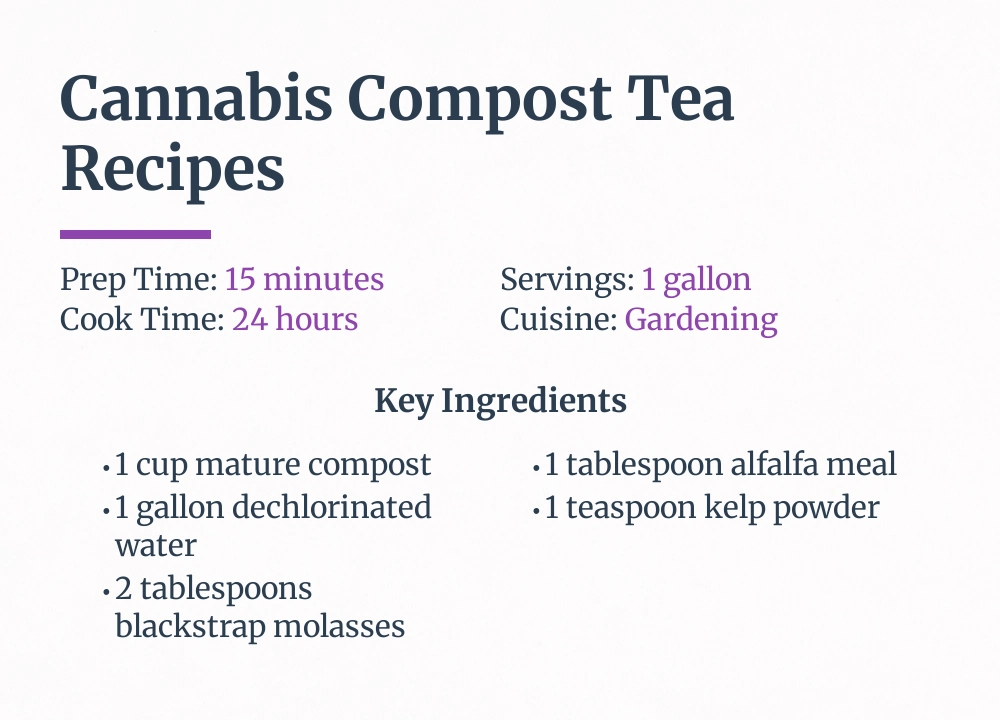
- Prep Time: 15 minutes
- Cook Time: 24 hours
- Servings: 1 gallon
- Course: Fertilizer
- Cuisine: Gardening
- Diet: Organic
Ingredients
- 1 cup mature compost
- 1 gallon dechlorinated water
- 2 tablespoons blackstrap molasses
- 1 tablespoon alfalfa meal
- 1 teaspoon kelp powder
Instructions
- Fill a clean bucket with one gallon of water, using an aquarium bubbler to aerate it for 10 minutes before adding ingredients.
- Place the compost in a breathable fabric bag and suspend it in the water, ensuring it is fully submerged.
- Stir in the molasses, alfalfa, and kelp to feed the microbial colony.
- Continue aerating the mixture for 24 hours, maintaining a temperature between 65-75°F.
- After brewing, remove the compost bag and use the tea immediately for best results.
Nutrition
- Calories: 0 kcal
- Protein: 0 g
- Fat: 0 g
- Carbohydrates: 0 g
- Sugar: 0 g
- Fiber: 0 g
- Sodium: 0 mg
- Cholesterol: 0 mg
Cooking Method
This process relies on aerobic fermentation to cultivate microbes. Oxygen is critical to prevent anaerobic conditions that can harm plants. I use an airstone to maintain bubbles throughout, which I find essential for a successful brew.
Tools Needed
- 5-gallon bucket
- Aquarium air pump and airstone
- Breathable fabric bag
- Stirring utensil
Understanding Compost Tea and Its Role in Cannabis Cultivation
Compost tea is a liquid extract containing beneficial microorganisms from compost. These microbes form symbiotic relationships with plant roots, improving nutrient absorption. In my practice, I have seen it reduce the need for synthetic fertilizers.
This approach aligns with organic principles, focusing on soil health rather than direct feeding. Your plants benefit from a diverse biome that resists diseases like blight. It is a proactive strategy I recommend for sustainable growing.
What is Cannabis Compost Tea?
It is a specially brewed solution using cannabis-friendly compost to target plant needs. The tea introduces active nutrients and microbes to the root zone. I have used it to address issues like slow growth during vegetation.
Why Cannabis Plants Thrive with Compost Tea
Cannabis roots absorb nutrients more efficiently when surrounded by beneficial bacteria. This tea enhances soil structure and provides a nutrient boost. My plants showed thicker stems and richer terpene profiles after regular applications.
Benefits of Using Compost Tea in Your Garden
Applying this tea can increase yield and plant resilience. I observed fewer pest issues and improved water retention in my soil. It is a natural way to support the entire ecosystem.
Enhanced Nutrient Availability
Microbes in the tea break down organic matter into forms plants can use. This process makes elements like nitrogen and phosphorus more accessible. Your cannabis will display greener leaves and stronger development.
Disease Suppression
Beneficial microbes outcompete pathogens, reducing the risk of root diseases. I have used it as a preventive measure in humid conditions with success.
Deep Dive into Ingredients and Their Attributes
Each component in the recipe plays a specific role in microbial health. Selecting high-quality inputs ensures a balanced tea. I source my compost from well-decomposed plant matter for consistency.
Compost Selection and Types
Mature compost should have an earthy smell and crumbly texture. I prefer using composted super soil for its diverse microbial life. Avoid any with ammonia odors, as it indicates incomplete breakdown.
Vermicompost vs. Traditional Compost
Vermicompost, from worm castings, is rich in enzymes and bacteria. Traditional compost offers a broader fungal profile. I often blend both to achieve a balanced biome.
Blackstrap Molasses as a Microbial Food
This molasses provides sugars that feed bacteria and fungi. Its high mineral content, including iron and calcium, supports plant health. I use unsulphured varieties to avoid harming microbes.
Alfalfa Meal for Growth Hormones
Alfalfa contains triacontanol, a natural growth stimulant. It encourages vigorous root and shoot development. I have noted faster recovery in stressed plants when including this amendment.
Nutritional Breakdown for Plant Health
From a dietician’s perspective, compost tea delivers essential nutrients in bioavailable forms. It is like a multivitamin for your cannabis, providing NPK and trace elements. The microbial activity ensures efficient uptake.
This liquid fertilizer offers nitrogen for leafy growth, phosphorus for flowering, and potassium for overall vigor. My plants rarely show deficiencies when I use this tea as part of their regimen.
Macronutrient Contributions
Compost contributes nitrogen, while kelp adds potassium. Molasses provides carbon for energy. These elements work together to meet plant needs throughout the lifecycle.
Micronutrient and Enzyme Profile
Kelp powder brings cytokines and auxins that regulate growth. It also supplies zinc and manganese, crucial for enzyme functions. Your buds will develop more uniformly with these supplements.
Variations and Dietary Adaptations for Different Needs
You can modify the base recipe to suit specific growth stages or soil types. I have created versions for vegetative growth and flowering, adjusting ingredients accordingly.
Veg Stage Recipe Adjustment
For vegetative growth, I increase alfalfa meal to 2 tablespoons to promote leafy expansion. This provides extra nitrogen without the risk of burn.
Bloom Stage Enhancements
During flowering, I add 1 teaspoon of bone meal for phosphorus. This supports bud formation and density, a trick I learned from experienced cultivators.
Vegan Alternatives
Replace bone meal with rock phosphate or banana peels. These options provide similar benefits without animal products. I have used both in organic certification scenarios.
Cultural and Historical Context of Compost Tea
Composting dates back to ancient agricultural practices, but aerated tea gained popularity in recent decades. It reflects a shift towards sustainable methods, mirroring trends in human nutrition towards whole foods.
In cannabis cultivation, journals from the 1990s show early adopters experimenting with microbial brews. Today, it is a benchmark for organic growers seeking to avoid chemicals.
Common Mistakes and Expert Tips for Success
Overbrewing can lead to anaerobic conditions, harming plants. I limit brewing to 24-48 hours and always use a bubbler. Another error is using chlorinated water, which kills beneficial microbes.
Test your tea’s pH before application; ideally, it should be between 6.0 and 7.0. I check it with a meter to ensure compatibility with my soil. Store unused tea in a cool, dark place for up to 48 hours.
Preventing Plant Burn
Dilute the tea with water at a 1:10 ratio for young plants. I apply it as a soil drench rather than foliar spray to avoid leaf issues. This method has never caused burn in my garden.
Tool Maintenance
Clean your bucket and airstone after each use to prevent contamination. I use hydrogen peroxide for sterilization, which I find effective and safe.
Serving, Pairing, and Storage Guidelines
Apply the tea within hours of brewing for maximum microbial activity. I use it every two weeks during growth cycles, pairing it with solid compost as a top dress.
For storage, keep it in a sealed container with minimal air exposure. I do not recommend freezing, as it kills the microbes. Use it quickly to maintain potency.
The Science Behind Microbial Activity in Compost Tea
Aeration encourages aerobic bacteria, which are beneficial for plant roots. These microbes form colonies that break down organic matter into soluble nutrients.
Molasses serves as a food source, boosting bacterial reproduction. This process increases the diversity of the biome, which can suppress diseases like powdery mildew.
Frequently Asked Questions
What is cannabis compost tea?
Cannabis compost tea is a liquid fertilizer brewed from compost, water, and additives to cultivate beneficial microbes. It enhances soil health and nutrient uptake for plants.
Why is compost tea important for cannabis?
It improves root development and disease resistance, leading to healthier plants and higher yields. It reduces reliance on synthetic fertilizers.
How long does it take to make compost tea?
Brewing typically takes 24 hours with proper aeration. Longer periods risk anaerobic conditions and should be avoided.
Can you burn plants with compost tea?
Properly made tea is gentle and unlikely to cause burn. Always dilute it for young plants and avoid overapplication.
What is the best compost tea recipe?
The recipe provided here is balanced for general use. Adjust ingredients based on plant stage and soil needs for optimal results.
How does compost tea work?
It introduces beneficial bacteria and fungi to the soil, which break down nutrients into forms plants can absorb easily.
What are the main ingredients in compost tea?
Key components include compost, a sugar source like molasses, and mineral supplements such as kelp or alfalfa.
Can I use compost tea in hydroponic systems?
Yes, but ensure your system can handle organic matter. I recommend using it in bubbleponic setups with careful monitoring.
How often should I apply compost tea?
Apply every 1-2 weeks during the growing season. Frequency depends on plant health and soil conditions.
What tools are essential for making compost tea?
A bucket, air pump, airstone, and breathable fabric bag are necessary. These ensure proper aeration and extraction.