
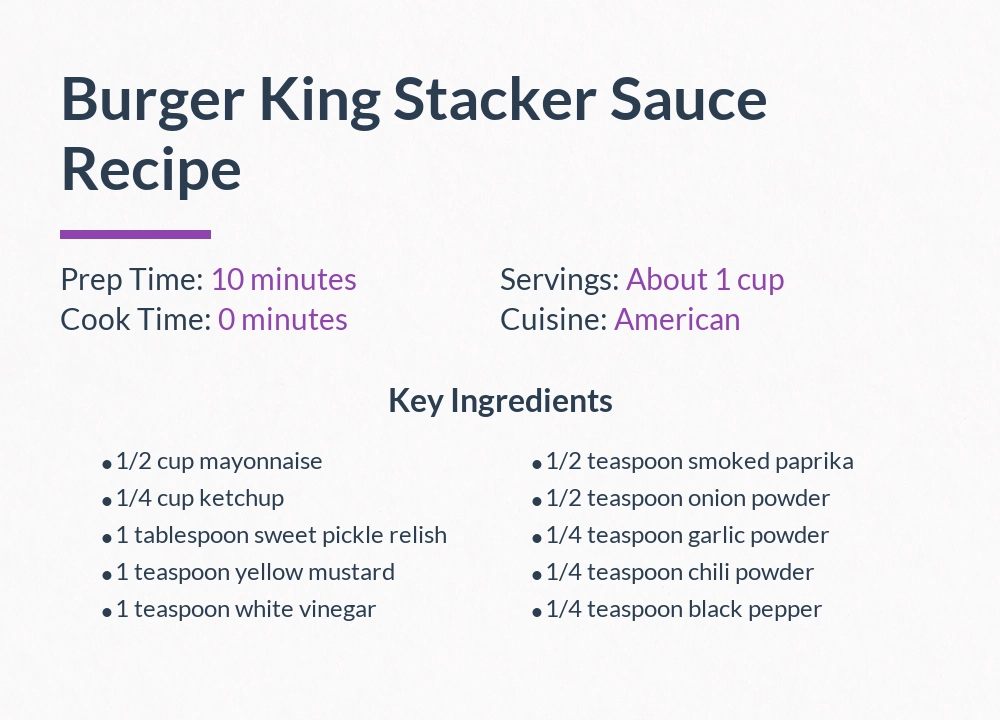
That distinct sauce from the Burger King Stacker burger has a way of sticking in your memory long after the last bite. When the chain removed it from menus, a specific taste experience vanished from easy reach. This situation pushed me to deconstruct and replicate that flavor in my own kitchen. After numerous tests and adjustments, I arrived at a formula that captures its essence.
You can now bypass the drive-thru and produce this condiment yourself. This guide walks through every step of the process, from gathering simple ingredients to achieving the perfect consistency. We will also examine its nutritional aspects and explore various ways to incorporate it into your meals.
How to Make Burger King Stacker Sauce Recipe
This section provides the complete method for creating the sauce. Follow these steps closely for a result that mirrors the original.
Recipe Details
- Prep Time: 10 minutes
- Cook Time: 0 minutes
- Servings: About 1 cup
- Course: Condiment
- Cuisine: American
- Diet: Contains Egg, Gluten
Ingredients
- 1/2 cup mayonnaise
- 1/4 cup ketchup
- 1 tablespoon sweet pickle relish
- 1 teaspoon yellow mustard
- 1 teaspoon white vinegar
- 1/2 teaspoon smoked paprika
- 1/2 teaspoon onion powder
- 1/4 teaspoon garlic powder
- 1/4 teaspoon chili powder
- 1/4 teaspoon black pepper
- 1/8 teaspoon cayenne pepper (optional)
Instructions
- Gather all ingredients and a medium-sized mixing bowl.
- Add the mayonnaise and ketchup to the bowl. Whisk them together until fully combined and smooth.
- Incorporate the sweet pickle relish, yellow mustard, and white vinegar. Stir thoroughly to integrate the wet ingredients.
- Sprinkle in the smoked paprika, onion powder, garlic powder, chili powder, and black pepper. If using cayenne for heat, add it now.
- Mix everything vigorously for about two minutes until the color is uniform and no spice clumps remain.
- Taste the sauce and adjust seasonings if necessary. For a thinner consistency, add a teaspoon of water or vinegar.
- Transfer the finished sauce to an airtight container. For optimal flavor, let it chill in the refrigerator for at least one hour before use.
Nutrition
- Calories: 90 kcal
- Protein: 0.5 g
- Fat: 8 g
- Carbohydrates: 4 g
- Sugar: 3 g
- Fiber: 0.2 g
- Sodium: 180 mg
- Cholesterol: 5 mg
Cooking Method
This is a no-cook, cold-preparation method. The process relies on emulsification through whisking to bind the oils and liquids. Allowing the sauce to rest in the fridge enables the dried spices to rehydrate and the flavors to marry.
Tools Needed
- Medium mixing bowl
- Whisk or fork
- Measuring spoons and cups
- Airtight container for storage
Decoding the Stacker Sauce Flavor
The signature taste is a complex balance of several elements. It is not merely a single-note condiment but a layered accompaniment.
Core Flavor Components
This sauce builds on a foundation of creamy and tangy notes. Mayonnaise provides a rich, fatty base that carries other flavors. Ketchup introduces sweetness and a slight acidity that brightens the mix.
The relish contributes a specific sweet and briny character that is crucial. Mustard and vinegar add sharpness and depth, preventing the sauce from becoming overly sweet. The spice blend is where the magic happens, adding smokiness and a subtle heat.
Ingredient Specifics and Their Roles
Each component has a defined job in the final product. Understanding this helps if you need to make substitutions.
Mayonnaise
Use a full-fat, classic mayonnaise for authenticity. This ingredient creates the emulsion and provides a smooth, creamy texture. Low-fat versions can make the sauce watery and less stable.
Ketchup
A standard tomato ketchup works best. Its blend of tomato, vinegar, sugar, and spices adds a familiar sweetness and tang. Avoid using sugar-free variants as they can alter the flavor profile significantly.
Sweet Pickle Relish
This is a non-negotiable element for that authentic Stacker taste. The relish provides tiny bursts of sweetness and pickle flavor. Finely chopped pickles can be a substitute, but the specific taste of sweet relish is key.
Spice Blend
The combination of smoked paprika, onion, and garlic powders creates a savory, smoky backbone. Chili and black pepper add a mild, building heat. The optional cayenne pepper increases the spice level for those who prefer it.
Nutritional Perspective on Homemade Condiments
Creating this sauce at home gives you full control over its nutritional content. This is a significant advantage over the commercial version.
Analyzing the Macronutrients
The primary source of calories in this recipe comes from fats in the mayonnaise. This makes it an energy-dense addition to meals. The carbohydrate content is moderate, largely from the sugars in ketchup and relish.
Protein is minimal, as expected for a condiment. The sauce is designed to complement protein-rich foods like beef patties, not to be a significant source itself.
Sodium and Sugar Considerations
Store-bought sauces often contain high levels of sodium and added sugars. By making it yourself, you can monitor these components. This recipe uses standard pantry items, but you can select low-sodium ketchup or reduce certain ingredients to adjust the levels.
The sugar content is inherent to the ketchup and relish. There is no additional sugar added in this formulation. For a lower-sugar version, you could experiment with no-sugar-added ketchup, though the taste will change.
Adapting the Recipe for Dietary Needs
Many people have specific dietary requirements. This sauce can be modified to suit various needs without sacrificing its core character.
Gluten-Free Adaptation
The recipe as written is generally gluten-free, but you must verify your ingredients. Some brands of ketchup or mustard may contain gluten-based stabilizers or vinegar derived from wheat. Always check labels to ensure compliance.
Vegan and Dairy-Free Version
To make a plant-based version, replace the mayonnaise with a high-quality vegan alternative. Many vegan mayos made from soybean or avocado oil mimic the texture and taste well. Ensure the ketchup and other ingredients are also vegan-certified.
Lower-Fat Alternative
For a reduced-fat profile, use a light mayonnaise. Be aware that the mouthfeel and stability of the sauce might be slightly different. The flavor will remain largely intact, as the spices carry most of the taste signature.
The Place of Signature Sauces in Fast Food
Condiments like the Stacker sauce are integral to brand identity in the quick-service restaurant industry. They create a unique taste that customers associate with a specific chain.
Burger King has a history of introducing limited-time sauces to promote new burger varieties. The Stacker sauce was part of a line focused on bold, smoky flavors meant to complement multiple meat patties and bacon. This approach taps into a preference for hearty, savory profiles.
Recreating these sauces at home has become a popular way to extend the life of discontinued menu items. It allows for customization and often results in a fresher, preservative-free product.
Avoiding Common Preparation Errors
Several small mistakes can prevent your sauce from turning out correctly. Paying attention to these details ensures a superior result.
Incomplete Mixing
Failing to whisk the ingredients thoroughly can leave pockets of dry spices or separated liquids. This creates a bland sauce with an inconsistent texture. Mix for the full recommended time until the color is completely even.
Skipping the Chill Time
Using the sauce immediately after mixing is possible, but the flavors will not have melded. The resting period in the refrigerator allows the powdered spices to fully hydrate and the acidity to mellow. This step transforms the mixture from separate ingredients into a unified condiment.
Ingredient Temperature
Using ingredients straight from the fridge is fine. However, if your mayonnaise is particularly cold, it might be thicker and harder to whisk. Letting everything sit at room temperature for 10-15 minutes before starting can make the process smoother.
Maximizing Your Homemade Sauce
This versatile condiment has uses beyond just being a burger topping. Think of it as a multi-purpose sauce for various dishes.
Ideal Food Pairings
Its bold profile makes it an excellent partner for grilled meats. Obviously, it excels on a bacon cheeseburger, mimicking the original BK Stacker. Try it as a dip for french fries, onion rings, or chicken tenders.
It can also serve as a spread for sandwiches or a dressing for a robust potato salad. The smoky and tangy notes cut through the richness of fried foods and fatty meats.
Storage and Shelf Life
Store the sauce in an airtight container in the refrigerator. A glass jar or a plastic container with a tight-sealing lid works well. Properly stored, it should remain fresh for up to one week.
Freezing is not recommended. The emulsion can break upon thawing, resulting in a separated, watery sauce. It is best made in small batches that can be consumed within a few days.
Frequently Asked Questions
What is the primary flavor of Burger King Stacker Sauce?
The primary flavor is a smoky, tangy, and slightly sweet combination. It is creamier than standard burger sauce due to the mayonnaise base, with a noticeable kick from spices like paprika and black pepper.
Can I make this sauce without sweet pickle relish?
You can substitute it with finely chopped dill pickles and a pinch of sugar, but the flavor will be different. Sweet pickle relish provides a specific flavor and texture that is central to the authentic taste.
Why did my homemade sauce turn out too runny?
A runny sauce is often due to the specific brand of mayonnaise used or over-measuring the ketchup and vinegar. To fix it, you can add a little more mayonnaise or let it thicken in the refrigerator for a longer period.
Is there a significant taste difference between this and the original?
This copycat recipe is designed to be extremely close. The main difference may come from the freshness of your ingredients and the lack of commercial preservatives, which often results in a brighter, more pronounced flavor.
How can I make a spicier version of this sauce?
Increase the amount of cayenne pepper or add a few drops of a hot sauce like Tabasco. You could also incorporate a small amount of chipotle powder for a smokier heat.
What is the best way to mix the ingredients if I don’t have a whisk?
A fork works perfectly well for this small batch. Use a stirring and pressing motion against the side of the bowl to break up any clumps of spice and ensure a smooth consistency.
Can I use this sauce as a marinade for chicken or beef?
Yes, its acidic components from vinegar and ketchup can help tenderize meat. Use it as a marinade for a few hours before grilling or baking. Note that the sugar content may cause it to burn over high heat, so cook accordingly.