
The scent of pine needles and the sound of laughter echo from my memory. A large plastic dispenser sat on a weathered picnic table, its contents glowing an impossible shade of red. We called it bug juice, and it was the official drink of summer. Years later, I found myself wanting to recreate that specific flavor for my own children.
This mission led me to deconstruct the classic camp formula. The goal was to capture its spirit while improving its nutritional profile. This bug juice drink recipe is the result of that kitchen experimentation. It delivers the familiar, fruity taste without relying solely on artificial ingredients and excessive sugar.
You can prepare this beverage in about five minutes. It serves a crowd and is perfect for parties, picnics, or a simple afternoon thirst quencher. Let’s walk through the entire process, from gathering ingredients to understanding its place in our cultural history.
How to Make Bug Juice Drink Recipe
This is the core method for creating a classic bug juice. The procedure is straightforward, but the details matter for achieving the right balance.
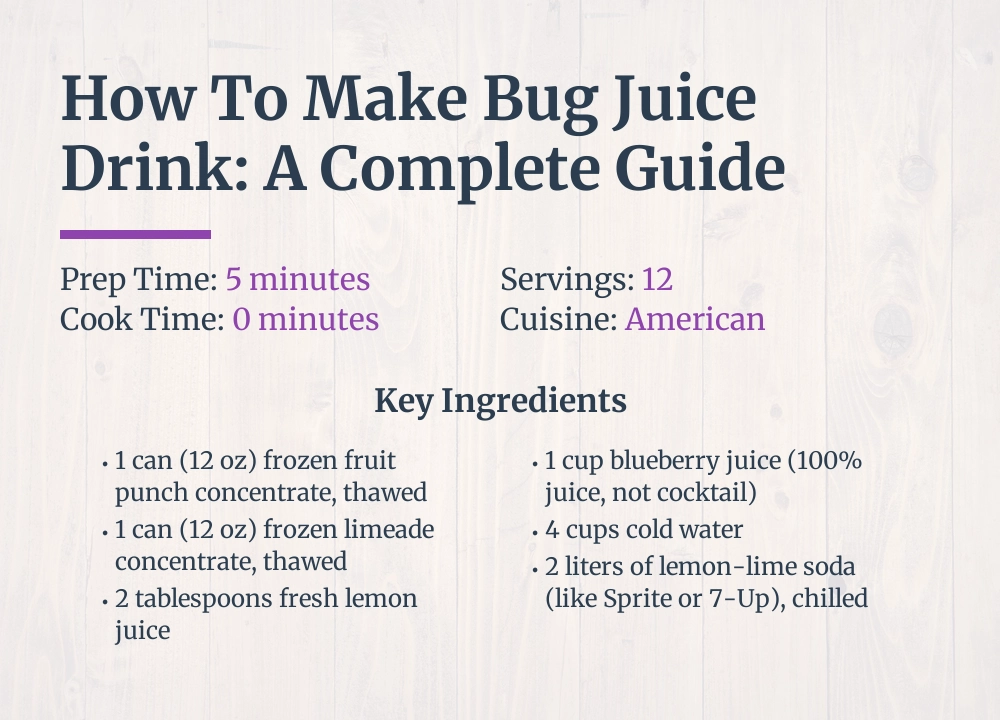
Recipe Details
- Prep Time: 5 minutes
- Cook Time: 0 minutes
- Servings: 12
- Course: Beverage
- Cuisine: American
- Diet: Vegetarian
Ingredients
- 1 can (12 oz) frozen fruit punch concentrate, thawed
- 1 can (12 oz) frozen limeade concentrate, thawed
- 2 tablespoons fresh lemon juice
- 1 cup blueberry juice (100% juice, not cocktail)
- 4 cups cold water
- 2 liters of lemon-lime soda (like Sprite or 7-Up), chilled
Instructions
- Ensure both the fruit punch and limeade concentrates are completely thawed. This allows for easy mixing.
- In a large pitcher or beverage dispenser, combine the thawed fruit punch and limeade concentrates.
- Add the fresh lemon juice and the blueberry juice to the mixture.
- Pour in the 4 cups of cold water. Stir vigorously with a long spoon until all the concentrates are fully dissolved.
- Gently pour the chilled lemon-lime soda down the side of the pitcher to minimize fizz loss. Stir lightly to combine.
- Serve immediately over ice. For a festive touch, add slices of orange, lemon, or fresh berries.
Nutrition
- Calories: 110 kcal
- Protein: 0 g
- Fat: 0 g
- Carbohydrates: 28 g
- Sugar: 26 g
- Fiber: 0 g
- Sodium: 15 mg
- Cholesterol: 0 mg
Cooking Method
This is a no-cook recipe that uses the stirring method. The key is sequential combination. Mixing the concentrates and water first creates a strong base. The carbonated beverage is added last to preserve its effervescence. The entire process is a form of liquid alchemy, transforming separate components into a unified drink.
Tools Needed
- Large pitcher or drink dispenser (at least 1-gallon capacity)
- Long-handled spoon for stirring
- Measuring cups and spoons
- Can opener
Understanding the Core Components
The flavor of this drink hinges on its ingredients. Each one plays a specific role in the final product’s taste, color, and mouthfeel.
Fruit Punch Concentrate
This ingredient provides the foundational sweetness and red color. Fruit punch is typically a blend of apple, cherry, and grape juices. Its concentrated form delivers intense flavor without adding a large volume of liquid. The high sugar content acts as a preservative and flavor carrier.
From a dietary perspective, this is the primary source of simple carbohydrates in the recipe. Choosing a brand with no artificial colors can slightly improve the nutritional value. The concentrate also contributes to the overall vitamin C content of the beverage.
Limeade Concentrate
Limeade introduces a crucial acidic component. It cuts through the cloying sweetness of the fruit punch. This balance is what makes the drink palatable and refreshing rather than syrupy.
The citric acid in the limeade also acts as a natural preservative. It helps maintain the beverage’s stability for a few hours after mixing. The sharp, tangy notes elevate the simpler fruit flavors.
Lemon-Lime Soda
Carbonation is a signature element of many modern versions. The soda adds bubbles that make the drink feel lighter on the palate. It also contributes a second layer of sweetness and a clean, crisp finish.
The choice between brands like Sprite or 7-Up is largely a matter of preference. Some contain natural lemon and lime flavors, while others use artificial flavorings. This ingredient is responsible for the final sugar boost.
Nutritional Information and Health Considerations
Understanding what is in your glass allows for informed consumption. This analysis is based on the standard recipe provided above.
Caloric and Sugar Content
A single serving contains approximately 110 calories. Nearly all of these calories come from carbohydrates, specifically sugars. The 26 grams of sugar per serving is significant. It represents about half of the daily added sugar limit for men and over two-thirds for women, according to dietary guidelines.
The sugars are a combination of naturally occurring fructose from the juice concentrates and added sugars from the soda. This results in a high glycemic load. Consuming it can cause a rapid spike in blood sugar levels, followed by a potential energy crash.
Vitamins and Micronutrients
There are some positive nutritional aspects. The juice concentrates provide a small amount of vitamin C. This vitamin supports immune function and acts as an antioxidant in the body. The blueberry juice contributes trace amounts of anthocyanins.
Anthocyanins are pigments with researched antioxidant properties. They are associated with supporting eye health and reducing inflammation. However, the quantity in one serving of this drink is minimal compared to eating whole blueberries.
Creating a Healthier Profile
It is possible to adjust the formula for better nutrition. Replacing the lemon-lime soda with plain sparkling water instantly reduces the sugar content by about 10 grams per serving. The trade-off is a less sweet, more tart final product.
You can also use 100% juice concentrates with no added sugar. Increasing the proportion of blueberry juice enhances the antioxidant profile. Adding a pinch of salt can help with electrolyte balance, making it more effective for rehydration.
Variations and Dietary Adaptations
The basic structure of this beverage is highly adaptable. You can modify it to suit different tastes, occasions, and dietary needs.
Low-Sugar and Sugar-Free Versions
For a diabetic-friendly or low-carb option, significant changes are needed. Use sugar-free fruit punch drink mix packets as a base. Combine them with diet lemon-lime soda or seltzer water.
Sweeten with a liquid stevia extract or monk fruit sweetener to taste. Infuse the water with muddled fresh berries, citrus slices, and herbs like mint or basil. This method provides flavor complexity without relying on sugar or artificial sweeteners.
Adult Alcoholic Additions
This drink serves as a excellent mixer for social gatherings. For an alcoholic bug juice, add one cup of vodka, white rum, or tequila to the full batch. The fruity flavors mask the taste of the alcohol effectively.
Another approach is to serve the non-alcoholic version and allow guests to spike their individual glasses. This accommodates both drinkers and non-drinkers at the same event. Always consume alcoholic beverages responsibly.
Exploring Different Fruit Profiles
Do not feel confined to the classic fruit punch and limeade combination. Try using frozen cherry concentrate for a deeper red color and tart flavor. A blend of pineapple and orange juice concentrate creates a tropical twist.
For a unique flavor, consider adding a small amount of beet juice. It will enhance the vibrant color and contribute an earthy sweetness. A few tablespoons of pomegranate juice also work well for a more complex, antioxidant-rich profile.
The History and Culture of Bug Juice
The term “bug juice” has a fascinating history that predates its current culinary meaning. Its origins are deeply rooted in American summer camp tradition.
Military and Camp Origins
Historically, “bug juice” was slang in the military for any cheap, strong, or poorly identified alcoholic drink. It was also a generic term for insect repellent. How this term transferred to a sweet camp beverage is not entirely clear, but the connection likely lies in its questionable contents.
At summer camps, the drink was famously made from whatever powdered mix was cheapest and most available. Kool-Aid and other generic brands were standard. The name stuck because, like its namesake, you could not always be sure what was in it.
Evolution into a Staple
Over decades, bug juice became an integral part of the camp experience. It was less about the flavor and more about the context. It represented community, fun, and a break from routine. The drink was served in large coolers or dispensers, often lukewarm, and was a primary source of hydration for active children.
Its cultural footprint expanded through books, movies, and even a Disney Channel reality show named “Bug Juice.” This cemented its status as an iconic symbol of American summer. The recipe evolved from a simple powdered mix to more elaborate formulations involving multiple concentrates and sodas.
Common Preparation Mistakes and Solutions
Avoiding a few key errors will ensure your homemade version is superior to the camp classic.
Order of Mixing
Adding the soda first is a frequent error. The carbonation will fizz out violently when you stir in the thick concentrates. Always mix the non-carbonated components thoroughly before gently incorporating the soda. This preserves the bubbles for a more enjoyable drinking experience.
Another mistake is not thawing the frozen concentrates fully. Lumps of frozen concentrate will not dissolve properly. They will sink to the bottom and create an overly sweet, unbalanced final few servings.
Ingredient Temperature
Using warm soda or room temperature water will result in a flat, unrefreshing drink. Every liquid ingredient should be chilled before mixing. This keeps the final product cold without requiring excessive ice, which can dilute the flavor.
If you must serve it for an extended period, consider placing the beverage dispenser in a large bowl of ice. This maintains the temperature without watering down the juice inside the container.
Serving, Storage, and Pairing Ideas
This beverage is versatile and can be integrated into various occasions and menus.
Optimal Serving Conditions
Bug juice is best served ice-cold immediately after preparation. Use clear pitchers or dispensers to show off its bright color. Garnish with floating slices of lemon, lime, and orange to hint at the flavors within.
For a children’s birthday party, consider turning it into a “bug juice bar.” Provide the base drink and an array of add-ins like fresh berries, maraschino cherries, and gummy worms. This interactive element makes the drink part of the entertainment.
Food Pairings
The sweet and acidic profile of this drink pairs well with savory, salty, and grilled foods. It is an excellent companion for classic barbecue fare like hamburgers, hot dogs, and potato salad. The sweetness complements the smoky, charred flavors.
It also works well with picnic foods such as fried chicken, pasta salad, and sandwiches. The high sugar content provides a quick energy source, which can be beneficial during active outdoor events.
Storage and Shelf Life
Store any leftovers in a sealed container in the refrigerator. The drink is best consumed within 24 hours. After this time, the carbonation will be mostly gone, and the flavors may begin to separate or taste flat.
You can prepare a concentrate version in advance. Mix the juices, concentrates, and water (but not the soda) and refrigerate for up to two days. Add the soda just before serving to restore the fizz and refresh the taste.
Frequently Asked Questions
Why is it called bug juice?
The name originates from American summer camps. It was a humorous term for the often-mysterious, brightly colored drinks made from cheap powdered mixes. The name suggests the contents were as questionable as drinking bug repellent.
Can I make bug juice without soda?
Yes, you can replace the lemon-lime soda with an equal amount of cold water or sparkling water. Using sparkling water will keep the carbonation without the extra sugar and calories. The flavor will be less sweet and more tart.
Is there real fruit juice in bug juice?
Traditional camp versions often used artificial powdered mixes with no real juice. This homemade recipe includes real juice concentrates and blueberry juice, providing some fruit content. However, the primary flavor still comes from concentrates and added sweeteners.
How can I reduce the sugar in this recipe?
Use sugar-free drink mixes and diet soda. Alternatively, dilute a smaller amount of 100% juice with seltzer water and enhance the flavor with fresh citrus slices and herbs. This significantly lowers the sugar content per serving.
Can I freeze bug juice into popsicles?
Absolutely. Pour the prepared drink into popsicle molds and freeze for at least four hours. The high sugar content will keep the popsicles from freezing rock solid, resulting in a slushy, enjoyable texture perfect for a hot day.
What is the best way to serve bug juice for a large group?
For a crowd, multiply the recipe and mix it in a large, clean cooler. This keeps it cold for hours. Alternatively, use a multi-gallon beverage dispenser. Prepare a double-strength concentrate ahead of time and dilute with soda and ice just before guests arrive.
Does bug juice contain caffeine?
The standard recipe provided contains no caffeine. However, if you use a soda like Mountain Dew or certain fruit punch mixes that include caffeine, then it would. Always check the labels of your concentrates and soda if caffeine is a concern.