
Dry, crumbly bran muffins are a common disappointment, but this recipe solves that with a simple swap. Applesauce provides natural sweetness and moisture for a tender result every time.
My grandmother used to make similar muffins, and the aroma from her oven always promised a wholesome treat. I have refined her method to balance nutrition and flavor perfectly.
This guide will walk you through each step, ensuring your muffins are hearty yet never dry. Let’s begin with the straightforward recipe that delivers consistent success.
How to Make Bran Muffin Recipe with Applesauce
Recipe Details
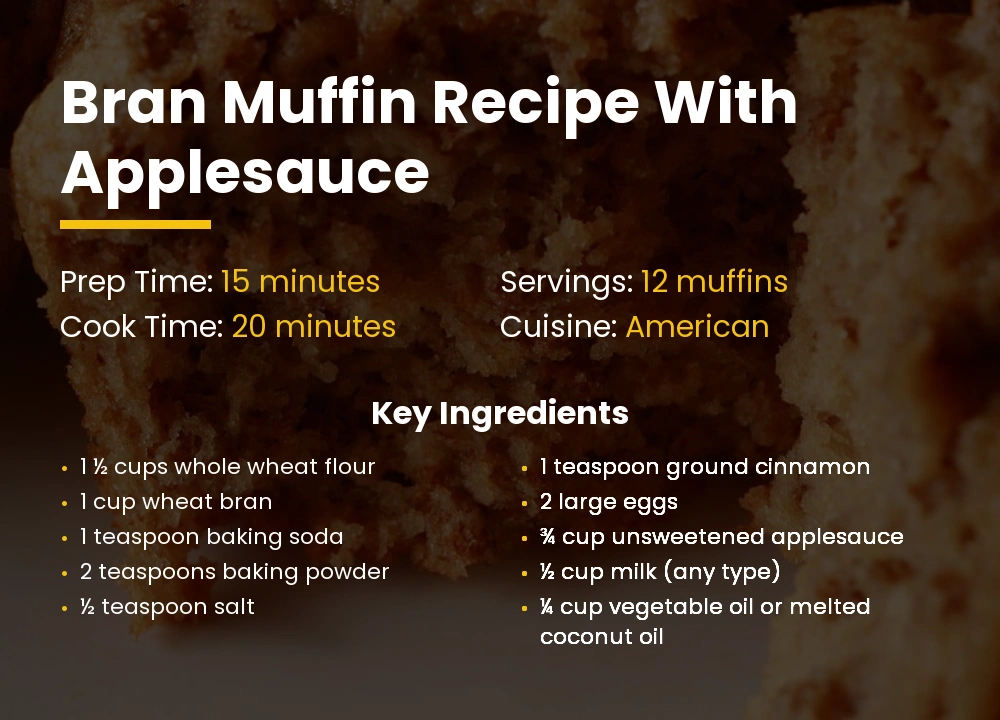
- Prep Time: 15 minutes
- Cook Time: 20 minutes
- Servings: 12 muffins
- Course: Breakfast, Snack
- Cuisine: American
- Diet: Vegetarian
Ingredients
- 1 ½ cups whole wheat flour
- 1 cup wheat bran
- 1 teaspoon baking soda
- 2 teaspoons baking powder
- ½ teaspoon salt
- 1 teaspoon ground cinnamon
- 2 large eggs
- ¾ cup unsweetened applesauce
- ½ cup milk (any type)
- ¼ cup vegetable oil or melted coconut oil
- ½ cup brown sugar, packed
- 1 teaspoon vanilla extract
- Optional: ½ cup raisins or fresh blueberries
Instructions
- Preheat your oven to 375°F (190°C) and prepare a muffin pan with nonstick spray or liners.
- In a large bowl, whisk together the whole wheat flour, wheat bran, baking soda, baking powder, salt, and cinnamon.
- In a separate medium bowl, combine the eggs, applesauce, milk, oil, brown sugar, and vanilla extract.
- Pour the wet ingredients into the dry ingredients and stir until just combined; do not overmix.
- If using, fold in raisins or blueberries gently.
- Divide the batter evenly among the 12 muffin cups, filling each about ¾ full.
- Bake for 18-20 minutes, or until a toothpick inserted into the center comes out clean.
- Transfer the muffins to a wire rack to cool completely before serving.
Nutrition
- Calories: 180 kcal
- Protein: 5 g
- Fat: 6 g
- Carbohydrates: 30 g
- Sugar: 12 g
- Fiber: 5 g
- Sodium: 280 mg
- Cholesterol: 30 mg
Cooking Method
This recipe uses the muffin method, mixing wet and dry ingredients separately before combining. Baking at 375°F ensures proper rise and a golden top without drying out the interior.
Proper oven temperature is crucial for even cooking, so use an oven thermometer if possible. The muffins are done when they spring back lightly to the touch.
Tools Needed
- Muffin pan (12-cup)
- Large mixing bowl
- Medium mixing bowl
- Whisk
- Spatula
- Wire rack
- Measuring cups and spoons
- Nonstick spray or paper liners
Now that you have the basic recipe, let’s explore why each component is chosen for optimal results. Understanding these elements allows you to bake with confidence and adapt as needed.
Ingredient Functions
Whole Wheat Flour
Whole wheat flour includes the bran, germ, and endosperm for a nutrient-dense base. Its slightly nutty flavor complements the sweetness of applesauce and brown sugar.
Compared to all-purpose flour, whole wheat adds fiber and a hearty texture. Using it in this recipe boosts the nutritional value without sacrificing tenderness.
Wheat Bran
Wheat bran is the outer layer of the wheat kernel, packed with insoluble fiber. It absorbs liquid during baking, contributing to the muffin’s structure and moisture retention.
This ingredient is key for the classic bran muffin texture and health benefits. You can find it in the baking aisle or health food stores.
Applesauce
Unsweetened applesauce acts as a natural sweetener and fat replacer in this recipe. It adds moisture and helps bind the ingredients, resulting in a soft crumb.
Using applesauce reduces the need for additional oil or butter while enhancing flavor. Its pectin content also aids in creating a tender muffin interior.
Leavening Agents
Baking soda and baking powder work together to provide lift and lightness. Baking soda reacts with the acidic applesauce to produce carbon dioxide bubbles.
Baking powder offers additional rise during the baking process, ensuring the muffins are not dense. This combination guarantees a fluffy texture every time.
Sweeteners and Fats
Brown sugar adds a deep, caramel-like sweetness and moisture due to its molasses content. Vegetable oil or coconut oil contributes to a tender mouthfeel and rich flavor.
These elements balance the earthy notes of bran and whole wheat flour. They also help keep the muffins moist over several days.
Nutritional Insights
Each muffin offers a substantial amount of dietary fiber from wheat bran and whole wheat flour. This fiber aids digestion and promotes a feeling of fullness, making them a satisfying breakfast or snack.
The recipe includes moderate sugar and fat for flavor without excess calories. You can adjust these components based on dietary preferences without compromising texture.
Fiber Benefits
Fiber from bran and whole grains supports heart health and stable blood sugar levels. Consuming fiber-rich foods like these muffins can contribute to daily nutritional goals.
Insoluble fiber from wheat bran adds bulk to stool and promotes regular bowel movements. This makes the muffins a practical choice for those seeking digestive health.
Macronutrient Balance
Protein from eggs and flour, along with healthy fats from oil, provides sustained energy. Carbohydrates from whole grains are released slowly, preventing energy spikes and crashes.
This balance makes the muffins suitable for active lifestyles or as a pre-workout snack. They are also vegetarian-friendly and can be adapted for other diets.
Baking Techniques
Mixing Methods
Combining wet and dry ingredients separately ensures even distribution without overmixing. Overmixing can develop gluten, leading to tough muffins.
Stir until just combined, even if a few lumps remain, for the best texture. This method preserves the air bubbles created by leavening agents.
Oven Management
Preheating the oven is essential for consistent baking and proper rise. An oven thermometer helps verify accuracy, as home ovens often run hot or cold.
Rotating the muffin pan halfway through baking promotes even browning. Testing doneness with a toothpick prevents undercooking or drying out.
Customization Options
Flour Variations
All-purpose flour can replace whole wheat flour for a lighter texture, though fiber content will decrease. For gluten-free versions, use a blend like almond flour or oat flour with xanthan gum.
These substitutions may alter moisture levels, so adjust liquid ingredients slightly. Experiment in small batches to find your preferred combination.
Sweetener Swaps
Maple syrup or honey can substitute for brown sugar, but reduce other liquids to compensate. Blackstrap molasses adds iron and a robust flavor, echoing traditional recipes.
For lower sugar options, use stevia or erythritol, though texture might change. Applesauce already provides natural sweetness, allowing for reduced added sugars.
Mix-In Ideas
Raisins, dried cranberries, or chopped nuts add texture and flavor variations. Fresh blueberries or diced apples introduce bursts of juiciness and vitamins.
Incorporate spices like nutmeg or ginger for seasonal twists. These additions make the muffins versatile for different tastes and occasions.
Storage and Freshness
Cool muffins completely on a wire rack before storing to prevent condensation. Place them in an airtight container at room temperature for up to three days.
For longer storage, wrap individual muffins in plastic wrap and freeze in a freezer bag. They can be frozen for up to three months without losing quality.
Reheating Tips
Thaw frozen muffins overnight in the refrigerator or at room temperature. Warm them in a toaster oven or microwave for 10-15 seconds to restore freshness.
Reheating refreshes the moisture and aroma, making them taste freshly baked. Avoid overheating, as this can dry them out.
Historical Context
Bran muffins gained popularity in the 20th century as health consciousness rose. They originated from using milling byproducts like bran, which were once considered waste.
Applesauce has been used in baking for centuries to add sweetness and moisture without refined sugars. Combining these elements reflects a tradition of resourceful, nutritious cooking.
Modern recipes continue this legacy by emphasizing whole ingredients and dietary balance. This approach aligns with contemporary interests in sustainable and health-focused eating.
Frequently Asked Questions
Can I use all-purpose flour instead of whole wheat flour?
Yes, you can substitute all-purpose flour for whole wheat flour in equal amounts. The muffins will have a lighter texture but less fiber and a milder flavor.
How can I make these muffins vegan?
Replace eggs with flax eggs and use plant-based milk like almond or soy milk. Ensure the sugar is vegan-certified, and the recipe will work perfectly.
Can I substitute the applesauce with something else?
Mashed banana or pumpkin puree can replace applesauce for similar moisture and sweetness. Adjust spices accordingly to complement the new flavor profile.
How long do these muffins last at room temperature?
Store them in an airtight container at room temperature for up to three days. For longer freshness, refrigerate for up to a week or freeze as described.
Why did my muffins turn out dry?
Overmixing the batter or overbaking can lead to dry muffins. Follow the instructions precisely, and check for doneness a few minutes before the recommended time.
Can I add other mix-ins like chocolate chips?
Chocolate chips, nuts, or seeds can be added in moderation without altering the batter significantly. Fold them in gently after combining wet and dry ingredients.
Is there a way to reduce the sugar in this recipe?
Reduce the brown sugar to ¼ cup or use a sugar substitute, but note that texture may change. The applesauce provides natural sweetness, so less added sugar is often acceptable.
Can I use a different type of oil?
Any neutral oil like canola or avocado oil works, as does melted butter for richer flavor. Coconut oil adds a subtle tropical note if you enjoy its taste.
What is the best way to measure flour for accuracy?
Spoon flour into the measuring cup and level it off with a knife for precise amounts. Avoid scooping directly from the bag, which can pack too much flour.
Can I make mini muffins with this batter?
Yes, fill mini muffin pans and bake for 10-12 minutes at the same temperature. Adjust the time based on size, as they cook faster than standard muffins.