
I first encountered borage tea in my grandmother’s sun-drenched garden, where the plant’s star-shaped blue flowers nodded in the breeze. She would steep the fresh leaves and flowers, creating a drink that tasted like a mix of cucumber and melon. This memory inspired me to study its nutritional benefits and share this simple, ancient recipe with you.
Borage tea is a caffeine-free herbal infusion made from the leaves and flowers of the Borago officinalis plant. You can prepare it using fresh or dried borage by steeping it in boiling water for about 5 to 10 minutes. The result is a light, refreshing beverage known for its potential to support skin health and reduce inflammation. In this guide, I will walk you through every step, from selecting ingredients to exploring its rich history and health science.
How to Make Borage Tea
This section provides the core method for preparing a classic cup of borage tea. I have tested this approach multiple times to ensure it delivers the best flavor and therapeutic qualities. The process is straightforward, but paying attention to details like water temperature and steeping time makes a significant difference in the final taste.
Recipe Details
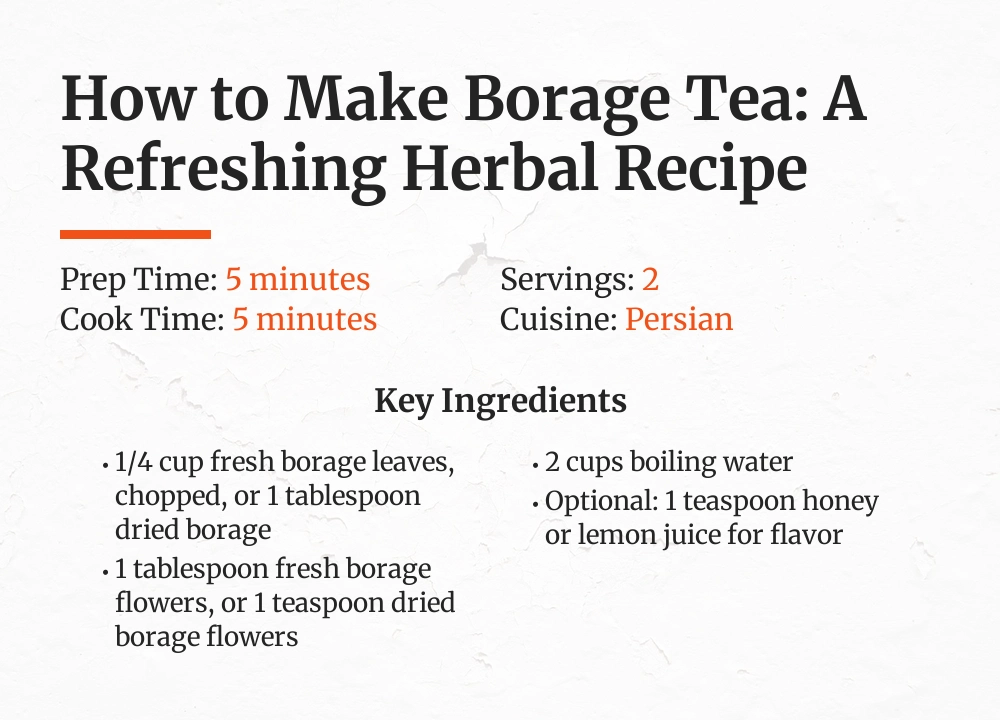
- Prep Time: 5 minutes
- Cook Time: 5 minutes
- Servings: 2
- Course: Beverage
- Cuisine: Persian
- Diet: Vegan, Gluten-Free
Ingredients
- 1/4 cup fresh borage leaves, chopped, or 1 tablespoon dried borage
- 1 tablespoon fresh borage flowers, or 1 teaspoon dried borage flowers
- 2 cups boiling water
- Optional: 1 teaspoon honey or lemon juice for flavor
Instructions
- Begin by washing the fresh borage leaves and flowers under cold water to remove any debris. If using dried borage, measure the required amount.
- Place the borage leaves and flowers into a heat-proof teapot or a large mug. A ceramic teapot works well for retaining heat.
- Bring 2 cups of water to a rolling boil. Pour the boiling water directly over the borage in the teapot.
- Cover the teapot and let the mixture steep for 5 to 7 minutes. For a stronger tea, extend the steeping time up to 10 minutes.
- Strain the tea into cups using a fine mesh strainer or cloth to remove the plant material. Add honey or lemon juice if desired, and serve warm.
Nutrition
- Calories: 5 kcal
- Protein: 0.3 g
- Fat: 0.1 g
- Carbohydrates: 1 g
- Sugar: 0 g
- Fiber: 0.5 g
- Sodium: 2 mg
- Cholesterol: 0 mg
Cooking Method
The primary method for borage tea is infusion, which involves steeping the plant material in hot water. This technique extracts the water-soluble compounds, such as antioxidants and essential oils, without boiling the herbs directly. Boiling can destroy delicate flavors and nutrients, so it is best to pour boiling water over the borage and let it sit covered. This approach preserves the melon-like aroma and beneficial properties.
Tools Needed
- A heat-proof teapot or a large mug
- A kettle for boiling water
- A fine mesh strainer or a clean cloth for draining
- A measuring cup and spoons
- A colander for washing fresh borage
Understanding Borage: The Star Ingredient
Borage, scientifically known as Borago officinalis, is an annual herb native to the Mediterranean region. It is easily recognizable by its bristly leaves and vibrant blue or purple star-shaped flowers. Historically, it has been used in traditional medicine across Europe and the Middle East for its purported ability to uplift mood and support respiratory health.
The plant thrives in well-drained, moisture-retaining soil and is often grown in gardens for its ornamental beauty and culinary uses. Both the leaves and flowers are edible, with a flavor profile that combines notes of cucumber and a subtle melon undertone. This unique taste makes it a versatile addition to drinks, salads, and even jellies.
What is Borage?
Borage is a hardy plant that can reach up to two feet in height, characterized by hairy stems and leaves. The flowers are not only attractive to humans but also to bees, which is why it is sometimes called “bee bread.” In culinary contexts, borage is valued for its fresh, crisp flavor, which is why it pairs well with beverages like tea. The leaves contain pyrrolizidine alkaloids, which require caution in consumption, but brewing tea typically uses amounts considered safe for occasional use.
Nutritional Profile of Borage
Borage is rich in gamma-linolenic acid (GLA), an omega-6 fatty acid that may help reduce inflammation. It also provides small amounts of vitamins like vitamin C and minerals such as calcium and potassium. The flowers contain antioxidants that contribute to their blue color and potential health benefits. When brewed into tea, these compounds are partially extracted, offering a low-calorie drink with mild therapeutic effects.
Nutritional Breakdown of Borage Tea
From a dietary perspective, borage tea is a hydrating beverage with minimal calories, making it suitable for weight management plans. The GLA in borage may support skin health by maintaining moisture and elasticity. Additionally, the tea’s anti-inflammatory properties can complement diets aimed at reducing joint discomfort or improving cardiovascular function.
The infusion process allows for the release of water-soluble nutrients without adding fats or sugars. If you sweeten the tea with honey or add citrus juice, the nutritional profile changes slightly, but it remains a healthy option compared to sugary drinks. Always consult a healthcare provider before using herbal teas for medicinal purposes, especially if you have pre-existing conditions.
Health Benefits of Borage Tea
Drinking borage tea may help promote relaxation due to its historical association with reducing stress. The GLA content supports the body’s production of prostaglandins, which regulate inflammation. Some studies suggest it could aid in managing mild depression, though more research is needed. The tea’s diuretic properties might also assist in flushing out toxins, supporting kidney and liver health.
Cultural and Historical Context of Borage Tea
Borage has a long history dating back to ancient Roman and Persian cultures. In Persia, it is known as “gol gavzaban” and is often brewed as a tea mixed with other herbs like chamomile or elderflower. This traditional preparation, called chai gol gavzaban, is believed to combat anxiety and boost courage, as reflected in the plant’s Latin name, which derives from “borago,” meaning “courage.”
During the Middle Ages, European monks cultivated borage in monastery gardens for its medicinal properties. It was commonly used in remedies for fevers and respiratory issues. Today, this herbal tea remains popular in Middle Eastern and Mediterranean cuisines, often served as a refreshing drink during social gatherings or as part of holistic wellness practices.
Variations of Borage Tea
While the basic recipe is delightful, you can customize borage tea to suit different tastes or occasions. I often experiment with additions like citrus juice or other herbs to create unique blends. These variations maintain the core benefits while introducing new flavors and textures.
Iced Borage Tea
For a hot summer day, try making iced borage tea. Brew the tea as usual, then let it cool to room temperature. Pour it over ice cubes and add a splash of lemon juice or a few fresh mint leaves. This version is incredibly thirst-quenching and retains the melon-like flavor without dilution if served promptly.
Borage Tea with Other Herbs
Combining borage with herbs like chamomile or calendula can enhance its calming effects. Use equal parts of each herb when steeping. For example, add a teaspoon of dried chamomile flowers to the borage before pouring boiling water. This blend is perfect for evening relaxation and adds a floral complexity to the taste.
Borage Jelly Recipe
Borage jelly is a creative way to use the plant’s flowers. Steep a handful of borage flowers in 2 cups of boiling water for 10 minutes, then strain. Mix the infusion with 1 cup of sugar and 2 tablespoons of lemon juice, and cook until it reaches a gel-like consistency. Pour into canning jars and seal for a lovely, spreadable jelly with a subtle cucumber flavor.
Dietary Adaptations
Borage tea is naturally vegan and gluten-free, but you can adjust it for specific dietary needs. For a low-sugar version, omit sweeteners or use stevia. If you prefer a creamier texture, add a splash of almond or oat milk after brewing. Always ensure that any added ingredients align with your health goals and allergies.
Common Mistakes and Expert Tips
Avoid over-steeping the tea, as it can become bitter due to the release of excess alkaloids. Use fresh borage when possible for the best flavor, and store dried borage in an airtight container away from light. Do not boil the leaves directly, as high heat can degrade their delicate compounds. Instead, rely on the infusion method for optimal results.
When harvesting borage from your garden, choose young leaves and fully open flowers for a milder taste. Wash them thoroughly to remove any dirt or insects. If using dried borage, check for freshness by smelling it—it should have a faint, cucumber-like aroma. These small steps ensure a superior tea experience.
Serving and Pairing Suggestions
Serve borage tea warm in a ceramic cup to maintain its temperature, or chilled in a tall glass for a refreshing summer drink. It pairs well with light snacks like cucumber sandwiches or fruit salads. For a Persian-inspired serving, accompany it with biscuits or a slice of cake during afternoon tea. The tea’s subtle flavor complements savory dishes without overpowering them.
Storage and Preservation
Fresh borage tea can be stored in the refrigerator for up to 24 hours in a sealed container. For longer preservation, dry the leaves and flowers using a dehydrator or a collapsible drying screen. Store dried borage in a dark, cool place in an airtight canister. Properly dried borage can last for several months, allowing you to enjoy this tea year-round.
The Science Behind Borage Tea
Borage contains pyrrolizidine alkaloids, which are compounds that can be toxic in large amounts. However, brewing tea typically uses small quantities that are considered safe for occasional consumption. The steeping process extracts beneficial elements like GLA and antioxidants, which interact with the body’s inflammatory pathways. Always use moderation and consult reliable sources or a healthcare professional for personalized advice.
Frequently Asked Questions
What is borage tea recipe?
A borage tea recipe involves steeping fresh or dried borage leaves and flowers in boiling water for 5 to 10 minutes. It results in a caffeine-free herbal drink with a cucumber-melon flavor, often enhanced with lemon or honey.
Why is borage tea recipe important?
This recipe is important because it provides a simple way to access the potential health benefits of borage, such as reducing inflammation and promoting relaxation. It also preserves cultural traditions and encourages the use of garden herbs in daily wellness routines.
How does borage tea recipe work?
The recipe works through infusion, where hot water extracts soluble compounds from the borage plant. This process releases antioxidants, essential oils, and other nutrients into the liquid, creating a therapeutic beverage that can be consumed for its flavor and mild health effects.
Can I use dried borage for tea?
Yes, dried borage works well for tea. Use about 1 tablespoon of dried leaves and flowers per 2 cups of water. Dried borage may have a more concentrated flavor, so adjust steeping time to avoid bitterness.
What does borage tea taste like?
Borage tea has a refreshing taste reminiscent of cucumber with a hint of melon. The flavor is mild and slightly sweet, making it pleasant both hot and cold. Adding citrus juice can enhance its brightness.
Is borage tea safe to drink daily?
While occasional consumption is generally safe, daily intake should be approached with caution due to the presence of pyrrolizidine alkaloids. Limit to one cup per day and consult a healthcare provider if you have liver conditions or are pregnant.
How can I grow borage for tea?
Borage is easy to grow from seeds in well-drained soil with full sun. Sow seeds in spring, and the plant will self-seed for future seasons. Harvest leaves and flowers when young for the best tea quality.
What are the best tools for making borage tea?
Essential tools include a heat-proof teapot, a kettle, and a strainer. A collapsible drying screen is useful for preserving homegrown borage. These items ensure efficient brewing and storage.