
That distinct sauce from the Burger King Stacker burger has a way of sticking in your memory long after the meal is over. I found myself missing its unique blend of tangy and smoky notes during a recent burger night at home, which led me to experiment in the kitchen. After several attempts, I developed a method to replicate that flavor profile accurately. This article guides you through creating your own version, with insights into its components and adaptations.
You will discover not just the steps for the sauce but also why each ingredient matters and how to adjust it for various dietary needs. Whether you are aiming to recreate a fast-food favorite or understand its nutritional aspects, this resource covers all angles. Let us start with the core recipe to get you making this condiment quickly.
How to Make BK Stacker Sauce Recipe
This section provides the complete recipe for the sauce, designed for ease and accuracy. Follow the steps closely to achieve a result that mirrors the original condiment. The process is straightforward and requires no cooking, making it accessible for most home kitchens.
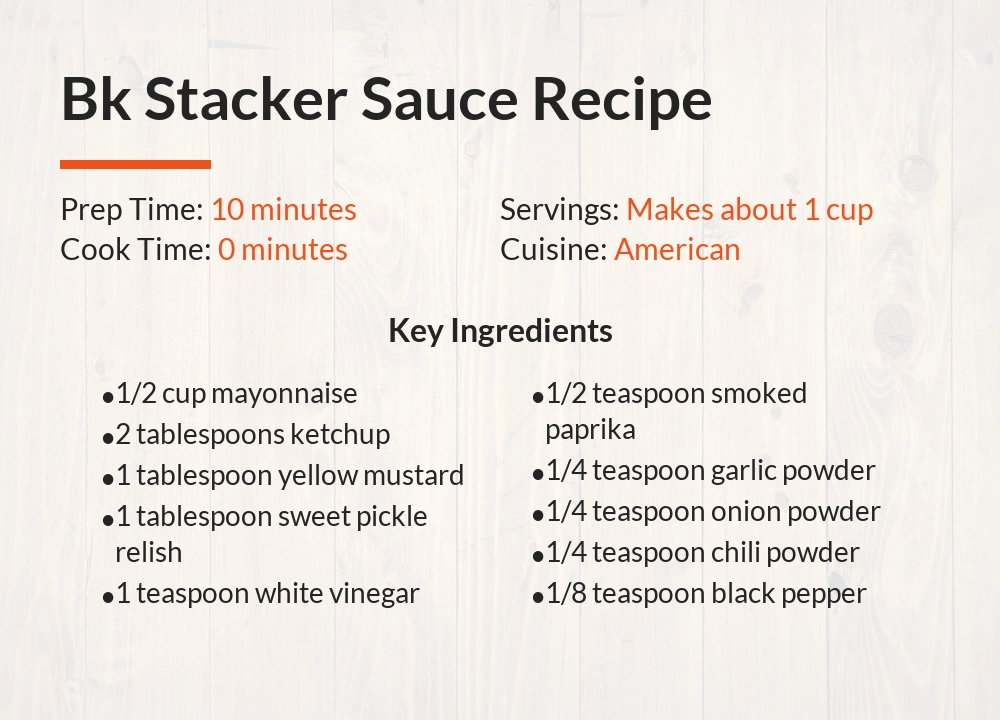
Recipe Details
- Prep Time: 10 minutes
- Cook Time: 0 minutes
- Servings: Makes about 1 cup
- Course: Condiment
- Cuisine: American
- Diet: Contains eggs and potential allergens
Ingredients
- 1/2 cup mayonnaise
- 2 tablespoons ketchup
- 1 tablespoon yellow mustard
- 1 tablespoon sweet pickle relish
- 1 teaspoon white vinegar
- 1/2 teaspoon smoked paprika
- 1/4 teaspoon garlic powder
- 1/4 teaspoon onion powder
- 1/4 teaspoon chili powder
- 1/8 teaspoon black pepper
- 1/8 teaspoon salt (adjust to taste)
Instructions
- Combine the mayonnaise, ketchup, mustard, and sweet pickle relish in a medium-sized mixing bowl.
- Add the white vinegar, smoked paprika, garlic powder, onion powder, chili powder, black pepper, and salt to the bowl.
- Whisk all ingredients together until fully incorporated and smooth.
- Taste the mixture and adjust seasoning if needed, such as adding more salt or vinegar for tanginess.
- Transfer the sauce to an airtight container and refrigerate for at least 30 minutes before use to allow flavors to meld.
Nutrition
- Calories: 90 kcal
- Protein: 0.5 g
- Fat: 9 g
- Carbohydrates: 2 g
- Sugar: 1 g
- Fiber: 0.2 g
- Sodium: 150 mg
- Cholesterol: 5 mg
Cooking Method
This is a no-cook recipe that relies on mixing and chilling. The ingredients are combined cold, and refrigeration enhances the flavor integration. No heat application is involved, which preserves the freshness of components like mayonnaise and relish.
Tools Needed
- Medium mixing bowl
- Whisk or fork for stirring
- Measuring spoons and cups
- Airtight container for storage
Understanding the Flavor Profile
The BK Stacker Sauce stands out due to its balanced combination of creamy, tangy, and smoky elements. It is not overly sweet or spicy but has a subtle complexity that complements hearty burgers. This section breaks down how each ingredient contributes to the overall taste.
Mayonnaise provides a rich base that carries other flavors smoothly. Ketchup and mustard introduce acidity and slight sweetness, while pickle relish adds texture and a hint of brine. Spices like smoked paprika and chili powder deliver depth without overwhelming heat.
Mayonnaise as the Foundation
Mayonnaise is essential for creating the creamy consistency of the sauce. It is made from oil, egg yolks, and vinegar or lemon juice, which emulsify to form a stable base. The fat content helps coat the palate, allowing other flavors to linger.
Using a high-quality mayonnaise can improve the final product, as cheaper versions might have added sugars or stabilizers. For a homemade touch, you could make your own mayo, but store-bought works well for convenience.
Role of Ketchup and Mustard
Ketchup contributes tomato-based sweetness and acidity, which cuts through the richness of the mayo. Mustard, typically yellow mustard in this context, adds a sharp tang and slight bitterness. Together, they create a familiar flavor reminiscent of many classic American condiments.
The vinegar in mustard also acts as a preservative and flavor enhancer. If you prefer a milder taste, reduce the mustard slightly, but note that it is key to replicating the authentic profile.
Sweet Pickle Relish Texture
Sweet pickle relish introduces small chunks of pickled cucumbers, which provide a contrasting texture and sweet-sour note. It is made from cucumbers, sugar, vinegar, and spices, and it helps balance the saltiness of other ingredients.
Ensure the relish is well-drained to avoid making the sauce too watery. If you only have dill relish, you can use it but may need to adjust sweetness elsewhere.
Spices and Seasonings Impact
Smoked paprika gives a woody, slightly sweet flavor that mimics the smokiness often associated with grilled meats. Garlic and onion powders add savory notes without the raw bite of fresh versions. Chili powder brings a mild heat and earthiness.
Black pepper and salt round out the seasoning, enhancing all other components. Adjust these to your preference, but be cautious with salt if you are watching sodium intake.
Nutritional Breakdown
From a dietary perspective, this sauce is calorie-dense due to the mayonnaise base, which is high in fats. A single tablespoon serving contains approximately 90 calories, with most coming from fats. Understanding these values can help you incorporate it into a balanced diet.
The sauce also has moderate sodium levels, primarily from ketchup, mustard, and added salt. If you have hypertension or are reducing salt intake, consider the adaptations discussed later. Sugar content is relatively low but present from ketchup and relish.
Caloric and Macronutrient Analysis
Each serving provides about 9 grams of fat, which includes saturated fats from mayonnaise. Carbohydrates are minimal at 2 grams per serving, with sugars making up half of that. Protein is negligible, as this is a condiment rather than a significant protein source.
For those tracking intake, note that these values can vary based on ingredient brands. Using light mayonnaise or sugar-free ketchup can alter the numbers substantially.
Sodium and Health Considerations
Sodium content is around 150 mg per serving, which adds up if used generously. High sodium diets are linked to increased blood pressure, so moderation is advised. The sauce also contains cholesterol from egg-based mayonnaise, though it is not excessive.
If you are concerned about heart health, opt for low-fat mayo and reduce added salt. The spices themselves contribute minimal sodium, so focus on the base ingredients for adjustments.
Dietary Adaptations
This recipe can be modified to suit various dietary restrictions without sacrificing flavor. Whether you avoid animal products, reduce sugar, or need gluten-free options, simple swaps can make it accessible. Below are practical adjustments based on common needs.
Vegan and Dairy-Free Version
Replace mayonnaise with a plant-based alternative made from soy, avocado, or other oils. Ensure the ketchup and mustard are vegan, as some brands may contain honey or animal-derived additives. Sweet pickle relish is typically vegan, but check labels for hidden ingredients.
The texture and taste will be similar, though plant-based mayo might have a slightly different mouthfeel. Adjust seasonings as needed to match the original profile.
Low-Sodium and Sugar-Free Options
Use low-sodium ketchup and mustard, and omit added salt. For sugar reduction, select no-sugar-added ketchup and relish, or make your own relish with sugar substitutes. Be mindful that flavor balance might shift, so taste and tweak accordingly.
Spices like paprika and chili powder become more prominent in low-sodium versions, which can be a positive change. You can also increase vinegar slightly to enhance tanginess without salt.
Gluten-Free Adaptation
Most ingredients in this sauce are naturally gluten-free, but verify labels on ketchup, mustard, and relish, as some brands use gluten-containing additives or vinegar derived from wheat. Choose certified gluten-free products if necessary.
This adaptation is straightforward and does not require ingredient substitutions, just careful selection. The recipe remains unchanged otherwise.
Historical Context of Burger King Sauces
Burger King introduced the Stacker burger line in the mid-2000s, focusing on layered beef patties and a signature sauce. The sauce was designed to be a unifying element that added moisture and flavor without overpowering the meat. It reflects a broader trend in fast food toward customizable, bold condiments.
Fast food sauces often evolve from classic American recipes, like Thousand Island or burger sauce, but with proprietary tweaks. The BK Stacker Sauce likely draws from this tradition, emphasizing simplicity and mass appeal. Its discontinuation in some markets sparked fan efforts to recreate it at home.
Evolution of Fast Food Condiments
Condiments in fast food have shifted from basic ketchup and mustard to complex, signature blends that differentiate brands. For instance, McDonald’s Big Mac Sauce and Burger King’s Stacker Sauce both use mayonnaise-based formulas with added spices and relishes. This trend aims to create loyal customers through unique taste experiences.
Historically, such sauces were developed for efficiency and shelf stability, but homemade versions allow for fresher ingredients. Understanding this background helps appreciate why replicating these sauces is popular among home cooks.
Common Mistakes and Expert Tips
When making this sauce, a few pitfalls can lead to subpar results, such as separation or blandness. Based on my tests, here are key areas to watch and tips for consistency. These insights come from both culinary practice and nutritional knowledge.
Avoiding Separation and Texture Issues
If the sauce appears oily or separated, it might be due to over-mixing or ingredient temperature differences. Use room temperature ingredients if possible, and whisk gently until just combined. Chilling the sauce after mixing helps stabilize the emulsion.
Adding ingredients gradually, starting with the mayo and slowly incorporating others, can prevent breaking. If separation occurs, a quick re-whisk before serving usually fixes it.
Preventing Blandness
Bland sauce often results from underseasoning or not allowing flavors to meld. Always taste and adjust salt, acidity, and spices after mixing. Refrigeration for at least 30 minutes is crucial, as it lets the spices hydrate and blend seamlessly.
If the sauce lacks depth, increase smoked paprika or add a dash of Worcestershire sauce for umami, but note that may deviate from the original. Using fresh spices ensures potency, as old ones can lose flavor.
Storage and Shelf Life
Store the sauce in an airtight container in the refrigerator for up to one week. Do not leave it at room temperature for extended periods, as mayonnaise-based condiments can spoil. Freezing is not recommended, as it may alter texture upon thawing.
Label the container with the date to track freshness. If you make a large batch, consider dividing it into smaller portions to minimize exposure to air each time you use it.
Serving Suggestions and Pairings
While designed for burgers, this sauce is versatile and can enhance various dishes. Its creamy, tangy profile works well with grilled meats, sandwiches, and even as a dip. Here are some ideas to maximize its use in your meals.
Beyond Burgers: Other Uses
Try it as a dip for french fries, onion rings, or vegetable sticks. It also makes a good spread for sandwiches, wraps, or hot dogs. For a breakfast twist, add a dollop to egg dishes or breakfast burritos.
In salads, it can serve as a base for dressings when thinned with a little vinegar or water. Experiment with pairing it with chicken tenders or fish fillets for a fast-food-inspired meal at home.
Pairing with the Perfect Burger
For an authentic BK Stacker experience, use the sauce on a burger with beef patties, crispy bacon, and American cheese. The sauce’s richness complements the savory notes of the meat and saltiness of the bacon. Toast the bun lightly to add texture contrast.
Balance the meal with sides like a simple salad or baked potatoes to offset the indulgence. If you are health-conscious, opt for lean beef or turkey burgers and whole-grain buns.
Frequently Asked Questions
What is BK Stacker Sauce recipe?
It is a homemade version of the condiment used in Burger King’s Stacker burgers, typically made with mayonnaise, ketchup, mustard, sweet pickle relish, and spices. This copycat recipe aims to replicate the original flavor for use in home kitchens.
Why is BK Stacker Sauce recipe important?
This recipe allows you to recreate a discontinued or hard-to-find fast-food item, offering control over ingredients for dietary needs or freshness. It also provides insight into how commercial sauces are crafted, enabling customization.
How does BK Stacker Sauce recipe work?
The recipe combines emulsified ingredients like mayonnaise with acidic components and spices to create a balanced condiment. No cooking is required; mixing and chilling allow flavors to blend, resulting in a sauce that mimics the original texture and taste.
Can I make this sauce ahead of time?
Yes, preparing it a day in advance often improves the flavor as ingredients meld. Store it in the refrigerator in an airtight container, and give it a stir before serving to ensure consistency.
Is this sauce suitable for vegetarians?
The standard recipe contains eggs from mayonnaise, so it is vegetarian but not vegan. For a vegan version, use plant-based mayonnaise and check other ingredients for animal-derived components.
How can I reduce the calorie content?
Substitute light or reduced-fat mayonnaise and use low-sugar ketchup. These changes lower fat and sugar levels while maintaining similar flavor, though texture might be slightly thinner.
What if I don’t have sweet pickle relish?
You can chop sweet pickles finely and use them with a teaspoon of sugar or omit it for a less sweet version. Dill relish can work but will alter the flavor profile toward more tanginess.
Can I freeze this sauce?
Freezing is not recommended because mayonnaise can separate and become grainy upon thawing. For best quality, make fresh batches as needed or refrigerate for short-term storage.