
That moment when you open a bottle of bibigo Korean BBQ sauce, the aroma of garlic and ginger fills your kitchen, promising a meal that feels both familiar and exciting. I remember hosting a dinner where I used it as a glaze for grilled chicken, and my guests couldn’t stop asking for the recipe. This experience inspired me to delve deeper into creating versatile, health-conscious versions you can make at home.
Whether you are new to Korean flavors or a seasoned cook, this guide will help you master bibigo-inspired sauces. You will learn how to balance sweet and savory notes while adapting recipes to fit various dietary needs. From marinating beef to dressing salads, these sauces can transform simple ingredients into memorable dishes.
In this article, I combine my background in nutrition and culinary history to provide a thorough exploration. We will cover everything from ingredient science to storage tips, ensuring you have all the knowledge needed for success. Let us start with the core recipe that replicates the beloved bibigo profile.
How to Make Bibigo Korean BBQ Sauce Recipes
This foundational recipe mimics the classic bibigo sauce, using accessible ingredients to achieve a similar depth of flavor. It is perfect for marinating meats or as a dipping sauce.
Recipe Details
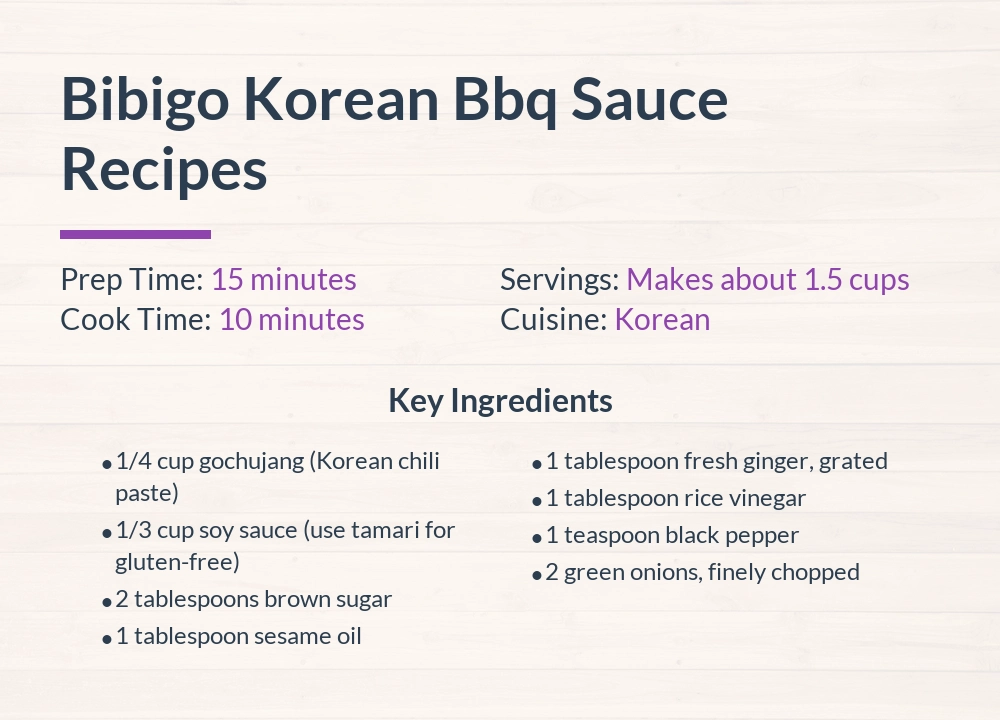
- Prep Time: 15 minutes
- Cook Time: 10 minutes
- Servings: Makes about 1.5 cups
- Course: Main Course, Condiment
- Cuisine: Korean
- Diet: Adaptable for Gluten-Free, Vegan
Ingredients
- 1/4 cup gochujang (Korean chili paste)
- 1/3 cup soy sauce (use tamari for gluten-free)
- 2 tablespoons brown sugar
- 1 tablespoon sesame oil
- 4 cloves garlic, minced
- 1 tablespoon fresh ginger, grated
- 1 tablespoon rice vinegar
- 1 teaspoon black pepper
- 2 green onions, finely chopped
- 1 tablespoon honey or maple syrup for vegan option
Instructions
- In a medium bowl, combine gochujang, soy sauce, and brown sugar. Whisk until the sugar dissolves and the mixture is smooth.
- Add minced garlic, grated ginger, rice vinegar, and black pepper. Stir thoroughly to incorporate all elements.
- Gradually mix in sesame oil and honey, ensuring the sauce emulsifies without separating.
- Fold in the chopped green onions for a fresh, crisp texture.
- Transfer the sauce to a saucepan and simmer over medium heat for 5-7 minutes, stirring occasionally. This step deepens the flavors and thickens the consistency.
- Allow the sauce to cool before using it as a marinade or glaze. Store any leftovers in an airtight container.
Nutrition
- Calories: 45 kcal
- Protein: 1 g
- Fat: 2 g
- Carbohydrates: 6 g
- Sugar: 4 g
- Fiber: 0.5 g
- Sodium: 320 mg
- Cholesterol: 0 mg
Cooking Method
This sauce can be used raw for a brighter taste or cooked to enhance its richness. Simmering helps meld the ingredients, creating a cohesive flavor profile ideal for grilling or baking. Always heat it gently to prevent burning the sugars.
Tools Needed
- Mixing bowl
- Whisk or fork
- Saucepan
- Measuring spoons and cups
- Airtight glass container for storage
Understanding the Ingredients
Each component in this sauce contributes to its unique taste and nutritional profile. Knowing their roles allows you to make informed substitutions.
Gochujang
Gochujang is a fermented chili paste from Korea, made from glutinous rice, fermented soybeans, and red chili powder. It provides a spicy, slightly sweet base with umami depth. Fermentation adds probiotics, which support gut health. In recipes, it acts as a thickening agent and flavor enhancer.
Garlic and Ginger
Fresh garlic offers allicin, a compound with anti-inflammatory properties, while ginger contains gingerol, known for aiding digestion. These ingredients add pungency and warmth, balancing the sauce’s sweetness. Mincing or grating them releases more of their essential oils, intensifying the aroma.
Soy Sauce and Sweeteners
Soy sauce contributes saltiness and umami, derived from fermented soybeans and wheat. For a gluten-free version, tamari works well. Brown sugar and honey provide caramel notes that complement the heat from gochujang. Honey also has natural preservative qualities, extending the sauce’s shelf life.
Nutritional Insights
From a dietary perspective, this sauce is relatively low in calories but high in sodium due to soy sauce. Using reduced-sodium soy sauce can mitigate this. The inclusion of garlic and ginger adds micronutrients like vitamin C and manganese. Gochujang’s fermentation process may introduce beneficial bacteria, though cooking can reduce their potency.
For those monitoring sugar intake, substituting honey with stevia or erythritol can lower carbohydrate content. The sauce is naturally cholesterol-free and can be part of a balanced diet when used in moderation. Pair it with lean proteins like chicken or tofu to create a meal rich in protein and fiber.
Adapting for Dietary Needs
Many dietary restrictions can be accommodated with simple swaps. This flexibility makes the sauce accessible to a wider audience.
Gluten-Free Version
Replace regular soy sauce with tamari or coconut aminos. Ensure that the gochujang brand is certified gluten-free, as some varieties include wheat. This adjustment maintains the savory profile without compromising texture.
Vegan and Plant-Based Options
Use maple syrup or agave nectar instead of honey. Check that the gochujang does not contain animal-derived ingredients. For a richer taste, add a teaspoon of miso paste to enhance umami notes.
Low-Sodium Adjustments
Reduce soy sauce by half and supplement with water or low-sodium broth. Adding a splash of rice vinegar can brighten the flavor without extra salt. Incorporate more fresh herbs like cilantro to add complexity.
The Story Behind Korean BBQ
Korean BBQ, or gogi-gui, dates back to the Goguryeo era (37 BCE–668 CE), where meat was grilled over open flames. It evolved into a social dining experience, often enjoyed in groups. Bibigo, as a modern brand, reflects this tradition by offering convenient sauces that capture authentic flavors.
The term “bulgogi” translates to “fire meat,” highlighting the cooking method over high heat. Galbi, another popular style, uses marinated short ribs. These dishes emphasize community and sharing, which is why sauces like bibigo’s are designed to bring people together around food.
Expert Tips for Perfect Results
Avoid common pitfalls to ensure your sauce enhances every dish. These insights come from testing various methods and ingredients.
Marination Times
For meats like beef or chicken, marinate for at least 2 hours but no more than 12 hours. Over-marinating can break down proteins, resulting in a mushy texture. Seafood requires shorter times, around 30 minutes, to prevent over-acidification from vinegar.
Heat Management
When cooking with the sauce, use medium-high heat to caramelize the sugars without burning. If grilling, brush on the sauce during the last few minutes to avoid flare-ups. A food thermometer can help ensure meats reach safe internal temperatures, such as 165°F for poultry.
Storage and Shelf Life
Store homemade sauce in an airtight container in the refrigerator for up to two weeks. For longer preservation, freeze it in ice cube trays and thaw as needed. Commercial bibigo sauce typically lasts longer due to added preservatives like citric acid.
Serving Suggestions and Storage
This sauce pairs well with a variety of dishes. Use it as a glaze for grilled beef or chicken, a dip for appetizers like mini wontons, or a dressing for salads. For a complete meal, serve with steamed rice, kimchi, and green onion slaw.
Leftover sauce can be reused as a base for stir-fries or soups. Always use clean utensils to prevent contamination. If the sauce separates, simply whisk it back together before use.
The Science of Marination
Marination works through acid and enzyme action. Ingredients like vinegar and ginger help tenderize meats by breaking down connective tissues. Sugar components aid in browning via the Maillard reaction, creating complex flavors. Understanding this process allows you to adjust marination times based on the protein’s density.
Frequently Asked Questions
What is bibigo Korean BBQ sauce made of?
Bibigo Korean BBQ sauce typically includes gochujang, soy sauce, garlic, ginger, sweeteners like brown sugar, and sesame oil. It may contain additives for shelf stability, such as disodium inosinate or citric acid.
Can I make this sauce without gochujang?
Yes, substitute gochujang with a mix of miso paste and chili powder, though the flavor will differ. Adjust sweetness and saltiness to balance the profile.
How long can I store homemade Korean BBQ sauce?
Homemade sauce lasts up to two weeks in the refrigerator if stored in an airtight container. Freezing extends its life to three months.
Is bibigo sauce suitable for a low-carb diet?
It can be adapted by using sugar substitutes like erythritol and reducing sweeteners. Check nutrition labels for commercial versions, as they may contain hidden carbs.
What dishes pair well with this sauce?
It complements bulgogi, galbi, tacos, quesadillas, and even vegetables. Try it as a glaze for salmon or a dip for fried appetizers.
How can I reduce the spiciness?
Use less gochujang or add more sweetener. Incorporating apple puree can also mellow the heat while adding natural sweetness.
Can I use this sauce for vegetarian dishes?
Absolutely. It works well with tofu, tempeh, or grilled vegetables. Ensure all ingredients are plant-based for a vegan option.
Why did my sauce turn out too salty?
This often happens with overuse of soy sauce. Dilute with water or add more sweetener and acid, like vinegar, to balance the flavor.
What is the difference between bibigo sauce and homemade versions?
Commercial bibigo sauce may include preservatives and consistent flavor profiles, while homemade allows customization and fresher ingredients. Nutritionally, homemade can be lower in sodium and additives.
How do I achieve a thicker consistency?
Simmer the sauce longer to reduce it, or add a slurry of cornstarch and water. Start with one teaspoon of cornstarch mixed with two tablespoons of water, then stir into the heated sauce.