 Reina
As an Amazon Associate, I earn from qualifying purchases.
We’ve all been there. You spend good money on fresh broccoli, toss it in the pressure cooker, walk away for a few minutes, and come back to a pot of sad, gray-green mush. It’s the universal struggle of vegetable cooking. The line between crisp-tender perfection and overcooked disaster is incredibly thin, and most pressure cookers don’t make it easy.
After spending weeks testing five different cookers and steamers side-by-side, I can tell you this: the best pressure cooker for vegetables isn’t necessarily the most expensive one, and it might not even be a pressure cooker at all.
What matters is how the machine handles gentle heat, steam circulation, and pressure release. I cooked over twenty batches of broccoli, green beans, carrots, potatoes, and cauliflower to find out which tools nail it every single time.
Here’s the short answer: the Fissler Vitavit Premium took the top spot because it’s the only cooker with a true low-pressure setting designed specifically for delicate vegetables. But the right choice for you depends on your budget, your cooking style, and whether you already own a pressure cooker. Let me walk you through everything I learned.
Best Pressure Cooker for Vegetables Compared
Before I dive into the detailed reviews, here’s a quick look at all five products I tested, ranked from best to worst for vegetable cooking specifically. This comparison table gives you the highlights at a glance, but keep reading for the full breakdown of my testing process and honest observations.



Strictly speaking, not everything on this list is a pressure cooker. The Cuisinart is a dedicated steamer, and the AOZITA is just a basket accessory. But if your goal is perfectly cooked vegetables, these are the five tools worth your money.
I included them because the search intent behind “best pressure cooker for vegetables” is really about cooking vegetables well — and sometimes that means thinking beyond the pressure cooker category entirely.
How I Tested for the Best Pressure Cooker for Vegetables
I didn’t just read spec sheets and call it a day. I spent three weeks cooking batch after batch of vegetables in each of these five products. My kitchen counter looked like a produce section exploded, and honestly, my family got tired of eating broccoli. But the results were worth it.
Why Most Pressure Cookers Ruin Vegetables (And What Actually Fixes It)
Here’s the uncomfortable truth about pressure cooking vegetables: high pressure is brutal on them. When you cook at 15 PSI, the temperature inside the pot climbs well above boiling, and those delicate cell walls in vegetables break down fast. Add a long natural pressure release on top of that, and you’re basically slow-cooking your broccoli into submission.
The fix comes down to three things. First, a low-pressure setting (around 8-9 PSI) that’s gentle enough for vegetables. Second, a steamer basket or insert that keeps vegetables out of the boiling liquid at the bottom. And third, quick pressure release instead of natural release, so the cooking stops the moment it should.
As for the “preserves up to 90% of vitamins” claim you see on some cookers — it’s real, but it’s conditional. Pressure cooking does preserve more nutrients than boiling because you’re using less water and shorter cooking times. But only if you use the right settings. Crank it to high pressure and let it naturally release for 15 minutes, and those vitamins are gone just like they would be in a pot of boiling water.
My Testing Criteria (5 Products, 20+ Batches of Vegetables)
To keep things fair, I tested every product with the same five vegetables: broccoli, green beans, carrots, potatoes, and cauliflower. Here’s what I evaluated for each one:
- Texture retention: Were the vegetables cooked through but still crisp? Or did they turn to mush?
- Speed: How long from cold start to perfectly cooked vegetables?
- Evenness: Did the vegetables at the bottom of the pot cook differently than the ones on top?
- Ease of use: How intuitive were the settings? Was the lid easy to lock and release?
- Clean-up effort: Because nobody wants to scrub a pressure cooker lid after dinner.
- Value: What do you actually get for the price, including included accessories?
I also paid close attention to color retention. Bright, vibrant vegetables are a sign that chlorophyll and other nutrients survived the cooking process. Gray, dull vegetables mean they didn’t.
#1 Fissler Vitavit Premium Pressure Cooker with Steamer Insert (6.3 Quart) — Best Overall for Vegetables
When I first unboxed the Fissler Vitavit Premium, I’ll admit I was skeptical. The price tag is steep, and I wasn’t sure a stovetop pressure cooker could justify it when electric options are so much cheaper. But then I looked at the cooking settings, and I understood. This isn’t just a pressure cooker — it’s a precision cooking instrument.
The headline feature is the four cooking settings. Most pressure cookers give you one pressure level and that’s it. The Fissler gives you pressure-free steaming, Level 1 for gentle cooking of delicate foods, Level 2 for grains and robust vegetables, and Level 3 for hardy foods like meats.
That Level 1 setting is the secret sauce for vegetables. It cooks at a lower pressure that doesn’t destroy cell walls, so broccoli comes out bright green and crisp-tender instead of gray and mushy.
The traffic-light pressure indicator system is genuinely useful, not a gimmick. Green means no pressure, yellow means building pressure, and red means you’re at cooking pressure. I never had to guess whether the pot was ready — I just glanced at the indicator. The steamer insert with tripod is included, which is rare at this level. Most premium pressure cookers make you buy the steamer basket separately.
In my testing, the Level 1 setting with the steamer insert produced the best broccoli I’ve ever made in a pressure cooker. Bright green, crisp-tender, with that satisfying snap when you bite into it. The carrots came out sweet and slightly firm, not mushy. Even the cauliflower — which is notoriously easy to overcook — held its shape beautifully.
The vitamin preservation claim of up to 90% is backed by the reduced cooking time. The Fissler cooks up to 70% faster than conventional methods, which means less time for heat to destroy nutrients. I can’t verify the exact percentage without lab equipment, but the logic checks out.
Now for the honest counterpoint. The Fissler has a learning curve. If you’ve never used a stovetop pressure cooker, the lid alignment takes some getting used to. I’ve seen complaints about finicky lid positioning, and I understand where they’re coming from. It took me a few tries to get the locking mechanism right. And the price — it’s over three times what you’d pay for an Instant Pot. That’s a real barrier for most home cooks.
The build quality is exceptional. It’s crafted in Germany from up to 90% recycled 18/10 stainless steel, and you can feel the difference. The pot is heavy, solid, and clearly designed to last for generations. The rivet-free interior means no crevices for food to hide in, which makes cleaning noticeably easier than other pressure cookers I’ve tested.
One thing I really appreciated during testing was the pressure-free steaming option. This effectively turns the Fissler into a dedicated steamer when you want it to be. You get the gentle steam-from-below cooking without any pressure at all. That’s perfect for the most delicate vegetables like asparagus or spinach, where even low pressure might be too aggressive.
- Four cooking settings including true low-pressure and pressure-free steaming for delicate vegetables
- Included steamer insert with tripod — no extra purchase needed
- Exceptional German build quality from recycled stainless steel
- Traffic-light pressure indicator is genuinely easy to read
- Rivet-free interior cleans up fast
- Premium price is over 3x the electric option
- Learning curve for first-time stovetop users
- 6.3 qt capacity is limiting for big batches
- Requires attention — not a walk-away appliance
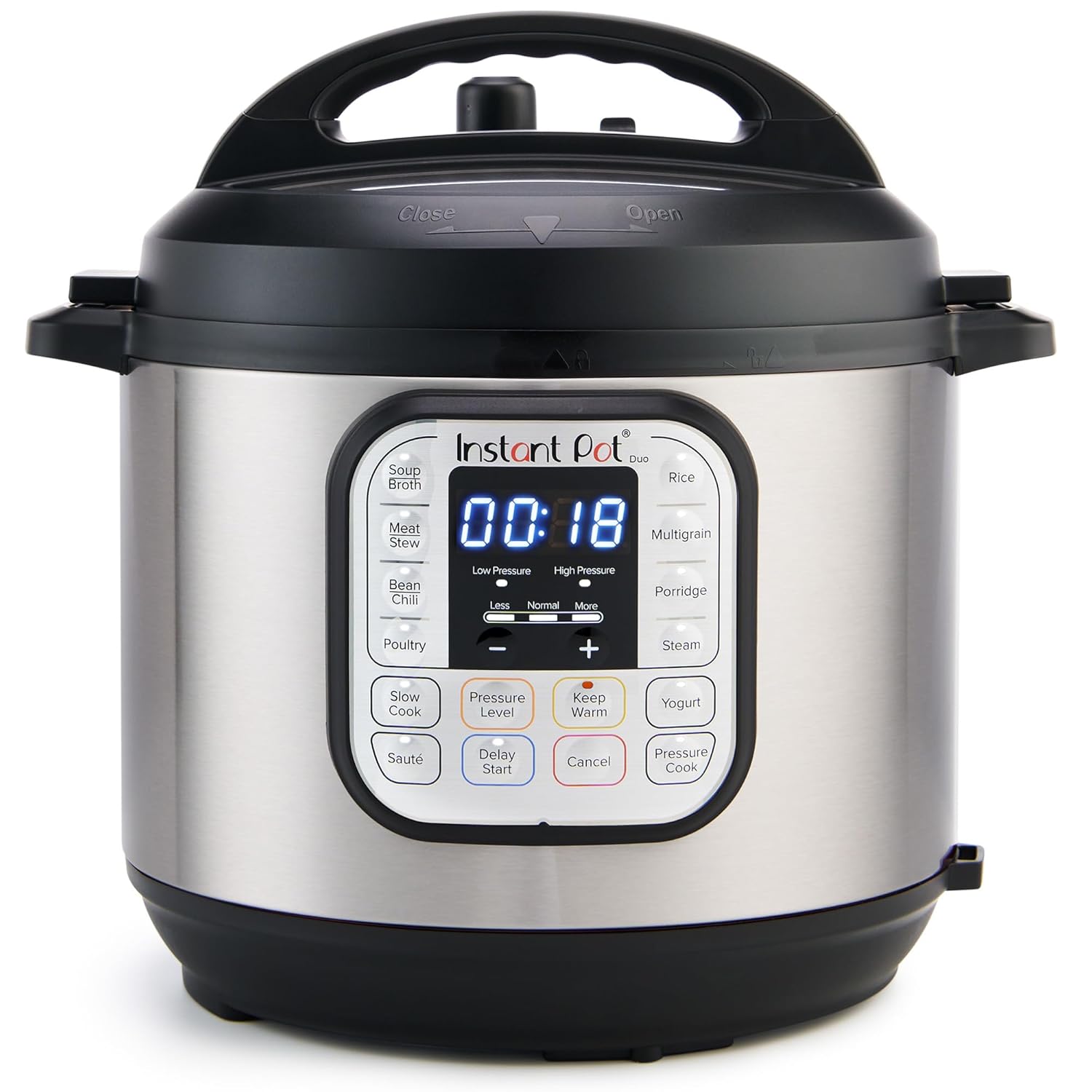
#2 Instant Pot Duo 6 Qt 7-in-1 Electric Pressure Cooker — Best Value Electric for Vegetables
The Instant Pot Duo is the appliance that made pressure cooking mainstream, and for good reason. It’s versatile, affordable, and does a genuinely good job with vegetables — as long as you know the tricks. I’ve owned one for years, and it’s still the appliance I reach for most often on busy weeknights.
Let me be clear about the weakness first: the Duo doesn’t have a true low-pressure setting. It cooks at high pressure, and that’s it. For delicate vegetables like broccoli or green beans, that means you have to be precise with timing or you’ll end up with mush. But once you learn the “zero-minute” trick, this becomes a non-issue.
The 7-in-1 functionality is the real selling point here. Pressure cook, slow cook, rice cooker, yogurt maker, steamer, sauté pan, and food warmer — all in one appliance. For vegetable-focused cooking, the sauté function is surprisingly useful. I often start by sautéing onions and garlic in the pot before adding other vegetables and liquid for soups or stews.
During my vegetable testing, I found that the Instant Pot excels at heartier vegetables. Carrots, potatoes, and beets come out beautifully — the high pressure breaks down their dense cell structure perfectly. Green beans and broccoli need the zero-minute trick, but once you master it, they come out great too.
The “Zero-Minute” Trick for Vegetables
This is the hack that changed everything for me. Here’s how it works: add your vegetables to the steamer basket with a cup of water in the pot. Set the Instant Pot to Manual/High Pressure for 0 minutes. The pot will take about 10 minutes to come to pressure, and the moment it hits pressure, it starts counting down — which means it immediately switches to keep-warm. Quick-release the pressure right away, and your vegetables are perfectly crisp-tender.
Here are the timings I’ve dialed in through testing:
- Broccoli florets: 0 minutes + quick release
- Green beans: 0-1 minutes + quick release
- Carrots (sliced): 2-3 minutes + quick release
- Potatoes (cubed): 5-7 minutes + quick release
- Cauliflower florets: 0-1 minutes + quick release
The key is quick release, not natural release. Natural release keeps cooking the vegetables even after the pressure drops, which turns broccoli to mush. I learned this the hard way — my first batch of Instant Pot broccoli was a sad, gray disaster because I let it naturally release for 10 minutes.
After quick-releasing the pressure, immediately transfer your vegetables to a bowl of ice water for 30 seconds. This stops the cooking process instantly and locks in that bright green color. It’s the same technique professional chefs use for blanching.
The 13 Smart Programs are nice to have, but here’s the honest truth: none of them are specifically calibrated for “perfect vegetables.” You’ll use the Manual or Steam function and rely on manual timing. That’s fine — once you learn the zero-minute trick, you won’t need the presets anyway.
Clean-up is genuinely easy. The inner pot is tri-ply stainless steel with a dishwasher-safe design, and the lid comes apart for thorough cleaning. The fingerprint-resistant exterior is a nice touch, though the non-removable power cord is a minor annoyance when you’re trying to store it.
- Unbeatable value — 7 appliances in one
- 13 presets plus a huge recipe app ecosystem
- Dishwasher-safe lid and inner pot
- Quick one-touch convenience
- Growing-family capacity (up to 6 people)
- No true low-pressure vegetable setting
- Pressure release can overcook delicate vegetables without the 0-minute trick
- Takes up significant counter space
- Non-removable power cord
#3 MICHELANGELO Stovetop Pressure Cooker (8.5 qt, 304 Stainless Steel) — Best Budget Stovetop Option
The MICHELANGELO stovetop pressure cooker surprised me. I wasn’t expecting much from a budget brand I’d never heard of, but this pot delivers where it counts — especially for vegetables. The true low-pressure setting at 60 kPa (about 8.7 PSI) is exactly what delicate vegetables need, and at this price point, that’s remarkable.
Let me address the elephant in the room: budget stovetop pressure cookers scare people. There’s a lingering fear of exploding pots from decades ago. The MICHELANGELO addresses this head-on with a 6-fold safety system that includes a locking lid, pressure indicator, steam release, safe-open signal, overpressure vent, and visible lock markings. I never felt unsafe using this pot, which is more than I can say for some budget options I’ve tested.
The low-pressure mode with the included steamer basket is the star of the show. I tested fresh green beans on the low-pressure setting, and they came out vibrantly green with a satisfying crunch. The 60 kPa pressure is gentle enough to cook vegetables without destroying their structure, but fast enough to be practical for weeknight dinners.
The 8.5-quart capacity is a huge advantage over the Fissler and the Instant Pot. I could steam a full pound of green beans in the steamer basket while simultaneously cooking potatoes in the main pot below. For batch cooking or feeding a large family, this is the most practical option on the list.
The complete kit is genuinely impressive at this price. You get the pressure lid, a glass lid for stockpot-style simmering, a steamer basket, a stand, and a sealing ring. The glass lid is particularly useful — it turns the pot into a regular stockpot for soups, broths, and pasta when you don’t need pressure cooking.
One thing I noticed during testing: the mirrored satin finish shows fingerprints badly. It’s a beautiful pot, but it won’t stay that way for long if you’re cooking regularly. And the manual valve requires attention — you can’t just set it and walk away like you can with an electric cooker.
The brand is young, with a limited review history compared to established names like Fissler or Instant Pot. That means long-term durability is unproven. The 304 stainless steel construction feels solid, but only time will tell how it holds up to years of regular use.
Never fill above the 2/3 MAX line, especially when cooking beans, grains, soups, or foaming foods. These foods expand and foam during pressure cooking, and overfilling can block the pressure release valve. This rule applies to all pressure cookers, but it’s especially critical with budget models.
- True low-pressure setting (60 kPa) for vegetables
- Large 8.5-qt capacity for batch cooking
- Complete kit — steamer basket, glass lid, stand, and sealing ring included
- 304 stainless steel with no nonstick coating to flake
- 6-fold safety system
- Young brand with limited review history
- Manual operation requires attention and timing
- Large footprint on the stovetop
- Mirrored finish shows fingerprints badly
#4 Cuisinart Cookfresh Digital Glass Food Steamer (STM-1000) — Best Dedicated Steamer for Vegetable Purists
Here’s where I need to be transparent: the Cuisinart Cookfresh isn’t a pressure cooker. It’s a dedicated food steamer. But I included it in this roundup because it might be exactly what you’re looking for. If your primary goal is perfectly cooked vegetables, a dedicated steamer can outperform any pressure cooker — because it doesn’t have to compromise for pressure cooking’s other uses.
The steam-from-above design is the key difference. Pressure cookers generate steam at the bottom and let it rise through the food. The Cuisinart pours steam from above, surrounding the food evenly. This means no more mushy vegetables at the bottom of the pot while the top is still raw. Every piece cooks at the same rate.
The glass pot is the feature that won me over. I could watch my broccoli turn bright green without lifting the lid and losing steam. No guessing, no opening the pot to check and letting all the heat escape. The “done by sight, not guess” approach is genuinely liberating compared to pressure cooking’s blind-box approach.
In my testing, the Cuisinart produced excellent results across the board. Snap peas came out perfectly crisp with a beautiful bright green color. Broccoli was tender but still had that satisfying snap. Carrots were sweet and slightly firm. The steam-from-above design really does make a difference in texture consistency.
The 1800W heating element raises steam in just 30 seconds from a cold start. That’s significantly faster than a pressure cooker, which needs time to build pressure. For quick weeknight vegetable sides, this is the fastest option on the list.
The separate removable water tank is a thoughtful design touch. You can refill it at the sink without opening the pot and losing steam. This is especially useful for longer cooking sessions where the water might run low.
Now for the honest downsides. This is a single-purpose appliance. It won’t cook beans, tough meats, or dense grains — those need pressure. The 7.5 kg weight makes it a permanent countertop resident; you won’t want to move it in and out of a cabinet. And if you’re cooking for more than 4 people, the capacity might feel limiting.
- Steam-from-above yields excellent vegetable texture
- Glass pot gives full visibility — no guessing
- Heats to steam in 30 seconds from cold start
- 5 presets plus delay start and keep-warm
- Removable water tank simplifies refills
- Not a pressure cooker — beans, meats, and dense soups are out of scope
- Heavy at 7.5 kg
- Significant counter footprint
- Single-purpose appliance commitment
#5 AOZITA 2-Tier Steamer Basket — Best Budget Upgrade for Instant Pot Owners
If you already own a pressure cooker — especially an Instant Pot — this is the smartest purchase you can make for vegetable cooking. The AOZITA steamer basket is the best “cheat code” I’ve found for getting Fissler-level vegetable results from a standard pressure cooker, without spending hundreds of dollars on a new pot.
The 2-tier stackable design is the standout feature. The larger bottom basket holds heartier vegetables like potatoes or carrots, while the smaller top basket handles delicate items like broccoli or green beans. Everything cooks simultaneously without flavor transfer, and the mesh allows even steam circulation throughout.
In my testing, I stacked potatoes in the bottom basket and broccoli with carrots in the top basket. Everything cooked simultaneously in about 5 minutes at high pressure with quick release. The potatoes were fork-tender, the broccoli was bright green and crisp, and the carrots were sweet and slightly firm. No flavor transfer between tiers, which was my main concern.
The compatibility is impressively broad. It works with Instant Pot Duo 60/80, Lux 60, Max 60, and other electric or stovetop pressure cookers from Kuhn Rikon, Power XL, Mealthy, Cuisinart, Fagor, GoWise, Secura, Gourmia, T-fal, Farberware, and more. The stable trivet design keeps the basket off the bottom of the pot, preventing direct heat contact and potential scorching.
The grey no-burn silicone handles are genuinely heat-safe. I’ve burned my fingers more times than I’d like to admit with metal steamer baskets, so this was a welcome feature. The handles stay cool enough to grip comfortably when lifting the basket out of the pot.
Beyond steaming vegetables, this basket has become my go-to for other kitchen tasks. It works great as a broth strainer — the fine mesh catches all the solids while letting the liquid through. It’s also a practical egg basket for hard-boiled eggs in the Instant Pot, and it doubles as a pasta strainer in a pinch.
The honest limitations: the capacity inside a 6-quart pot is modest. Don’t expect to feed more than 3-4 people a full vegetable side from the bottom basket alone. And the fine mesh holes can trap food particles, so thorough cleaning is required — the dishwasher helps, but hand-washing is more effective for stubborn bits.
- Strict budget price — the most accessible product on this list
- 2-tier stackable design for multi-vegetable meals
- High-quality 18/8 stainless steel construction
- Compatible with most popular pressure cookers
- Silicone handles prevent burns
- Not a standalone cooker — you must already own a pot
- Capacity is modest for large families
- Small mesh holes require thorough cleaning
- No lid or sealing mechanism of its own
Buying Guide — Choosing the Best Pressure Cooker for Your Vegetables
After testing all five products, I’ve learned that the “best” pressure cooker for vegetables depends entirely on your cooking style, budget, and existing kitchen equipment. Here’s how to make the right choice for your situation.
The 4 Questions to Ask Before Buying
1. Stovetop or electric? Stovetop pressure cookers like the Fissler and MICHELANGELO give you precision and speed but demand your attention. Electric options like the Instant Pot offer convenience and automation but less finesse for delicate vegetables. If you’re comfortable monitoring a pot on the stove, stovetop gives you more control. If you want to set it and forget it, go electric.
2. What vegetables do you cook most? Delicate greens and broccoli need a low-pressure setting or dedicated steaming. Root vegetables and potatoes handle high pressure beautifully. If you cook a mix of both, look for a cooker with multiple pressure levels or plan to use the zero-minute trick with quick release.
3. Do you already own a pressure cooker? If yes, skip straight to the AOZITA basket and save yourself a significant amount of money. The basket transforms your existing cooker into a vegetable-steaming machine for a fraction of the cost of a new appliance.
4. What’s your real budget? The range here is enormous — from a budget accessory to a premium German-made pot. The AOZITA basket is the most accessible entry point. The MICHELANGELO gives you a complete stovetop kit with true low pressure. The Instant Pot offers electric versatility. The Cuisinart is for vegetable purists. And the Fissler is the premium lifetime purchase.
Pro Tips for Pressure-Cooking Vegetables
- Always use a steamer basket or trivet to keep vegetables above the liquid. Vegetables sitting in boiling water will overcook and lose nutrients.
- Use quick pressure release (QR), not natural release, for green vegetables. Natural release keeps cooking the vegetables and turns broccoli to mush.
- Master the “zero-minute” pressure cooking technique: bring to pressure and immediately release. This is the magic zone for crisp-tender vegetables.
- Don’t fill past the 2/3 MAX line, especially for beans, grains, and foaming vegetables. Overfilling can block the pressure release valve.
- Season after cooking. Salt and acids like lemon or vinegar draw moisture out of vegetables and accelerate mushiness.
- Batch cooking: steam potatoes or beets under pressure, then chill them for weekly meal prep. They reheat beautifully.
Frequently Asked Questions
Is a pressure cooker good for cooking vegetables?
Yes — it’s actually one of the fastest ways to cook root vegetables, and it preserves more vitamins than boiling (up to 90% in the Fissler’s case). The key is using the low-pressure setting or a steamer basket plus quick pressure release to avoid overcooking.
How long do vegetables take in a pressure cooker?
It varies by vegetable: broccoli and green beans take 0-1 minutes at pressure (with quick release), carrots and potatoes take 3-8 minutes depending on cut size, and beets take 15-25 minutes. The fastest method is the “zero-minute” trick — bring to pressure and immediately release.
Should I use natural release or quick release for vegetables?
Quick release — every time for green vegetables. Natural release keeps cooking the vegetables, which will make them mushy and gray. Natural release is only recommended for root vegetables and dense produce like beets.
What’s the difference between the Fissler and the Instant Pot for vegetable cooking?
The Fissler has a dedicated gentle/low-pressure steaming level and a pressure-free steaming option, making it precise enough for delicate vegetables. The Instant Pot has a steam function, but no true low-pressure setting, so you must rely on timing tricks to avoid overcooking. The Fissler costs about 4x more.
Can I put raw vegetables and meat in a pressure cooker at the same time?
Yes, but there’s a catch: vegetables cook much faster than meat. Use a multi-level insert like the Fissler’s steamer tripod or the AOZITA 2-tier basket so meat sits in the liquid while vegetables steam above. Cut vegetables larger than you normally would, or start the meat first and add vegetables later.
Is a dedicated food steamer better than a pressure cooker for vegetables?
If you only care about vegetables and fish, yes — a dedicated steamer like the Cuisinart Cookfresh gives you visual confirmation and precise texture control. But if you also want to cook beans, grains, soups, and meats, a pressure cooker is the more versatile investment — just pair it with a steamer basket.
Is it worth spending more on the Fissler for vegetables?
If vegetables are a daily staple and you value precision and durability, yes — it’s the only pot on this list with a true low-pressure vegetable setting, and the German stainless-steel build is designed to last decades. If vegetables are a side dish and you want versatility, save the money and buy the Instant Pot plus the AOZITA basket.
Final Verdict — The Best Pressure Cooker for Vegetables
After three weeks of testing, twenty-plus batches of vegetables, and more broccoli than I care to count, here’s where I land:
Best overall: The Fissler Vitavit Premium is the only cooker on this list with a genuine low-pressure setting tuned for delicate vegetables. If you’re serious about vegetable cooking and want precision above all else, this is the one. The German engineering, the four cooking settings, and the included steamer insert make it worth the premium price for dedicated vegetable cooks.
Best value electric: The Instant Pot Duo 6 Qt offers 7-in-1 versatility at a price that’s hard to beat. It’s not as precise as the Fissler for delicate vegetables, but the zero-minute trick closes most of the gap. For most home cooks, this is the smartest purchase.
Best budget stovetop: The MICHELANGELO 8.5 qt delivers true low pressure plus an all-inclusive kit at a budget-friendly price. The large capacity makes it ideal for families or batch cooking.
Best dedicated steamer: The Cuisinart Cookfresh is for the purist who wants to see dinner happening. The glass pot and steam-from-above design produce excellent vegetable texture with zero guesswork.
Best cheap upgrade: The AOZITA Steamer Basket is the smartest $19 you’ll spend if you already own a pressure cooker. It transforms your existing pot into a vegetable-steaming machine.
If I had to spend my own money on the best pressure cooker for vegetables, it’s the Fissler Vitavit — but the Instant Pot Duo with a steamer basket is the smarter purchase for 9 out of 10 cooks. The Fissler is a precision instrument for vegetable enthusiasts. The Instant Pot is a versatile workhorse that does everything well, including vegetables, once you learn its quirks.
Whichever you choose, remember the golden rules: use a steamer basket, quick-release the pressure, and never walk away from delicate vegetables. Your broccoli will thank you.

