Reina
Reina 
As an Amazon Associate, I may earn a small commission from qualifying purchases at no extra cost to you. This helps me create more valuable, tested content for you.
Grill pans with ridges look incredible on social media. Those perfect cross-hatch marks on a steak, the dramatic sear lines on chicken breasts — it’s hard not to want that look. But anyone who’s actually used one knows the struggle. They’re notorious for being a pain to clean, they can be heavy as hell, and sometimes the food just doesn’t cook evenly. So which one actually delivers on its promises without making you dread cleanup?
I tested five of the most popular ridge grill pans side by side — three cast iron and two nonstick — cooking the same foods on the same stovetop to see which ones earned a permanent spot in my kitchen. The best grill pan with ridges depends largely on whether you prioritize performance or convenience, but after weeks of cooking, I have clear favorites for each scenario.
If you want the short answer: The Lodge 11″ Chef Collection Cast Iron Grill Pan gives you the best sear and heat retention at a price that’s hard to beat. But if you hate scrubbing and want something you can use on a Tuesday night without a ritual, grab the SENSARTE 12″ Nonstick Grill Pan instead.
Understanding these trade-offs is exactly what our honest comparison between grill pan and cast iron covers, helping you choose the right pan for your kitchen.
Why This Guide Is Different
I didn’t just read specs and call it a day. I cooked steaks, chicken breasts, zucchini slices, bell peppers, and even fish fillets on every single pan. I cleaned each one multiple times — by hand and (where allowed) in the dishwasher. I paid attention to the things that matter in daily use: how easily food releases, whether the ridges actually leave good marks, how long the pan takes to heat up, and what it feels like to wash it at 9 PM after a long day.
I also kept notes on things that surprised me — both good and bad. Some pans performed better than their price suggested. Others disappointed despite strong ratings. A few had quality quirks that made me question whether I’d recommend them to a friend.
Before You Buy — The Honest Truth About Ridge Grill Pans
Let me level with you. Ridge grill pans are polarizing. Some people absolutely love them. Others call them the most overhyped piece of cookware in existence. I’ve landed somewhere in the middle after all this testing, and I think you will too once you understand what they’re actually good for.
Why Some People Hate Them
First, the bad news. Cleaning a ridge grill pan is genuinely harder than cleaning a flat skillet. Food gets trapped between the ridges, and scrubbing those grooves takes extra effort. With cast iron, you can’t use soap if you want to maintain the seasoning, so you’re stuck with hot water and a stiff brush. That’s not fun.
Second, only a fraction of your food actually touches the cooking surface. The ridges elevate whatever you’re cooking, which means less surface area for browning. If you’re after that deep, crusty sear on a steak, a flat cast iron pan will outperform a ridged one every time. The grill marks look pretty, but they’re mostly cosmetic.
Then there’s the weight. Cast iron grill pans are heavy — around 7 pounds for most 11-inch models. That’s not a big deal if you’re strong or young, but it matters if you have wrist issues or cook regularly for a family.
Nonstick versions solve the weight and cleaning problems, but they introduce their own issues. The coating wears out after a couple of years, and you can’t get them screaming hot for a proper sear without damaging the surface.
When a Ridge Pan Actually Shines
That said, I wouldn’t be writing this if ridge pans were worthless. They excel in specific situations.
Vegetables love these pans. When you cook zucchini, bell peppers, or Brussels sprouts in a flat pan, they release moisture and end up steaming in their own liquid. The ridges lift the food above that moisture, so the water drips down into the grooves and the veggies actually brown. I got the best roasted zucchini of my life from a ridged cast iron pan — crispy edges, tender center, no sogginess.
They’re also great for quick indoor grilling when you don’t want to fire up the outdoor grill. A chicken breast or fish fillet with nice grill marks looks impressive on a plate, and the fat drains away from the food instead of pooling around it. If presentation matters to you, that’s a real benefit.
What I Looked For
I evaluated every pan on four criteria:
- Heat retention and distribution — Does it get evenly hot and stay hot when you add food?
- Sear quality — Do the ridges leave distinct, dark marks without burning?
- Ease of cleaning — Can I get this clean in under five minutes without cursing?
- Value — Is the price fair for what you’re getting?
I also paid attention to things like handle comfort, oven safety, and whether the pan feels durable enough to last.
My Top Picks at a Glance
1. Lodge 11″ Cast Iron Square Grill Pan – Best Overall
 Check Price on Amazon
Rating: 4.7 out of 5 | Material: Cast Iron | Surface: 11″ Square | Weight: ~7.5 lbs | Oven Safe: Yes (500°F+)
This pan is heavy. Let’s get that out of the way first. When I pulled it out of the box, I genuinely wondered if I’d made a mistake ordering it. But the first steak I seared on it made me forget all about the weight.
Lodge has been making cast iron cookware for well over a century, and this Chef Collection grill pan represents everything they’ve learned. The pre-seasoning is excellent — I didn’t need to do any extra work before cooking. I just heated it on medium for about five minutes, added a thin layer of oil, and laid down a ribeye. The sizzle was immediate and loud. Within minutes, I had deep, dark grill marks that looked like they came from a professional grill.
The heat retention is outstanding. Once this pan gets hot, it stays hot. When I added a batch of chicken breasts, the temperature barely dropped. That’s a big deal because the number one reason for poor sear marks is a pan that cools down too much when food hits it. The Lodge doesn’t have that problem.
The square shape is genuinely useful. You can fit four chicken thighs comfortably, or two steaks without them touching. The dual handles make it easier to lift than a single-handle pan of the same weight, though you’ll still want both hands.
Where it falls short: Cleaning this pan is not quick. After cooking, I let it cool, then scrubbed the ridges with a stiff brush under hot water. No soap, because that would strip the seasoning. It takes maybe five minutes, but it feels longer when you’re tired. And you absolutely must dry it thoroughly and rub a thin layer of oil on it afterward — otherwise it’ll rust by morning. I learned that the hard way.
Who it’s for: This pan is for people who value cooking performance above all else. If you already own cast iron and understand the maintenance, this is a no-brainer. If you’ve never used cast iron before, be ready for a learning curve.
2. SENSARTE 12″ Nonstick Grill Pan – Best for Easy Cleaning
 Check Price on Amazon
Rating: 4.7 out of 5 | Material: Die-Cast Aluminum (Nonstick) | Surface: 12″ Square | Weight: ~3.5 lbs | Oven Safe: Up to 350°F
If the Lodge is for cooking enthusiasts, the SENSARTE is for everyone else. And I mean that as a compliment.
I grabbed this pan on a weeknight when I had exactly zero patience for scrubbing. I wanted grilled chicken and vegetables, and I wanted them without a production. The SENSARTE delivered.
The 12-inch surface is genuinely large — I cooked two chicken breasts and a full batch of zucchini slices without crowding. The raised ribs produced distinct grill marks on everything I put on them. Not as dark as the Lodge’s marks, but definitely present and attractive. The pour spouts at the corners are a nice touch; they let you drain off excess fat without tilting the whole pan.
Cleaning took about thirty seconds. I let the pan cool, ran it under hot water, and wiped it with a soft sponge. Everything came off immediately. No scrubbing, no soaking, no cursing. That convenience is the entire point of this pan, and it nails it.
Where it falls short: The nonstick coating is the weak link. It’s good quality — PFOA-free and feels durable — but all nonstick coatings wear out eventually. With moderate use, I’d expect this pan to last two to three years before the coating starts to degrade. Compare that to the Lodge, which will outlive you, and there’s a clear trade-off.
The heat distribution is also less even than cast iron. I noticed hot spots in the center of the pan when I cooked on medium-high heat. The edges were noticeably cooler. It’s not a dealbreaker — you just need to rotate your food occasionally — but it’s worth knowing.
Also, the oven safety is limited to 350°F. You can’t transfer this pan from the stovetop to a hot broiler for melting cheese, which limits some cooking techniques.
Who it’s for: Busy home cooks who want grill marks without the ritual. If you value your time more than the absolute deepest sear, this is the pan to buy. It’s also great for anyone with wrist pain who can’t handle a 7-pound cast iron pan.
3. Cuisinel 10.5″ Cast Iron Grill Pan – Best Value Bundle
 Check Price on Amazon
Rating: 4.6 out of 5 | Material: Cast Iron | Surface: 10.5″ Square | Weight: ~7 lbs | Oven Safe: Pan 500°F+ / Lid 350°F
The Cuisinel comes with accessories that actually matter — a tempered glass lid, a silicone handle cover, and a pan scraper. That’s a smart package, and for what you get, the price is impressive.
Cooking on this pan feels similar to the Lodge. It’s cast iron, so it heats slowly and stays hot. The pre-seasoning is decent but not as smooth as the Lodge’s. I noticed a slightly rougher surface texture, which meant my first batch of chicken breasts stuck a little more than I’d hoped. After a couple of uses, the seasoning improved and sticking became less of an issue.
The lid is the standout accessory. I used it to steam vegetables while grilling chicken underneath — basically turning the pan into a mini oven. It’s handy for melting cheese on burgers or trapping heat to cook thicker cuts through. Just remember the lid is only oven-safe to 350°F, so don’t get creative with the broiler.
Where it falls short: The 10.5-inch surface is noticeably smaller than the competition. I could fit one large steak or two smaller chicken breasts. If you’re cooking for more than two people, you’ll need to cook in batches, which gets tedious. The smaller size also means the pan itself feels more cramped when you’re trying to maneuver food.
I also noticed some unevenness on the rim — a minor quality control issue. It didn’t affect cooking performance, but it bothered me aesthetically.
Who it’s for: Singles or couples cooking occasional grilled meals who want a complete package without buying extras. The accessories add genuine value, and the pan performs well enough for casual use.
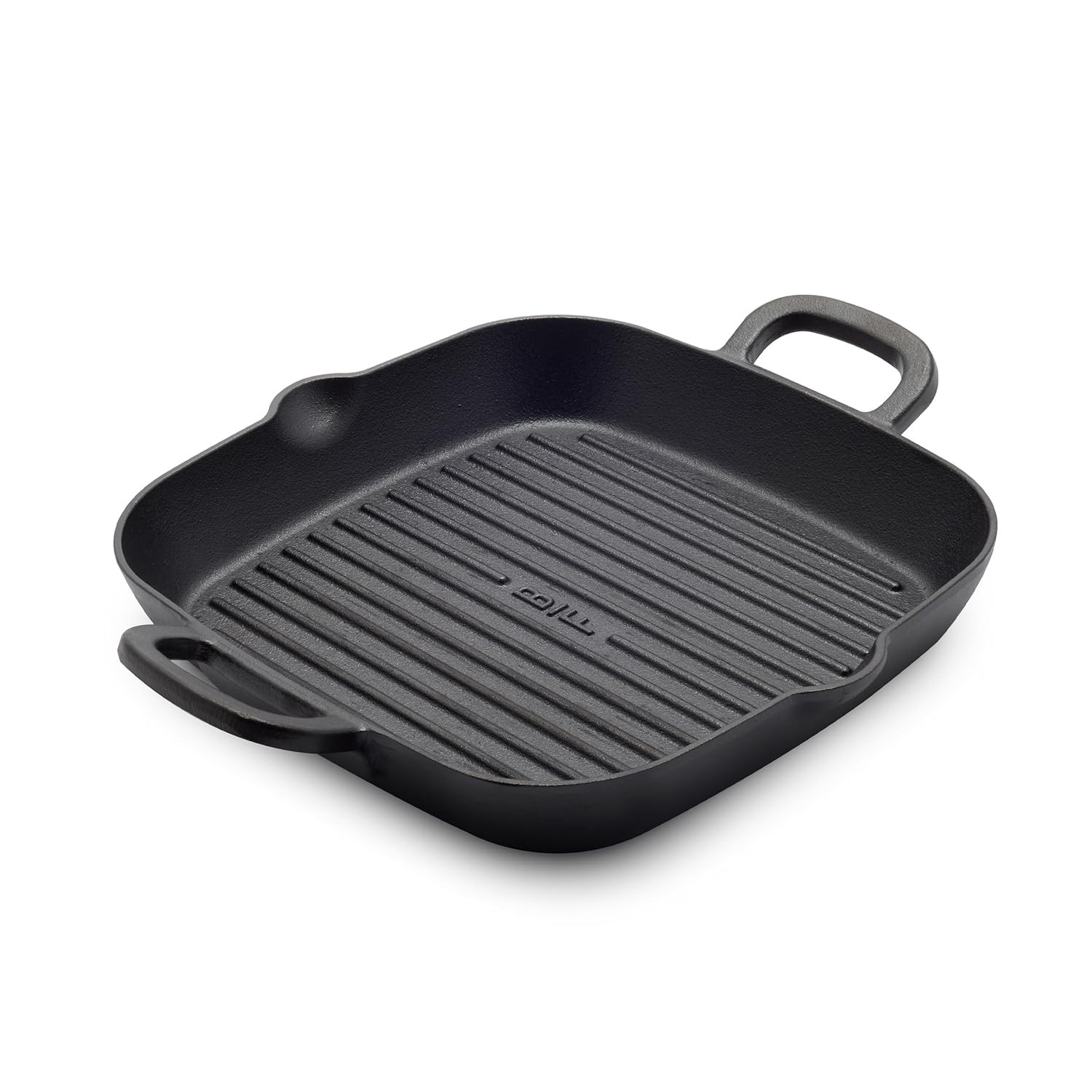
4. GreenPan x Bobby Flay 11″ Cast Iron Grill Pan – Best Design
 Check Price on Amazon
Rating: 4.3 out of 5 | Material: Cast Iron | Surface: 11″ Square | Weight: ~7 lbs | Oven Safe: Yes (500°F+)
This pan was designed by Bobby Flay, and it shows in the details. The ridges are taller than most other cast iron grill pans I tested — noticeably higher — which means the food sits further above the pan’s surface. That’s excellent for fat drainage. When I cooked a fatty ribeye, the grease dripped down and away from the meat, which gave me a cleaner, less greasy final result.
The pour spouts on two corners are wider and more functional than average. Tilting the pan to drain off excess oil felt natural rather than precarious. The ergonomic helper handle is also well-designed — it stays cooler than the main handle and provides a good grip point for lifting.
Heat performance is competitive. It gets hot evenly and maintains temperature well, though I didn’t notice a meaningful difference between this and the Lodge in terms of sear quality. Both delivered excellent results.
Where it falls short: The pre-seasoning out of the box was inconsistent. Some areas of the cooking surface felt smooth and well-seasoned, while others had a patchy, rough texture. My first few cooks required extra oil to prevent sticking. The seasoning improved with use, but the Lodge was ready to go from day one.
The lower rating (4.3 compared to Lodge’s 4.7) reflects some quality control concerns. A few user reviews mention uneven casting or rough edges. My unit was fine, but I can see why the overall satisfaction is slightly lower.
Who it’s for: Bobby Flay fans or anyone who specifically wants a pan optimized for draining fat. The high ridges genuinely make a difference for oily foods. But at the same price as the better-rated Lodge, it’s hard to recommend as a first choice.
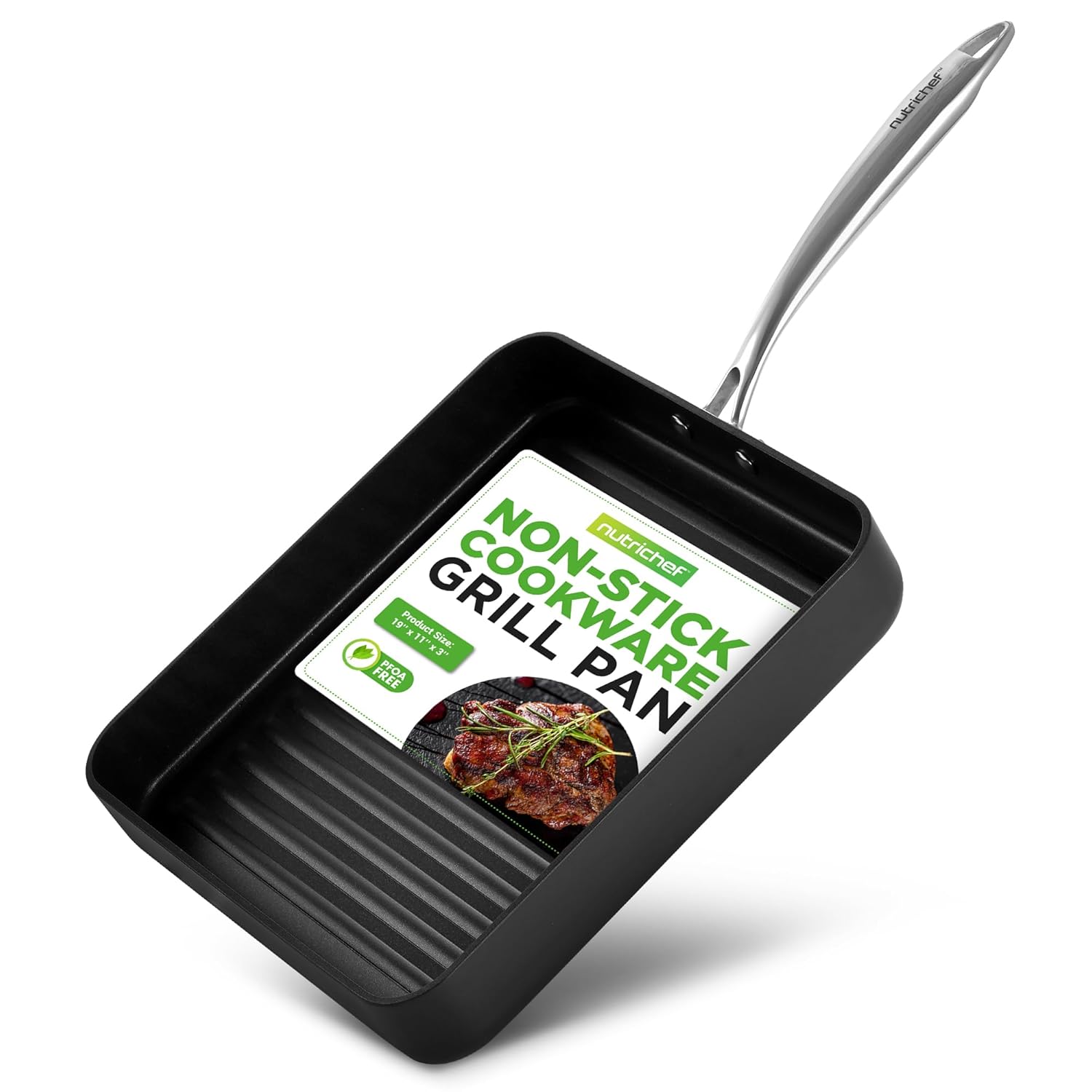
5. NutriChef 11″ Non-Stick Grill Pan – Budget Nonstick Option
 Check Price on Amazon
Rating: 4.4 out of 5 | Material: Hard Anodized Aluminum (Nonstick) | Surface: 11″ Square | Weight: ~3 lbs | Oven Safe: Not recommended (handles not oven-safe)
The NutriChef is the lightest pan I tested, coming in at around 3 pounds. If weight is your primary concern — maybe you have arthritis or limited strength — this pan is easy to handle. You can lift it with one hand, pour from it, and wash it without any strain.
The ridges are genuinely tall. In fact, they’re the tallest of any pan in this roundup. The food sits well above the pan surface, which means excellent fat drainage. When I grilled chicken thighs, the skin crisped up nicely because it wasn’t sitting in rendered fat.
Hard anodized aluminum heats up quickly — faster than cast iron by a good margin. If you’re impatient or cooking on a rushed schedule, that’s a real advantage. I had the pan hot and ready in under three minutes.
Where it falls short: The nonstick coating feels less durable than the SENSARTE’s. After just a few uses, I noticed a slight change in the surface texture — it didn’t release food as effortlessly as it did on day one. Multiple user reviews mention peeling after six months of regular use. I haven’t used it long enough to confirm that, but the early signs aren’t encouraging.
This pan is not induction compatible, which limits its versatility. It works on gas, ceramic, glass, and halogen cooktops, but if you have an induction stove, skip this one entirely.
The handles, while comfortable, are not oven-safe. You can’t transfer this pan from stovetop to oven for finishing dishes. That’s a legitimate limitation for anyone who likes to broil or bake after searing.
Who it’s for: Someone on a tight budget who needs a lightweight pan for occasional indoor grilling. If you only use it once a week or less, the coating will likely last longer. But if you cook frequently, you’ll get better long-term value from the SENSARTE.
Grill Pan Showdown – Side-by-Side Comparison
| Feature | Lodge 11″ | SENSARTE 12″ | Cuisinel 10.5″ | GreenPan 11″ | NutriChef 11″ |
|---|---|---|---|---|---|
| Material | Cast Iron | Nonstick (Aluminum) | Cast Iron | Cast Iron | Nonstick (Hard Anodized) |
| Surface | 11″ Square | 12″ Square | 10.5″ Square | 11″ Square | 11″ Square |
| Weight | ~7.5 lbs | ~3.5 lbs | ~7 lbs | ~7 lbs | ~3 lbs |
| Oven Safe | Yes (500°F+) | Up to 350°F | Pan 500°F+ / Lid 350°F | Yes (500°F+) | Not Recommended |
| Dishwasher Safe | No | Yes (handwash recommended) | No | No | Yes |
Which Grill Pan Should You Buy?
I’ve spent weeks cooking on these pans, and here’s how I’d sum it up for someone who wants a direct, honest recommendation.
If you want the absolute best cooking performance and don’t mind maintaining it — buy the Lodge 11″ Cast Iron. It heats evenly, holds temperature like a champ, and produces the deepest, most satisfying grill marks of any pan I tested. Yes, it’s heavy. Yes, it requires care. But it will last forever and the cooking results are genuinely superior.
If you want grill marks without the hassle — buy the SENSARTE 12″ Nonstick. It’s lightweight, easy to clean, and large enough to cook for multiple people. The nonstick coating won’t last as long as cast iron, but the convenience trade-off is worth it for most home cooks. This is the pan I reach for on weeknights.
If you’re cooking for one or two people and want everything included — the Cuisinel 10.5″ with Lid is a solid value. The glass lid is genuinely useful, and the included scraper and handle cover mean you don’t need to buy anything extra.
The GreenPan Bobby Flay is a good pan if you find it on sale, but I wouldn’t choose it over the Lodge at the same price. The high ridges are nice for fatty meats, but the inconsistent seasoning out of the box is a concern.
The NutriChef is a pass unless you’re on an extremely tight budget and need something temporary. The coating durability concerns are real, and the lack of induction compatibility limits its usefulness.
Here’s my final advice: Think about what you hate most in the kitchen. If it’s cleaning, go nonstick. If it’s lifting heavy pans, still go nonstick. If it’s the idea of food sticking to a poorly seasoned surface, get the Lodge and learn to maintain it. If you want the best steak sear of your life, get the Lodge and deal with the cleaning. There’s no perfect pan — only the right pan for your particular set of priorities.
This decision process is exactly what we explore in our comparison of cast iron vs nonstick grill pans.
Frequently Asked Questions About Grill Pans with Ridges
Can I use a grill pan on an induction cooktop?
Yes, if the pan is made from a magnetic material. Cast iron grill pans like the Lodge and Cuisinel work on induction. The SENSARTE nonstick is also induction-compatible. But the NutriChef is not — check the product specs before buying if you have an induction stove.
How do I clean a cast iron grill pan without ruining the seasoning?
Let the pan cool completely, then scrub the ridges with a stiff brush under hot running water. Avoid soap, as it can strip the seasoning. Dry the pan immediately with a towel, then place it on low heat for a minute to evaporate any remaining moisture. Rub a very thin layer of cooking oil over the entire surface before storing.
Are grill pans worth it compared to a flat skillet?
It depends on what you’re cooking. A flat skillet gives you more surface contact for a deeper, more even sear. A grill pan gives you attractive cross-hatch marks and better fat drainage for oily foods and vegetables. If you can only buy one pan, get a flat skillet. If you already have a flat skillet and want presentation options, a grill pan is a great addition.
Why does food stick to my grill pan?
Most likely the pan isn’t hot enough before you add food. Heat it on medium for at least five minutes, then add oil, then let the oil heat for another minute before adding food. Cast iron pans need to be properly preheated to develop a nonstick surface. With nonstick pans, sticking usually means the coating is wearing out.
Can I put a nonstick grill pan in the oven?
Only if the manufacturer specifically states it’s oven-safe. The SENSARTE is safe up to 350°F, but the NutriChef’s handles aren’t oven-safe at all. Cast iron pans like the Lodge can go much hotter — typically 500°F or more. Always check the handle material and manufacturer guidelines before putting any pan in the oven.
The Verdict
After all this testing, I keep two grill pans in my kitchen. The Lodge lives in my cabinet for weekends when I have time to cook properly and don’t mind the cleaning ritual. The SENSARTE sits on my stovetop for Tuesday nights when I want a quick grilled chicken breast without extra work.
If I had to recommend just one to someone who’s never owned a grill pan before, it would be the SENSARTE. The learning curve is minimal, the cleaning is easy, and the results are good enough that you’ll actually use it regularly. The Lodge is the better pan in terms of pure performance, but only if you’re willing to put in the effort.
Choose the pan that matches your cooking style, not the one that looks best on a shelf. That’s how you avoid buying a grill pan that ends up collecting dust in a cabinet.