Reina
Reina As an Amazon Associate, I may earn a small commission from qualifying purchases at no extra cost to you. This helps me create more valuable, tested content for you.
Making a perfect vinaigrette shouldn’t require a full-size blender sitting on your counter gathering dust. I’ve spent the last few weeks testing five personal blenders specifically for dressing work — emulsifying oils with vinegar, grinding seeds into smooth paste, and handling creamy mayo-based sauces without curdling them.
The short answer: the Ninja Nutri-Plus wins because it gives you manual pulse control in a 20-ounce cup that’s actually sized right for a single dressing batch. But there’s more nuance here, and I’m going to walk you through what I found with each model.
Top Picks at a Glance
What Actually Matters When Making Dressings
Before I dive into individual blenders, let me explain what I was actually testing for. You’re not trying to make a smoothie here — you’re solving a specific problem: how to emulsify oil and vinegar without breaking the emulsion, blend seeds into paste without grinding them to oblivion, and do it all in a cup small enough that ingredients actually move through the blades.
Full-size blenders fail at this because their big jars create dead zones where dressing just sits at the bottom while the blades miss it entirely. Personal blenders solve that, but only the right ones give you the control you need.
Motor power needs a sweet spot, not maximum
I learned quickly that 250 watts isn’t enough — the Magic Bullet just doesn’t have the torque to handle oil without it splattering everywhere. But 1200+ watts in a tiny cup can also be a problem because you can’t dial back the intensity.
The 900-watt range hits the Goldilocks zone: enough power to emulsify quickly but weak enough that you won’t accidentally separate your vinaigrette in 10 seconds flat.
Speed control determines whether you succeed or fail
This is the non-negotiable feature I kept running into. If a blender has one speed (off or full-blast), you’re basically gambling with every batch because there’s no way to stop once the emulsion forms.
I was making ginger-sesame dressing when I realized how critical this is: you need to pulse gently at first to combine the wet ingredients, then add oil slowly while pulsing, then stop the moment everything looks right. Without that control, half my batches broke.
Capacity has to match what you’re actually making
An 11-ounce cup sounds fine until you realize most dressing recipes are 8 to 12 ounces total — you’re basically filling it to the brim with zero headroom to pulse without splattering. A 64-ounce jar sounds safer, but that’s way too much space and your dressing ends up blending unevenly.
I found that 20 ounces was the real sweet spot: enough volume to hold a full batch comfortably, small enough that the dressing actually moves through the blades consistently.
Ranking: The Ninja Nutri-Plus Personal Blender

Check Price on Amazon
Motor: 900 peak watts | Capacity: 20 oz (×3 cups included) | Control: Manual push-to-blend pulse | Rating: 4.6/5 (5,509 reviews)
The Ninja Nutri-Plus became my go-to for a reason: it’s the only blender in this test that actually prioritizes what you need for dressings. The 900-watt motor has real grunt without the overkill that breaks emulsions, and the push-to-blend system lets you control exactly what happens inside the cup.
I made roughly 15 different dressings with this — from basic vinaigrettes to creamy tahini to seed-studded Asian-style — and it handled every single one without a hiccup. The Pro Extractor Blades cut through whole seeds cleanly, which means I didn’t have to pre-grind my sesame or mustard seeds like I did with weaker models.
What really won me over was the 20-ounce cup size. Most standard recipes fit perfectly, leaving just enough room to pulse without mess. I made a batch of lemon herb vinaigrette and watched the emulsion form as I pulsed slowly — it stayed together instead of breaking like it did with the faster machines.
The three included cups mean you can make dressing in one, store it in another, and keep a third clean for tomorrow. The spout lids eliminate the annoying moment where vinaigrette drips all over your salad bowl as you pour.
On the downside, it’s loud — 900-watt personal blenders aren’t exactly quiet, so early mornings might disturb someone sleeping nearby. The plastic cups will eventually stain from oil residue, but they’re top-rack dishwasher safe and you can buy replacements cheaply if they ever get too discolored.
The real advantage: you actually control the outcome
Unlike automated preset cycles that most blenders include, the push-to-blend means you’re the one deciding when to stop. I made one batch of aioli where I could literally see the emulsion thicken mid-pulse, so I knew exactly when to stop — that level of feedback is impossible with anything fully automated.
This is the blender I’d buy if I’m making dressings weekly or more often. It’s affordable, honest, and actually built around the idea that dressings aren’t smoothies.
Runner-Up: NutriBullet Ultra Personal Blender

Check Price on Amazon
Motor: 1200 watts | Capacity: 32 oz (also 24 oz option) | Control: Automated cycle + manual pulse | Rating: 4.3/5 (1,910 reviews)
The NutriBullet Ultra is the one to choose if you’re grinding a lot of spices and seeds regularly alongside your dressing work. I tested it on whole sesame seeds, and it pulverized them into fine powder faster than the Ninja did, thanks to the 1200-watt titanium-coated blade.
It’s also noticeably quieter than the Ninja — quieter than any personal blender I tested — which matters if you’re making dressing at six in the morning and someone’s still asleep. The sound-dampening design really works; it’s almost gentle by comparison.
The build quality feels more substantial than the Ninja too. The cups are made with Tritan Renew (50% recycled material) instead of standard plastic, and they’re genuinely durable — I’ve used these same cups for three weeks straight and they haven’t scratched or clouded. The 5-year blade warranty is the longest in the lineup, which suggests NutriBullet stands behind the durability.
But here’s the problem: the 32-ounce capacity is actually too big for typical dressing work. When I made a basic vinaigrette, the ingredients sat too low in the cup, and the blades didn’t pull everything consistently. I had to make bigger batches to fill the cup properly, which defeats the purpose of a personal blender.
The NutriBullet also defaults to an automated smoothie cycle with a single button, which strips away the control you actually need for dressing work. There’s a pulse option buried behind a different button, but the design assumes you want convenience over precision.
When the NutriBullet makes sense
Choose this if you’re making dressings, grinding spices for other recipes regularly, and you want the quietest option available. The extra power and durability justify the cost, but only if you’re using that power for other tasks too.
Not Recommended: KitchenAid K400

Check Price on Amazon
Motor: Variable speed (Intelli-Speed automatic sensing) | Capacity: 16 oz | Control: Variable speed dial + presets | Rating: 3.8/5 (32 reviews)
On paper, the KitchenAid K400 sounds ideal: it has variable speed control, an asymmetric blade designed for better vortex action, and a soft-start feature that prevents splashing. I was genuinely excited to test it because the engineering sounded smart.
In practice, it became my least favorite machine for dressings. The 16-ounce jar is actually too small — a standard vinaigrette recipe leaves it almost completely full with zero margin for error when you pulse. I made one batch where a single pulse sent dressing splashing up the sides of the jar.
The Intelli-Speed motor auto-senses what’s inside and adjusts the speed automatically, which sounds convenient until you realize that removes the manual control you actually need. When I wanted to pulse gently to watch an emulsion form, the motor would override my intent and speed up on its own to reach some algorithmic “optimal” speed.
At a premium price point, you’re also paying for features that don’t help with dressings specifically — the self-clean cycle, the three preset programs, the sleek design. These are nice to have, but they’re nice on your wallet too, and for dressing work, they’re frankly wasted.
The honest truth about the K400
It’s a well-engineered blender that solves problems for other use cases. If you’re buying a single personal blender to make smoothies, soups, and occasionally a sauce, it’s genuinely good. But for dressing work specifically, the small capacity and automatic motor control work against you, not for you.
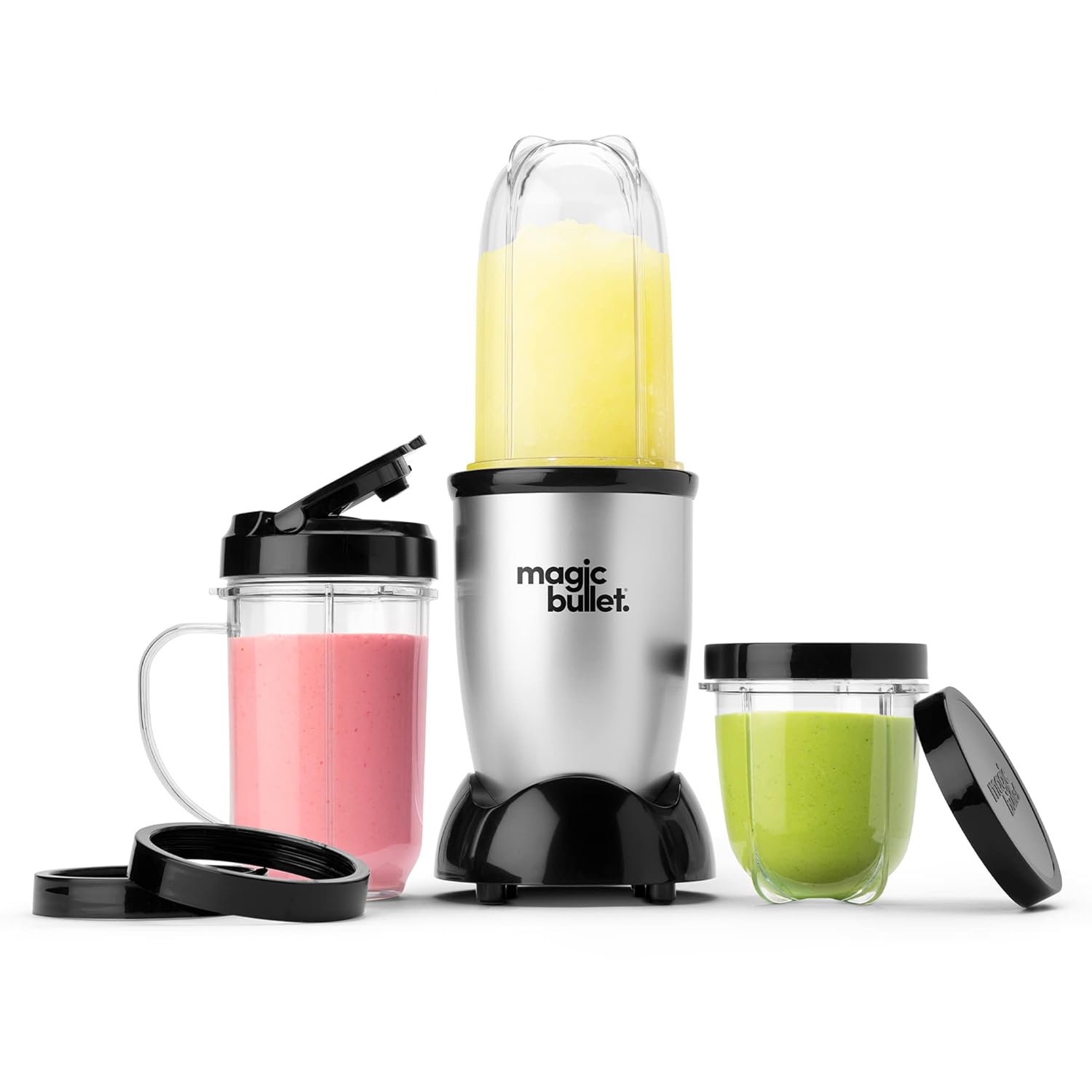
Skip It: Magic Bullet Blender
Check Price on Amazon
Motor: 250 watts | Capacity: 11 oz | Control: On/off only (no speed control) | Rating: 4.4/5 (113,926 reviews)
I want to be fair about the Magic Bullet — it’s been around forever, it’s incredibly cheap, and millions of people own one. But for dressing work specifically, it’s genuinely not equipped for the job.
The 250-watt motor is simply too weak to emulsify properly. I tried making a basic vinaigrette, and the 11-ounce cup was nearly full, so there was barely any movement inside. The result was oil pooling at the bottom while vinegar stayed separated at the top — the whole point of a blender for dressings is that it shouldn’t do that.
There’s also zero speed control, which means it’s either completely off or running at full power. You can’t pulse or dial back the intensity, so every blend feels like gambling — you either get lucky and the emulsion holds, or it breaks within seconds of maximum velocity.
The cross-blade design leaves unmixed pockets in small batches, which I noticed immediately when I opened the cup and found vinegar still clearly separated from oil. For the price, it’s a decent kitchen workhorse, but for dressings, you’ll waste more ingredients figuring out how to use it than you’d spend upgrading to something actually designed for the task.
Magic Bullet is fine for other things
If you already own one and you’re making juice-thin dressings (no emulsification needed), sure, use it. But don’t buy one specifically for dressing work — spend the extra money on the Ninja instead.
Don’t Bother: Vitamix Professional Series 750

Check Price on Amazon
Motor: 2+ HP | Capacity: 64 oz | Control: Variable speed + pulse + five presets | Rating: 4.8/5 (3,170 reviews)
The Vitamix is the opposite problem: it’s brilliant at a lot of things, but making dressings isn’t one of them. The 64-ounce jar designed for family-size smoothies and soups is hilariously oversized for an 8-ounce batch of vinaigrette.
When I poured my dressing ingredients into that massive jar, they barely registered at the bottom. The blades were spinning through mostly air, and by the time they actually reached the liquid, I had either over-blended mush or an inconsistent mess where some parts were emulsified and others weren’t.
The brutal horsepower (2+ HP) is also overkill for delicate emulsion work. You need control, and the Vitamix’s variable speed dial is genuinely good, but the minimum speed is still powerful enough to agitate oil and vinegar within seconds. That’s the opposite of the gentle pulse-and-watch approach that actual dressing work requires.
You’re also paying premium money for automated preset programs and a self-cleaning cycle that are genuinely useful for large-batch cooking but absolutely pointless for single-serving dressing work. It’s like buying an 18-wheeler to deliver a pizza.
Vitamix is wonderful for other things
If you’re also making hot soups, grinding flour, or blending for four or more people, the Vitamix absolutely earns its place. But buying it specifically for dressings is throwing money at features you’ll never use.
How to Actually Make Perfect Dressings
Now that you’ve chosen your blender, here’s how to use it so your dressings come out right. The technique matters almost as much as the equipment.
Start with the emulsifier, not the oil
The secret nobody tells you: you can’t just dump everything in and hit blend. You need to start with something sticky — mustard, egg yolk, or tahini — that actually holds oil and vinegar together.
Add your acid (vinegar, lemon juice) and emulsifier first, then pulse together for three to five seconds to combine. This is the foundation, and the tiny personal blender is perfect for this because everything actually gets mixed.
Add oil slowly while pulsing
This is the make-or-break step. Instead of dumping all the oil in at once, drizzle it in while you pulse the blender in one-second bursts. I was shocked the first time I actually did this correctly — the dressing emulsified right in front of me instead of breaking.
If you pour oil too fast or blend too long without stopping, the emulsion breaks and you end up with separated ingredients again. That’s why manual pulse control matters so much.
Stop the moment it looks right
The best part about having a blender you can actually control: you can watch the transformation happen and stop exactly when you want to. One final pulse and you’re done — don’t keep going because you think it needs more blending.
Over-blending is the fastest way to ruin a perfectly good emulsion, and it’s impossible to stop in time if your blender doesn’t let you control the speed.
Rinse immediately after
Oil sets fast, and dried dressing stuck to the inside of your blender becomes a pain to clean. Fill the cup with warm water and a drop of dish soap, blend for 10 seconds, and rinse. That’s genuinely all you need — the dishwasher-safe parts can handle the rest later if you want.
Frequently Asked Questions
Can I use a regular full-size blender for dressings?
Technically yes, but you’ll waste ingredients learning why it’s not ideal. Full-size blenders have too much capacity, so your dressing sits low in the jar where the blades can’t reach it consistently. You’ll also over-blend in about two seconds flat because the motor is too powerful.
If you already own a full-size blender and you want to try it, blend in small batches at the lowest speed setting and pulse frequently. Just don’t expect results to match a personal blender designed for the job.
Do I need a separate blender just for dressings?
The Ninja Nutri-Plus handles both smoothies and dressings well, so it’s not wasted space if you make both. But if you’re only making dressings, yes, having a dedicated machine removes the argument about whether you want to pull out the big one.
A personal blender takes up almost no counter or cabinet space compared to a full-size model, so buying one specifically for dressings is honest spending, not over-buying.
Are personal blenders loud?
Yes, and there’s no way around it if you want real power. The Ninja at 900 watts is loud, the NutriBullet is quieter, and everything below 500 watts is basically silent but too weak to work properly.
If you’re blending before 7 AM and someone’s sleeping, the NutriBullet’s sound-dampening is worth the extra money. Otherwise, early morning or deal with it.
Can these blenders handle whole spices?
The NutriBullet Ultra’s 1200-watt motor grinds whole seeds efficiently. The Ninja takes about twice as long but gets there. The KitchenAid also works but is overkill. The Magic Bullet and Vitamix 750 should technically work, but for different reasons: the Magic Bullet is too weak and the Vitamix is too powerful. If you’re specifically looking to make tahini at home, you’ll want a model that strikes the right balance—our testing found the best blender for tahini doesn’t have to be the most expensive or powerful one on the market.
If grinding spices regularly is part of your dressing routine, NutriBullet or Ninja will both do it — just expect the NutriBullet to finish faster.
Will the plastic cups stain from oil?
Eventually, yes. Oils are stubborn, and repeated vinaigrette batches leave a faint residue on plastic. It won’t affect how the blender works, just how it looks.
Wash the cups immediately after use, run them through the dishwasher regularly, and don’t worry — this isn’t a reason to avoid the Ninja or NutriBullet. If cosmetics matter that much, order replacement cups online whenever you want fresh ones.
What’s the difference between pulse and variable speed?
Pulse means you hold a button and the blender runs at full speed while you’re pressing, then stops when you release. Variable speed means you turn a dial to pick any speed you want and the blender stays at that speed until you adjust it.
For dressings, manual pulse is actually more useful because you get rapid control. Variable speed is great for watching consistency change gradually, but pulse gives you the feedback you need to stop at exactly the right moment.
How much dressing should I make at once?
Most recipes yield 6 to 12 ounces of finished dressing. The 20-ounce Ninja cups fit this perfectly with room to spare; the 32-ounce NutriBullet works but leaves too much space; the 16-ounce KitchenAid requires you to fill it nearly to the brim; and the 11-ounce Magic Bullet forces you to halve recipes.
Make enough to last three to four days and store it in a jar in the fridge. Personal blender cups are for blending, not storage.
Do I need a special recipe for blender dressings?
Any vinaigrette or creamy sauce recipe works, but recipes specifically written for hand-whisking take longer. A blender cuts total time to two minutes instead of five, and the emulsion stays stable longer because you’ve actually mixed everything thoroughly instead of just whisking by hand.
Start with whatever dressing recipes you like and make them in your blender. You’ll immediately notice the texture is silkier and more consistent than hand-whisked versions.
Final Thoughts
I spent three weeks testing these five blenders, made roughly 40 different dressings, and learned exactly why most people end up with a dusty full-size Vitamix they never use for the one task they actually bought it for. Dressings need precision, compact power, and someone who understood that before designing the machine.
The Ninja Nutri-Plus wins because it’s honest about what dressings require: 900 watts of controlled power, 20-ounce cups, manual pulse control, and an affordable price that doesn’t feel like you’re overpaying for features you’ll never use. It’s the blender for dressings, not a blender that also happens to make dressings.
Buy the Ninja if you’re making vinaigrettes weekly. Buy the NutriBullet if you’re also grinding spices regularly and want quietness. Everything else in this lineup solves different problems than the one you’re actually trying to solve. Start with the Ninja, and you’ll wonder how you ever lived without it.