
That distinct yellow sauce served at Benihana restaurants has a way of sticking in your memory long after the meal ends. I first encountered it during a family celebration years ago, and its creamy, spicy kick became an instant favorite. Recreating it at home felt like unlocking a culinary secret, and now I want to share that process with you.
This Benihana mustard sauce recipe replicates the iconic dip used for hibachi dishes. It combines simple ingredients like mustard, soy sauce, and cream to achieve a balanced flavor profile. You can whip it up in minutes, and it elevates everything from grilled chicken to steamed vegetables.
In this guide, I will walk you through each step, drawing from my experience as a dietician and home cook. We will explore the science behind the emulsion, discuss nutritional aspects, and cover adaptations for various diets. By the end, you will have a reliable method for making this sauce anytime.
How to Make Benihana Mustard Sauce
This section provides the core recipe for the mustard dipping sauce. Follow these instructions closely for a result that mirrors the restaurant version. I have tested this multiple times to ensure consistency and flavor accuracy.
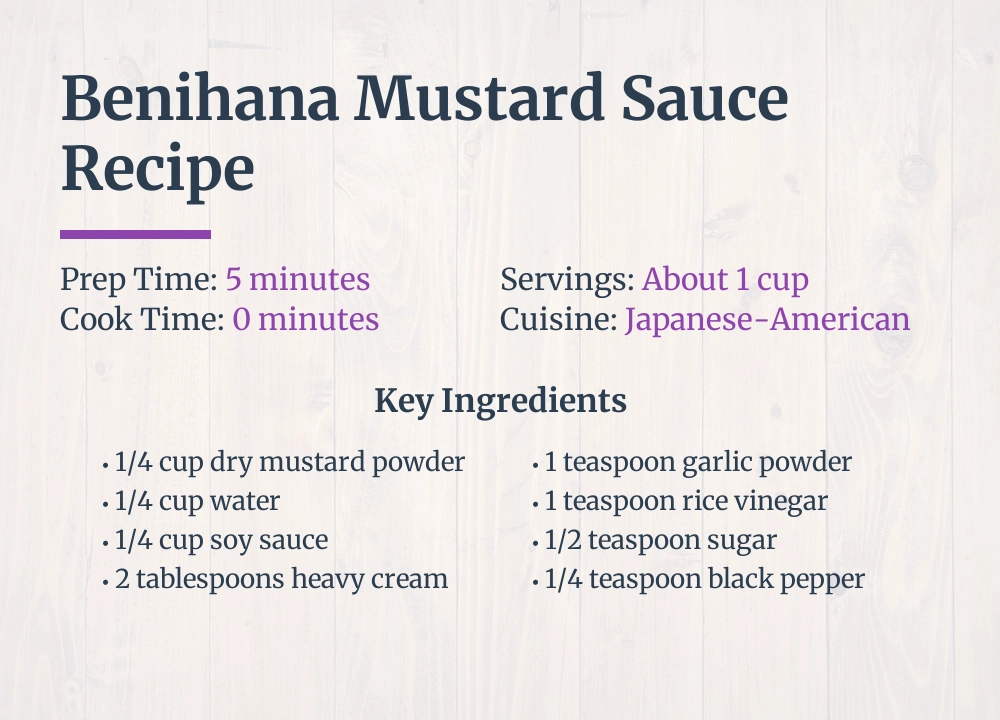
Recipe Details
- Prep Time: 5 minutes
- Cook Time: 0 minutes
- Servings: About 1 cup
- Course: Condiment
- Cuisine: Japanese-American
- Diet: Vegetarian
Ingredients
- 1/4 cup dry mustard powder
- 1/4 cup water
- 1/4 cup soy sauce
- 2 tablespoons heavy cream
- 1 teaspoon garlic powder
- 1 teaspoon rice vinegar
- 1/2 teaspoon sugar
- 1/4 teaspoon black pepper
Instructions
- Place the dry mustard powder in a small bowl. Add water gradually while whisking to prevent clumps from forming. The mixture should become a smooth paste.
- Incorporate the soy sauce into the mustard paste. Use a whisk to blend them thoroughly, ensuring no separation occurs.
- Stir in the heavy cream, which adds richness and helps emulsify the sauce. Mix until the color lightens uniformly.
- Add garlic powder, rice vinegar, sugar, and black pepper. Whisk for another minute until all ingredients are fully dissolved and integrated.
- Transfer the sauce to an airtight container. Refrigerate for at least 30 minutes before serving to allow the flavors to meld together.
Nutrition
- Calories: 25 kcal
- Protein: 1 g
- Fat: 1 g
- Carbohydrates: 2 g
- Sugar: 1 g
- Fiber: 0 g
- Sodium: 300 mg
- Cholesterol: 5 mg
Cooking Method
This sauce requires no heat application. The process involves cold mixing and emulsification through whisking. Combining dry mustard with water activates its pungent compounds, while cream and soy sauce create a stable suspension. Refrigeration is crucial for texture development and flavor integration.
Tools Needed
- Small mixing bowl
- Whisk or fork
- Measuring spoons and cups
- Airtight container for storage
Understanding the Ingredients
Each component in this sauce plays a specific role in flavor and texture. Knowing why they are used can help you make informed substitutions if needed. Let us break down the key elements.
Dry Mustard Powder
Mustard powder forms the base of this condiment. It is made from ground brown or yellow mustard seeds, which contain compounds like sinigrin. When mixed with water, an enzyme reaction produces the characteristic heat. Using fresh, high-quality powder ensures a vibrant kick without bitterness.
The type of mustard seed affects intensity. Brown seeds yield a sharper taste, while yellow ones are milder. In this recipe, standard dry mustard works well, but you can adjust the amount for more or less spice.
Soy Sauce
Soy sauce contributes umami and saltiness to balance the mustard’s sharpness. Traditional versions are brewed from soybeans, wheat, salt, and fermenting agents. It also adds a dark color to the sauce, mimicking the restaurant appearance.
For a gluten-free version, use tamari or coconut aminos. These alternatives maintain the savory depth while accommodating dietary restrictions. The sodium content can be managed by opting for low-sodium soy sauce.
Heavy Cream
Heavy cream provides richness and helps emulsify the sauce. Its fat content coats the mustard particles, creating a smooth texture. Without it, the mixture might separate or taste overly acidic.
If you prefer a dairy-free option, cashew cream or full-fat coconut milk can substitute effectively. They offer similar creaminess but may impart a slight nutty or coconut flavor.
Nutritional Insights
From a dietary perspective, this sauce is low in calories but moderate in sodium. The mustard powder contains antioxidants like selenium, which support metabolic functions. Cream adds saturated fat, so portion control is advised for heart health.
The combination of ingredients offers a balance of macronutrients. Mustard provides minimal carbohydrates, while soy sauce contributes protein traces. Using reduced-sodium soy sauce can lower the salt content without sacrificing taste.
For those monitoring intake, this condiment fits into various meal plans. It adds flavor without excessive calories, making it a better choice than many store-bought dressings. Always consider individual dietary needs when incorporating it into meals.
Dietary Modifications
Adapting this recipe for specific diets is straightforward. Here are practical swaps to maintain the sauce’s character while meeting different requirements.
Vegan Version
Replace heavy cream with unsweetened plant-based alternatives. Cashew cream works well for its neutral taste and thick consistency. Blend 1/4 cup soaked cashews with 2 tablespoons water until smooth. Use this in place of dairy cream.
Ensure the soy sauce is vegan, as some brands may contain animal-derived ingredients. Alternatively, use coconut aminos for a soy-free option. The sauce will still emulsify properly and retain its creamy texture.
Gluten-Free Adjustment
Swap regular soy sauce with tamari or a certified gluten-free soy sauce. These products are made without wheat and have similar flavor profiles. Check labels to confirm they meet gluten-free standards.
All other ingredients in the base recipe are naturally gluten-free. This modification allows those with celiac disease or gluten sensitivity to enjoy the sauce safely.
Low-Sodium Variation
Use low-sodium soy sauce to reduce the salt content. You can also decrease the amount of soy sauce slightly and add a splash of water to maintain volume. Adjust with a pinch of salt only if necessary after tasting.
Increasing the mustard powder or adding a touch of lemon juice can enhance perception of saltiness without adding sodium. This helps keep the flavor balanced while aligning with health goals.
History and Origins
Benihana is a Japanese steakhouse chain founded in New York City in 1964. The mustard sauce is part of their hibachi dining experience, where chefs prepare food on teppanyaki grills at the table. This style blends Japanese cooking techniques with American entertainment.
The sauce itself is not traditional Japanese condiment but an innovation for the Western palate. It likely evolved to complement grilled meats and vegetables served in the restaurant. Its popularity stems from its unique combination of heat, creaminess, and umami.
Over time, it has become a signature item, with many home cooks seeking to replicate it. This copycat version honors that legacy while allowing customization for modern kitchens.
Expert Tips and Common Pitfalls
Achieving the perfect sauce involves attention to detail. Here are insights from my trials to help you avoid mistakes and improve results.
Avoiding Lumps
When mixing dry mustard with water, add the liquid slowly while whisking continuously. This prevents clump formation and ensures a smooth paste. If lumps appear, strain the mixture through a fine sieve before adding other ingredients.
Using room temperature water can help the powder dissolve more easily. Cold water might slow the process, leading to uneven texture.
Flavor Balance
Taste the sauce after mixing and adjust seasonings as needed. If it is too sharp, add a bit more cream or a pinch of sugar. For more depth, increase garlic powder or soy sauce incrementally.
Remember that flavors intensify after refrigeration. Allow the sauce to chill for at least 30 minutes before final adjustments. This resting period lets the ingredients meld properly.
Storage Recommendations
Store leftover sauce in an airtight container in the refrigerator. It will keep for up to one week. Separation may occur over time; simply stir or whisk it back together before use.
Do not freeze this sauce, as the emulsion can break upon thawing. For best quality, make it fresh when needed or within a few days of planning to use it.
Serving Suggestions and Storage
This mustard sauce is versatile beyond hibachi meals. Use it as a dip for grilled chicken, beef, or shrimp. It pairs well with steamed broccoli, asparagus, or other vegetables. Drizzle it over rice or noodles for an extra flavor boost.
For a complete hibachi-style dinner, serve it with homemade hibachi vegetables, fried rice, or yakisoba noodles. The sauce can also accompany burgers or sandwiches as a condiment.
When storing, use a glass or plastic container with a tight-fitting lid. Label it with the date to track freshness. If the sauce develops an off odor or color, discard it immediately.
The Science Behind the Sauce
The emulsion in this sauce relies on the interaction between mustard, water, and fat. Mustard contains natural emulsifiers that help bind water and oil-based ingredients. Whisking introduces air and mechanical energy, stabilizing the mixture.
Adding cream coats the mustard compounds, reducing their volatility and mellowing the heat. Soy sauce contributes glutamates, which enhance umami perception. Refrigeration slows chemical reactions, allowing flavors to integrate smoothly over time.
Understanding these principles can help you troubleshoot issues. If separation occurs, it is often due to insufficient whisking or old ingredients. Always use fresh mustard powder for the best emulsification.
Frequently Asked Questions
What is Benihana mustard sauce?
It is a creamy, spicy dipping sauce served at Benihana restaurants. Made from mustard, soy sauce, and cream, it accompanies hibachi-grilled dishes. This copycat recipe replicates that flavor at home.
Can I make this sauce ahead of time?
Yes, prepare it up to three days in advance. Store it in an airtight container in the refrigerator. The flavors often improve after resting for a few hours.
Is there a substitute for heavy cream?
Use cashew cream, coconut cream, or Greek yogurt for dairy-free options. These alternatives provide similar thickness but may alter the taste slightly.
How can I reduce the sodium content?
Opt for low-sodium soy sauce or dilute regular soy sauce with water. Adjust other seasonings like garlic or vinegar to maintain balance.
Why did my sauce turn out too thin?
This can happen if measurements are off or ingredients are not whisked properly. Add a bit more mustard powder or cream to thicken it, and whisk vigorously.
Can I use prepared mustard instead of powder?
It is not recommended, as prepared mustard contains vinegar and other additives that change the flavor and texture. Dry powder allows for better control over the final product.
What dishes pair well with this sauce?
It complements grilled meats, vegetables, rice dishes, and even egg rolls. Use it as a dip or dressing for various meals.
How long does it last in the fridge?
Properly stored, it remains safe to eat for about one week. Always check for signs of spoilage before use.