
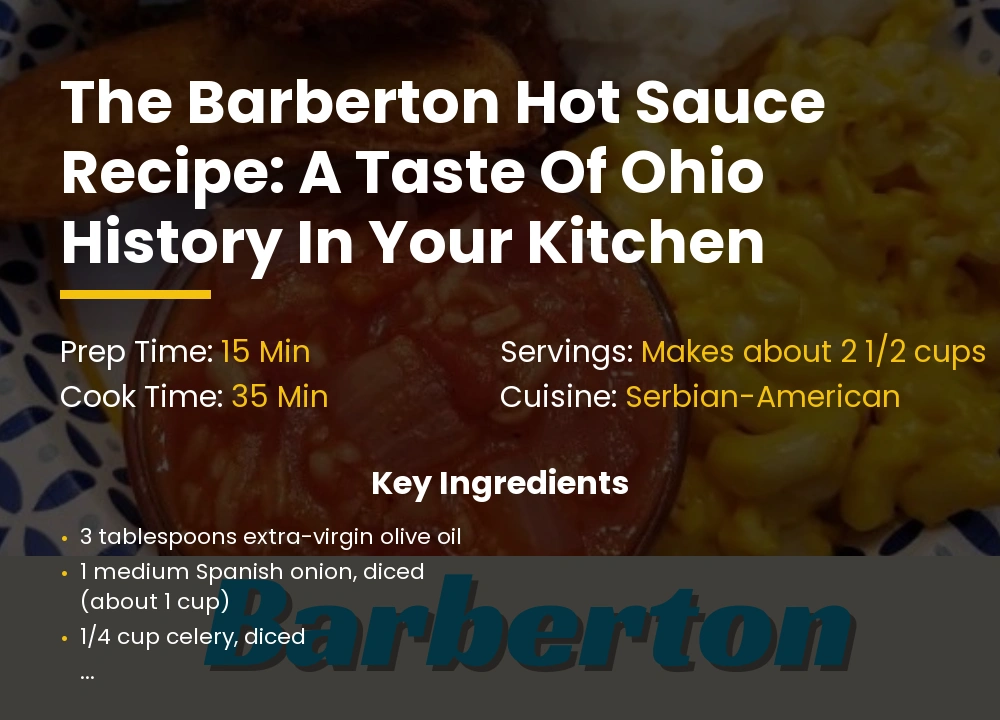
There is a specific taste of home for many in Northeast Ohio, one that cannot be found on grocery store shelves. It arrives in a small bowl, not a bottle, accompanying golden fried chicken with a side of vinegar coleslaw. For a decade, I missed that flavor, a culinary ghost from my time living near Barberton. No other sauce quite matched its unique character—not a spicy Buffalo, not a sweet ketchup, but something entirely its own.
This pursuit led me to my kitchen, armed with memory and a mission to recreate that Barberton hot sauce recipe. After numerous batches, comparing notes with community forums and historical references, I perfected a version that brought that taste back vividly. My goal here is to give you more than just a list of ingredients. I will guide you through the cultural significance, the nutritional profile, and the precise techniques that transform simple vegetables into a legendary condiment.
This article provides the complete method, the reasons behind each step, and the knowledge to adapt it to your own dietary needs. You will understand why this sauce is a pillar of Serbian-American cuisine in Ohio and how to make it a staple in your home.
Understanding the Barberton Hot Sauce Legacy
To appreciate this recipe fully, you must understand its context. Barberton, Ohio, is famed for its distinct style of fried chicken, established by Serbian immigrants in the 1930s. The “hot sauce” is a fundamental component of this meal, though its name can be misleading. It is not a scorching, vinegar-based liquid for wings.
This sauce is a savory, lightly textured tomato-based accompaniment, simmered with a trinity of aromatics and mild peppers. It is designed to complement, not overwhelm, the simple perfection of expertly fried chicken and the tang of a vinegar-based slaw. The recipe was closely guarded by restaurant families for generations, creating a aura of mystery around its straightforward ingredients.
My attempt to replicate it was not just about flavor, but about reconnecting with a piece of regional food history. Each batch was a step closer to the communal tables of those iconic Ohio restaurants.
How to Make Barberton Hot Sauce recipe
This is the core method I developed through testing. It respects the traditional foundations while providing clear, actionable steps for the modern home cook. The result is a sauce with a balanced flavor profile that is both familiar and unique.
Recipe Details
- Prep Time: 15 Min
- Cook Time: 35 Min
- Servings: Makes about 2 1/2 cups
- Course: Condiment, Sauce
- Cuisine: Serbian-American
- Diet: Vegetarian, Gluten-Free
Ingredients
- 3 tablespoons extra-virgin olive oil
- 1 medium Spanish onion, diced (about 1 cup)
- 1/4 cup celery, diced
- 2 Hungarian hot wax peppers or banana peppers, stemmed, seeded, and minced
- 2 jalapeño chiles, stemmed, seeded, and minced
- 1 (28-ounce) can whole tomatoes, with their juices
- 1 1/2 cups chicken stock or vegetable stock
- 1 four-finger pinch of kosher salt (approx. 2 teaspoons)
- Freshly ground black pepper, to taste
Instructions
- Prepare all your vegetables before you begin cooking. Dice the onion and celery uniformly. Stem, seed, and mince both the Hungarian peppers and jalapeños. This ensures a smooth cooking process.
- Heat the olive oil in a non-reactive saucepan or Dutch oven over medium-high heat. A non-reactive pan, like stainless steel or enameled cast iron, prevents any metallic taste from affecting your sauce.
- Once the oil shimmers, add the diced onion, celery, and all the minced peppers. Add the four-finger pinch of salt. The salt helps draw moisture from the vegetables.
- Sweat the vegetables, stirring occasionally, for 8 to 10 minutes. You want them softened and translucent, not browned. This step builds the foundational flavor.
- Add the entire can of whole tomatoes and their juices. Use your hands or kitchen shears to gently crush the tomatoes in the pot. Pour in the chicken stock.
- Bring the mixture to a lively simmer, then reduce the heat to maintain a low, steady simmer. Let it cook uncovered for 20 to 25 minutes.
- The sauce is ready when it has thickened slightly but remains loose and spoonable. It will continue to thicken as it cools. Taste and adjust seasoning with more salt and black pepper as needed.
- For a traditional texture, serve as is with its rustic chunks. For a smoother sauce, use an immersion blender directly in the pot or carefully transfer to a countertop blender to puree to your desired consistency.
Nutrition
- Calories: 45 kcal
- Protein: 1 g
- Fat: 3 g
- Carbohydrates: 4 g
- Sugar: 2 g
- Fiber: 1 g
- Sodium: 220 mg
- Cholesterol: 0 mg
Values are per 1/4 cup serving and are estimates. Using low-sodium stock will significantly reduce sodium content.
Cooking Method
This recipe employs a straightforward combination of sweating and simmering. Sweating the vegetables in fat without browning caramelizes their natural sugars gently, creating a sweet, deep base. The subsequent long simmer melds the flavors and allows the tomatoes to break down, creating a harmonious and integrated sauce where no single ingredient dominates.
Tools Needed
- A non-reactive saucepan or Dutch oven (3-quart minimum)
- Sharp chef’s knife and cutting board
- Wooden spoon or spatula
- Measuring cups and spoons
- Immersion blender or countertop blender (optional, for smooth texture)
Decoding the Ingredients: Choices and Impacts
Every component in this recipe has a specific role. Understanding these roles allows you to make informed substitutions and appreciate the final product.
Olive Oil and The Non-Reactive Pan
Extra-virgin olive oil is my fat of choice for its fruity undertone, which complements the tomatoes. A non-reactive saucepan is non-negotiable. Reactive metals like aluminum or uncoated cast iron can react with the acidic tomatoes, imparting a bitter, metallic flavor. Stainless steel or enameled cast iron is ideal.
The Vegetable Foundation: Onion and Celery
The Spanish onion, known for its higher sugar and water content compared to yellow onions, provides a sweet, mellow base that reduces to a pleasant sweetness. The celery is not merely for texture; it contributes a subtle, herbaceous aroma that is part of the sauce’s signature flavor profile. Dicing them uniformly ensures even cooking.
Understanding the Peppers
The pepper selection defines the sauce’s character. Hungarian hot wax peppers (also called banana peppers) offer a very mild heat and a slight tang. Jalapeños, when seeded, contribute a brighter, greener heat that is noticeable but not aggressive. This combination creates a layered, mild warmth rather than a blunt spice. The “hot” in the name refers to this gentle warmth, not intense capsaicin burn.
Tomatoes and Liquid
Canned whole tomatoes are consistently superior to fresh for this application, unless it’s peak summer season. They are picked and canned at optimal ripeness. Crushing them by hand gives you control over the texture. Using a quality chicken stock adds a savory depth (umami) that water cannot. Vegetable stock is a fine alternative for a vegetarian version.
The “Four-Finger Pinch” of Salt
This old-school measurement is about intuition. It typically translates to 1.5 to 2 teaspoons of coarse kosher salt. Salt applied early during the sweating process breaks down the vegetable cell walls, encouraging moisture release and more efficient flavor development.
Nutritional Perspective from a Dietician’s View
As a condiment, this sauce can be part of a balanced diet. It is naturally vegetarian, gluten-free, and low in calories and fat per serving. The primary contributors to its nutritional value are the vegetables themselves.
Tomatoes provide lycopene, a powerful antioxidant, whose bioavailability increases when cooked. Onions and celery offer dietary fiber and micronutrients like vitamin C and potassium. The capsaicin in the peppers may offer mild metabolic benefits. The olive oil contributes heart-healthy monounsaturated fats.
The main consideration is sodium content, which primarily comes from the stock and added salt. You can easily manage this by opting for low-sodium or no-salt-added stock and being conservative with the final seasoning adjustment.
Adapting the Recipe for Different Needs
This recipe is wonderfully adaptable. Here are practical modifications for various dietary preferences.
For a Vegan Version
Simply ensure you use vegetable stock instead of chicken stock. Check that your stock is certified vegan, as some brands may use animal-derived flavorings. All other core ingredients are plant-based.
Managing Heat Levels
For a completely mild sauce, replace both the Hungarian and jalapeño peppers with a single diced green bell pepper. For more heat, leave the seeds in one jalapeño, or add a pinch of crushed red pepper flakes with the vegetables. You can also experiment with a single serrano pepper for a sharper, more penetrating warmth.
Low-Sodium Adaptation
Use no-salt-added canned tomatoes and a homemade or purchased no-sodium vegetable broth. Rely on the natural sweetness of the sweated vegetables and the flavor of black pepper. You can finish with a splash of vinegar or a squeeze of lemon to brighten the flavors without salt.
Expert Techniques and Common Errors
Avoiding a few key mistakes will guarantee a superior result that mirrors the traditional taste.
Do not rush the sweating step. Browning the onions will create a deeper, caramelized flavor that is not traditional for this sauce. You want soft, translucent vegetables. Do not cover the pot during the simmer. Leaving it uncovered allows excess water to evaporate, properly concentrating the flavors and achieving the correct consistency.
Season in stages. The initial salt helps sweat the vegetables. Always taste and adjust after simmering, as the flavors will have concentrated. If the sauce tastes flat, a tiny pinch of sugar can balance acidity, and a final seasoning of salt and pepper is crucial.
Allow the sauce to rest for 15 minutes off the heat before serving. This lets the flavors integrate further. The texture will also thicken slightly as it cools.
Serving, Storing, and Future Uses
Traditionally, this sauce is served warm in a small bowl alongside Barberton-style fried chicken, which is typically a simple, lightly breaded, pan-fried chicken, and a sharp vinegar-based slaw. The combination is exceptional.
Beyond chicken, it is excellent with meatloaf, over roasted potatoes, as a base for braised chicken, or even with a hearty grain bowl. Its versatility is a strength.
To store, let the sauce cool completely. Transfer it to an airtight container. It will keep in the refrigerator for up to 5 days. You can also freeze it for up to 3 months. Thaw overnight in the refrigerator and reheat gently on the stovetop, adding a small splash of water or stock if it has thickened too much.
Frequently Asked Questions
Can I use fresh tomatoes instead of canned?
You can, but only if they are very ripe, in-season tomatoes. You will need about 2 pounds. Blanch, peel, and seed them before using. The sauce may be slightly less consistent and may require a longer simmer to break down.
My sauce is too thin. How can I thicken it?
Continue to simmer it uncovered over low heat, stirring occasionally to prevent sticking. The excess liquid will evaporate. Do not add starch thickeners like flour or cornstarch, as they will alter the clean, fresh flavor and texture.
What can I use if I can’t find Hungarian peppers?
The best substitute is a standard banana pepper or a cubanelle pepper. Both offer a similar mild, slightly sweet flavor with minimal heat. In a pinch, a green bell pepper will work, though you will lose the subtle peppery note.
Is this sauce spicy?
As prepared with seeded peppers, it is not spicy in the conventional sense. It has a mild, pervasive warmth and a rich vegetable flavor. The heat level is easily adjustable by altering the type and quantity of peppers you use.
How is this different from a marinara sauce?
The key differences are the inclusion of celery and specific mild peppers, the use of stock instead of just tomato juice or water, and the cooking technique. Marinara is typically more herb-forward (oregano, basil), while Barberton hot sauce is simpler, focusing on the sweet vegetable flavors with a gentle pepper background.
Can I make this in a slow cooker?
Yes. After sweating the vegetables on the stovetop, transfer them to a slow cooker. Add the tomatoes and stock. Cook on LOW for 4-5 hours. This method can deepen the flavors but may result in a slightly less bright tomato taste.
What is the best way to reheat leftovers?
Gently warm it in a small saucepan over medium-low heat, stirring occasionally. You can add a tablespoon of water or stock if it seems too thick. Microwaving in short intervals, stirring between each, is also effective.