
Many people seek a natural way to unwind after a long day, but store-bought teas can be expensive or lack transparency in ingredients. I faced this issue years ago when searching for a soothing beverage that matched the quality of professional blends.
This aveda tea recipe solves that by allowing you to craft a reliable herbal mix using dried peppermint, licorice root, basil, and fennel. My version stems from反复 testing to balance flavor and wellness benefits, much like the original Aveda comforting tea.
You will find the full method below, followed by deep dives into each component. This approach ensures you can replicate the results while understanding why each step matters.
How to Make aveda tea recipe
This section outlines the complete process for preparing the tea blend from scratch. Follow these steps for a consistent outcome every time.
Recipe Details
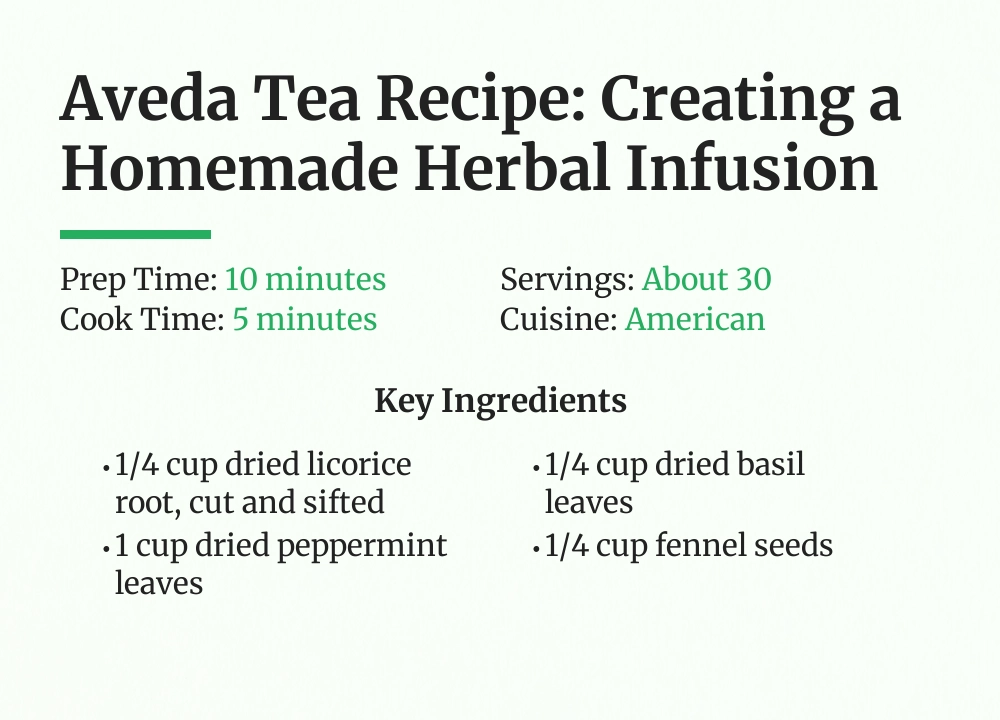
- Prep Time: 10 minutes
- Cook Time: 5 minutes
- Servings: About 30
- Course: Beverage
- Cuisine: American
- Diet: Vegan, Gluten-Free
Ingredients
- 1/4 cup dried licorice root, cut and sifted
- 1 cup dried peppermint leaves
- 1/4 cup dried basil leaves
- 1/4 cup fennel seeds
Instructions
- Place all dried herbs in a dry bowl to begin blending.
- Combine licorice root, peppermint leaves, basil leaves, and fennel seeds thoroughly.
- Use your hands to mix the herbs, ensuring an even distribution for balanced flavor.
- Transfer the blend to an airtight jar, sealing it to preserve aroma and potency.
- For brewing, measure 1 to 2 tablespoons of the mix per cup of hot water.
- Put the blend into a tea strainer or infuser, then place it in your cup.
- Pour freshly boiled water over the herbs and steep for 3 to 4 minutes.
- Remove the strainer and serve the tea hot, or cool it for an iced version.
Nutrition
- Calories: 5 kcal
- Protein: 0 g
- Fat: 0 g
- Carbohydrates: 1 g
- Sugar: 0 g
- Fiber: 0 g
- Sodium: 0 mg
- Cholesterol: 0 mg
Cooking Method
This tea employs an infusion technique where hot water extracts essential oils and compounds from the herbs. No heat application beyond boiling water is required, making it simple and efficient.
Tools Needed
- Mixing bowl for combining ingredients
- Airtight glass jar for storage
- Tea strainer or infuser
- Measuring cups and spoons
Understanding the Ingredients in Aveda Tea
Each herb in this blend contributes distinct attributes that affect the tea’s flavor, scent, and health impacts. Knowing their origins and properties helps you appreciate the final product.
Peppermint: The Cooling Agent
Peppermint leaves originate from Europe and the Middle East, valued for their high menthol content. This compound delivers a refreshing coolness that can ease digestion and clear nasal passages.
In this recipe, peppermint provides a brisk contrast to the sweetness of licorice. Selecting organic dried leaves ensures no pesticides interfere with the pure aroma.
Licorice Root: The Sweet Base
Licorice root, often sourced from Asia, contains glycyrrhizin, a natural sweetener 50 times sweeter than sugar. It has been used in traditional medicine for its anti-inflammatory and soothing qualities.
This root balances the blend’s flavor profile while supporting respiratory health. However, monitor intake if you have blood pressure concerns due to its potential effects.
Basil: The Earthy Complement
Basil leaves, common in Mediterranean cooking, add an earthy, slightly spicy note. They are rich in antioxidants like flavonoids, which may aid in reducing oxidative stress.
In the tea, basil bridges the gap between peppermint’s coolness and licorice’s sweetness. Use dried leaves for a concentrated flavor that infuses well.
Fennel Seeds: The Digestive Helper
Fennel seeds, with their licorice-like taste, come from the Mediterranean and Asia. They contain anethole, a compound studied for anti-cancer properties and digestive benefits.
These seeds reduce bloating and add complexity to the tea’s aroma. Crushing them lightly before blending can enhance oil release during steeping.
Nutritional Benefits of Aveda Tea
This herbal infusion offers more than just flavor; it packs compounds that support overall wellness. The combination works synergistically to provide comfort and health perks.
Peppermint contributes menthol, which relaxes gastrointestinal muscles and may improve breath freshness. Licorice root’s glycyrrhizin has been linked to adrenal support and anti-viral effects.
Basil provides essential oils like eugenol, known for anti-inflammatory actions. Fennel seeds aid in blood sugar regulation and heart health through fiber and potassium content.
Together, these herbs create a low-calorie beverage that can be part of a balanced diet. Regular consumption might help with stress reduction and digestive harmony.
Dietary Adaptations for Aveda Tea
This recipe is inherently vegan and gluten-free, but you can adjust it for specific needs or preferences. Simple swaps maintain the tea’s integrity while catering to dietary restrictions.
If you avoid licorice due to blood pressure issues, replace it with dried marshmallow root for similar soothing effects. For a stronger mint flavor, increase peppermint leaves and reduce fennel seeds.
Those with allergies to specific herbs can omit them or substitute with chamomile or ginger. Always check ingredient sources to ensure they meet your dietary standards.
Cultural and Historical Roots of Herbal Tea Blends
Herbal teas have a rich history dating back thousands of years, with origins in ancient Egypt, China, and India. They were used for medicinal purposes long before becoming recreational beverages.
Aveda, founded in 1978, incorporated elements of Ayurveda and aromatherapy into their blends. Their comforting tea draws on this legacy, emphasizing natural ingredients for holistic well-being.
This homemade version honors that tradition while giving you control over sourcing and composition. It reflects a global appreciation for plant-based remedies.
Common Mistakes and How to Avoid Them
Many first-time brewers over-steep the tea, leading to a bitter taste from excessive tannin extraction. Adhere to the 3-4 minute window for optimal results.
Using non-dried herbs can introduce moisture, causing mold in storage. Ensure all components are fully dehydrated before blending.
Inaccurate measurements might unbalance the flavor; for instance, too much licorice root can overpower other notes. Use standard measuring tools for consistency.
Storing the blend in clear jars exposed to light degrades quality. Choose opaque, airtight containers to preserve potency and aroma.
Serving Suggestions and Storage Tips
This tea is versatile enough for any time of day. Serve it hot in the morning to gently awaken the senses or after meals to support digestion.
Pair it with light foods like fruit salads or whole-grain crackers to complement its herbal notes. For a refreshing twist, chill brewed tea and add citrus slices.
Store the dry blend in a cool, dark place for up to six months. Label the jar with the creation date to track freshness and ensure you use it within its peak period.
The Science Behind Herbal Infusions
Steeping involves dissolving water-soluble compounds from herbs into hot water. Temperature and time are critical factors that influence extraction efficiency.
For this blend, water near boiling point (100°C) best releases essential oils and flavonoids. Longer steeping increases compound yield but risks bitterness if overdone.
The combination of peppermint, licorice, basil, and fennel creates a synergistic effect where each herb’s properties enhance the others. This maximizes both flavor and potential health benefits.
Frequently Asked Questions
What is aveda tea recipe?
Aveda tea recipe is a homemade herbal blend mimicking Aveda’s Comforting Tea, using dried peppermint, licorice root, basil, and fennel seeds for a soothing drink.
Why is aveda tea recipe important?
It allows cost-effective, customizable tea making with full ingredient control, promoting wellness through natural herbs without additives or preservatives.
How does aveda tea recipe work?
Steeping the herb mix in hot water extracts active compounds like menthol and anethole, which provide digestive aid, relaxation, and antioxidant effects.
Can I use tea bags instead of loose herbs?
Yes, but loose herbs offer better flavor control and freshness. If using bags, fill them with the blend and steep as directed.
How long does the tea blend last?
Properly stored in an airtight jar, it remains potent for about six months. Check for loss of aroma as a sign of staleness.
Is this tea safe during pregnancy?
Consult a healthcare provider first, as licorice root may not be recommended. Consider omitting it or using alternatives like ginger.
Where is the best place to buy ingredients?
Health food stores, online retailers, or bulk sections like Azure Standard offer quality dried herbs. Look for organic options to ensure purity.
Can I add sweeteners to the tea?
Yes, but the licorice root provides natural sweetness. If needed, use honey or stevia sparingly to avoid masking the herbal notes.