
You might have stood in line at Wingstop, drawn by the aroma of sizzling chicken and the promise of that signature Atomic sauce. I remember my first taste—a rush of heat that made my eyes water, followed by a surprising sweetness that kept me reaching for more. Recreating this sauce at home became a personal mission, and after countless tests, I perfected a version that captures its essence. This guide will walk you through making Wingstop’s Atomic sauce, explaining its components and how to balance its intense flavors.
Atomic sauce is more than just a condiment; it’s a blend of fiery chilies and subtle sweetness that elevates any dish. In this article, you’ll learn not only the step-by-step recipe but also the science behind its heat, nutritional insights, and ways to adapt it for different diets. Whether you’re a heat seeker or curious cook, this comprehensive resource covers everything from ingredient selection to storage tips.
How to Make Atomic Sauce Wingstop Recipe
This section provides the core recipe for replicating Wingstop’s Atomic sauce. Follow these steps closely to achieve that iconic balance of sweet and spicy notes. The process involves simmering and blending to develop a smooth, cohesive texture.
Recipe Details
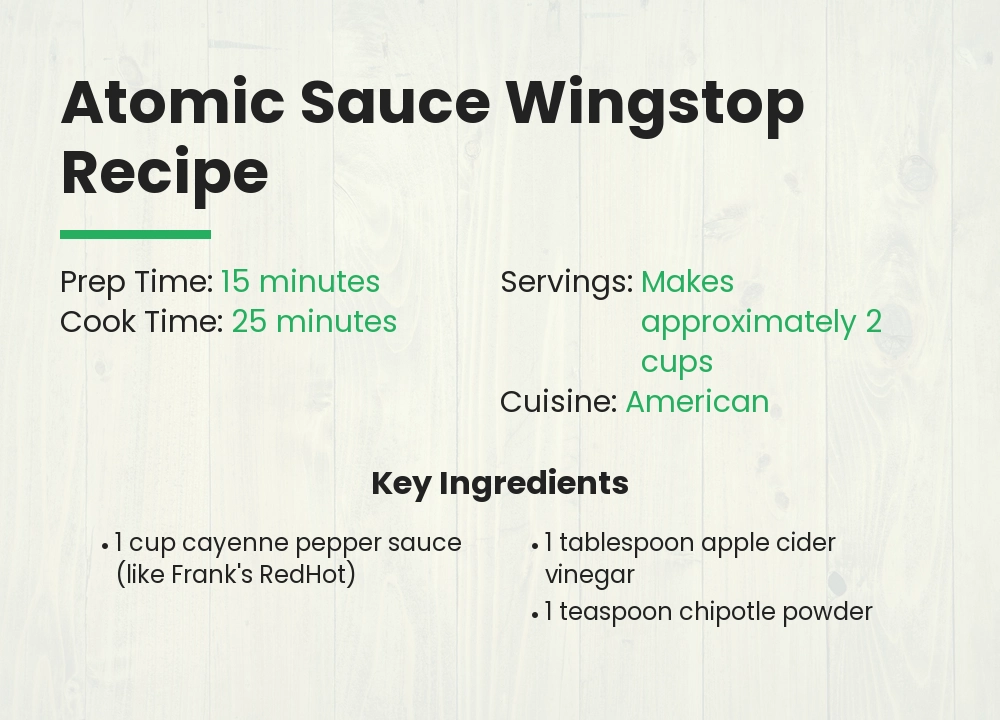
- Prep Time: 15 minutes
- Cook Time: 25 minutes
- Servings: Makes approximately 2 cups
- Course: Condiment
- Cuisine: American
- Diet: Vegetarian, Gluten-Free (check labels for additives)
Ingredients
- 1 cup cayenne pepper sauce (like Frank’s RedHot)
- 2-3 habanero peppers, seeds removed for less heat
- 1/2 red bell pepper, chopped
- 1/2 cup canned crushed tomatoes
- 2 cloves garlic, minced
- 1 tablespoon apple cider vinegar
- 1 teaspoon chipotle powder
- 1/2 tablespoon ground black pepper
- 1/4 teaspoon allspice
- 1 tablespoon brown sugar or honey
- 1/2 cup water (adjust for consistency)
- Salt to taste
Instructions
- Prepare the peppers by washing and deseeding the habaneros and bell peppers. Wear gloves to avoid skin irritation from the chilies.
- In a medium saucepan, combine the cayenne pepper sauce, chopped habaneros, bell peppers, crushed tomatoes, minced garlic, and water. Bring to a boil over medium heat.
- Reduce the heat to low and let the mixture simmer for 15-20 minutes, stirring occasionally. This allows the flavors to meld and the peppers to soften.
- Remove from heat and let it cool slightly. Transfer to a blender, adding apple cider vinegar, chipotle powder, black pepper, allspice, and brown sugar.
- Blend on high until smooth. If the sauce is too thick, add water a tablespoon at a time until desired consistency is reached.
- Taste and adjust salt or sweetness as needed. For a smoother finish, strain through a fine mesh sieve to remove any pulp.
- Store in an airtight container in the refrigerator. The sauce will thicken as it cools.
Nutrition
- Calories: 25 kcal per 2-tablespoon serving
- Protein: 1 g
- Fat: 0.5 g
- Carbohydrates: 5 g
- Sugar: 3 g
- Fiber: 1 g
- Sodium: 400 mg
- Cholesterol: 0 mg
Cooking Method
This sauce uses a stovetop simmering method to extract flavors and achieve a thick, pourable consistency. Simmering helps break down the peppers and tomatoes, creating a unified base. Avoid boiling vigorously, as it can cause bitterness.
Tools Needed
- Medium saucepan
- Blender or immersion blender
- Cutting board and knife
- Measuring cups and spoons
- Fine mesh sieve (optional, for straining)
- Gloves for handling chilies
Understanding the Atomic Sauce Flavor Profile
Wingstop’s Atomic sauce is renowned for its multi-layered taste that starts with a bold, fiery heat and finishes with a subtle sweetness. This complexity comes from the careful balance of ingredients, each contributing distinct attributes.
The Role of Chilies in Heat and Flavor
Chilies like habanero and cayenne form the backbone of this sauce. Habanero peppers, with their fruity undertones, provide a powerful heat that registers high on the Scoville scale. Cayenne pepper sauce adds a consistent, sharp spiciness that builds gradually.
Scoville Scale Interpretation
The Scoville scale measures capsaicin concentration, which dictates heat levels. Habaneros range from 100,000 to 350,000 Scoville Heat Units (SHU), while cayenne sits around 30,000 to 50,000 SHU. In Atomic sauce, this combination creates a sustained heat that isn’t overwhelming due to balancing elements.
Sweetness and Acidity Balance
Ingredients like bell peppers and brown sugar introduce a sweet contrast that tempers the chilies’ intensity. Bell peppers, with their mild flavor, add volume and a slight crunch when fresh, but they soften during cooking to blend seamlessly. Apple cider vinegar contributes acidity, which brightens the sauce and preserves it.
Ingredient Analysis and Selection
Choosing high-quality ingredients is crucial for replicating the authentic taste of Atomic sauce. Each component plays a specific role in texture, flavor, and heat management.
Cayenne Pepper Sauce
Cayenne pepper sauce, typically made from cayenne chilies, vinegar, and salt, provides a tangy base. Opt for brands with minimal additives to avoid altering the sauce’s purity. The vinegar in the sauce also acts as a natural preservative.
Habanero Peppers
Habaneros are small, lantern-shaped chilies with a floral aroma. Their heat is immediate but can be controlled by removing seeds and membranes. For a milder version, substitute with jalapeños, though this changes the Scoville rating significantly.
Bell Peppers and Tomatoes
Red bell peppers contribute a slight sweetness and help thicken the sauce without adding excessive heat. Canned crushed tomatoes provide body and a umami depth, while allspice introduces a warm, aromatic note that complements the chilies.
Nutritional Breakdown and Health Considerations
From a dietary perspective, Atomic sauce is low in calories but high in sodium and capsaicin. Understanding its nutritional impact can help you incorporate it into a balanced diet.
Caloric and Macronutrient Profile
A typical serving contains minimal fat and protein, with carbohydrates mainly from sugars in the tomatoes and sweeteners. The fiber content comes from vegetable pulp, which aids digestion.
Capsaicin and Metabolism
Capsaicin, the compound responsible for heat in chilies, may temporarily boost metabolism and promote satiety. However, excessive consumption can cause gastrointestinal discomfort in sensitive individuals.
Sodium Content Management
The high sodium levels, primarily from cayenne sauce and added salt, can be reduced by using low-sodium alternatives or omitting extra salt. This is important for those monitoring blood pressure.
Dietary Adaptations for Atomic Sauce
This recipe can be modified to suit various dietary needs without compromising flavor. Here are practical swaps for common restrictions.
Vegan and Low-Sugar Versions
For a vegan adaptation, ensure the cayenne sauce and sugar are plant-based—use maple syrup instead of honey. To reduce sugar, substitute with stevia or omit sweeteners entirely, relying on bell peppers for natural sweetness.
Gluten-Free and Allergen Notes
Most ingredients are naturally gluten-free, but check labels on canned tomatoes and pre-made sauces for hidden gluten. For nut allergies, this recipe is safe, as it contains no common allergens like nuts or dairy.
Historical Context of Hot Sauces
Hot sauces have a rich history dating back to ancient civilizations in Central and South America, where chilies were cultivated for culinary and medicinal use. In the United States, sauces like Atomic reflect a fusion of traditions, combining Caribbean heat with American fast-food culture.
Wingstop, founded in 1994, popularized Atomic sauce as part of its bold flavor lineup. It draws inspiration from habanero-based condiments common in Mexican and Caribbean cuisines, adapted for a broader palate.
Common Mistakes and Expert Tips
Avoiding pitfalls ensures your sauce turns out consistently flavorful. Here are key mistakes and how to address them.
Overheating the Sauce
Boiling the mixture too vigorously can scorch the tomatoes and chilies, leading to a bitter taste. Simmer gently and stir frequently to prevent burning.
Inconsistent Blending
For a smooth texture, blend the sauce while it’s warm but not hot to avoid pressure buildup in the blender. If chunks remain, strain through a sieve for a professional finish.
Adjusting Heat Levels
Heat tolerance varies; start with fewer habaneros and add gradually. Remember, the sauce will mellow slightly after refrigeration. Always taste and adjust seasonings before storing.
Serving Suggestions and Pairings
Atomic sauce is versatile beyond wings. Use it as a marinade for grilled meats, a dip for vegetables, or a topping for burgers and tacos. Pair with cooling sides like coleslaw or yogurt-based dips to balance the heat.
For storage, keep the sauce in a sealed jar in the refrigerator for up to two weeks. Freezing is not recommended, as it can alter the texture and flavor integrity.
The Science Behind Emulsification and Flavor Development
When you simmer and blend the ingredients, emulsification occurs, where oil-based compounds from chilies combine with water-based elements like tomatoes. This creates a stable mixture that doesn’t separate easily.
The Maillard reaction during cooking enhances depth by caramelizing sugars in the peppers and tomatoes, contributing to the sauce’s complex flavor profile. Acidity from vinegar also helps preserve the sauce by inhibiting microbial growth.
Frequently Asked Questions
What is atomic Sauce wingstop recipe?
It is a homemade version of Wingstop’s Atomic sauce, a condiment known for its intense heat from habanero and cayenne peppers, balanced with sweet and tangy elements like bell peppers and vinegar.
Why is atomic Sauce wingstop recipe important?
This recipe allows you to replicate a popular restaurant sauce at home, giving control over ingredients, heat levels, and dietary adjustments, while saving money compared to buying pre-made versions.
How does atomic Sauce wingstop recipe work?
By simmering chilies, tomatoes, and spices, then blending them, you create a smooth sauce where capsaicin from peppers provides heat, and other ingredients add complexity and balance.
Can I make Atomic sauce less spicy?
Yes, reduce the number of habanero peppers or remove their seeds and membranes, which contain most of the capsaicin. Adding more bell peppers or a touch of sweetness can also mitigate heat.
How long does homemade Atomic sauce last?
Stored in an airtight container in the refrigerator, it remains fresh for up to two weeks. The acidity from vinegar helps preserve it, but always check for off odors or mold before use.
Is Atomic sauce vegan?
The base recipe is vegan if you use plant-based sweeteners and check cayenne sauce ingredients. Avoid honey; opt for agave or sugar substitutes.
What can I substitute for habanero peppers?
Scotch bonnet peppers offer a similar heat and fruity flavor. For milder options, use serrano or jalapeño peppers, though the Scoville rating will decrease.
How do I achieve a smoother sauce texture?
Blend the mixture thoroughly while warm, and strain it through a fine mesh sieve to remove any fibrous pulp from the peppers and tomatoes.
Can I use fresh tomatoes instead of canned?
Yes, but blanch and peel fresh tomatoes before crushing them to mimic the consistency of canned crushed tomatoes. This may require adjusting cooking time for proper breakdown.
What dishes pair well with Atomic sauce?
Beyond wings, it complements grilled chicken, fish, roasted vegetables, or even as a spicy addition to sandwiches and wraps. Pair with dairy-based dips to cool the palate.