
I recall a damp autumn evening when seasonal sniffles had taken hold in my household. A mentor in herbal traditions shared a simple remedy using dried astragalus root, steeped gently on the stove. That initial brew, with its subtle earthy sweetness, became a trusted ally during colder months. You might be seeking a natural way to support your well-being without complex tonics or supplements. This astragalus tea recipe offers a straightforward method to harness the root’s properties, and I will guide you through each step as if we were in the kitchen together.
The core process involves simmering dried astragalus root slices in water to extract its beneficial compounds. I have refined this technique over years of practice, balancing flavor and potency. Below, you will find the detailed recipe to start your preparation immediately. Later sections delve into the science, history, and adaptations to tailor it to your needs.
How to Make Astragalus Tea Recipe
This section provides the complete method for crafting a basic astragalus infusion. Follow these instructions closely for a consistent result every time. The measurements are designed for two servings, but you can scale them easily.
Recipe Details
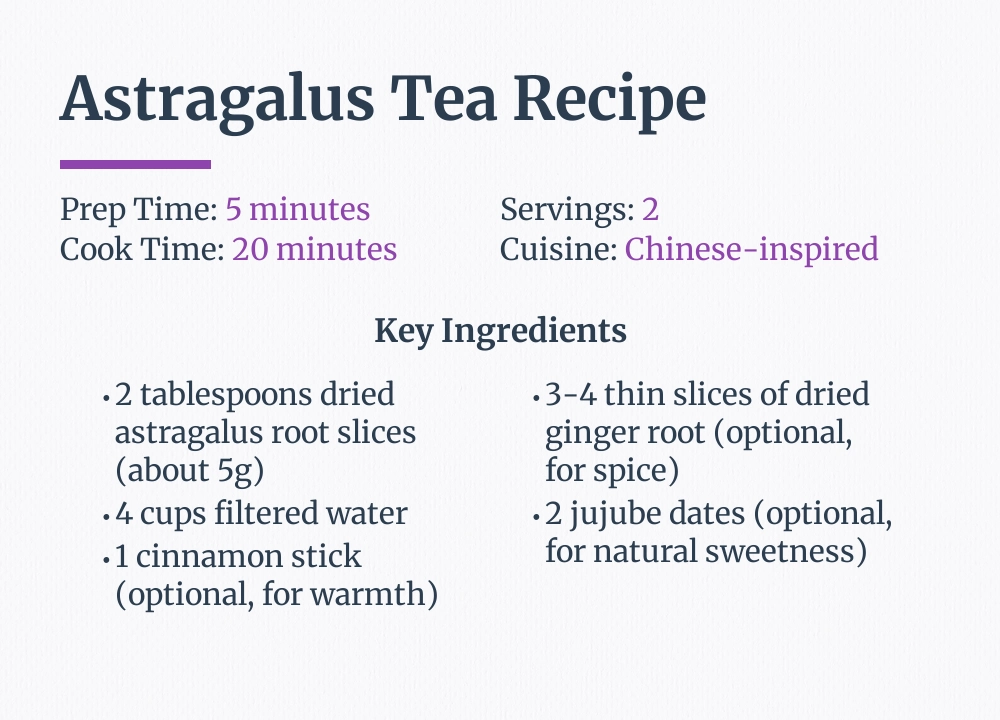
- Prep Time: 5 minutes
- Cook Time: 20 minutes
- Servings: 2
- Course: Beverage
- Cuisine: Chinese-inspired
- Diet: Vegan, Gluten-Free
Ingredients
- 2 tablespoons dried astragalus root slices (about 5g)
- 4 cups filtered water
- 1 cinnamon stick (optional, for warmth)
- 3-4 thin slices of dried ginger root (optional, for spice)
- 2 jujube dates (optional, for natural sweetness)
Instructions
- Place the dried astragalus root slices in a fine-mesh strainer and rinse briefly under cool water to remove any dust.
- In a medium-sized pot, combine the rinsed astragalus root and 4 cups of filtered water.
- If using cinnamon, ginger, or dates, add them to the pot now for infused flavor.
- Set the pot over high heat and bring the mixture to a rolling boil.
- Once boiling, reduce the heat to low, allowing the liquid to maintain a gentle simmer.
- Cover the pot partially and let it simmer for 15-20 minutes. The water will reduce slightly and take on a pale amber hue.
- After simmering, remove the pot from heat and strain the tea into cups or a teapot, discarding the solid ingredients.
- Serve the tea hot. You can store any leftovers in a sealed container in the refrigerator for up to two days.
Nutrition
- Calories: 10 kcal
- Protein: 0 g
- Fat: 0 g
- Carbohydrates: 2 g
- Sugar: 1 g
- Fiber: 0 g
- Sodium: 5 mg
- Cholesterol: 0 mg
Cooking Method
This recipe uses a decoction technique, which involves simmering tougher plant materials like roots to release their water-soluble compounds. Unlike quick steeping, simmering ensures deeper extraction of polysaccharides and flavonoids from astragalus. Keep the heat low to avoid boiling away volatile elements.
Tools Needed
- Medium-sized pot with lid
- Fine-mesh strainer
- Measuring cups and spoons
- Storage container for leftovers
Understanding Astragalus Root
Astragalus, known as Huang Qi in Traditional Chinese Medicine, is a perennial plant native to Northern China and Mongolia. Its root has been used for centuries in herbal formulations. You might encounter it in sliced, powdered, or capsule forms, but for tea, dried slices are ideal.
What Is Astragalus?
Astragalus membranaceus is the primary species used medicinally. The root contains active compounds like astragalosides and polysaccharides, which contribute to its adaptogenic properties. When selecting dried root, look for firm, yellowish slices without signs of mold or excessive dryness.
Health Benefits
Research indicates astragalus may support immune function by modulating white blood cell activity. It also exhibits antioxidant effects, helping to protect cells from oxidative stress. In traditional settings, it is often used to bolster vitality during seasonal changes or periods of fatigue.
Sourcing and Quality
Purchase organic astragalus root from reputable suppliers to avoid pesticide residues. I prefer slices over powder for tea, as they allow better control over strength and are easier to strain. Store dried root in a cool, dark place to preserve its potency.
Nutritional Science Behind Astragalus Tea
This beverage is low in calories but rich in bioactive components. The simmering process extracts these into the water, creating a hydrating infusion with potential health perks.
Key Compounds and Their Effects
Astragalus polysaccharides are known to stimulate immune responses by enhancing macrophage activity. Saponins like astragaloside IV may support cardiovascular health by promoting blood flow. Flavonoids in the root contribute to its antioxidant capacity, neutralizing free radicals.
How It Supports Immunity
Regular consumption might help maintain immune balance by encouraging the production of antibodies and interferons. This makes it a popular choice during cold and flu seasons. However, it is not a cure for diseases but a supportive measure within a healthy lifestyle.
Cultural and Historical Context
Astragalus root has been a staple in Chinese herbalism for over two millennia. It was historically used in formulas to tonify Qi, the vital energy believed to flow through the body. Practitioners often combined it with other herbs like licorice root or ginseng in soups and teas.
Origins in Traditional Chinese Medicine
In ancient texts, astragalus was categorized as a superior herb for strengthening the exterior and preventing ailments. It was commonly added to bone broths or slow-cooked dishes to extract its benefits. This tradition influences modern adaptations like astragalus soup or chai blends.
Modern Adaptations
Today, astragalus appears in various forms, from capsules to culinary recipes. Western herbalists have integrated it into immune-supporting protocols, sometimes pairing it with elderberry or reishi mushroom. This evolution reflects a blend of ancestral wisdom and contemporary science.
Dietary Adaptations and Variations
This basic recipe is inherently vegan and gluten-free, but you can customize it to suit taste preferences or dietary needs. Experiment with additional herbs or sweeteners for variety.
Vegan and Gluten-Free Options
The standard recipe contains no animal products or gluten. For extra sweetness without refined sugar, add a teaspoon of maple syrup or stevia after straining. Avoid honey if strictly vegan, but it can be used otherwise.
Adding Other Herbs and Spices
Incorporate complementary botanicals like dried orange peel for citrus notes or elderberry for a tart flavor. A chai-inspired version might include cardamom, clove, and allspice. These additions not only enhance taste but can amplify health benefits through synergistic effects.
Common Mistakes and Expert Tips
Many first-time brewers encounter issues like bitterness or weak flavor. Addressing these early ensures a more enjoyable experience.
Avoiding Bitterness
Over-simmering can release tannins that impart a harsh taste. Stick to the recommended 20-minute simmer and remove from heat promptly. If using ginger or cinnamon, add them later in the process to prevent overpowering the astragalus.
Optimal Brewing Times
For maximum extraction without bitterness, keep the simmer gentle and covered. I find that 15 minutes is sufficient for a light brew, while 20 minutes yields a stronger infusion. Adjust based on your preference for intensity.
Serving, Pairing, and Storage
Astragalus tea is versatile and can be enjoyed in multiple contexts. Consider timing and accompaniments to integrate it seamlessly into your routine.
Best Times to Drink
I prefer it in the morning or early afternoon to leverage its potential energizing effects. Avoid drinking it late in the evening if you are sensitive to herbal stimulants, though it contains no caffeine.
Food Pairings
Pair this tea with light snacks like rice crackers or fresh fruit. In Chinese cuisine, it often accompanies congee or steamed vegetables. The mild flavor complements savory dishes without clashing.
How to Store Leftovers
Refrigerate strained tea in a glass jar for up to 48 hours. Reheat gently on the stove or enjoy it chilled over ice. Do not leave it at room temperature for extended periods to prevent microbial growth.
The Science of Herbal Infusions
Understanding why simmering works helps in mastering herbal tea preparation. Roots and barks require heat and time to release their compounds effectively.
Why Simmering Works
Water acts as a solvent, breaking down cell walls in the root to extract polysaccharides and saponins. Simmering maintains a temperature high enough for extraction but low enough to preserve heat-sensitive nutrients. This method is more efficient than steeping for dense materials.
Extraction of Active Compounds
The duration and temperature directly influence the concentration of beneficial elements. Longer simmers yield higher levels of astragalus polysaccharides, which are linked to immune modulation. However, excessive heat can degrade some flavonoids, so balance is key.
Frequently Asked Questions
What is astragalus tea recipe?
It is a method of preparing a beverage by simmering dried astragalus root in water to extract its health-supporting compounds. The basic version includes only root and water, but variations add spices or sweeteners.
Why is astragalus tea recipe important?
This recipe provides a natural way to potentially enhance immune function and overall vitality. It translates traditional herbal knowledge into a simple, accessible form for daily use.
How does astragalus tea recipe work?
Simmering the root releases bioactive components like polysaccharides into the water. When consumed, these compounds may interact with immune cells, promoting balance and resilience.
Can I use fresh astragalus root?
Fresh root is less common and may require adjustments in quantity due to higher water content. Dried root is standardized and easier to measure for consistent results.
What are the side effects of astragalus tea?
It is generally safe for most people, but those with autoimmune conditions or on immunosuppressants should consult a healthcare provider. Excessive intake might cause digestive discomfort in sensitive individuals.
How long should I steep astragalus tea?
For dried root slices, simmer for 15-20 minutes. Do not steep indefinitely, as prolonged heat can make the tea bitter and less palatable.
Can I drink astragalus tea daily?
Yes, many people incorporate it into their daily routine for maintenance. Start with one cup per day and observe how your body responds before increasing frequency.
Is astragalus tea safe for children?
Children under 12 should avoid it unless advised by a pediatrician. Their developing systems may react differently to herbal compounds.
How to store astragalus tea?
Keep it in a sealed container in the refrigerator for up to two days. For longer storage, freeze it in ice cube trays and thaw as needed.
What does astragalus tea taste like?
It has a mild, earthy flavor with slight sweetness. Additions like cinnamon or dates can mask any bitterness and enhance the overall profile.