
That distinctive sweet and tangy flavor from Arby’s has a way of sticking in your memory long after the meal is over. I spent years trying to pin down what made their Bronco Berry Sauce so unique before deciding to recreate it in my own kitchen. After numerous tests and adjustments, I found a method that delivers that same balanced taste without a trip to the drive-thru.
This guide will walk you through making the sauce from scratch, with detailed explanations of each component. You will learn how to achieve the perfect consistency and flavor profile that makes this condiment so popular. Beyond the steps, we will cover the nutritional aspects, historical background, and practical tips for storage and use.
Whether you are new to this sauce or a long-time fan, this resource aims to answer every question you might have. Let us start by diving into the preparation process so you can see how simple it is to make at home.
How to Make Arby’s Bronco Berry Sauce Recipe
This section provides a straightforward approach to replicating the classic Arby’s sauce. Follow these steps closely for a result that mirrors the original in taste and texture. The ingredients are common and easy to find in most grocery stores.
You can adjust sweetness or heat levels to suit your preferences later in the process. I recommend making a full batch as it stores well and can be used in many different dishes. The entire process takes less than 30 minutes from start to finish.
Recipe Details
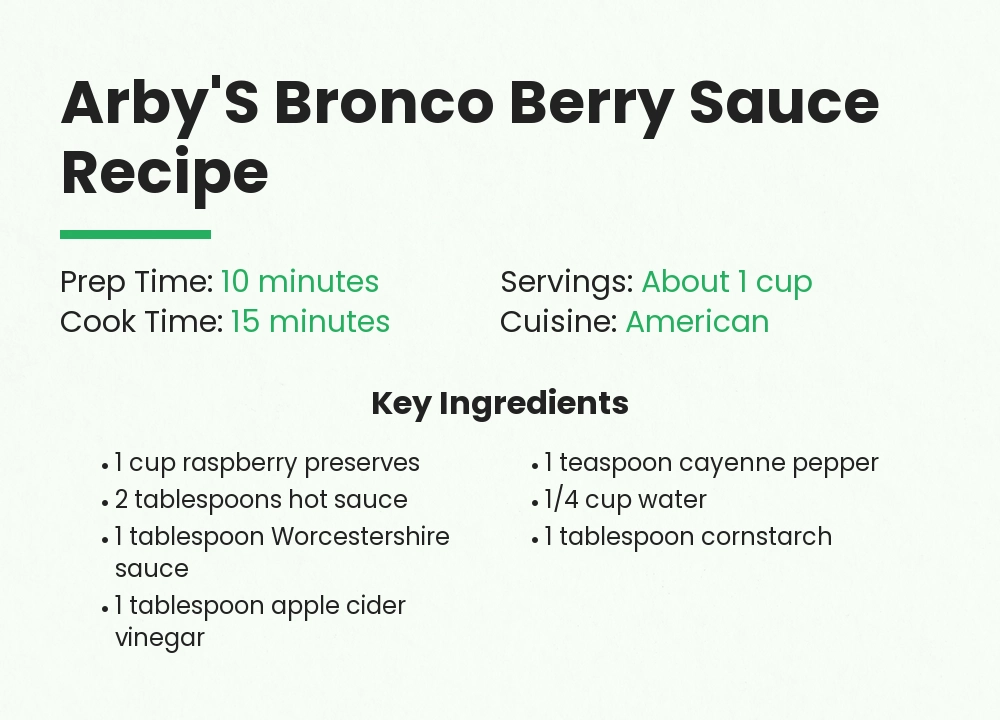
- Prep Time: 10 minutes
- Cook Time: 15 minutes
- Servings: About 1 cup
- Course: Sauce
- Cuisine: American
- Diet: Vegetarian
Ingredients
- 1 cup raspberry preserves
- 2 tablespoons hot sauce
- 1 tablespoon Worcestershire sauce
- 1 tablespoon apple cider vinegar
- 1 teaspoon cayenne pepper
- 1/4 cup water
- 1 tablespoon cornstarch
Instructions
- Combine the raspberry preserves, hot sauce, Worcestershire sauce, apple cider vinegar, and cayenne pepper in a medium saucepan.
- Place the saucepan over medium heat and stir continuously until the preserves melt completely into the mixture.
- In a separate small bowl, mix the cornstarch with water to create a slurry without any lumps.
- Pour the cornstarch slurry into the saucepan while stirring to incorporate it evenly.
- Reduce the heat to low and let the sauce simmer for 10 minutes, stirring occasionally to prevent sticking.
- Check the consistency by dipping a spoon into the sauce; it should coat the back of the spoon thickly.
- Remove the saucepan from heat and allow the sauce to cool to room temperature before transferring to a container.
Nutrition
- Calories: 45 kcal
- Protein: 0 g
- Fat: 0 g
- Carbohydrates: 11 g
- Sugar: 9 g
- Fiber: 0 g
- Sodium: 85 mg
- Cholesterol: 0 mg
Cooking Method
This sauce is prepared using a stovetop simmering technique. The process involves heating the ingredients together to meld flavors and activate thickeners. Constant stirring is key to avoiding burning or uneven texture.
Simmering helps reduce the liquid content slightly, intensifying the taste. The cornstarch requires heat to thicken properly, so do not skip the simmering step. Always cool the sauce completely before sealing it for storage to maintain quality.
Tools Needed
- Medium saucepan
- Whisk or wooden spoon
- Measuring cups and spoons
- Small bowl for mixing slurry
- Airtight container for storage
Ingredient Analysis and Selection
Each component in this recipe plays a specific role in achieving the final product. Understanding why certain items are used can help you make informed substitutions if needed. Let us break down the primary elements and their functions.
Quality ingredients often lead to a better outcome, so choose items with care. For instance, the type of berry preserves can influence the sweetness and acidity levels. I will explain how each part contributes to the overall experience.
Raspberry Preserves
Raspberry preserves form the foundation of this sauce, providing sweetness and fruitiness. They contain natural pectin, which aids in thickening without additional agents. The seeds in some preserves can add texture, but you can strain them out for a smoother finish.
Select preserves with high fruit content for a more authentic taste. Avoid products with artificial flavors or excessive sugar syrups. If you prefer a different berry, strawberry or blackberry preserves can work as alternatives.
Hot Sauce and Cayenne Pepper
Hot sauce introduces a vinegar-based heat that balances the sweetness of the berries. Cayenne pepper adds an extra layer of spiciness and depth. The combination creates a complex heat profile that is not overwhelming.
Use a standard vinegar-based hot sauce like Tabasco for best results. Adjust the amount of cayenne to control the spice level. These elements are crucial for replicating the signature kick of the original sauce.
Worcestershire Sauce
Worcestershire sauce contributes umami and slight tanginess to the mix. It contains anchovies in traditional recipes, making it non-vegetarian, but vegan versions are available. This ingredient enhances the savory notes that prevent the sauce from being overly sweet.
If you need a vegetarian option, look for brands that omit animal products. The sauce’s complexity comes from fermented ingredients, so do not skip it unless necessary. A small amount makes a significant difference in the final flavor.
Nutritional Breakdown and Health Considerations
From a dietary perspective, this sauce is relatively high in sugars due to the fruit preserves. A single tablespoon contains around 45 calories, primarily from carbohydrates. It is low in fat and protein, making it a condiment rather than a significant nutrient source.
The sugar content comes mainly from natural fruit sugars and added sweeteners in preserves. If you are monitoring sugar intake, consider using low-sugar preserves or reducing the quantity. The sauce does provide a small amount of vitamins from the berries, such as vitamin C.
Sodium levels are moderate, largely from the Worcestershire and hot sauce. Those on low-sodium diets can use reduced-sodium versions of these ingredients. The fiber content is minimal unless whole fruit is included, so it is not a major source of dietary fiber.
Overall, this sauce can fit into a balanced diet when used in moderation. Pair it with lean proteins or vegetables to create a more nutritious meal. I will discuss specific dietary adaptations in the next section for various needs.
Dietary Adaptations for Special Needs
Many people have dietary restrictions that require recipe modifications. This sauce can be easily adjusted to meet common needs like vegan, gluten-free, or low-sugar diets. Below are practical swaps that maintain the essence of the original.
Vegan Version
To make this sauce vegan, replace the Worcestershire sauce with a plant-based alternative. Many brands offer vegan Worcestershire that uses ingredients like soy sauce and molasses. Ensure the hot sauce does not contain animal-derived additives.
Check the raspberry preserves for gelatin or other non-vegan components. Most preserves are fruit-based, but it is good to verify. This version will have a similar flavor profile without any animal products.
Gluten-Free Adaptation
Traditional Worcestershire sauce often contains malt vinegar from barley, which has gluten. Use a certified gluten-free Worcestershire sauce to avoid issues. Most hot sauces and berry preserves are naturally gluten-free, but always read labels.
Cornstarch is typically gluten-free, but confirm it is processed in a safe facility if cross-contamination is a concern. With these changes, the sauce becomes suitable for those with celiac disease or gluten sensitivity.
Low-Sugar Option
For a lower sugar content, opt for sugar-free raspberry preserves or reduce the amount used. You can also add a sugar substitute like stevia, but adjust carefully to avoid bitterness. Increasing the proportion of spices can help balance the flavor without extra sweetness.
Be aware that sugar-free preserves might alter the texture, so you may need to adjust thickeners. Simmer the sauce longer to reduce and concentrate the flavors naturally. This approach cuts calories while keeping the sauce enjoyable.
Historical and Cultural Context
Arby’s introduced Bronco Berry Sauce as part of their limited-time offerings, often paired with chicken items like sandwiches or tenders. It gained a loyal following due to its unique combination of sweet fruit and spicy heat. The sauce reflects a broader trend in American fast food toward bold, signature condiments.
While the exact origins are not well-documented, it likely emerged in the early 2000s as Arby’s expanded their menu. The name “Bronco” might evoke a Western or rugged image, aligning with their branding. This sauce is similar to other berry-based condiments in barbecue traditions, which often use fruit to complement smoky flavors.
Over time, fans have noted variations in the sauce’s recipe at different locations, leading to discussions online about consistency. Making it at home ensures you get the same taste every time, regardless of regional differences. Understanding this background adds depth to your cooking experience.
Avoiding Common Mistakes and Expert Tips
Many home cooks encounter issues when making sauces like this, such as uneven thickening or flavor imbalances. Based on my tests, here are key pitfalls to avoid and tips for success. These insights come from hands-on experience and can save you time and effort.
Consistency Problems
If your sauce is too thin, it likely needs more simmering time or an additional thickener. Cornstarch slurry is effective, but add it gradually to prevent over-thickening. If the sauce becomes too thick, whisk in a small amount of water until it reaches the desired consistency.
Always cool the sauce completely before judging the thickness, as it sets upon cooling. Stir frequently during cooking to distribute heat evenly and avoid lumps. A smooth, pourable texture is ideal for dipping or drizzling.
Flavor Adjustments
Taste the sauce after cooling, as flavors develop over time. If it is too sweet, add more vinegar or hot sauce to cut through the sweetness. For more heat, incorporate extra cayenne pepper or a dash of hotter sauce varieties.
Balancing sweet, sour, and spicy elements is crucial for authenticity. Write down any changes you make so you can replicate them in future batches. Remember that ingredients can vary by brand, so adjustments may be necessary.
Storage and Shelf Life
Store the sauce in an airtight container in the refrigerator for up to two weeks. Glass jars with tight seals work best to preserve freshness. If you notice any mold or off odors, discard the sauce immediately.
For longer storage, freeze the sauce in portion-sized containers for up to three months. Thaw it in the refrigerator before use and stir well to recombine any separated liquids. Proper storage maintains both safety and quality.
Serving Suggestions and Pairing Ideas
This versatile sauce can be used in numerous ways beyond its classic fast-food applications. I have experimented with various pairings to maximize its potential. Here are some categories to inspire your meals.
Traditional Dipping Uses
Serve the sauce alongside chicken tenders, nuggets, or fried fish for a familiar experience. It also complements mozzarella sticks or onion rings as a tangy dip. The sweet and spicy profile cuts through the richness of fried foods.
For a lighter option, use it as a dressing for salads with grilled chicken or mixed greens. Thin it with a bit of olive oil if needed for easier tossing. This approach adds flavor without excessive calories.
Grilled and Roasted Dishes
Brush the sauce onto grilled chicken breasts or pork chops during the last few minutes of cooking. The sugars can caramelize slightly, creating a glossy glaze. Avoid applying it too early to prevent burning.
Roasted vegetables like carrots or Brussels sprouts benefit from a drizzle of this sauce after cooking. The acidity brightens the earthy flavors and adds moisture. Experiment with different proteins and veggies to find your favorite combinations.
Creative Culinary Applications
Mix the sauce into cream cheese or mayonnaise to create a spread for sandwiches or burgers. It can also be used as a base for marinades by combining with oil and herbs. Try it as a topping for baked potatoes or mixed into grain bowls.
For breakfast, swirl it into yogurt or oatmeal for a fruity twist. The possibilities are nearly endless, so do not limit yourself to conventional uses. I often make a double batch to have on hand for quick meal enhancements.
The Science Behind Sauce Emulsification and Thickening
Understanding the basic science involved can improve your sauce-making skills. This recipe relies on pectin from fruit and starch from cornstarch for thickening. Pectin is a natural fiber that gels when heated with sugar and acid.
Cornstarch granules swell and absorb liquid when heated, creating a thicker consistency. The acid from vinegar and hot sauce helps balance pH, which can affect how these thickeners perform. Simmering activates these processes without boiling, which might break emulsions.
If you substitute thickeners, note that arrowroot or tapioca starch behave differently than cornstarch. They might require adjusted ratios or cooking times. Knowing these principles allows you to troubleshoot and adapt recipes confidently.
Frequently Asked Questions
What is Arby’s Bronco Berry Sauce?
It is a sweet and spicy condiment made from berry preserves, hot sauce, and other flavorings. Arby’s serves it primarily as a dipping sauce for chicken items. The homemade version replicates this using common kitchen ingredients.
Can I use fresh berries instead of preserves?
Yes, but you will need to cook them down with sugar to achieve a similar consistency and sweetness. Use about 1 cup of fresh berries and 1/4 cup sugar, simmered until broken down. This method may require additional thickening agents like cornstarch.
How long does homemade Bronco Berry Sauce last?
When stored in an airtight container in the refrigerator, it lasts up to two weeks. Always check for signs of spoilage before use. For longer storage, freezing is recommended for up to three months.
Is this sauce spicy?
It has a mild to moderate heat level, depending on the amount of hot sauce and cayenne used. You can adjust the spiciness by reducing or increasing these ingredients. The sweetness from the berries helps balance the heat.
Can I make this sauce without cornstarch?
Yes, you can omit cornstarch and simmer the sauce longer to reduce and thicken it naturally. Alternatively, use other thickeners like arrowroot powder or tapioca starch. Keep in mind that the texture might vary slightly.
What can I substitute for Worcestershire sauce?
For a similar flavor, use soy sauce mixed with a bit of vinegar and molasses. If you avoid soy, coconut aminos can work as an alternative. The goal is to replicate the umami and tanginess.
Why did my sauce turn out too bitter?
Bitterness can come from overcooking the berries or using low-quality preserves. Ensure you do not burn the ingredients during simmering. Adding a pinch of sugar can help counteract bitterness if it occurs.
How can I make the sauce smoother?
Strain the sauce through a fine mesh sieve after cooking to remove any seeds or lumps. For an ultra-smooth texture, use an immersion blender before cooling. This step is optional but improves mouthfeel.
Is Bronco Berry Sauce gluten-free?
The homemade version can be gluten-free if you use certified gluten-free Worcestershire sauce and other ingredients. Check labels carefully, as some products may contain gluten. Arby’s original sauce may not be gluten-free due to cross-contamination risks.
What are the best dishes to pair with this sauce?
It pairs well with fried or grilled chicken, meatballs, and vegetable platters. You can also use it as a glaze for meats or a topping for burgers. Experiment to find combinations that suit your taste preferences.