
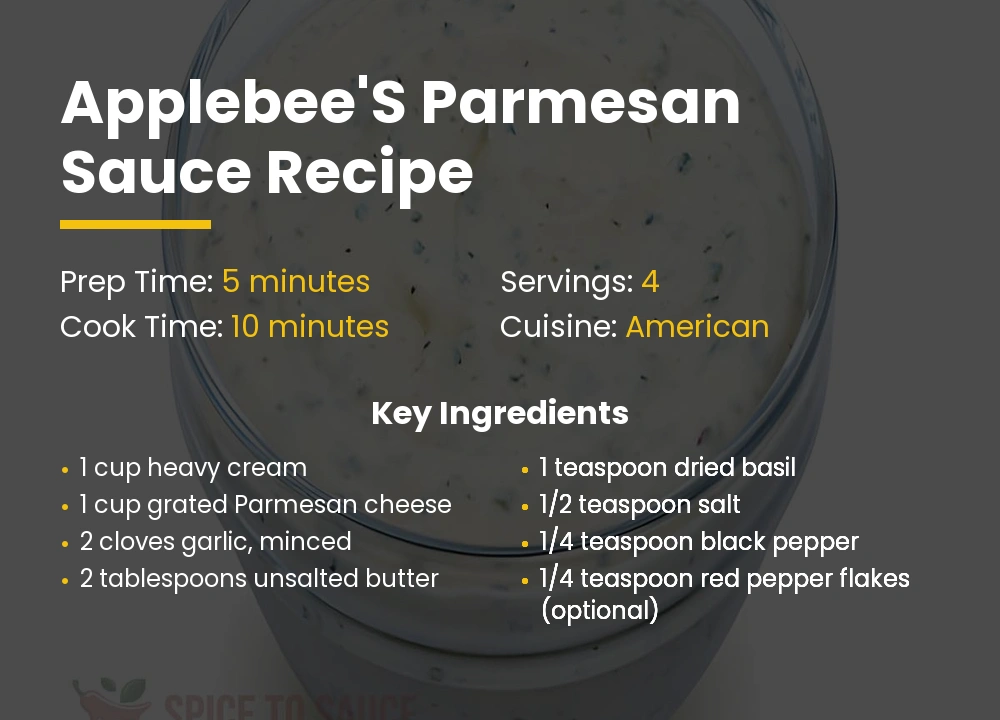
Many home cooks seek to replicate restaurant sauces for quality and cost control. I developed this copycat recipe through extensive testing in my kitchen.
You might recognize this sauce from Applebee’s steak and shrimp dishes. My version captures that creamy, savory profile with accessible ingredients.
This guide provides the recipe alongside practical cooking science. Let’s begin with the straightforward steps to make the sauce.
How to Make Applebee’s Parmesan Sauce Recipe
Recipe Details
These details help you plan your cooking session efficiently. Note the times and servings for best results.
- Prep Time: 5 minutes
- Cook Time: 10 minutes
- Servings: 4
- Course: Sauce
- Cuisine: American
- Diet: Vegetarian
Ingredients
Gather these items before you begin to ensure a smooth cooking process. Fresh ingredients yield the best flavor.
- 1 cup heavy cream
- 1 cup grated Parmesan cheese
- 2 cloves garlic, minced
- 2 tablespoons unsalted butter
- 1 teaspoon dried basil
- 1/2 teaspoon salt
- 1/4 teaspoon black pepper
- 1/4 teaspoon red pepper flakes (optional)
Instructions
- Melt butter in a saucepan over medium heat.
- Add minced garlic and sauté for about 1 minute until fragrant.
- Pour in heavy cream and bring to a gentle simmer.
- Reduce heat to low and gradually whisk in Parmesan cheese.
- Stir continuously until the cheese is fully melted and sauce thickens.
- Add dried basil, salt, black pepper, and red pepper flakes if using.
- Cook for another 2-3 minutes, stirring often, until desired consistency is reached.
- Remove from heat and serve immediately over your chosen dish.
Nutrition
This nutritional information is per serving based on four servings. Adjust values if you modify ingredients.
- Calories: 320 kcal
- Protein: 10 g
- Fat: 28 g
- Carbohydrates: 4 g
- Sugar: 2 g
- Fiber: 0 g
- Sodium: 450 mg
- Cholesterol: 90 mg
Cooking Method
This sauce uses a stovetop method with constant stirring to prevent burning. Medium heat works best for melting ingredients evenly.
You’ll see the sauce thicken as the cheese incorporates. Adjust heat lower if it bubbles too vigorously.
Tools Needed
A medium saucepan and a whisk are essential for this recipe. Have a measuring cup and spoons ready for accuracy.
A silicone spatula can help scrape the sides of the pan. Keep a timer nearby to monitor cooking times.
Ingredient Insights
Each component plays a specific role in the sauce’s texture and taste. Understanding these roles helps you make informed substitutions.
Parmesan cheese provides a salty, umami depth that defines the sauce. Heavy cream adds richness and creates a smooth emulsion.
Parmesan Cheese Selection
Use freshly grated Parmesan for optimal melting and flavor. Pre-grated cheese often contains anti-caking agents that affect texture.
Authentic Parmigiano-Reggiano offers a nutty, salty profile. Domestic Parmesan works well but may require salt adjustment.
Heavy Cream and Dairy
Heavy cream has a high fat content that prevents curdling. It also gives the sauce its luxurious mouthfeel and stability.
For a lighter version, half-and-half can substitute but will yield a thinner sauce. Whole milk with a cornstarch slurry might work for dietary needs.
Garlic and Seasonings
Fresh minced garlic delivers the best aromatic punch. Sauté it just until fragrant to avoid any bitter notes.
Dried basil contributes an herbal hint without overpowering. Red pepper flakes add a subtle heat that balances the creaminess.
Serving and Pairing Ideas
This versatile sauce elevates many proteins and carbohydrates. It mimics the topping for Applebee’s steak and shrimp dish.
Consider it a foundation for various meals throughout your week. The sauce can be adapted to suit different dietary preferences.
With Grilled Proteins
Pair it with a juicy grilled ribeye or sirloin steak for a classic combination. Season shrimp with Cajun spices for a fun twist.
Simply cook your protein to preference and ladle the sauce over top. This creates a restaurant-style plate at home.
As a Pasta Sauce
Toss the sauce with freshly cooked fettuccine or linguine for a quick meal. Add sautéed vegetables or chicken for extra substance.
It makes a great pasta sauce that coats each strand evenly. You can thin it slightly with pasta water if needed.
For Side Dishes
Drizzle it over mashed potatoes or steamed broccoli for enhanced flavor. Use it as a dip for breadsticks or artichoke hearts.
This transforms ordinary side dishes into something special. The sauce adds a creamy element that complements textures.
Storage and Reheating
Store leftover sauce in an airtight container in the refrigerator. It will keep for up to three days when properly sealed.
Reheat gently on the stovetop over low heat while stirring. Add a splash of milk or cream to restore consistency if it thickens.
Freezing is not recommended due to dairy separation. The sauce may become grainy upon thawing and reheating.
Plan to use leftovers within a few days for best quality. This ensures the flavors remain bright and the texture smooth.
Dietary Adaptations
You can modify this recipe to meet various dietary needs. Simple swaps allow for vegan, keto, or lower-fat versions.
Always adjust seasonings after making substitutions. Different ingredients will alter the final taste profile.
Vegan Version
Replace heavy cream with full-fat coconut milk or cashew cream. Use nutritional yeast or vegan Parmesan cheese for the cheesy flavor.
Sauté the garlic in olive oil instead of butter. The sauce will have a similar consistency but a distinct plant-based taste.
Low-Carb and Keto
This sauce is naturally low-carb, making it suitable for keto diets. Ensure your Parmesan cheese has no added sugars.
Serve it over zucchini noodles or cauliflower mash for a complete meal. The high fat content aligns with keto macros.
Reducing Sodium and Fat
Choose a low-sodium Parmesan cheese to cut salt content. You can also reduce the added salt in the recipe.
Use half heavy cream and half whole milk to lower fat. The sauce will be lighter but still creamy.
Expert Tips and Common Mistakes
Grate your own cheese from a block for smoother melting. Pre-shredded cheese contains cellulose that can cause graininess.
Cook the garlic just until fragrant to avoid bitterness. Overcooked garlic can impart a harsh taste to the sauce.
Simmer the cream gently to prevent scorching. High heat may cause the dairy to separate or burn.
Whisk constantly while adding cheese to ensure even incorporation. This prevents clumps and creates a silky texture.
If the sauce becomes too thick, thin it with a little milk or cream. For a thicker sauce, simmer longer or add more cheese.
Avoid boiling the sauce after adding the cheese. Excessive heat can make the proteins in cheese tough and stringy.
Let the sauce rest for a minute before serving. This allows the flavors to meld and the consistency to set slightly.
Frequently Asked Questions
Can I use pre-grated Parmesan cheese?
Pre-grated Parmesan can be used, but freshly grated cheese melts better and offers superior flavor. The anti-caking agents in pre-grated cheese may affect the sauce’s smoothness.
How do I store leftover Parmesan sauce?
Store leftover sauce in an airtight container in the refrigerator for up to three days. Reheat it gently on the stovetop over low heat, stirring occasionally.
Can I make this sauce vegan?
Yes, replace heavy cream with cashew cream or full-fat coconut milk, and use nutritional yeast or vegan Parmesan for cheese. Adjust seasonings to taste.
What dishes pair well with this sauce?
This sauce pairs excellently with grilled steak, shrimp, pasta, mashed potatoes, and vegetables. It’s versatile and can enhance many main courses and sides.
How can I adjust the thickness of the sauce?
To thin the sauce, add a splash of milk or cream while heating. To thicken it, simmer longer or whisk in a small amount of grated cheese.
Is this sauce gluten-free?
Yes, this Parmesan sauce is naturally gluten-free as written. Always check labels on ingredients like pre-grated cheese for hidden additives.
Can I use fresh basil instead of dried?
Yes, use one tablespoon of chopped fresh basil in place of dried. Add it at the end of cooking to preserve its bright flavor.
How can I prevent the sauce from separating?
Keep the heat low and avoid boiling after adding cheese. Constant stirring and gradual incorporation of ingredients help maintain emulsion.