
There is a specific comfort found in restaurant sauces we try to recreate at home. For many, the rich, savory blanket of Applebee’s Parmesan cream sauce is that flavor. It transforms a simple grilled chicken breast or a pile of fettuccine into something memorable.
I have analyzed this sauce from every angle in my kitchen. As a dietician, I also look at its components to understand how we can enjoy it smartly. This guide provides the exact method to make it, along with the science, history, and adaptations you need.
You will learn not just how to combine ingredients, but why each one matters. We will cover its perfect pairings, storage methods, and how to adjust it for various dietary needs. This is the complete resource for mastering this popular sauce.
How to Make Applebees Parmesan Cream Sauce Recipe
This is the foundational recipe. Follow these steps closely for a sauce that is creamy, well-seasoned, and clings perfectly to pasta, meat, or vegetables. The process is straightforward but requires attention to heat and timing.
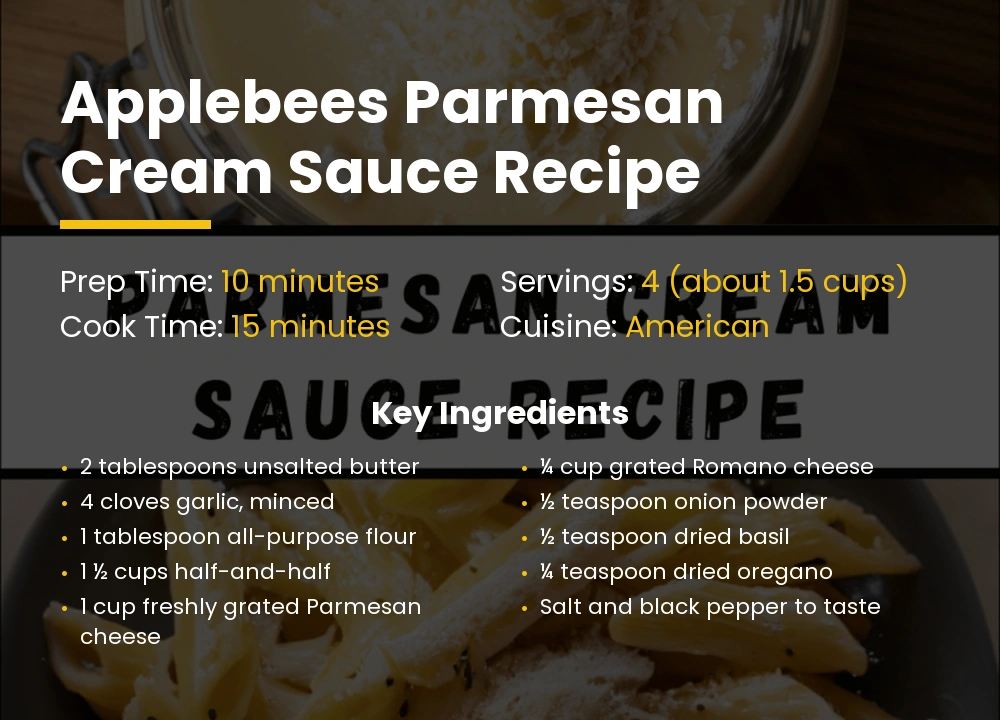
Recipe Details
- Prep Time: 10 minutes
- Cook Time: 15 minutes
- Servings: 4 (about 1.5 cups)
- Course: Sauce
- Cuisine: American
- Diet: Vegetarian
Ingredients
- 2 tablespoons unsalted butter
- 4 cloves garlic, minced
- 1 tablespoon all-purpose flour
- 1 ½ cups half-and-half
- 1 cup freshly grated Parmesan cheese
- ¼ cup grated Romano cheese
- ½ teaspoon onion powder
- ½ teaspoon dried basil
- ¼ teaspoon dried oregano
- Salt and black pepper to taste
Instructions
- Melt the butter in a medium saucepan over medium-low heat. Add the minced garlic and cook for 1-2 minutes until fragrant, stirring constantly to prevent burning.
- Sprinkle the flour over the melted butter and garlic. Whisk continuously for about 1 minute to form a pale golden roux. This step cooks the raw flour taste out.
- Slowly pour in the half-and-half while whisking constantly to ensure no lumps form. Increase the heat to medium and bring the mixture to a gentle simmer, whisking frequently.
- Once simmering, reduce the heat to low. Gradually add the grated Parmesan and Romano cheese, a handful at a time, whisking until each addition is fully melted and incorporated before adding the next.
- Stir in the onion powder, dried basil, and dried oregano. Continue to cook on low for 3-5 minutes, allowing the sauce to thicken slightly and the flavors to meld. It should coat the back of a spoon.
- Remove from heat. Taste and season with salt and black pepper as needed. The cheese already provides salt, so add sparingly. Let the sauce stand for 2-3 minutes before serving; it will continue to thicken.
Nutrition
- Calories: 310 kcal
- Protein: 14 g
- Fat: 24 g
- Saturated Fat: 15 g
- Monounsaturated Fat: 4 g
- Carbohydrates: 8 g
- Sugar: 0.4 g
- Fiber: 0.2 g
- Sodium: 680 mg
- Cholesterol: 75 mg
Cooking Method
This sauce uses a classic French technique called a roux. Butter and flour are cooked together, then liquid is added to create a béchamel. Cheese is introduced to transform it into a Mornay sauce. Controlling the heat is critical. Too high, and the dairy may scorch or the fat separate.
Tools Needed
- Medium saucepan (2-quart is ideal)
- Whisk
- Microplane or box grater for cheese
- Measuring cups and spoons
The Anatomy of the Sauce: Ingredient Analysis
Each component in this recipe has a specific functional and flavorful role. Understanding these roles helps you make informed substitutions and troubleshoot any issues.
Parmesan and Romano Cheeses
These are the core flavor agents. True Parmigiano-Reggiano, aged for 24 months or more, provides nutty, crystalline notes. Romano, often Pecorino, offers a sharper, saltier, more piquant profile. The combination creates a complex savory depth. Pre-grated cheese often contains anti-caking agents like cellulose, which can make your sauce grainy and less smooth. Grating your own cheese is non-negotiable for ideal texture.
Half-and-Half
Half-and-half, at 10-12% milk fat, provides richness without the overwhelming heaviness of heavy cream. It allows the cheese flavor to remain the star. Its protein and fat content emulsify with the roux to create a stable, silky base. Whole milk can be used for a lighter version, but the sauce will be thinner.
The Aromatic Foundation: Butter, Garlic, and Flour
Butter offers a rich, rounded flavor base for the roux. Garlic adds its essential pungent aroma, which mellows beautifully during cooking. The flour acts as a thickening agent. Cooking it in the butter neutralizes its raw taste and allows it to evenly absorb the liquid later, preventing clumps.
Herbs and Seasonings
Onion powder delivers a consistent, sweet-savory note without the texture of fresh onions. Dried basil and oregano provide the subtle, herbaceous backbone characteristic of many Italian-American sauces. These dried herbs are used because their flavor holds up well in the creamy, simmering liquid.
Nutritional Perspective and Dietary Adaptations
From a dietary standpoint, this sauce is energy-dense, primarily from fats and proteins. A single serving provides a significant amount of calcium and protein from the dairy. The sodium level is considerable due to the cheese. Here is how you can modify the recipe to fit different needs.
Considering Macronutrients
The sauce’s profile is high in fat, moderate in protein, and lower in carbohydrates. For those monitoring energy intake, portion control is effective. Using it as a generous garnish rather than a main component is a practical approach. The 4 grams of monounsaturated fat per serving come primarily from the dairy.
For Ketos Extreme Low-Carb Guidelines
This sauce can fit a ketogenic diet with one change. Replace the all-purpose flour with a fine almond flour or a pinch of xanthan gum as a thickener. Ensure no starchy fillers are in your cheese. Serve over zucchini noodles or a grilled ribeye steak.
Addressing Lactose Intolerance or Dairy-Free Needs
For a dairy-free version, use a high-fat, unsweetened plant milk like cashew or oat milk. Vegan butter works for the roux. Nutritional yeast, combined with a sprinkle of miso paste, can mimic the umami of Parmesan. Shredded vegan cheese alternatives made from coconut oil or cashews can melt in, though results vary by brand.
Managing Sodium and Saturated Fat
To reduce sodium, seek out a lower-sodium Parmesan cheese and omit added salt. For saturated fat, use whole milk instead of half-and-half. The sauce will be lighter but still flavorful.
Historical and Culinary Context
The Parmesan cream sauce at Applebee’s is a modern iteration of a much older tradition. It belongs to the family of creamy cheese sauces that have roots in French and Italian culinary practice.
The French Mornay sauce, a béchamel with Gruyère or Parmesan, dates back centuries. Italian cuisine has its own rich history of using Parmigiano-Reggiano in cooked sauces, particularly in the Emilia-Romagna region. This American restaurant version simplifies and standardizes these concepts for a broad audience.
It reflects the late 20th-century trend of “Italian-American” cuisine, where rich, comforting, and familiar flavors were prioritized. The sauce is designed to be universally pleasing, pairing with multiple proteins and starches on a large chain restaurant menu.
Expert Tips for Consistent Results
Small details separate a good sauce from a great one. These insights come from repeated testing and understanding the chemical interactions in your pan.
Preventing Graininess and Separation
Sauce graininess usually comes from two sources. The first is using pre-grated cheese with cellulose. The second is adding cheese to a sauce that is too hot, causing the proteins to clump. Always add cheese off the direct heat or on very low heat. If your sauce breaks and looks oily, a splash of cold cream or milk whisked vigorously can often bring it back together.
The Importance of Fresh Garlic
Garlic powder will not provide the same aromatic foundation. Mince your garlic finely so it disperses evenly and cooks quickly without burning. Burnt garlic becomes bitter and will ruin the sauce’s delicate balance.
Thickness Control
Remember the sauce thickens as it cools. If it seems too thin after cooking, let it stand for five minutes. If it is too thick for your liking, whisk in a tablespoon of warm milk or half-and-half until the desired consistency is reached.
Serving, Pairing, and Storage Instructions
This sauce’s versatility is its greatest asset. While famous for topping steak and shrimp, its applications are nearly endless.
Classic Applebee’s Applications
For the full steak and shrimp Parmesan experience, grill an 8-ounce ribeye steak and a skewer of shrimp seasoned with Old Bay. Serve the steak and shrimp over mashed potatoes or fettuccine pasta, then ladle the sauce generously over everything. A chicken breast filet, pan-fried or grilled, smothered in this sauce is another simple, satisfying meal.
Beyond the Restaurant Menu
Consider it for vegetables like broccoli or asparagus. Use it as a decadent dip for breadsticks or artichokes. It can even be a base for a creamy baked pasta dish, mixed with cooked penne and chicken before being topped with marinara sauce and more cheese.
Storage Instructions Store Leftover Parmesan Sauce
Cool the sauce completely before transferring it to an airtight container. It will keep in the refrigerator for 3-4 days. Reheat it gently in a saucepan over low heat, adding a small splash of milk to loosen it if necessary. Whisk constantly during reheating.
Freezing is not recommended. The dairy base can separate and become grainy when thawed and reheated, compromising the texture significantly.
Frequently Asked Questions
Can I use heavy cream instead of half-and-half?
Yes, heavy cream will create a richer, thicker sauce. You may need to slightly increase the amount of cheese to balance the extra fat and maintain the sharp Parmesan flavor.
My sauce is too salty. How can I fix it?
It is difficult to remove salt. Your best option is to dilute the batch by making a second, unsalted batch of the base sauce (without cheese) and gradually blending the two together. For future attempts, use low-sodium cheese and add salt only at the end, after tasting.
What is the best pasta to use with this sauce?
Fettuccine is the classic choice because its broad, flat shape holds the creamy sauce well. Other good options are penne, rigatoni, or cavatappi. Their shapes trap the sauce inside their tubes and ridges.
How can I make this sauce ahead of time?
You can prepare the sauce 1-2 days in advance. Store it in the refrigerator. When ready to serve, reheat it slowly on the stove with a little extra milk or cream to restore its creamy consistency.
Is this sauce gluten-free?
As written, it is not due to the all-purpose flour. For a gluten-free version, substitute the flour with an equal amount of a gluten-free 1:1 baking blend or use 1 teaspoon of cornstarch dissolved in cold water, added after the half-and-half.
What can I substitute for Romano cheese?
If you cannot find Romano, you can use all Parmesan. For a closer flavor profile, Asiago cheese is a good alternative, offering a similar sharp and salty character.
Can I add other herbs?
Absolutely. A teaspoon of chopped fresh basil added at the end would be wonderful. Thyme or a pinch of red pepper flakes are also common additions for a different flavor profile.
Why did my sauce turn out lumpy?
Lumps typically form if the half-and-half is added too quickly to the roux without constant whisking, or if the heat was too high. You can often salvage it by straining the sauce through a fine-mesh sieve to remove the lumps.