
You searched for a crab boil sauce with the bold kick of Low Country or Angry Crab Shack, and found only vague hints. I faced the same challenge after a memorable meal at a coastal boil. This recipe replicates that famous Trifecta Sauce, a spicy condiment that transforms seafood. Let’s make it together in your kitchen today.
We will create a balanced blend of heat, sweetness, and tang from scratch. You will understand not just the steps, but the science and history behind each ingredient.
How to Make Angry Crab Sauce Recipe
This section provides the complete formula for the signature Angry Crab Trifecta Sauce. Follow these steps for a consistent, restaurant-quality result every time. The process is straightforward and uses common kitchen tools.
Recipe Details
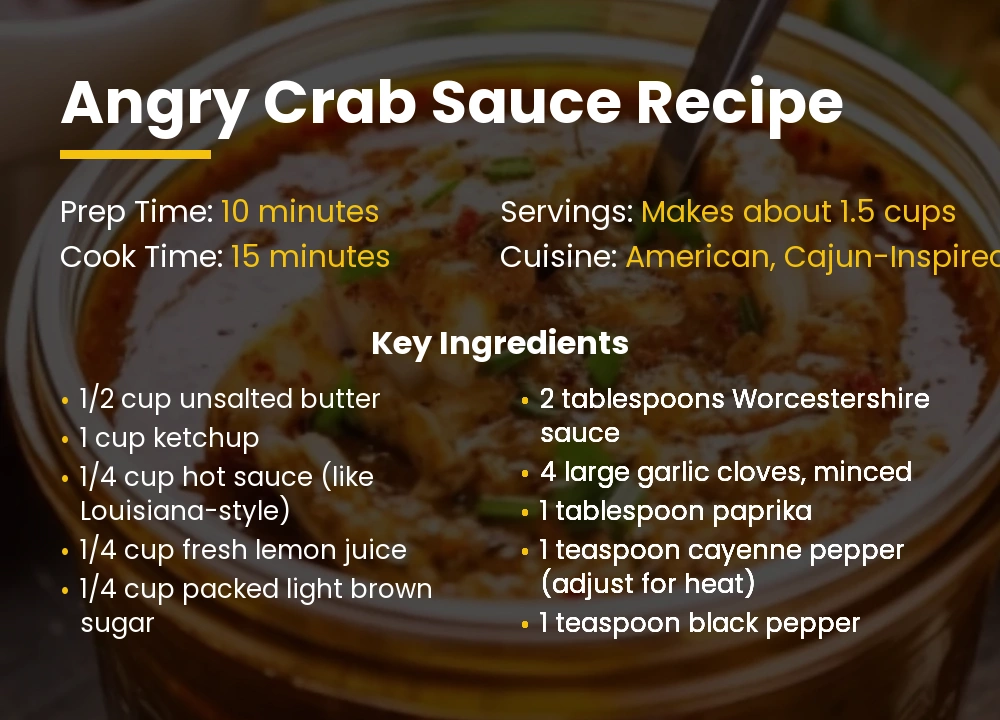
- Prep Time: 10 minutes
- Cook Time: 15 minutes
- Servings: Makes about 1.5 cups
- Course: Condiment, Sauce
- Cuisine: American, Cajun-Inspired
- Diet: Gluten-Free
Ingredients
- 1/2 cup unsalted butter
- 1 cup ketchup
- 1/4 cup hot sauce (like Louisiana-style)
- 1/4 cup fresh lemon juice
- 1/4 cup packed light brown sugar
- 2 tablespoons Worcestershire sauce
- 4 large garlic cloves, minced
- 1 tablespoon paprika
- 1 teaspoon cayenne pepper (adjust for heat)
- 1 teaspoon black pepper
- 1/2 teaspoon onion powder
Instructions
- Melt the butter in a medium saucepan over medium heat. Add the minced garlic and sauté for about 60 seconds until fragrant and golden.
- Pour in the ketchup, hot sauce, lemon juice, Worcestershire sauce, and add the brown sugar. Stir continuously with a whisk to combine.
- Sprinkle in the paprika, cayenne pepper, black pepper, and onion powder. Whisk again until all spices are fully incorporated into the liquid.
- Bring the mixture to a gentle simmer, then reduce the heat to low. Let it cook for 10-12 minutes, stirring occasionally.
- You will see the sauce thicken slightly and the color deepen to a rich red. Remove it from the heat and let it cool for 5 minutes before serving.
Nutrition
- Calories: 80 kcal
- Protein: 0.5 g
- Fat: 6 g
- Carbohydrates: 7 g
- Sugar: 6 g
- Fiber: 0.1 g
- Sodium: 250 mg
- Cholesterol: 15 mg
Values are per 2-tablespoon serving. They are estimates based on the ingredients used. Sodium content can vary with brand choices for ketchup and hot sauce.
Cooking Method
The sauce is made using a stovetop simmering method. This technique melds flavors and achieves the ideal consistency. It involves sautéing aromatics first, then combining and reducing wet ingredients.
Tools Needed
- Medium saucepan (2-quart capacity)
- Whisk
- Measuring cups and spoons
- Cutting board and knife for garlic
- Juicer for fresh lemon juice
The History of This Spicy Condiment
This sauce is rooted in the tradition of seafood boils from the American Low Country and Gulf Coast. Establishments like the Angry Crab Shack popularized such bold Cajun flavors. The “Trifecta” name refers to the harmony of sweet, spicy, and tangy notes.
It evolved from simple melted butter dips for crab into complex, packaged boil bags. My version honors that history while giving you control over ingredients. Understanding this background explains why the flavor profile works so well.
Ingredient Purpose and Selection
Each component plays a specific role in building the sauce’s layered taste. Knowing why they are included helps you make informed substitutions if needed. Let’s examine the key players beyond their basic listing.
Butter and Aromatics
Unsalted butter provides a rich, silky base that carries other flavors. It also helps the sauce cling to seafood like crab and shrimp. Fresh garlic, when sautéed, loses its raw bite and adds a deep, savory foundation.
You can substitute with ghee for a slightly nuttier taste. Avoid margarine as it may separate and offer an artificial flavor. The quality of your butter directly influences the sauce’s final mouthfeel.
The Tomato Foundation
Ketchup is the primary tomato element, contributing sweetness, tang, and body. Its vinegar and sugar content are crucial for the sauce’s balance. Use a standard brand without high-fructose corn syrup for a cleaner taste.
Tomato paste can be used in a pinch but requires additional liquid. I tested both and found ketchup provides the right consistency immediately. This choice saves time and ensures reliable results.
Heat and Acidity Sources
Louisiana-style hot sauce brings vinegar-based heat without overpowering smokiness. Lemon juice adds a bright, fresh acidity that cuts through the richness. The combination prevents the sauce from tasting overly heavy or flat.
You can adjust the cayenne pepper level to match your preferred spice level. Remember, the heat will intensify slightly as the sauce simmers. Start with the recommended amount and add more after tasting.
Sweetness and Umami
Light brown sugar caramelizes subtly, rounding out the sharp edges of vinegar and lemon. Worcestershire sauce contributes savory depth with its anchovy and tamarind notes. These elements create the “Trifecta” balance that defines the sauce.
Molasses can replace brown sugar for a darker, more robust sweetness. Soy sauce or tamari are gluten-free options for umami if you skip Worcestershire. I prefer Worcestershire for its classic, complex profile.
Nutritional Profile and Dietician Notes
As a dietician, I analyze this sauce for its sodium, fat, and sugar content. The main considerations are portion control and ingredient quality. Used moderately, it can be part of a balanced diet.
The sauce provides minimal protein or fiber but enhances the consumption of lean seafood. The fat from butter is primarily saturated, which should be consumed in moderation. You can reduce the butter by half and replace it with vegetable broth for a lighter version.
The sugar content comes mainly from ketchup and brown sugar. Using a no-sugar-added ketchup and reducing the brown sugar by half lowers the carbohydrate count. Always check labels if managing conditions like diabetes or hypertension.
Adaptations for Different Diets
Many readers ask for variations to suit dietary restrictions or preferences. The base recipe is naturally gluten-free, but always verify your hot sauce and Worcestershire labels. Here are effective modifications I have tested personally.
Vegan Angry Crab Sauce
Replace butter with an equal amount of vegan butter or refined coconut oil. Use a vegan Worcestershire sauce, as traditional versions contain fish. The result is a plant-based condiment with similar richness and flavor.
Ensure your sugar is processed without bone char for strict vegan diets. All other ingredients, including ketchup and hot sauce, are typically vegan-friendly. This adaptation allows everyone to enjoy the bold taste.
Lower-Sodium Version
Select low-sodium ketchup and reduced-sodium hot sauce from the store. Omit the added salt and use a salt-free seasoning blend in place of the spices. You can also decrease the Worcestershire sauce by half.
The sauce will still have flavor from garlic, lemon, and spices. Taste at the end and add a pinch of salt only if absolutely necessary. This adjustment is crucial for heart-healthy eating plans.
Serving and Application Ideas
This sauce is famously used for seafood boils with crab, shrimp, corn, and andouille sausage. Drizzle it over boiled components or mix it into the bag for full coverage. It also excels as a dipping sauce for fried seafood or a glaze for grilled fish.
Try it as a sandwich spread or a topping for baked potatoes. I sometimes mix a spoonful into mayonnaise for a quick seafood remoulade. Its versatility extends beyond the typical crab boil setting.
Expert Tips and Problem Solving
If your sauce seems too thin after simmering, continue cooking on low for a few more minutes. Stir frequently to prevent burning at the bottom of the pan. The sauce will thicken further as it cools to room temperature.
A too-thick sauce can be loosened with a tablespoon of water or lemon juice. If the butter appears to separate, remove the pan from heat and whisk vigorously. This emulsifies the fats back into the liquid for a smooth texture.
Store leftover sauce in an airtight container in the refrigerator for up to one week. Reheat gently on the stovetop or in short bursts in the microwave, stirring between intervals. Freezing is not recommended as it can alter the consistency upon thawing.
Frequently Asked Questions
What is Angry Crab Trifecta Sauce?
Angry Crab Trifecta Sauce is a spicy condiment featuring a balance of sweet, tangy, and hot flavors, often used for seafood boils. It originates from restaurants like Angry Crab Shack and enhances dishes like crab, shrimp, and sausage.
Can I make this sauce less spicy?
You can make a milder version by reducing or omitting the cayenne pepper and using a mild hot sauce. Start with half the amount of cayenne and adjust after simmering to control the heat level effectively.
What can I use instead of ketchup?
Tomato paste diluted with a little water and a teaspoon of vinegar can substitute for ketchup in a pinch. You will need to add a bit more sugar to match the sweetness that ketchup provides naturally.
How long does homemade Angry Crab Sauce last?
Homemade Angry Crab Sauce lasts for up to 7 days when stored in a sealed container in the refrigerator. Always use a clean spoon to serve it to prevent bacterial contamination and extend its freshness.
Is this sauce suitable for a gluten-free diet?
This sauce is gluten-free if you use brands of ketchup, hot sauce, and Worcestershire sauce that are certified gluten-free. Always check product labels, as some Worcestershire sauces contain gluten from malt vinegar.
Can I use this sauce for other proteins?
This sauce works well with chicken, tofu, or roasted vegetables in addition to seafood. Brush it on during the last few minutes of cooking to avoid burning the sugar content.
Why did my sauce turn out too sweet?
Your sauce may be too sweet if your ketchup brand is high in sugar or you measured the brown sugar incorrectly. Counteract excess sweetness by adding more lemon juice or a splash of apple cider vinegar.
What is the best way to melt butter for this recipe?
Melt butter over medium heat in a saucepan to avoid browning it excessively. You want it liquid and frothy before adding the garlic, which should sauté gently without burning for the best flavor foundation.