
The first time I tasted amogio sauce, it was at a bustling family picnic in Sicily, where my cousin prepared it for grilled chicken skewers. The vibrant blend of fresh herbs and citrus cut through the summer heat, creating a moment I wanted to recreate in my own kitchen. If you have ever wondered how to capture that authentic Italian flavor without relying on store-bought options, this guide will walk you through every step.
Amogio sauce is a versatile Sicilian condiment that works as a marinade, dipping sauce, or pasta topping. In this article, I will share my tested recipe and explain the science behind its ingredients, its nutritional profile, and how to adapt it for various dietary needs. You will learn not just to make the sauce, but to master it through detailed insights and practical tips.
How to Make Amogio Sauce Recipe
This section provides the core recipe for amogio sauce, designed for clarity and ease. Follow these steps to achieve a balanced sauce with bright herbal notes and a subtle kick of heat. I have refined this version through multiple trials to ensure consistent results.
Recipe Details
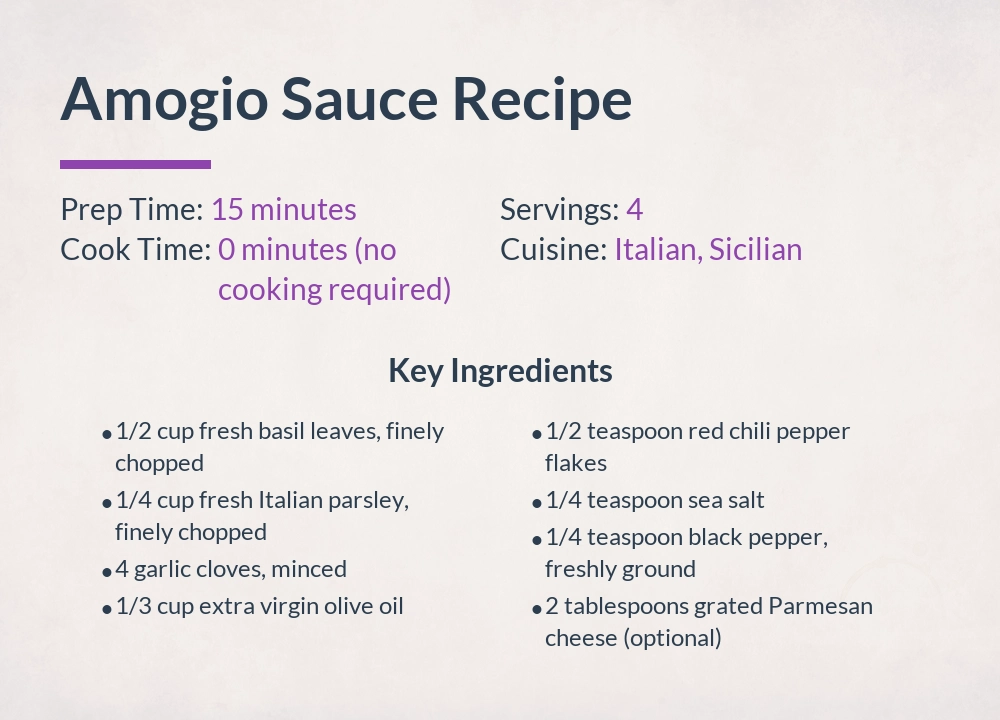
- Prep Time: 15 minutes
- Cook Time: 0 minutes (no cooking required)
- Servings: 4
- Course: Condiment, Marinade
- Cuisine: Italian, Sicilian
- Diet: Vegetarian
Ingredients
- 1/2 cup fresh basil leaves, finely chopped
- 1/4 cup fresh Italian parsley, finely chopped
- 4 garlic cloves, minced
- 1/3 cup extra virgin olive oil
- 2 tablespoons fresh lemon juice
- 1/2 teaspoon red chili pepper flakes
- 1/4 teaspoon sea salt
- 1/4 teaspoon black pepper, freshly ground
- 2 tablespoons grated Parmesan cheese (optional)
Instructions
- Wash and dry the fresh basil and parsley thoroughly to remove any dirt or moisture. Use a sharp knife to chop them finely, which helps release their essential oils.
- Peel the garlic cloves and mince them using a garlic press or fine grater for a smooth texture. Avoid large chunks to prevent overpowering the sauce.
- In a medium bowl, combine the chopped basil, parsley, minced garlic, red chili pepper flakes, salt, and black pepper. Stir gently to distribute the ingredients evenly.
- Pour in the extra virgin olive oil and fresh lemon juice. Whisk the mixture until it emulsifies slightly, creating a cohesive sauce. If using Parmesan cheese, add it now and blend well.
- Taste the sauce and adjust seasoning if needed. For a thinner consistency, add a tablespoon of water or more olive oil. Serve immediately or store as directed in later sections.
Nutrition
- Calories: 150 kcal
- Protein: 1 g
- Fat: 16 g
- Carbohydrates: 2 g
- Sugar: 0 g
- Fiber: 1 g
- Sodium: 120 mg
- Cholesterol: 0 mg
Cooking Method
Amogio sauce is a no-cook preparation, meaning the ingredients are combined raw to preserve their fresh flavors. This method relies on emulsification, where oil and acidic components like lemon juice are whisked together to form a stable mixture. It is best made just before use to maintain the vibrancy of the herbs.
Tools Needed
- Sharp chef’s knife for chopping herbs
- Cutting board
- Garlic press or microplane grater
- Medium mixing bowl
- Whisk or fork for blending
- Airtight container for storage
The Essence of Amogio Sauce
Amogio sauce, sometimes spelled ammoglio or amogiu, originates from Sicily and functions as a multipurpose condiment. Its name derives from Italian dialects, referring to a “mixture” or “blend,” which accurately describes its composition of fresh herbs, garlic, and oil. Unlike cooked sauces like Alfredo, it emphasizes raw, bright flavors that complement grilled meats, pasta, or bread.
This sauce is important because it showcases the Mediterranean diet’s principles, using whole ingredients with health benefits. It works by leveraging the synergy between fat-soluble compounds in olive oil and water-based acids in lemon juice, which carry flavors effectively. You can use it as a marinade to tenderize proteins or as a finishing sauce to enhance dishes without heavy cooking.
Ingredient Analysis
Each component in amogio sauce contributes distinct attributes that affect the final product. Understanding these elements allows you to make informed substitutions and adjustments based on availability or preference.
Basil
Basil provides sweet, peppery notes with hints of mint and anise. I recommend Genovese basil for its robust flavor, which holds up well in raw preparations. The essential oils in basil, such as estragole and linalool, are volatile and degrade with heat, so adding it fresh preserves its aroma. Chop the leaves just before mixing to minimize oxidation and discoloration.
Garlic
Garlic cloves introduce a pungent, slightly spicy character that mellows when combined with oil. Fresh garlic contains allicin, a compound with antimicrobial properties, which is activated upon crushing. For a smoother sauce, use a garlic press to break down the fibers evenly. Avoid pre-minced jarred garlic, as it often lacks potency and can impart a bitter taste.
Extra Virgin Olive Oil
High-quality extra virgin olive oil serves as the base, carrying fat-soluble flavors and adding a fruity, grassy profile. Look for cold-pressed oils from regions like Sicily or Calabria, which have lower acidity and richer polyphenols. These antioxidants not only benefit cardiovascular health but also stabilize the sauce, preventing separation when stored.
Lemon Juice
Fresh lemon juice adds acidity that balances the richness of the oil and enhances the herbal notes. The citric acid helps brighten the sauce and can act as a mild preservative. Always juice lemons at room temperature to maximize yield, and strain the juice to remove seeds or pulp that might cause bitterness.
Red Chili Pepper Flakes
Red chili pepper flakes contribute heat and a subtle smokiness. The capsaicin in chilies stimulates metabolism and adds depth without overwhelming other ingredients. Adjust the amount based on your tolerance; for a milder version, use 1/4 teaspoon, or increase to 3/4 teaspoon for extra heat.
Nutritional Breakdown
From a dietary perspective, amogio sauce aligns with heart-healthy eating patterns due to its monounsaturated fats from olive oil. These fats support cholesterol management and reduce inflammation when consumed as part of a balanced diet. The fresh herbs offer micronutrients like vitamin K from basil, which aids blood clotting, and vitamin C from parsley, boosting immune function.
The sauce is low in carbohydrates and sugar, making it suitable for low-carb or ketogenic diets. However, the sodium content can be controlled by reducing salt or using low-sodium alternatives. Including Parmesan cheese adds protein and calcium but increases cholesterol and fat, so omit it for a vegan version. Overall, a serving provides around 150 calories, primarily from fats, which help absorb fat-soluble vitamins from other foods.
Dietary Adaptations
Amogio sauce is inherently flexible, and you can modify it to meet specific dietary requirements without sacrificing flavor. Here are practical swaps based on common needs.
Vegan Version
Replace Parmesan cheese with nutritional yeast or omit it entirely. Nutritional yeast adds a cheesy flavor and provides B vitamins, making the sauce fully plant-based. Ensure all other ingredients, like the olive oil, are certified vegan, as some brands may process oils with animal derivatives.
Gluten-Free Adaptation
The base recipe is naturally gluten-free, but if using the sauce as a marinade for dishes like chicken spiedini, check that bread crumbs or other coatings are gluten-free. Opt for certified gluten-free bread crumbs or almond flour for dredging.
Low-Sodium Option
Reduce the salt to 1/8 teaspoon and rely on the natural salinity of the herbs and cheese. You can also use a salt substitute like potassium chloride or enhance flavor with additional lemon zest, which adds brightness without sodium.
Dairy-Free Variation
Skip the Parmesan cheese or use a dairy-free alternative made from nuts or soy. These substitutes often contain added oils and stabilizers, so adjust the olive oil quantity if the sauce becomes too thick.
Cultural and Historical Roots
Amogio sauce has its origins in Sicilian cuisine, where resourceful cooks used garden-grown herbs to create vibrant condiments. It reflects the island’s history of trade, incorporating ingredients like citrus and chili peppers introduced through Arab and Spanish influences. Traditionally, it was paired with simple dishes like grilled fish or chicken spiedini, showcasing the Mediterranean emphasis on fresh, seasonal produce.
In families like Beth Ann Mastromarino’s, as noted in some recipes, amogio sauce was a staple at gatherings, often prepared in large batches for summer picnics. This tradition highlights its role in communal eating, where it serves as a bridge between generations. The varying spellings—amogio, ammoglio, amogiu—stem from regional dialects, illustrating how recipes evolve orally before being documented.
Avoiding Common Mistakes
Many home cooks encounter issues when making amogio sauce, such as separation or blandness. Here are expert tips to prevent these problems and achieve optimal results.
Do not over-chop the herbs, as this can bruise them and release bitter compounds. Use a sharp knife and make swift, precise cuts. Always taste the sauce before serving and adjust acidity with lemon juice or richness with oil. If the sauce separates, whisk it vigorously or add a teaspoon of water to re-emulsify.
Store the sauce in an airtight container in the refrigerator for up to three days. Freezing is not recommended, as the herbs will wilt and lose texture. For best flavor, bring the sauce to room temperature before use, as cold temperatures can mute the aromatic qualities.
Serving and Pairing Ideas
Amogio sauce is incredibly versatile and can elevate a variety of dishes. Use it as a marinade for chicken spiedini, where it tenderizes the meat and adds moisture during baking or grilling. For pasta, toss it with angel hair or ciabatta croutons for a quick pan sauce. It also pairs well with grilled vegetables, fish, or as a dipping sauce for bread.
Complement the sauce with wines like a crisp Chardonnay or light reds such as Nero d’Avola, which balance the herbal and citrus notes. For a complete meal, serve it alongside a salad with cherry tomatoes and fresh mint, echoing Sicilian flavor profiles.
Storage and Leftovers
After preparation, transfer amogio sauce to an airtight container and refrigerate it immediately. The olive oil may solidify slightly when cold, but it will return to liquid at room temperature. Stir well before reuse. Leftovers can be repurposed as a base for salad dressings or drizzled over roasted broccoli for added flavor.
Do not leave the sauce at room temperature for more than two hours, as the raw garlic and herbs can harbor bacteria. For longer storage, consider freezing herb-infused oil without the lemon juice, then add acid fresh after thawing.
The Science of Flavor Development
The effectiveness of amogio sauce lies in the chemical interactions between its ingredients. Olive oil acts as a solvent, extracting fat-soluble flavors from herbs and garlic, while lemon juice provides water-soluble acids that enhance perception of brightness. Emulsification occurs when mechanical agitation, like whisking, temporarily binds oil and water molecules, creating a cohesive texture.
Garlic’s allicin compound forms when cells are damaged, offering antimicrobial benefits, but it decomposes quickly, so use minced garlic promptly. The capsaicin in chili flakes stimulates TRPV1 receptors on the tongue, perceived as heat, which can be moderated by the fat in oil. Understanding these processes helps you adjust ratios for personal preference.
Frequently Asked Questions
What is amogio sauce used for?
Amogio sauce serves as a marinade for meats like chicken or beef, a dipping sauce for bread, or a topping for pasta and fish. Its fresh, acidic profile cuts through rich dishes, making it a versatile condiment in Italian cooking.
Can I make amogio sauce ahead of time?
Yes, but for best results, prepare it within a few hours of use. The herbs may darken and lose vibrancy if stored too long. If making ahead, omit the lemon juice until ready to serve to prevent oxidation.
Is amogio sauce spicy?
The spiciness depends on the amount of red chili pepper flakes used. The recipe includes 1/2 teaspoon for mild heat, but you can reduce or omit it for a non-spicy version.
How does amogio sauce differ from pesto?
Unlike pesto, which typically includes nuts and cheese blended into a paste, amogio sauce is looser and emphasizes fresh herbs and citrus without nuts. It is often used as a marinade rather than a pasta sauce.
Can I use dried herbs instead of fresh?
Dried herbs are not recommended because they lack the bright, aromatic qualities of fresh ones. If necessary, use one-third the amount of dried herbs, but expect a different flavor profile.
What proteins work well with amogio sauce?
Chicken, fish, and beef all pair nicely. For chicken spiedini, marinate boneless breast cubes in the sauce before skewering and baking. The acidity helps tenderize the meat while adding flavor.
How can I thicken amogio sauce?
If the sauce is too thin, add more chopped herbs or a tablespoon of bread crumbs. For a creamier texture, incorporate grated Parmesan cheese or a splash of cream, though this alters the traditional recipe.
Is amogio sauce suitable for freezing?
Freezing is not ideal due to the fresh herbs and garlic, which can become mushy upon thawing. For longer preservation, freeze herb-infused oil separately and add fresh components later.