
There’s a sauce from my family’s past that transforms simple ingredients into something magical. My Great Grandma Rose brought this recipe from Sicily to Detroit, and it became the heart of our Sunday dinners.
Consequently, today I want to share her ammoglio sauce with you. This fresh, uncooked tomato sauce is bright, garlicky, and perfect for summer.
Therefore, let me guide you through making it, just as she did for me. You’ll discover how a few quality ingredients can create a vibrant topping for bread, seafood, and more.
How to Make Ammoglio Sauce
This recipe requires no cooking, just a bit of chopping and mixing. The key is using ripe, room-temperature tomatoes for the best flavor.
Follow these steps to create a sauce that’s both simple and spectacular. You’ll need about 15 minutes from start to finish.
Recipe Details
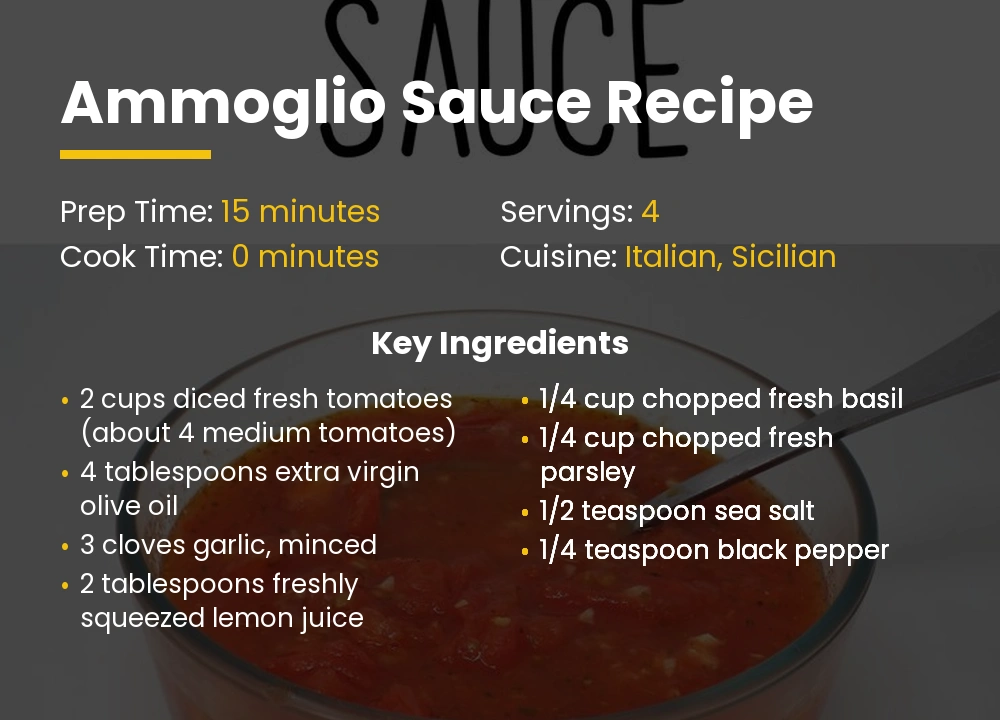
- Prep Time: 15 minutes
- Cook Time: 0 minutes
- Servings: 4
- Course: Condiment, Sauce
- Cuisine: Italian, Sicilian
- Diet: Vegan, Vegetarian
Ingredients
- 2 cups diced fresh tomatoes (about 4 medium tomatoes)
- 4 tablespoons extra virgin olive oil
- 3 cloves garlic, minced
- 2 tablespoons freshly squeezed lemon juice
- 1/4 cup chopped fresh basil
- 1/4 cup chopped fresh parsley
- 1/2 teaspoon sea salt
- 1/4 teaspoon black pepper
Instructions
- Wash and dice the tomatoes, placing them in a large bowl. Ensure the tomatoes are at room temperature for optimal taste.
- Add the minced garlic, olive oil, and lemon juice to the bowl. Stir gently to combine all the ingredients evenly.
- Chop the fresh herbs and mix them into the tomato mixture. The basil and parsley should be fresh for maximum aroma.
- Season with sea salt and black pepper, then let the sauce sit for 10 minutes. This allows the flavors to meld together beautifully.
- Stir once more before serving. Your ammoglio sauce is now ready to enjoy with your favorite dishes.
Nutrition
- Calories: 120 kcal
- Protein: 1 g
- Fat: 11 g
- Carbohydrates: 6 g
- Sugar: 4 g
- Fiber: 1 g
- Sodium: 300 mg
- Cholesterol: 0 mg
Cooking Method
Ammoglio is a no-cook sauce, meaning it’s assembled raw and served fresh. This method preserves the vibrant flavors and nutrients of the ingredients.
Building on this, the technique involves dicing and mixing, with no heat applied. It’s crucial to use high-quality, fresh components for the best results.
Tools Needed
- Large mixing bowl
- Sharp knife
- Cutting board
- Measuring spoons and cups
- Citrus juicer for lemon juice
Now that you have the basic recipe, let’s explore the rich history behind this sauce. Understanding its origins will deepen your appreciation for each bite.
The History of Ammoglio
Ammoglio hails from Sicily, where sun-ripened tomatoes and fragrant herbs are abundant. It was a staple in the homes of Italian families for generations.
Specifically, my Great Grandma Rose brought this recipe to Detroit with other Italian immigrants. They adapted their traditional dishes to new environments, keeping flavors alive.
As a result, this sauce represents a piece of culinary heritage passed down through families. It’s often associated with Sunday gatherings and festive meals.
In fact, in Sicily, ammoglio is known as a simple, fresh sauce for seafood and bread. The name itself might derive from local dialects meaning “mixture” or “dressing.”
Ingredient Insights
Each component in ammoglio plays a critical role in the final flavor profile. Choosing the right tomatoes is the foundation of this sauce.
For instance, fresh, ripe tomatoes provide natural sweetness and acidity. Room-temperature tomatoes release more juices, enhancing the sauce’s texture.
Similarly, garlic adds a pungent, aromatic kick that balances the tomatoes. Use fresh cloves and mince them finely for even distribution.
Moreover, extra virgin olive oil contributes fruity notes and a silky mouthfeel. A high-quality oil from Sicily or Italy can elevate the sauce.
Additionally, lemon juice introduces a bright, tangy element that cuts through richness. Freshly squeezed juice is preferable to bottled for its vibrant taste.
Finally, fresh herbs like basil and parsley offer earthy, fresh flavors. They should be chopped just before mixing to preserve their oils.
Nutritional Benefits
As a dietician, I value how ammoglio combines health with taste. This sauce is low in calories and rich in beneficial nutrients.
For example, tomatoes are packed with lycopene, an antioxidant linked to heart health. The no-cook method helps preserve heat-sensitive vitamins like vitamin C.
Furthermore, olive oil provides monounsaturated fats, which support cholesterol levels. Garlic has compounds that may boost immune function.
In addition, fresh herbs add vitamins A and K, along with minerals. Together, these ingredients make a condiment that’s both flavorful and nutritious.
Variations and Adaptations
Ammoglio is versatile and can be adjusted to suit different tastes. You can use canned diced tomatoes when fresh ones aren’t available.
For a spicier version, add red pepper flakes or chopped chili. Some families include capers or olives for a briny twist.
If you prefer a smoother texture, pulse the sauce briefly in a food processor. For dietary needs, this recipe is naturally vegan and gluten-free.
To make it herb-forward, increase the basil or add oregano. Experiment with different olive oils to find your preferred flavor profile.
Serving Suggestions
Ammoglio is traditionally served with fried calamari or as a bread dip. It also pairs wonderfully with grilled fish or chicken.
Try it over pasta for a light summer meal, or as a topping for bruschetta. It can elevate simple dishes like roasted vegetables or eggs.
In my family, we often had it with inexpensive beef steak cutlets. The sauce adds moisture and flavor to leaner cuts of meat.
For a light summer supper, serve ammoglio with crusty bread and a salad. It’s a refreshing alternative to cooked tomato sauces.
Common Mistakes to Avoid
Using cold tomatoes can dull the flavors and reduce juice release. Always let your tomatoes come to room temperature before dicing.
Over-mixing can break down the tomatoes too much, making the sauce watery. Stir gently until just combined for the best texture.
Substituting dried herbs for fresh will result in a less vibrant sauce. Fresh herbs are essential for the authentic taste and aroma.
Adding salt too early can draw out excess moisture from the tomatoes. Season just before serving to maintain the desired consistency.
Storing and Preserving
Ammoglio is best enjoyed fresh, but it can be stored for a short time. Keep it in an airtight container in the refrigerator for up to two days.
The flavors will intensify as it sits, but the herbs may lose brightness. For longer storage, freezing is not recommended due to texture changes.
If you must make it ahead, prepare the ingredients separately and mix before serving. This ensures the sauce retains its fresh, lively character.
Frequently Asked Questions
What is ammoglio sauce?
Ammoglio is a fresh, uncooked Italian tomato sauce from Sicily, made with diced tomatoes, garlic, olive oil, lemon juice, and herbs. It’s used as a dip, topping, or condiment for various dishes.
How do you pronounce ammoglio?
Ammoglio is pronounced “ah-MOHL-yoh,” with the stress on the second syllable. The “g” is soft, similar to the “gl” in Italian words like “aglio.”
What is the difference between ammoglio and marinara?
Ammoglio is a raw, fresh sauce, while marinara is cooked. Ammoglio has a brighter, more vibrant flavor from uncooked ingredients, whereas marinara is simmered and often includes onions.
Can I use canned tomatoes for ammoglio?
Yes, you can use high-quality canned diced tomatoes if fresh ones aren’t available. Drain them well to avoid excess liquid in the sauce.
How long does ammoglio sauce last?
Ammoglio sauce lasts up to two days in the refrigerator when stored in an airtight container. It’s best consumed fresh for optimal flavor and texture.
Is ammoglio sauce healthy?
Yes, ammoglio sauce is healthy due to its fresh, whole ingredients like tomatoes, olive oil, and herbs. It’s low in calories and rich in antioxidants and healthy fats.