
The scent of cinnamon and applesauce baking together transports me directly to my grandmother’s kitchen. Her handwritten recipe card for Amish Applesauce Cake was splattered with batter, a testament to its frequent use. This is not just a dessert; it is a piece of culinary heritage that delivers exceptional flavor and texture.
You are about to learn how to make a supremely moist cake that uses simple ingredients to create a memorable result. This guide provides the complete recipe, detailed instructions, and the science behind why it works so well.
How to Make Amish Applesauce Cake
This section provides the complete formula for creating this classic cake. Follow these steps precisely for a consistently perfect outcome.
Recipe Details
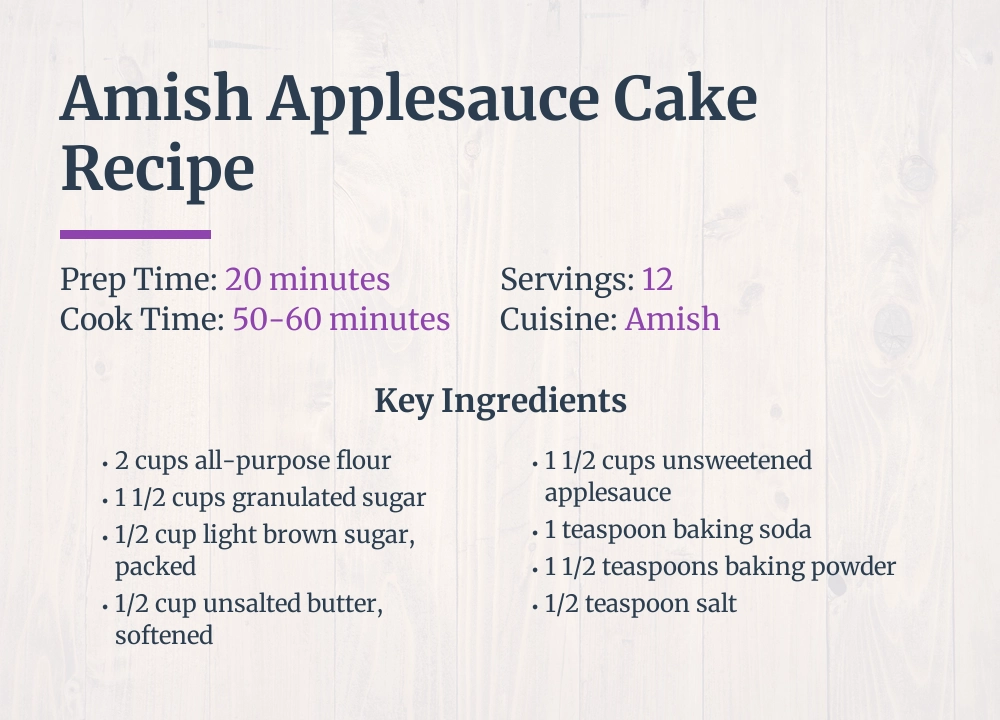
- Prep Time: 20 minutes
- Cook Time: 50-60 minutes
- Servings: 12
- Course: Dessert
- Cuisine: Amish
- Diet: Vegetarian
Ingredients
- 2 cups all-purpose flour
- 1 1/2 cups granulated sugar
- 1/2 cup light brown sugar, packed
- 1/2 cup unsalted butter, softened
- 2 large eggs, room temperature
- 1 1/2 cups unsweetened applesauce
- 1 teaspoon baking soda
- 1 1/2 teaspoons baking powder
- 1/2 teaspoon salt
- 1 1/2 teaspoons ground cinnamon
- 1/2 teaspoon ground nutmeg
- 1/2 teaspoon ground allspice
- 1/4 teaspoon ground cloves
- 1 cup raisins or chopped walnuts (optional)
Instructions
- Preheat your oven to 350°F (175°C). Grease and flour a standard Bundt pan or a 9×13 inch baking pan thoroughly.
- In a medium bowl, combine the flour, baking soda, baking powder, salt, cinnamon, nutmeg, allspice, and cloves. Whisk these dry ingredients together to ensure even distribution.
- In a separate large mixing bowl, cream the softened butter, granulated sugar, and brown sugar together until the mixture is light and fluffy. This should take about 3-4 minutes with an electric mixer.
- Beat the eggs into the butter and sugar mixture one at a time, ensuring each is fully incorporated before adding the next. Then, mix in the applesauce until just combined.
- Gradually add the dry ingredient mixture to the wet ingredients, stirring by hand or on low speed until a smooth batter forms. Be careful not to overmix.
- If you are using raisins or walnuts, fold them into the batter at this stage until evenly distributed.
- Pour the batter into your prepared pan and spread it evenly with a spatula.
- Bake for 50 to 60 minutes. The cake is done when a toothpick inserted into the center comes out clean, or with a few moist crumbs attached.
- Allow the cake to cool in the pan on a wire rack for 15 minutes before inverting it onto the rack to cool completely.
Nutrition
- Calories: 320 kcal
- Protein: 4 g
- Fat: 9 g
- Carbohydrates: 58 g
- Sugar: 38 g
- Fiber: 2 g
- Sodium: 280 mg
- Cholesterol: 50 mg
Cooking Method
This cake is prepared using the creaming method. This technique involves beating fat and sugar together to incorporate air, which helps the cake rise. The chemical leaveners, baking soda and baking powder, provide additional lift during the baking process.
The result is a cake with a tight, tender crumb that is remarkably moist due to the high moisture content of the applesauce. Baking in a Bundt pan promotes even heat distribution and creates a beautiful presentation.
Tools Needed
- Standard Bundt pan or 9×13 inch baking pan
- Large and medium mixing bowls
- Electric hand mixer or stand mixer
- Whisk and spatula
- Measuring cups and spoons
- Wire cooling rack
Understanding the Ingredients
Each component in this recipe has a specific role. Knowing the function of each will help you master the formula and make informed substitutions.
Applesauce
Unsweetened applesauce acts as a primary moistening agent and fat substitute. The pectin in apples helps bind the batter, while the natural sugars contribute to sweetness and browning. Using a chunky or smooth applesauce will slightly alter the final texture of the cake.
Butter and Sugars
Butter provides richness and flavor, and when creamed with sugar, it creates the cake’s structure. Granulated sugar offers sweetness, while brown sugar adds moisture and a subtle caramel note due to its molasses content. This combination prevents the cake from being overly dry.
Flour and Leavening Agents
All-purpose flour provides the necessary gluten structure to support the cake. Baking powder and baking soda are both used to ensure adequate rise. The baking soda also reacts with the acidic applesauce, enhancing the cake’s lift and creating a lighter texture.
The Spice Blend
Cinnamon, nutmeg, allspice, and cloves are the traditional warming spices. Cinnamon offers a sweet, woody base. Nutmeg and allspice add complexity and depth. Cloves provide a potent, pungent warmth that ties the entire spice profile together.
Nutritional Perspective
From a dietary standpoint, this cake has several interesting attributes. Compared to many frosted layer cakes, it contains less overall fat because the applesauce replaces some of the oil or butter typically required.
The applesauce contributes a small amount of dietary fiber and vitamin C. Using raisins or walnuts increases the fiber content and adds micronutrients like iron and potassium. The sugar content is significant, so portion control is advised for those monitoring their intake.
Historical and Cultural Roots
Amish cooking is rooted in practicality and resourcefulness. This cake exemplifies those principles, making use of pantry staples and home-canned applesauce. It was a way to enjoy a sweet treat without extravagant ingredients.
Such cakes were often served at church gatherings, family reunions, and other community events. The recipe has been passed down through generations, with each family adding their slight variation, such as the inclusion of nuts or a simple dusting of powdered sugar instead of a rich frosting.
Variations and Adaptations
This recipe is highly adaptable to different dietary needs and flavor preferences.
Gluten-Free Version
Replace the all-purpose flour with a 1:1 gluten-free baking blend. Ensure the blend contains xanthan gum, which helps replicate the structure that gluten provides in traditional wheat flour.
Vegan Adaptation
Substitute the butter with an equal amount of vegan butter or coconut oil. Replace each egg with a commercial egg replacer or a flax egg (1 tablespoon ground flaxseed mixed with 3 tablespoons water per egg).
Reduced-Sugar Option
You can decrease the total sugar by up to one-third. The texture may become slightly denser, and the crust will be less caramelized. Using a sugar substitute formulated for baking is another effective option.
Flavor Twists
For an apple pie bar flavor, add diced fresh apples to the batter. A caramel apple cake can be made by drizzling a simple caramel sauce over the cooled cake. For a blueberry cake, fold in one cup of fresh or frozen blueberries instead of raisins.
Baking Science and Expert Techniques
Success in baking relies on understanding a few key principles. Ensuring your ingredients are at room temperature, particularly the butter and eggs, allows for better emulsion and a smoother, more voluminous batter.
Do not overmix the batter once the flour is added. Overmixing develops the gluten network too much, resulting in a tough, chewy cake rather than a soft, tender crumb. Mix only until the last streaks of flour disappear.
Properly preparing your pan is non-negotiable. For a Bundt pan, use a baking spray that includes flour, or grease every crevice with butter and then dust with flour. This prevents the cake from sticking and breaking upon removal.
Serving and Storage Instructions
This cake is excellent served warm or at room temperature. A simple dusting of powdered sugar is a classic Amish presentation. It pairs wonderfully with a sharp cheddar cheese, a tradition in some communities, or a dollop of freshly whipped cream.
For storage, keep the completely cooled cake in an airtight container at room temperature for up to 3 days. It can also be wrapped tightly and frozen for up to 3 months. The flavors often meld and improve the day after baking.
Frequently Asked Questions
What is Amish Applesauce Cake?
Amish Applesauce Cake is a dense, moist spice cake that uses applesauce as a key ingredient for both moisture and flavor. It is a traditional recipe from Amish communities, known for its simplicity and use of pantry staples.
Why is this cake so moist?
The high moisture content comes primarily from the applesauce. The brown sugar also contributes to the cake’s retention of water, resulting in a texture that remains soft for several days.
Does this cake need frosting?
No, it is traditionally served without frosting. A dusting of confectioners’ sugar is common, but the cake is flavorful and moist enough to stand on its own. A simple glaze can be added if desired.
Can I use a boxed cake mix as a base?
While you can create a shortcut version using a spice cake mix and adding applesauce, the texture and depth of flavor will differ from the traditional from-scratch recipe. The homemade version offers superior taste and control over ingredients.
What is the difference between baking soda and baking powder in this recipe?
Baking soda requires an acid to activate, which is provided by the applesauce. It gives the batter an initial lift. Baking powder contains its own acid and provides a second rise during the heating process in the oven, ensuring a light final product.
How can I tell when the cake is fully baked?
The most reliable method is the toothpick test. Insert a toothpick into the thickest part of the cake. If it comes out clean or with a few dry crumbs, the cake is done. The edges will also begin to pull away from the sides of the pan.
My cake is dense. What went wrong?
A overly dense cake is often caused by overmixing the batter after adding the flour, which over-develops the gluten. Using expired baking soda or baking powder, or measuring the flour incorrectly by packing it into the cup, can also lead to a heavy texture.
Can I make this into muffins or a bread?
Yes, this batter works well for applesauce muffins or an Amish cinnamon bread. For muffins, fill lined cups 2/3 full and bake at 375°F for 18-22 minutes. For a loaf, bake in a 9×5 inch pan for 55-65 minutes.