Reina
As an Amazon Associate, I earn from qualifying purchases.
The short answer is yes: you can legally install and use an electric cooktop without a vent hood. No U.S.
building code requires mechanical ventilation above an electric range or cooktop, the way it does for gas.
But “legal” and “advisable” are two different thresholds, and the gap between them is exactly where this conversation gets interesting.
I’ve renovated kitchens where homeowners made this call deliberately, and I’ve also been called in to fix kitchens where ten years of unvented cooking left cabinets coated in a grease film that had to be sanded down before repainting.
The honest answer to the vent question lives somewhere between “you’ll be perfectly fine” and “never cook a single meal without exhaust.” This article covers the code reality, the health science, and every workable alternative, so you can make the decision with your eyes open.
So, Can You Really Skip the Vent? (Yes — Legally, Anyway)
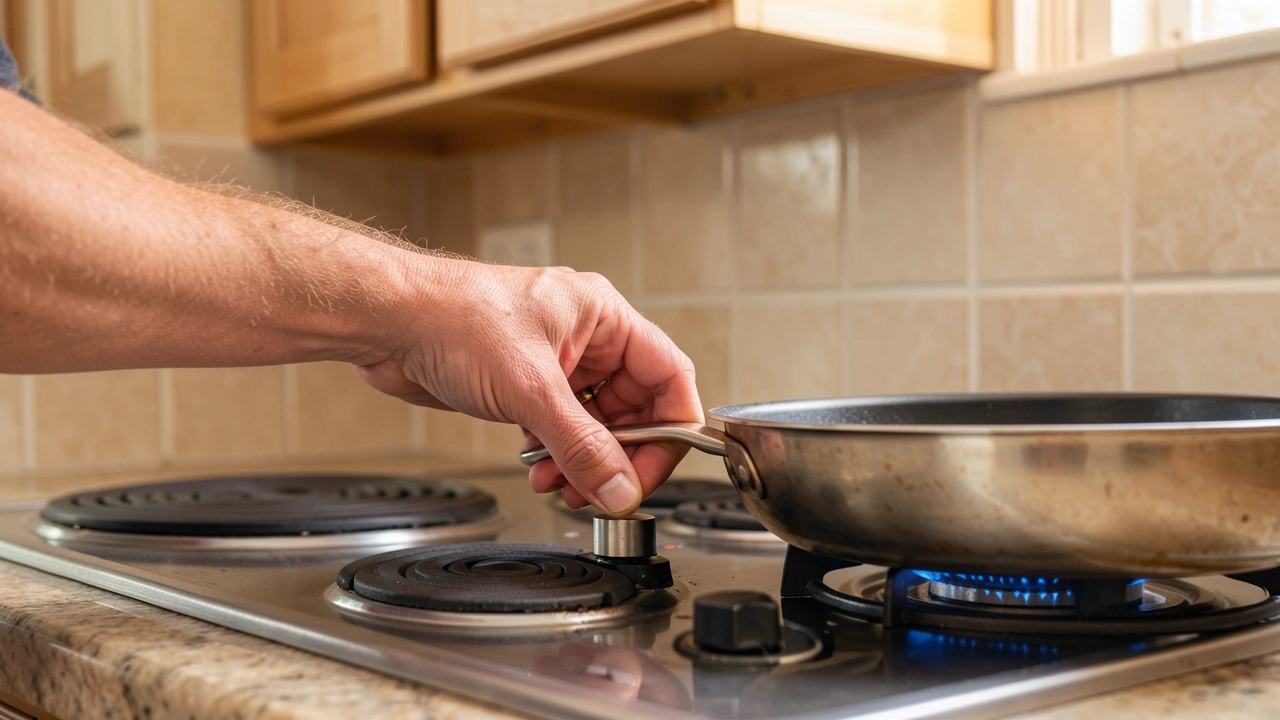
Let’s start with what the law actually says. The International Residential Code (IRC) and the International Fuel Gas Code (IFGC) — the two model codes that most U.S.
jurisdictions adopt or adapt — require ventilation for gas-fueled cooking appliances because those burn fuel and release combustion byproducts like carbon monoxide and nitrogen dioxide.
Electric coil and induction cooktops don’t burn anything. They generate heat through electrical resistance or electromagnetic induction, which means they produce zero combustion gases.
The code simply doesn’t regulate them the same way.
That hasn’t stopped a persistent myth from circulating in appliance showrooms.
I’ve stood in big-box stores while salespeople told customers their homeowners insurance would be void without a vent hood over an electric stove. It’s not true. No major U.S.
insurer conditions coverage on having a hood over an electric cooktop, and it’s not a question on any standard homeowners policy application.
The confusion almost certainly comes from gas appliances, where unvented installation genuinely is a fire and safety hazard that insurers care about.
Here are the four myths worth clearing up before we go further:
- Insurance requires a hood over electric. No insurer mandates this.
- An inspector will fail your kitchen. Code targets combustion appliances, not electric cooktops.
- Electric produces no fumes. It produces no combustion gases — but cooking still creates particulates, moisture, and odors.
- Vents exist for smoke. Most venting work handles invisible grease vapor and PM2.5.
- You are legally clear. Electric cooktops carry no code-mandated ventilation requirement.
- Inspectors won’t flag it. An unvented electric range passes inspection in every jurisdiction I know.
- You produce the emissions. Searing oil, charring food, boiling water — that’s where the pollutants come from.
- Air quality is the real issue. Moisture and fine particles matter more than visible smoke.
So the green light on legality is real. But here’s the part that trips people up: just because code doesn’t require ventilation doesn’t mean your kitchen doesn’t need it.
The code sets a minimum floor for safety — it’s not a recommendation about what’s good for your indoor air or your cabinets over the long haul.
Forget “can I?” — the question that actually matters is “should I, given how I cook and how long I plan to live here?” The rest of this article exists to help you answer that honestly.
Why Electric Cooktops Are Different From Gas (and Why That Matters)
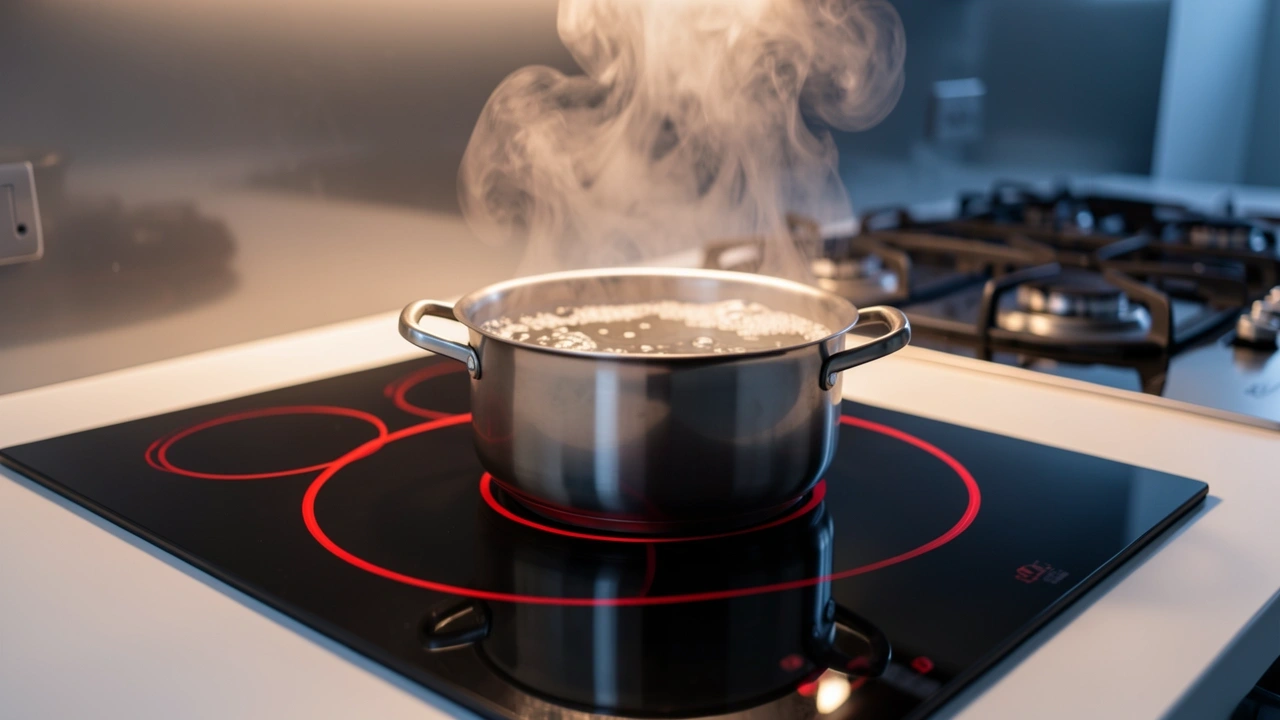
When people hear “electric is cleaner,” they assume it means zero emissions. That’s half right, and the half they’re missing is the half that determines your ventilation needs.
Gas burners produce combustion byproducts: carbon monoxide, nitrogen dioxide, and formaldehyde — all documented respiratory irritants with measurable health consequences in indoor air.
Electric coil and induction cooktops produce none of those. Full stop. But the act of cooking produces its own pollutants that have nothing to do with the heat source.
Searing a steak in a hot pan releases fine particulate matter — PM2.5 — from the oil and the proteins. Boiling pasta releases steam that spikes indoor humidity.
Browning butter or charring vegetables releases volatile organic compounds. Your cooktop doesn’t create these. Your food does.
That table is the entire argument in one glance.
Switching from gas to electric eliminates the most dangerous pollutants — the ones tied to combustion — but it does absolutely nothing about the particulates, humidity, and smells your cooking generates.
If you’re coming from gas, you’re removing a major health hazard. If you’re coming from nothing, you still need to think about air quality.
Lawrence Berkeley National Laboratory and Stanford studies have found that cooking — regardless of fuel type — generates fine particulate concentrations that can exceed EPA outdoor air quality limits during high-heat searing. Electric removes gas-specific toxins. It does not remove cooking smoke. If you sear, fry, or char food indoors, you are generating PM2.5 that would be illegal to emit outdoors in most cities.
The Messy Reality: What Happens When You Don’t Vent
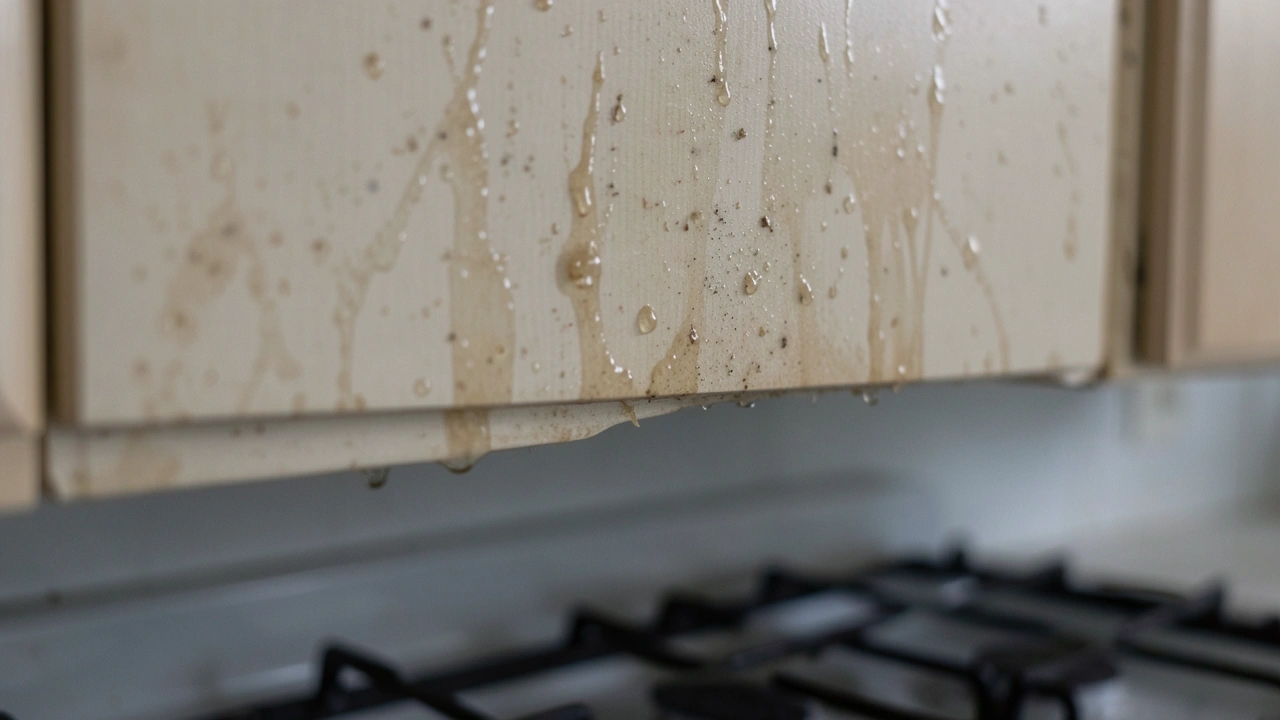
Assuming you decide to skip mechanical ventilation entirely, what does that actually cost you over the long run?
I’ve seen the end state of unvented kitchens more times than I can count, and the pattern is remarkably consistent. Let’s walk through the physical reality.
The moisture issue deserves special emphasis because it’s the most underrated. Modern homes are built tight — low air changes per hour, heavy insulation, sealed windows.
Every pot of boiling pasta adds roughly a pound of water vapor to the air. In a small kitchen with no exhaust and no open window, that vapor has nowhere to go.
It condenses on the coldest surfaces in the room, and those surfaces are often behind your appliances.
If your home was built in the last two decades and you cook daily without any ventilation, the moisture load alone can support mold growth behind appliances and on cold exterior walls. This is the single most underrated long-term risk of unvented electric cooking.
None of this is meant to scare you — it’s physics, and once you know it, you can plan around it. If you do live with an unvented cooktop, a few habits make a meaningful difference:
- Wipe cabinets and walls monthly with a degreaser
- Use lids on boiling pots to trap steam
- Crack a window for five minutes before and after cooking
- Run a portable HEPA filter near the cooktop during high-heat cooking
- Keep a dehumidifier running in the kitchen during humid months
- Deep-fry or blacken food without any air movement
- Ignore grease accumulating on the ceiling above the cooktop
- Assume an over-the-range microwave with a fan is true ventilation
- Leave wet cabinets sealed shut — let them dry out periodically
7 Ways to Ventilate (or At Least Survive) Without a Range Hood

If an overhead ducted hood isn’t in the cards — because of cost, structural constraints, or rental restrictions — you still have real options.
I’ve ranked them by how well they handle the three things that actually matter: odors, moisture, and fine particles.
A few notes on the ranking, because the table hides some nuance.
Downdraft vents are the only true invisible option — they rise from the cooktop surface when needed — but they’re less effective than overhead hoods for tall pots and front burners, which means you’ll still smell your fish dinner.
Recirculating hoods are the most popular choice because they install in an afternoon, but they do almost nothing for moisture and only trap larger particles.
Portable HEPA filters are the sleeper pick: they capture PM2.5 exceptionally well, cost less than a hood, and require zero installation.
Their weakness is that they do nothing for odors or humidity — a filter can’t un-cook a fish.
If you’re debating between a $300 recirculating hood and a $250 portable HEPA filter, pick based on what bothers you most. The HEPA filter will beat the hood for smoke and fine particles but won’t touch cooking smells. The hood will handle odors better but leaves moisture and PM2.5 in the air. Heavy searers should prioritize the filter. Fish-and-onion cooks should prioritize the hood.
Choose Your Setup: A Mini Decision Guide for Your Kitchen

There’s no universal answer to the vent question, but there is a universal framework. Answer these four questions in order and the right solution for your kitchen becomes obvious.
Where does your cooktop sit? If it’s on an exterior wall, you have the option of cutting through for a ducted vent — and if you can afford it, that’s still the best move.
If it’s in an island, your structural options shrink to downdraft vents, ceiling-mounted extraction, or no duct at all.
If it’s against an interior wall with another room behind it, running ductwork gets expensive fast.
Do you own or rent? Renters should never cut holes in walls. That immediately rules out ducted hoods, downdrafts, and ceiling-mounted units.
A portable HEPA filter and a window fan give you 80% of the practical benefit with zero permanent modifications.
How often do you sear, fry, or char food? This single question matters more than any other.
A household that cooks pasta, soups, and sheet-pan dinners four nights a week generates minimal PM2.5.
A household that stir-fries in a wok or sears steaks twice a week generates serious particulate concentrations. The former can get by with a recirculating hood or even just a window habit.
The latter needs mechanical extraction — ducted if possible, or a good HEPA filter positioned close to the cooktop.
What’s your budget? If you have $150 to spend, buy a window fan. If you have $300, buy a good portable HEPA filter.
If you have $1,500, a ducted downdraft or a ceiling-mounted extraction unit solves the problem elegantly.
Don’t waste money on an expensive recirculating hood expecting it to perform like a ducted system — it won’t, and you’ll be disappointed.
- Legally, you’re clear: No U.S. code requires venting for an electric or induction cooktop.
- Health-wise, it depends: If you cook daily with high-heat methods, invest in some form of mechanical air movement — even a $100 window fan changes the math.
- Electric removes the gas toxins: You’re not inhaling carbon monoxide or NO₂, but smoke and grease are universal to cooking.
- Zero vent is your call: It carries real, slow-motion consequences for your cabinets, your indoor air, and potentially your resale value.
Frequently Asked Questions
Does an induction cooktop need a vent?
No. Induction produces no combustion byproducts whatsoever — the pan itself is the heat source, and the surface stays cool. But it still heats oils and food that release PM2.5 and odors. The legal answer is identical to electric coil: no code requirement. The practical answer is also similar: you’ll still want air movement for fish, searing, and anything that smokes.
Can a microwave over the stove count as a vent?
Only partially. Over-the-range microwaves come in two versions: ducted, which pipes air outside, and recirculating, which pulls air through a charcoal filter and blows it back into the room. Recirculating units capture grease and some odors but do nothing for moisture or fine particulates. Check whether your unit has an exterior exhaust outlet — if it doesn’t, it’s a convenience fan, not a ventilation system.
Do I need a vent if I only cook a few times a week?
Low-frequency cooking dramatically lowers your risk profile. Occasional home cooking paired with a cracked window or a portable HEPA filter covers most of the practical harm. The key is matching your ventilation effort to cooking intensity — a daily wok user needs far more than a Sunday-pasta household.
Will a ventless range hood actually do anything?
Yes, but only for certain things. Ventless (recirculating) hoods use activated charcoal to absorb odors and metal mesh filters to catch grease. They genuinely work for smells and visible smoke, but they cannot remove moisture or PM2.5 — activated charcoal doesn’t trap particles, and without a duct, vapor stays in the room. They’re better than nothing, but they’re not a replacement for true exhaust.
Do I need a permit to add a vent later?
Generally yes — cutting through walls for exterior ducting touches structural elements and insulation, which is permit territory in most jurisdictions. A permit-required retro-vent job typically runs $500 to $1,500 depending on duct run length and wall type. That’s why planning ventilation during a renovation is dramatically cheaper than adding it afterward.
Does not having a vent affect home insurance or resale value?
Insurance, no — no standard U.S. policy conditions coverage on a hood over an electric cooktop. Resale is a softer story. A home with no visible venting can raise buyer questions, and appraisers sometimes flag it as a minor kitchen deficiency. In practice, it rarely moves the price on an otherwise updated kitchen, but it’s a talking point you’ll field during showings.