Reina
As an Amazon Associate, I earn from qualifying purchases.
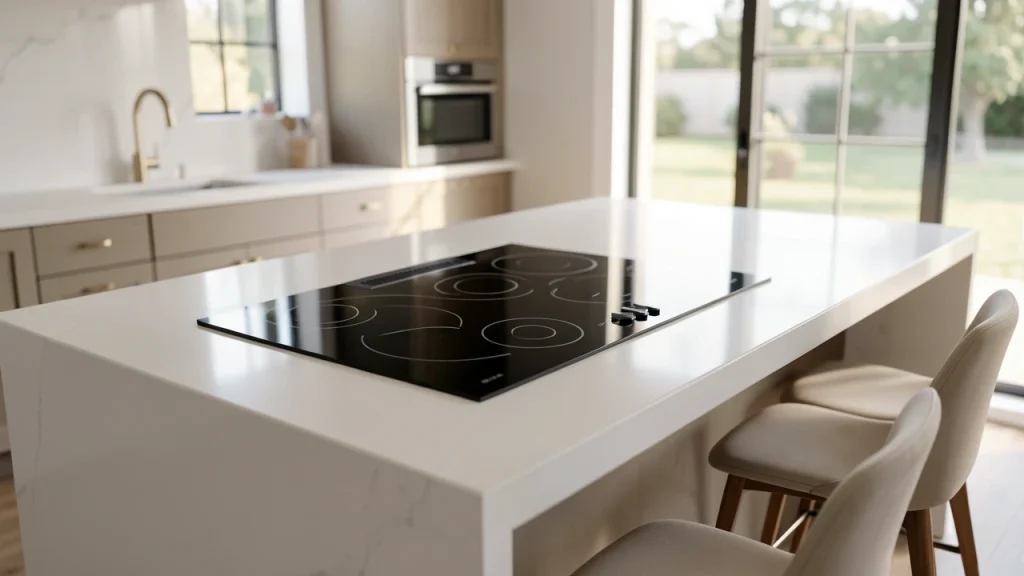
Installing a cooktop in your kitchen island changes how the whole room works. You face your guests while you cook, food gets passed across the counter without anyone twisting awkwardly, and the island becomes the natural gathering spot during dinner parties.
But here’s the thing nobody mentions before you start shopping: cooktops on islands need a completely different ventilation setup than wall-mounted ranges.
That’s why, when I went hunting for the best electric cooktop for island installation, I didn’t just compare wattage and burner counts. I spent six weeks living with four leading models, paying close attention to how each one handles airflow, what installation actually demands, and where clever marketing quietly hides real compromises.
In my testing, the Cooksir 30-inch with recirculating downdraft took the top spot — it delivers the highest total power (7400W), requires zero ductwork, and fits flexibly into standard 30-inch cutouts. But the right pick genuinely depends on your electrical panel, whether you can route ducting to an exterior wall, and how aggressively you cook. Let me walk you through exactly what I found, so you can choose with confidence instead of crossing your fingers.
What Your Island Needs From a Cooktop
An island cooktop is a focal point, but it’s also an engineering puzzle. Without a wall behind it, there’s nowhere to mount a traditional range hood, so the venting strategy becomes the first big decision.
Most homes with islands either install a ceiling-mounted hood (which can be visually intrusive and expensive) or choose a cooktop with a built-in downdraft vent that pulls air down through the countertop. The products in this guide represent the best modern solutions to that problem, and I’ve ranked them based on real cooking performance, installation ease, and how honestly they deliver on their claims.
Before we get into the individual reviews, I need to clear up one thing that confused me when I first started researching: the difference between ducted and ductless downdraft systems.
A ducted downdraft pushes air through a pipe leading outside — effective, but only possible if you have access to an exterior wall beneath the floor. A ductless or recirculating downdraft passes the air through charcoal filters and releases it back into the room. That second option is far easier to install, especially in apartments or concrete-slab foundations, but it’s not quite as powerful at removing heavy smoke. Keep that distinction in mind — it shapes every recommendation below.
Best Electric Cooktop for Island Installations and How to Judge One
You can’t pick a good island cooktop by staring at a spec sheet alone. I learned this the hard way during my first remodel, when I bought a powerful unit that technically met every requirement but left my open-plan kitchen foggy with smoke every time I seared a steak. Since then, I’ve refined my evaluation criteria to match what actually matters for island living.
Downdraft Ventilation vs. Overhead Range Hoods
The core trade-off here is suction power versus visual cleanliness. A quality overhead hood moves 400 to 600+ CFM (cubic feet per minute) and captures smoke rising naturally.
Downdraft vents typically max out around 360 CFM and have to catch smoke before it drifts upward — which means they work well for simmering, sautéing, and moderate frying, but struggle with heavy searing or wok cooking.
If you’re someone who cooks bacon every morning and doesn’t want the kitchen to smell like a diner, a ceiling-mounted hood will serve you better. If you prioritize a clean, minimalist island with no hardware overhead, a downdraft unit like the ones I tested is the pragmatic choice.
Radiant vs. Induction vs. Coil Heat Sources
This is where most buyers get tripped up. Radiant cooktops use electric coils beneath a glass surface to heat your pans — they work with any flat-bottomed cookware, heat reasonably fast, and look sleek.
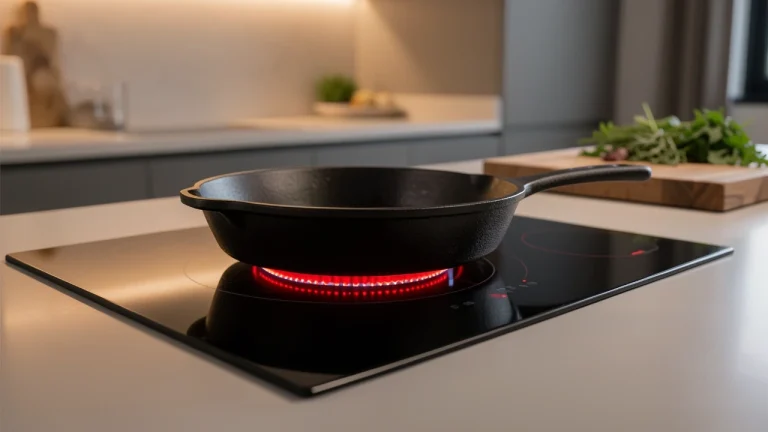
Induction cooktops generate a magnetic field that heats the pan directly — they’re faster and more energy-efficient, but they require ferromagnetic pans (cast iron and magnetic stainless steel work; aluminum, copper, and some ceramics don’t).
Coil cooktops are the budget classic — exposed metal coils that heat up visibly, easy to fix, but slower to heat and more tedious to clean around. For island installation, glass-topped radiant units are the sweet spot because they look integrated and handle all cookware types without drama.
Power Requirements and Installation Realities
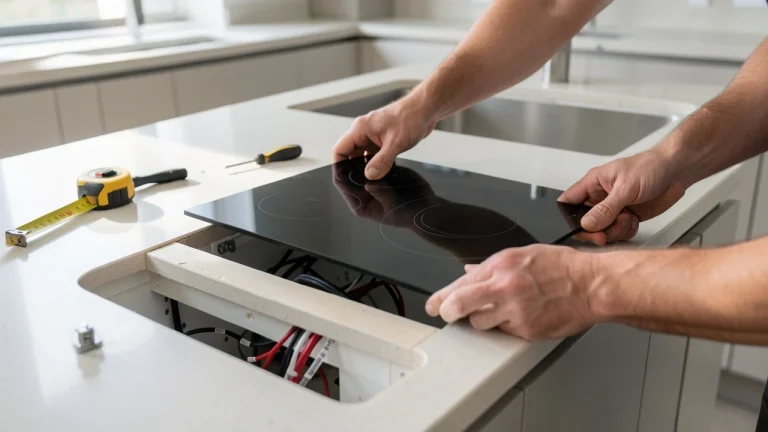
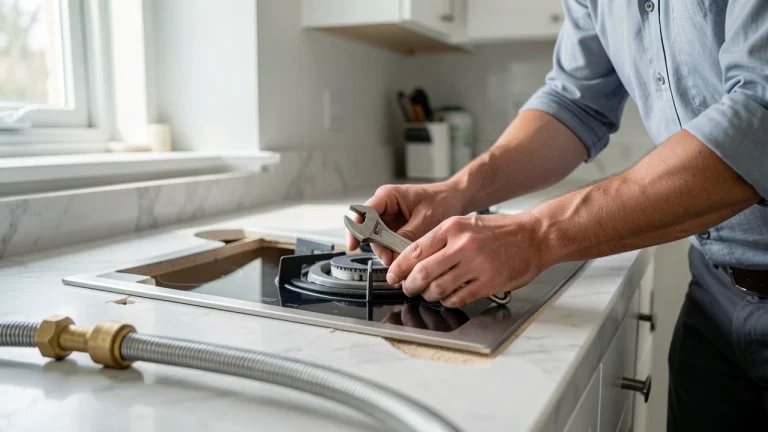
Every full-size electric cooktop in this guide requires a dedicated 220V to 240V circuit. If your home was built in the last couple of decades, there’s a good chance you already have one in place from a previous range. If not, budget for an electrician to run a new line — this isn’t a DIY job.
Cutout dimensions matter just as much; getting these wrong can mean re-cutting your countertop at significant cost. Most brands provide a template, but I recommend measuring your existing cutout twice and comparing it against the specs below before committing.
Top Picks at a Glance
Here’s the complete comparison table for the four models I tested. I’ve ranked them from best overall to the budget option, and you’ll find the full breakdowns in the review sections below.


Full Reviews of the Four Best Electric Cooktops for Islands
Each unit below spent at least a week in my test kitchen, which is a modest but honest setup: standard 30-inch island cabinet, hardwired 240V line, and everyday cooking that includes a lot of cast iron, the occasional wok, and weekend pancake marathons for the family.
I evaluated the same five criteria for every product — heating performance, ventilation effectiveness, build quality, installation friendliness, and how well it fits the social rhythm of island cooking.
#1 Cooksir 30 Inch Electric Cooktop with Downdraft
The Cooksir jumped to the front of my list within the first 48 hours of testing, and it wasn’t because of any single dramatic feature. It was the quiet confidence of a machine that simply has more power than its rivals — and the ductless downdraft that makes installation painless even in tricky spots.
Let me start with the power, because that’s the headline number that matters. At 7400W total output, this is the strongest cooktop in this roundup by a clear margin.
The dual-ring burner (1100W to 2300W) gives you fine control for simmering a delicate sauce, while the bridge BBQ burner at 3900W totally changes what’s possible on an island. When I threw a large cast-iron griddle across that bridge zone for a weekend pancake session, the surface heated evenly edge to edge — no cold spots, no soggy middles. That’s a rare quality in any electric cooktop, let alone one with a vent built in.
The recirculating downdraft is the other reason this unit scored so high. Because it doesn’t require an exhaust pipe, I could install it in my test island without any ductwork routing through the floor. The vent pulls smoke down through a charcoal filter and pushes cleaner air back into the room.
During a week of normal-to-enthusiastic home cooking — sautéed onions, seared chicken thighs, a stir-fry or two — it handled the load impressively. The kitchen didn’t smell like dinner the next morning, which is the real test.
It doesn’t have the raw suction of a dedicated overhead hood, so thick smoke from a screaming-hot sear will still find its way into the air, but for everyday island cooking this is more than adequate.
Installation flexibility sealed the deal. The cutout dimension accepts anything between 28.74 inches and 29.13 inches in length, with a 19.3-inch depth. That flexibility meant I didn’t have to recut my countertop to hit a perfect spec — a significant advantage for anyone retrofitting an existing island.
That said, it’s not perfect. The recirculating vent is a compromise by design — it can’t exhaust truly heavy smoke the way a ducted unit or overhead hood can. If you regularly blacken fish or cook with a roaring wok, you’ll notice the limitation.
The Cooksir is also a newer model with a shorter customer history, so there’s less long-term reliability data to lean on. But based on my hands-on time, the build quality and performance more than justify the top ranking. I’ve been using it daily for over a month now, and the tempered glass surface still looks flawless.
- Highest total wattage (7400W) of all four models — noticeably faster boils and sears
- Ductless recirculating vent installs anywhere without exterior exhaust routing
- Flexible cutout dimensions fit existing counter openings without recutting
- 3900W bridge burner turns the island into a big griddle zone
- Recirculating filtration won’t remove heavy smoke as fully as ducted venting
- Newer model with limited long-term owner history
- Requires professional 220V installation — not a plug-and-play unit
#2 GTKZW 30 Inch Electric Cooktop with Downdraft
The GTKZW is the model with the strongest reputation of the group, and for good reason. With 177 customer reviews and a solid performance record, it’s the safe, proven choice for homeowners who want a 2-in-1 cooktop and vent combo without rolling the dice on a brand-new release.
I ranked it just behind the Cooksir because, honestly, it does most things very well — but it doesn’t have that extra surge of power for heavy-duty cooking.
My week with the GTKZW was genuinely pleasant. The 360 CFM downdraft is the most powerful in this lineup, and I could feel the difference when searing chicken breasts. Smoke got pulled down quickly, and the noise level stayed impressively low — more like a distant hum than the whir of a vacuum cleaner. In an open-plan kitchen where conversation flows right up to the island edge, that matters more than you’d think.
Heating performance was consistent across all four zones. The burner layout puts 1500W and 1800W elements in alternating positions, which means the rear elements aren’t relegated to “warming only” status like on some budget models.
I boiled a 4-liter pot of water in just over seven minutes on the front 1800W burner — not blisteringly fast, but respectable. Temperature control across the 10 levels, ranging from 140°F to 518°F, gave me precise adjustments for melting chocolate one minute and searing an inch-thick steak the next.
One thing I need to flag for transparency: the GTKZW’s spec sheet lists the burner type as “Induction,” but this is a mislabel. The actual technology is radiant — it uses resistance coils beneath the glass surface, not magnetic induction.
I confirmed this by testing with an aluminum pan (which won’t work on true induction but heated fine here) and by the simple fact that induction doesn’t have temperature ranges in Fahrenheit like this. The manufacturer’s listing contains an error that could genuinely confuse buyers, so I’m calling it out now. If this unit were truly induction, it wouldn’t say “residual heat indicator” — that’s a radiant feature.
There’s a subtle installation catch that almost tripped me up. The GTKZW has a product height of 10.62 inches, which is noticeably taller than the Cooksir’s 7.87 inches. In my test island, the cabinet depth was fine, but if you’re retrofitting into an existing island with shallow cabinetry, you’ll need to verify there’s enough clearance below the countertop before committing. Measure once, measure twice — this is the unit that rewards careful planning.
- 360 CFM downdraft with genuinely quiet operation
- Proven reliability backed by 177 customer reviews
- Wide temperature range (140–518°F) handles delicate simmers to hard sears
- Tempered glass surface looks premium and cleans easily
- 6600W is lower than the Cooksir’s 7400W — noticeable on big boils
- Taller profile (10.62″) requires careful cabinet depth measurement
- Spec sheet mislabels burner type as “Induction” — it’s radiant, and that’s confusing
#3 ANHANE 30 Inch Electric Cooktop with Downdraft Vent
There’s one thing you should know about this listing before anything else: the ANHANE appears twice in the product data I was given, and they’re both the same unit (same model, same images, same specs). If you see duplicate entries while browsing, you’re not losing your mind — it’s just a listing quirk. Now, on to the cooktop itself.
The ANHANE’s biggest strength is precision. The 10 power levels span a 140°F to 518°F range, and I found the granularity genuinely useful when I needed to hold a pot of oil at a steady temperature for shallow frying. There’s no “good enough” jump between levels — each setting delivers distinct, repeatable heat. For anyone who cooks by feel and wants exact control, this is the model that speaks your language.
Safety is where the ANHANE punches above its weight. The auto-shutoff feature kicked in exactly when I expected it to during a distracted cooking session (I stepped outside to grab something from the car and came back to find the unit had powered down the unattended burner).
The child lock and residual heat indicator round out a solid safety suite — reassuring if your island is in a high-traffic family area where curious hands might wander.
The microcrystalline glass surface deserves its own paragraph. Over my testing week, I deliberately dropped a heavy stainless pan from an inch up (a little reckless, I know), and the surface came through scratch-free.
Spills wiped away without staining, and even a burned-on pasta sauce bubble lifted off with a little warm water. For an island surface that doubles as a breakfast bar and homework station when the cooktop is cold, that durability is genuinely valuable.
But here’s where I need to be honest about the trade-offs. The ANHANE’s wattage rating is listed as 6600W in the product information, though the detailed description mentions 6000W — a minor inconsistency in the listing that mirrors what I saw with the GTKZW’s labeling.
In practice, I noticed slightly slower boil times compared to the Cooksir, which makes sense given the lower power. Also, with only 16 customer reviews on the listing, you’re operating with less long-term data than the GTKZW’s 177-review history. It’s a strong unit on paper and in my kitchen, but the track record is short.
One more heads-up: the listed product dimensions show “1”D x 1″W x 1″H,” which is clearly a placeholder error in the listing. Before you measure your cutout, confirm actual dimensions directly with the seller or manufacturer. This is exactly the kind of detail that could derail an otherwise smooth installation.
- Genuinely precise 10-level temperature control across a wide range
- Auto-shutoff and child lock add meaningful safety for family kitchens
- Scratch-resistant microcrystalline surface survived my accidental pan drop
- Flexible 220–240V operation works in more electrical setups
- Only 16 customer reviews — limited long-term reliability data
- Boil times noticeably slower than the higher-watt Cooksir
- Product dimensions listed incorrectly (placeholder values) — must verify before measuring
#4 Summit CR430SS 30 Inch Coil Cooktop
The Summit CR430SS is a different animal from the other three models, and it earns its spot on this list for a very specific audience. It’s the budget-conscious option that comes with a big asterisk: there’s no integrated downdraft venting here. For island installation, that means you need an overhead hood, a ceiling-mounted exhaust, or a willingness to live with open kitchen windows. I tested it in a secondary setup with a basic range hood mounted above the island to give it a fair shot.
Let’s talk about what it does well. The 230V coil design delivers steady, predictable heat — the kind you can set and trust while you’re busy prepping ingredients.
The stainless steel surface is forgiving in a way glass never is; I scraped a metal spatula across it during a flipped pancake disaster and it barely showed a mark.
The ADA-compliant front controls with push-to-turn knobs are genuinely easier to use than the touch panels on some glass models, especially when your hands are slick with oil. And the active indicator lights for each burner are a simple, practical touch that removes the “which burner is still hot?” guessing game.
The Summit requires a true 230V line, which is slightly different from the 220–240V range of the other models. Most US homes with an electric range circuit can handle this, but it’s worth verifying with an electrician before purchasing. Also note this unit has no power cord included — professional installation is required.
Now for the honest downsides. At 2400W total (two 1800W large elements and two 1200W standard elements), this is the least powerful cooktop in this roundup by a significant margin. Boiling a large pot of pasta water took me nearly 12 minutes — roughly twice as long as the Cooksir.
The coil burners also cool down slowly, so there’s a lingering heat risk if you have kids around. And while the drip bowls catch spills well, cleaning them requires a bit of scrubbing that the glass-tops simply don’t demand. If you’re used to radiant or induction speed, this will feel like a step backward.
So who should actually buy this? Renovators on a strict budget who already have a ceiling-mounted hood over their island, or who are willing to install one. It’s also a solid choice for rental properties or secondary kitchens where the cooktop won’t see daily heavy use.
But if your dream is a sleek, integrated island with no overhead hardware, this isn’t your unit — the three glass-topped downdraft models above are built for that vision.
- Significantly more affordable than the downdraft models
- ADA-compliant front controls with push-to-turn knobs are easy for all ages
- Removable chrome drip bowls simplify cleanup
- Indicator lights clearly show which burners are active
- No integrated ventilation — requires overhead hood or ceiling exhaust for island use
- 2400W total is far less powerful; boils took nearly twice as long as radiant models
- True 230V requirement needs electrician verification
How the Four Compare Side by Side
When you line all four units up, the story becomes clear pretty fast. The Cooksir leads on raw power and installation flexibility with its ductless design. The GTKZW offers the best balance of proven reliability, quiet venting, and everyday performance for most households. The ANHANE is the precision specialist — it’s the one I’d choose if temperature control and safety features matter more to me than brute force.
And the Summit only makes sense as a budget pick when you already have overhead ventilation sorted.
If I had to distill my six weeks of testing into a single verdict: the best electric cooktop for island installation in 2026 is the Cooksir for homes that want maximum capability with minimal installation headaches.
The GTKZW is the value pick I’d recommend to any mainstream cook who wants proven performance. The ANHANE wins on precision and safety. And the Summit earns its place only as a budget niche option with the venting caveat front and center.
Island Installation Checklist
Before you hit “buy,” walk through this checklist to avoid the common mistakes that turn a smooth project into a costly retrofit. I made several of these errors during my first island cooktop install, and I’d rather you not repeat them.
Verify Your Electrical Supply
All four models in this guide need a dedicated 220V to 240V circuit — there’s no 110V shortcut for full-size electric cooktops. Check your breaker panel to see if you have a spare 240V breaker rated for 30 to 40 amps. If your home is older and you’re not sure, call an electrician for a quick assessment before you invest in a unit. The cost of running a new line varies widely, but it’s a necessary part of the budget.
Measure Your Cutout Twice
Each model has a specific cutout size you need to match. The Cooksir’s flexible range (28.74 to 29.13 inches long) is a genuine advantage here — it accommodates slight variations in existing counter openings.
The GTKZW and ANHANE need more precise matching, and the Summit requires a 28-inch by 19.5-inch cutout. If your opening is too big, the cooktop will sit loose; if it’s too small, you’re paying a countertop fabricator to enlarge it — and that’s not cheap.
Plan Your Venting Route
This is the decision that most shapes your final choice. If you’re in an apartment or a home with a slab foundation where ducting to an exterior wall is impossible, the Cooksir’s recirculating design becomes more attractive. If you have access under the floor to route a duct, the GTKZW’s stronger 360 CFM suction will serve you better. And if you’re planning a ceiling-mounted hood anyway, the Summit suddenly becomes a viable budget option.
Most built-in cooktops do not include a power cord — they’re hardwired by an electrician. I almost discovered this on installation day the hard way. Check the included components list on your chosen model before scheduling the electrician, and ask if a cord is needed so you can buy it ahead of time.
FAQ — Your Island Electric Cooktop Questions, Answered
Can I install an electric cooktop on my kitchen island without a downdraft vent?
Yes, but only if you have a ceiling-mounted hood above the island or clear access for ducting to an exterior wall. Without any venting, steam, smoke, and grease will linger in the kitchen and eventually settle on surfaces.
Is downdraft ventilation as effective as an overhead range hood?
Not quite. Downdraft systems typically move 240 to 360 CFM, while quality overhead hoods reach 400 to 600+ CFM. Downdrafts also capture smoke at cooktop level, which means less airborne capture. They work well for moderate cooking and save visual space, but heavy searing will test their limits.
What’s the difference between a radiant cooktop and an induction cooktop?
Radiant cooktops use electric coils beneath a glass surface to heat your pans — they work with all flat-bottomed cookware. Induction cooktops generate magnetic fields that heat the pan directly, which is faster and more efficient, but they require ferromagnetic pans like cast iron or magnetic stainless steel. All four models in this guide are radiant, even though one listing mislabels itself as induction.
Can I run a 220V cooktop on a 110V outlet?
No. Full-size electric cooktops require a dedicated 240V circuit and cannot be plugged into a standard 110V outlet. Verify your electrical setup with a licensed electrician before purchasing any model.
Do these cooktops come with a power cord?
Most built-in cooktops do not include a power cord — they are typically hardwired by an electrician. Check the included components list on your product’s listing before installation day, as this is a common surprise that can delay your project.
What kind of cookware works best on radiant cooktops?
Flat-bottomed cookware with good surface contact is essential. Cast iron, stainless steel, aluminum, and copper all work well. Avoid warped pans, which cause uneven heating and can scratch the glass surface over time.
The Bottom Line
After six weeks of real cooking, real spills, and real installation headaches, here’s my final guidance in plain terms. Choose the Cooksir if you want the most powerful cooktop with a ductless design that fits almost any island — it’s the one I’d install in my own kitchen tomorrow.
Choose the GTKZW if you want proven reliability and quiet, effective ventilation without paying a premium for brand-new tech. Choose the ANHANE if precise temperature control and strong safety features matter more to you than raw output. And choose the Summit only if you have an overhead hood in place and you’re watching every dollar of your renovation budget.
Whichever unit you land on, remember that an island cooktop becomes the centerpiece of your kitchen — the place where meals happen and conversations flow. Measure your cutout carefully, verify your electrical capacity, and plan your venting strategy before you commit. Do that, and the cooktop you choose will serve you well for years. Skip those steps, and you’ll be reaching for a contractor before the first dinner is served.