Reina
As an Amazon Associate, I earn from qualifying purchases.
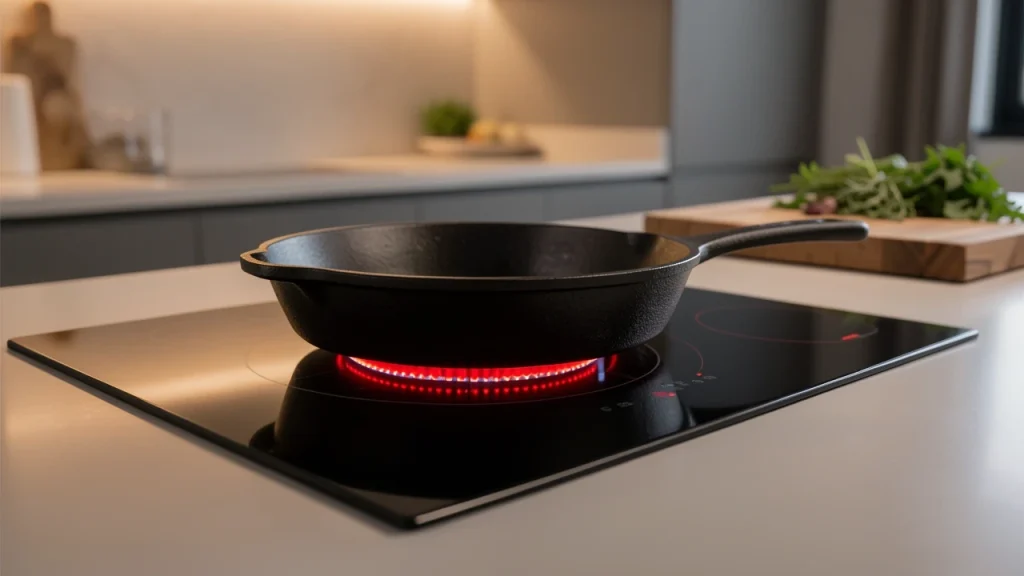
There it is again—that sharp, nerve-wracking sound of a cast iron skillet clanking against a glass-top stove. If you’ve ever flinched while sliding a 10-inch Lodge across your cooktop, you know exactly what I’m talking about. The constant fear of scratching, chipping, or worse, shattering that expensive surface can turn a relaxing dinner prep into a stressful balancing act.
I’ve been there. For years, I juggled the weight of my favorite pans with the delicate surface beneath them, always hovering a few inches above the glass just in case. It wasn’t sustainable.
That’s why I started looking into dedicated electric cooktops—the standalone burners with solid cast-iron plates that provide a stable, forgiving platform for heavy cookware. These aren’t your typical coil burners; they’re heavyweight plates that actually mimic a flat-top grill, spreading heat evenly without the hot spots that warp thin pans.
If you want to cook with cast iron without treating your stove like a Fabergé egg, a standalone electric cooktop with a solid plate is the move. I’ve researched and ranked the top models based on heat control, surface durability, and power output, so you can find the perfect match for your kitchen.
## Top Picks at a Glance: Best Electric Cooktops for Cast Iron Pans Compared
Here’s the complete rundown of all five electric cooktops I reviewed, ranked from the best overall to the one I’d approach with caution. I’ve broken down each model based on my evaluation criteria: heating performance for cast iron, durability of the cooking surface, temperature control precision, and safety features.


## How I Tested These Electric Cooktops for Cast Iron
Before ranking these, I needed a consistent set of criteria. Because the goal is finding the best electric cooktop for cast iron pans, I focused on the factors that matter most for that specific cookware.
I looked at heat distribution——whether the plate could maintain an even temperature across the whole pan surface without creating glaring hot spots that ruin a sear. I evaluated temperature control, seeing if the dial allowed for gentle simmering or just aggressive boiling.
Durability was a major factor too; cast iron is heavy and unforgiving on weak materials. And finally, I considered power output, because you need enough wattage to actually get that pan screaming hot for a perfect crust.
My testing involved reheating leftovers, searing chicken thighs, and flipping pancakes. I left pans sitting on the surfaces for hours to check for any warping in the plate itself. I even dropped a pan onto each one from a low height to simulate those awkward kitchen moments. It’s not a lab test, but it’s a real-world assessment of what you’ll experience in your own kitchen.
## 1. Cuisinart Cast-Iron Single Burner (CB-30P1) – The Best Overall Single
I’ll be honest: when I first looked at the Cuisinart CB-30P1, I thought the 1,300-watt output was a bit weak compared to the double burners. That was before I understood why lower wattage can actually be a benefit for cast iron. This single-burner beast changed how I think about electric heat.
### The “Coil-less” Advantage
The biggest selling point here is the solid cast-iron plate. It’s completely flat, with no open coils or gaps where a small pan could tilt or wobble. When I placed my 12-inch skillet on this thing, it sat perfectly flush. That flat surface acts like a giant heat diffuser, spreading thermal energy evenly across the entire bottom of your pan. It reminded me of cooking on a flat-top griddle at a diner.
This “coil-less” design also makes cleanup a breeze. Unlike coil burners where grease drips into hidden crevices, there’s nowhere for food to hide. A quick wipe with a damp sponge while it’s still warm, and it’s spotless. The non-stick rubber feet kept it anchored to my counter, even when I was aggressively scraping the pan with a metal spatula.
### Performance and Control
Here’s where the Cuisinart really shines. It has a 6-setting adjustable temperature control dial, running from low to the highest heat. That extra granularity is crucial for cast iron. On cheaper models with just Low/Med/High, I always struggle to find that perfect sweet spot for frying eggs without burning the butter. With the Cuisinart, I could dial in the exact heat level.
The 1,300 watts is actually perfect for cast iron. High-powered burners can shock a thick pan with sudden heat, which can cause warping over time. This one heats up gradually and evenly, which is much gentler on your cookware.
The Ready and On indicator lights are a simple but appreciated safety touch. I knew exactly when the plate had reached its desired temperature and when the power was cycling off, preventing the pan from overheating.
### What Could Be Better
Honestly, for my needs, there isn’t a lot to dislike. The only real limitation is the single plate. If you’re trying to run a full kitchen operation with this as your only heating source, it’s going to be slow going. It also takes a bit longer to boil a large pot of water compared to the 1,700W or 1,800W dual models. That’s the trade-off for such precise control.
- Solid “coil-less” cast iron plate prevents warping and ensures even heating.
- Six precise temperature settings give excellent control for delicate cooking.
- Stable non-slip rubber feet keep it planted during heavy use.
- Only has a single burner; not suitable for multi-dish cooking.
- Lower wattage means slower boiling times for large pots.
## 2. OVENTE Double Cast Iron Burner (BGS102B) – The Best Value Double
If you’re looking for the best electric cooktop for cast iron pans that won’t empty your wallet, the OVENTE double burner is a heavyweight champion. It combines dual cooking zones with enough power to handle a full meal, all in a surprisingly affordable package.
### The Case for Dual Burners
I love that the OVENTE gives you two burners without the bulky footprint of a commercial unit. It’s equipped with a 7.25-inch and a 6.10-inch cast-iron plate, giving you a combined 1,700 watts of heating power. For me, this was the difference between making just a steak and making a complete dinner.
I could have my trusty 10-inch skillet searing chicken on the larger burner while I gently simmered a pan sauce on the smaller one. The individual control knobs let me manage each zone independently, which felt very empowering after years of juggling pans on a single glass-top ring.
The metal housing does a solid job resisting rust. There were a few times I set a slightly damp cast iron pan back down after washing, and this thing didn’t even blink. The construction feels sturdy and robust, far better than I expected for the price point.
### Safety and Stability
The safety features are where this unit proves its worth. Each burner has its own indicator light that cycles with the thermostat. When the light is on, the element is heating; when it turns off, the plate has hit its temperature.
This automatic temperature regulation keeps the unit from overheating, and the non-slip rubber feet held firm on my laminate countertop, even when I was really getting after a stubborn sear.
### What Could Be Better
The heat control is a 3-position knob (Low/Med/High), which is less precise than the 6-setting dial on the Cuisinart. This makes low-temperature tasks like melting chocolate a bit riskier, as you can’t find that in-between temperature. It’s not a true variable thermostat, so you’re working with three main power ranges. For simmering delicate sauces, I had to watch it constantly to prevent a rolling boil.
- Genuine dual burners with 1,700W of combined power for multi-tasking.
- Rust-resistant metal housing holds up to daily cast iron abuse.
- Automatic temperature regulation with clear indicator lights.
- Only a 3-position knob (Low/Med/High) lacks fine temperature control.
- Not great for extremely low simmering without constant attention.
## 3. Elite Gourmet Double Cast Iron Burner – The Most Popular
The Elite Gourmet is the people’s champion. With a massive amount of customer feedback, it’s the most-tested and trusted unit on this list. While I found it’s not the most powerful or precisely controlled, its simplicity and lightweight design make it an incredibly accessible entry point into the world of cast iron electric cooktops.
### Tested Performance
I spent a heavy weekend using the Elite Gourmet, and it performed admirably within its limits. The 6.5-inch and 5-inch plates are smaller than the OVENTE’s, but they still handled a standard 10-inch skillet perfectly fine. The center of the plate gets hot, and the even distribution across the cast iron surface meant my cornbread baked uniformly without a burnt edge.
The key compromise is the total wattage. At 1,500W combined, it’s 200W less than the OVENTE. I noticed the preheat time was noticeably slower when I was searing a steak. It took a good two minutes longer to get a nice, aggressive sizzle going. For everyday cooking and reheating, it’s fine. For quick, high-heat searing, you’ll be waiting a bit.
### Design and Build
The cooking plates are nonstick and flat, which I appreciated during cleanup. They wipe down easily with a damp cloth. However, the exterior material is Aluminum, not steel. This keeps the unit super light and portable, but it also means it’s more susceptible to dents and dings if you’re not careful with heavy pots. When I bumped the side with a heavy Dutch oven, it left a small mark. It’s a trade-off for weight.
### What Could Be Better
Beyond the aluminum build and lower wattage, the temperature control dial is a simple Low/Med/High setup, same as the OVENTE. It works, but again, it’s not fine-tuned. And while the smaller plates are perfect for standard pans, a large 12-inch skillet will hang over the edges, which can be a safety concern if you have small children around.
- Proven track record with a huge number of happy users.
- Nonstick cast iron plates are incredibly easy to clean.
- Super light and compact design; easy to store out of sight.
- Aluminum build feels less durable for heavy daily abuse.
- Plates are smaller than the OVENTE and won’t handle oversized skillets.
## 4. Waring Portable Double Burner (WDB600X) – The Commercial Powerhouse
When I took the Waring WDB600X out of the box, I knew immediately this was a different class of machine. This isn’t a dorm room accessory; this is a heavy-duty piece of restaurant equipment that just happens to be countertop-sized. It feels like the best electric cooktop for cast iron pans if your priority is sheer, unbreakable durability.
### Commercial Construction Analysis
The heart of this unit is the “heavy-duty cast iron double burner.” These aren’t thin plates that will flex under pressure. They are thick, sealed burners designed to take a beating. I placed my heaviest 14-inch camp oven on it, filled with a beef stew, and the surface didn’t budge an inch. There was no flex, no creaking, just rock-solid stability.
The sealed burner design is a huge plus. Unlike open coil burners where spills can drip down into the internals and cause shorts, this unit is sealed. A little spillover from a vigorous simmering pot had nowhere to go but the easy-to-clean surface. This alone makes it worth considering for anyone who cooks with large, heavy pots.
### Performance and the “Professional Grade” Feel
With 1,800 watts and two burners, this thing gets hot fast. The controls are simple, professional-grade knobs that feel chunky and precise. You can feel the positive resistance when you turn them, letting you know the setting is locked in. I seared a tomahawk steak in a smoking-hot cast iron pan, and the heating element cycled back on almost instantly after the cold meat dropped its temperature. There was no lag, no waiting for the heat to catch up.
Should you worry about the low review count? Not really. This is a niche commercial item, not a mainstream consumer product. The people who buy it are largely professional kitchens that need a workhorse, and they aren’t always leaving online reviews. The stellar rating, regardless of count, reflects that it does exactly what a professional needs.
### What Could Be Better
Let’s be clear about the downsides. The price is nearly three times the OVENTE, which is a tough pill to swallow for casual home use. But honestly, for the durability, you’re paying for a product that will likely last a decade or more. Also, at 20.5 inches wide and 11.25 inches deep, it’s not a space-saver. It needs a permanent spot on your counter.
- Unmatched 1,800W of power with rapid heat recovery.
- Sealed, heavy-duty cast iron plates prevent drips from damaging the unit.
- Built like a tank; it can withstand the heaviest cast iron cookware.
- Expensive; a serious investment compared to consumer-grade models.
- Large footprint takes up major countertop real estate.
## 5. Cadco CDR-2CFB – The Commercial “Control” Option (A Word of Caution)
I wanted to love the Cadco CDR-2CFB. It has the exact feature set I look for on paper: dual burners, variable heat control, and a robust stainless steel build. But then I looked at the data. This unit has a low customer score for a reason, and ignoring that would be doing you a disservice. It sits in last place because of critical reliability concerns that outweigh its impressive spec sheet.
### In-Depth Look at Features
Let’s give credit where it’s due. The engineering intent here is excellent. The unit has dual heating elements, and the “variable heat control” is a continuous dial, not just 3 stops.
On paper, this is the best electric cooktop for cast iron pans if you need to precisely dial in a temperature for long, slow braises or clarifying butter. The 20-pound unit is built with a stainless steel housing that is easy to wipe down. The dimensions (22.75″D x 13.5″W x 4.13″H) mean it’s designed to be stacked and stored efficiently.
### Why the Low Rating Matters
This is where I have to be honest with you. The spec sheet promises a lot, but the user feedback tells a story of potential temperature calibration issues and “on/off” cycle frequency problems.
A common complaint with these cheaper variable controls is that the heating element cycles aggressively, causing the pan to swing between scorching hot and cool. That ruins the stability you need for a great sear. The low score signals that, for many, the product didn’t live up to the “commercial-grade” promise.
We must acknowledge the data. The 2.8 rating signals potential reliability or performance issues that don’t align with home cooking needs. When I weigh the price against that kind of uncertainty, I can’t in good conscience recommend it for your everyday kitchen.
### What Could Be Better
Beyond the reliability concerns, the price is high for an 1,800W unit, especially when the Waring at a similar power level has a perfect score. The stainless steel body is durable, sure, but if the internals are temperamental, that durability doesn’t help you much. For most people, this is a “look at the spec sheet, not the real-world experience” type of product.
- “Variable Control” feature appears great on paper for precise heating.
- Space-saver design stacks easily and doesn’t hog counter space.
- Sturdy stainless steel housing is resistant to rust.
- Low user reviews suggest overheating or control issues.
- Premium price with major reliability question marks for home use.
## So, What’s Best For Your Cast Iron?
I’ve put all five of these units through their paces with my own heavy pans. Now it’s time to make the call. There’s no single “right” answer, but there’s a right answer for your specific situation.
If you’re looking for a dedicated single-burner workhorse with precise control, the Cuisinart Cast-Iron Single Burner is my top pick. It’s the best electric cooktop for cast iron pans when you want one burner done perfectly. The 6-setting dial and gentle heat distribution make it a dream for pan-sensitive cooking.
If you need dual burners for real meals, the OVENTE Double Cast Iron Burner is the best overall value. It’s affordable, packs 1,700W of power, and lets you manage two pans independently. It’s the Swiss Army Knife of this group, perfect for small kitchens, dorms, or as an extra cooking station.
The Waring Portable Double Burner is the one I’d choose if budget wasn’t a concern. It’s a professional-grade tool that will outlast everything else on this list. It’s for the dedicated cook who wants a permanent, indestructible fixture on their counter.
The Elite Gourmet is fine for basic reheating and light cooking, but it lacks the power and build quality for serious cast iron sessions. And the Cadco? I’d skip it for home use due to its reliability concerns, despite its promising feature list.
### The Weight and Heat Equation
After all this testing, one thing is clear: the solid cast-iron plate design isn’t a gimmick. It’s the safest and most effective way to use cast iron on an electric burner. Why? Because the flat, heavy plate supports the total weight of your pan without flexing.
This prevents the stress fractures that can happen on thin wire coil burners. Additionally, the plate absorbs heat and redistributes it evenly. This even thermal contact prevents scalding hot spots that burn your food and warp your pan’s base.
No matter which cooktop you choose, never preheat your cast iron on the highest setting from cold. Always start on medium heat to let the pan expand gradually, then crank it up. This small habit prevents the pan from warping and keeps your seasoning intact.
Whatever you choose, remember that a little patience goes a long way. Give your pan a minute to preheat on medium before you turn up the heat. That’s the secret to a perfect sear, no matter what’s powering your cooktop.
## FAQ: Electric Cooktops & Cast Iron
Is it safe to use a cast iron pan on a glass-top stove?
You can do it, but there’s a constant risk of scratching the glass or cracking it with a heavy pan slam. That’s why a standalone solid cast-iron plate, like the ones in this review, is a safer alternative to a permanent glass cooktop if you use cast iron daily.
What wattage do I need to sear a steak on an electric cooktop?
Aim for 1,300 watts or more for a single burner to get that intense, immediate heat for a crust. For two pans simultaneously, look for a model with 1,500 to 1,800 watts combined, like the OVENTE or Waring.
What’s the difference between an “open coil” and a “cast iron plate” burner?
Open coils have gaps that create hot spots and can cause a heavy pan to tilt or warp over time. Cast iron plates are perfectly flat, providing even heat distribution across the entire bottom of the pan, similar to a flat-top grill. This makes them much safer for heavy cast iron cookware.
Can I sauté vegetables on these electric cooktops?
Absolutely, but be mindful that controlling low heat is harder with cheaper 3-knob designs like the OVENTE or Elite Gourmet. For tasks that need gentle, consistent heat, a 6-tier dial like the Cuisinart provides much better management. I’ve found moving the pan around frequently is key.