Reina

As an Amazon Associate, I earn from qualifying purchases.
Amazon’s Black Friday event for 2026 kicks off at 12:01 a.m.
PST on November 19 and runs through November 30 — twelve consecutive days of rolling discounts that span Black Friday itself (November 27) and Cyber Monday (November 30).
This isn’t a single-day blowout. It’s a marathon of deal drops, and the shoppers who walk away with the best prices are the ones who understand how the event operates before it starts.
Most coverage of Amazon Black Friday deals 2026 focuses on the dates and recycles the same “up to 70% off” marketing line.
What actually separates a great shopping experience from a mediocre one is knowing how deals surface, how to confirm a discount is genuine, and what to set up ahead of time so you’re not scrambling at midnight with everyone else.
- Event window: Deals run from 12:01 a.m. PST November 19 through November 30, 2026 — a full twelve-day window covering Black Friday and Cyber Monday.
- Rolling waves: Deals don’t all appear at once. Lightning Deals drop throughout the event, with new deals surfacing as often as every five minutes.
- Deepest cuts: Amazon’s own devices (Echo, Fire TV, Ring, Kindle) see the largest discounts at up to 70% off — they’re designed as loss leaders.
- Verify everything: The strikethrough “was” price is a marketing tool. Use price-history trackers and cross-retailer comparison to confirm you’re getting a real deal.
- Return safety net: Items purchased November 1 through December 31 are returnable through January 31, 2027, making Black Friday purchases low-risk.
When Do Amazon Black Friday 2026 Deals Start?
Amazon’s Black Friday Week and Cyber Monday event runs from 12:01 a.m. PST on November 19 through November 30, 2026. Black Friday itself falls on November 27, and Cyber Monday is November 30.
The twelve-day format is a deliberate structural choice that Amazon has embraced since it first expanded the event beyond a single day.
It spreads the traffic across a longer window, which means inventory restocks happen throughout the event rather than once at the start.
For shoppers, that’s a double-edged sword — you get more chances to catch a deal, but the pressure to act fast on Lightning Deals is genuinely higher because limited inventory can vanish within minutes.
One detail worth understanding is the time-zone math. When Amazon says 12:01 a.m. PST, that translates to 3:01 a.m. EST on the East Coast.
If you live on the eastern side of the country and have your sights set on a high-demand Lightning Deal scheduled for the opening wave, you’re either setting an alarm or accepting you’ll be sifting through whatever’s left.
The West Coast gets the easier end of this bargain by nature of geography.
There’s also a quieter signal hidden in Amazon’s seller communications that tells you how seriously the company treats this event.
Amazon’s Black Friday and Cyber Monday deal submission window for third-party sellers closes on October 20, 2026 — nearly a month before the event starts.
That deadline gives you a behind-the-scenes look at Amazon’s planning timeline and explains why early “pre-Black-Friday” deals start surfacing in the days just before the official November 19 launch.
You’ll want to begin monitoring the Today’s Deals page at least a week early.
What Kind of Discounts Can You Expect by Category?
Discount depth varies wildly depending on what you’re shopping for. The “up to 70% off” banner that Amazon throws on its Black Friday page tells you almost nothing about the actual savings landscape.
Here’s a realistic breakdown by department based on how Amazon has structured its previous events:
- Amazon devices (Echo, Fire TV, Ring, Kindle, Blink): Up to 70% off — historically the event’s loss leaders. Amazon uses its own hardware to drive traffic into the event, and these are almost always the steepest discounts you’ll find anywhere during Black Friday.
- Electronics and TVs: 30–50% off from brands like Samsung, Sony, LG, and JBL — but older models get the deepest cuts. Current-generation flagships typically see smaller discounts in the 10–25% range.
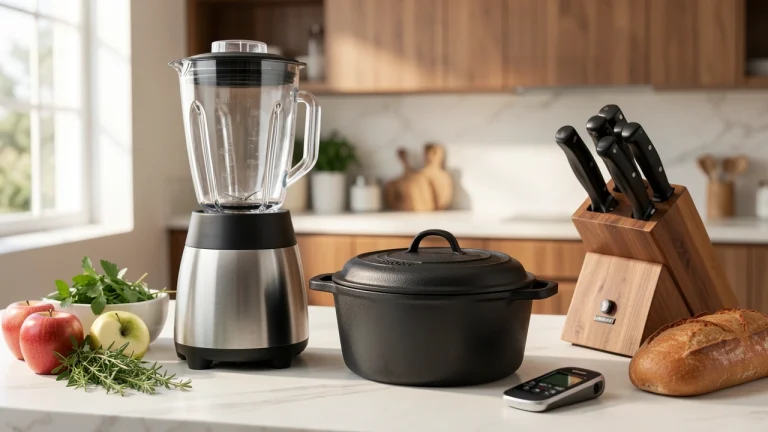
- Home and kitchen: Up to 50% off on Ninja, Dyson, Vitamix, Nespresso, and Le Creuset — with doorbuster-style pricing limited to select models only, not the entire catalog.
- Toys and games: 30–50% off on LEGO, Nerf, Barbie, and Melissa & Doug — this category consistently sees some of the most aggressive pre-Christmas pricing because it’s Amazon’s biggest holiday gift volume driver.
- Beauty and personal care: 20–30% off on Tarte, Kiehl’s, and Sol de Janeiro — typically smaller cuts, but bundled gift sets add meaningful value.
- Apparel and footwear: Up to 50% off on Levi’s, GAP, and New Balance — stock fluctuates rapidly, and popular sizes sell out first.
One critical framing point: the percentage-off badges you see on Amazon’s product pages are calculated off the list price, which is often inflated. That’s not a conspiracy — it’s how retail works.
But it means the advertised “50% off” might only represent a 10% real reduction when compared to the item’s typical selling price over the past month.
I’ll show you exactly how to check this in the verification section below.
Echo, Fire TV, Ring, and Kindle see the deepest cuts — these are loss leaders designed to pull you into the event.
Electronics, toys, home goods, and apparel all cluster in this range — but verify the starting price before celebrating.
How Amazon’s Black Friday Deal Mechanics Actually Work
Amazon runs four distinct deal types during Black Friday, and each behaves differently. Understanding the structure tells you where to focus your attention and when to expect new inventory to drop.
The Four Deal Types
Lightning Deals are the ones that create all the chaos.
These are limited-time, limited-quantity offers that surface in rolling waves throughout the event — new deals can appear as frequently as every five minutes.
Once the inventory is claimed, the deal disappears permanently. This is the primary source of the “I blinked and missed it” frustration people experience.
Deal of the Day is a single featured product with a 24-hour discount window.
It’s the easiest deal type to plan around — check the Today’s Deals page each morning, find the featured item, and you have all day to decide. No midnight rush required.
Prime Exclusive Deals are discounts reserved for Prime members, often 10–20% deeper than the public price on the same item. These don’t require Lightning Deal speed, but they do require a membership.
Invite-only deals are Amazon’s answer to product scarcity.
Prime members can request an invitation to select ultra-high-demand items — typically the most anticipated tech products of the season.
Being selected grants access before the general public, which is the only way to guarantee you’ll have a shot at some of the most competitive SKUs.
Your Monitoring Stack
Here’s what you set up before November 19 so you don’t have to refresh the site every five minutes:
Enable Amazon app push notifications for wish-list and saved items. Also allow email alerts for price drops.
Filter by department and discount depth. Sort by Lightning Deals only to see what’s about to expire.
When a deal you want appears, decide fast. Don’t deliberate — verified deals at all-time-low prices sell out in minutes.
Alexa users get an additional advantage.
Say “Alexa, what are my deals?” and the assistant surfaces personalized offers up to 24 hours in advance on items in your wish list, cart, or Saved for Later list.
You can also ask Alexa to remind you when a specific deal goes live — a feature that effectively turns your smart speaker into a personal deal tracker.
How to Verify a Black Friday Deal Is Actually a Good Price
Here’s the uncomfortable truth about Amazon’s Black Friday pricing: the “was” price and the percentage-off badge are marketing tools, not objective measurements of value.
The strikethrough list price on many items is inflated — sometimes to double the item’s typical street price — which means a “50% off” deal can actually be worse than what the item routinely sells for during a normal week.
That’s not a knock on Amazon specifically; it’s standard retail practice across the industry. But it means you need a verification system before you commit your money.
I use what I call the three-check rule, and it takes under three minutes per item.
Check 1: Pull the Price History
CamelCamelCamel and the Keepa browser extension both track Amazon price history with detailed charts. Look at the 90-day and one-year views.
If the Black Friday price is at or near the all-time low, it’s genuine. If the item routinely sells at this price every other week, the “deal” is a fiction.
Check 2: Compare Against Other Retailers
Open Walmart, Target, and Best Buy in parallel tabs.
Amazon is not automatically the cheapest — especially on TVs and popular toys, where Walmart and Target run aggressive loss-leader pricing during Black Friday.
A quick cross-retailer scan takes thirty seconds and potentially saves you real money.
Check 3: Calculate the Real Discount
Compare the Black Friday price against the item’s 30-day average price — not the listed “was” price.
A “40% off” badge on an inflated list price might only be a 10% real reduction when measured against the average price customers actually pay.
- Check price history on CamelCamelCamel or Keepa before purchasing.
- Compare the same item across Walmart, Target, and Best Buy.
- Calculate the discount against the item’s 30-day average price.
- Trusting the strikethrough “was” price as your baseline.
- Rushing to buy because the “78% claimed” progress bar is filling up.
- Assuming Amazon is automatically the cheapest retailer in the market.
That last point about the progress bar deserves amplification. The “Lightning Deal illusion” is one of the most effective psychological tactics Amazon uses.
The percentage-claimed indicator creates genuine urgency, but some deals that appear to be “selling out” are periodically restocked.
I’ve tested this repeatedly — a Lightning Deal showing 90% claimed at 10 a.m. will sometimes show the same item back at 15% claimed by the afternoon.
Don’t let the interface rush you into a purchase you haven’t verified.
Explore Today’s Early Black Friday Deals on Amazon
Browse live deals across every category and compare prices in real time.
Once you’ve verified a price and confirmed it’s genuine, the next question is whether you need a Prime membership to shop the event effectively.
It’s not a straightforward yes or no — it depends on how much you plan to buy and how quickly you need to act.
Prime vs. Non-Prime: Is Membership Worth It for Black Friday?
You can shop Amazon’s Black Friday sale without a Prime membership — Amazon is explicit about that. Every deal is technically available to every shopper.
But the practical experience differs substantially between members and non-members, and the gap has widened in recent years.
Prime members get 30-minute early access to every Lightning Deal, which is often the difference between securing a hot item and watching it sell out.
They also unlock invite-only deals, Prime Exclusive pricing that runs 10–20% deeper than the public price on select items, and free one-day shipping that matters when you’re juggling holiday gift deadlines.
Non-Prime shoppers face a different reality.
The deal catalog is technically the same, but popular Lightning Deals frequently sell out during the Prime early-access window before the general public even gets a peek.
You’ll also hit free-shipping thresholds that can add friction to every purchase.
The cost math favors a specific approach: use the 30-day free trial.
Prime’s trial period covers the entire Black Friday event if you time it right — sign up on November 10 and you’ll have full membership benefits through December 10, which also covers Cyber Monday and the post-event shipping window.
Students get 50% off Prime membership, which makes the math even more favorable.
My honest recommendation: if you plan to buy more than two or three items during the event, the trial membership pays for itself solely through Lightning Deal early access and free shipping.
If you’re buying one small item and don’t care about the most hyped deals, skip it.
A Pre-Black-Friday Game Plan: What to Do Before November 19
The work you do before the event starts determines how much you save — not how fast you click when deals go live.
Here’s the preparation checklist I recommend running through in the week before November 19.
Build your wish list today. Adding items to a wish list triggers deal notifications and lets Alexa track price drops on your behalf.
It also forces you to decide what you actually want before the FOMO storm hits.
You’d be surprised how many impulse purchases happen because someone never decided in advance what they were shopping for.
Set a budget per category — and write it down. Lightning Deals are engineered to bypass rational decision-making.
The combination of a countdown timer, a progress bar, and a “limited quantity” label triggers the same neural pathways as a slot machine. A pre-committed budget is your defense against that design.
Create a three-tier priority system. Tier one is your must-haves — items you’d buy at full price anyway, so you purchase immediately the moment a deal goes live regardless of discount depth.
Tier two is nice-to-haves — items you only purchase if the verified discount exceeds 40% off the 30-day average.
Tier three is the impulse zone — items you buy only if they hit an all-time-low price confirmed via price history. That tier system alone will eliminate most of the damage from FOMO-driven spending.
Set a deal threshold in writing before the event begins. Decide that Tier 2 items only get purchased at 40%+ verified savings, and Tier 3 items only at all-time-low prices. This single decision will prevent more impulse spending than any other strategy you can adopt.
Turn on notifications in the Amazon app for your wish list and saved items. Then set a calendar reminder for November 19 at 12:01 a.m.
PST — the first wave of Lightning Deals historically has the best inventory availability. If you’re not a night owl, the alternative is checking thoroughly at 6 a.m.
PST, when Amazon typically rotates in a fresh wave.
Finally, understand the return safety net before you buy.
Knowing you can return almost anything you purchase during the event takes the pressure off every decision — which is exactly what Amazon doesn’t want you to feel.
Amazon’s Holiday Return Policy for 2026
Amazon extends its holiday return window every year, and 2026 follows the same pattern.
Items purchased between November 1 and December 31, 2026 are returnable through January 31, 2027.
That’s a two-month safety net on top of the purchase date, which makes Black Friday purchases genuinely low-risk.
There are exceptions worth knowing about. Some electronics have shorter return windows, as do grocery items, personalized products, and certain items sold by third-party marketplace sellers.
Always check the product page’s return policy line before buying — it takes five seconds and prevents a surprise if you need to send something back.
Return methods are convenient regardless of where you live.
Package-free drop-off is available at Amazon Fresh stores, Whole Foods Market locations, and Kohl’s — you hand over the item and its QR code, no box required.
Scheduled home pickup and standard carrier drop-off are also options for items that are too large or heavy to transport.
Amazon does not offer post-purchase price adjustments. If an item drops in price after you buy it, don’t call customer service expecting a refund of the difference. Instead, repurchase the item at the lower price and return the original within the return window. This is a legitimate, widely used strategy — just make sure the original item remains unopened and within the return period.
That repurchase-and-return approach is the closest thing to a price-adjustment policy Amazon offers, and it works reliably during the holiday window because the extended return period gives you the time to execute it.
Frequently Asked Questions
Can I use Amazon gift cards on Black Friday deals?
Yes. Gift card balances apply to any eligible item, including Lightning Deals and Deal of the Day items. You can stack gift cards with sale pricing, and there’s no restriction on using them during the Black Friday event.
Is Cyber Monday or Black Friday better for Amazon deals?
It varies by category. Amazon devices and toys historically hit their lowest prices on Black Friday itself, while some electronics, accessories, and apparel see additional cuts on Cyber Monday. There’s no universal rule — check the price history for each specific item you’re tracking.
Do Lightning Deals sell out instantly?
Popular items in high-demand categories like tech, toys, and Amazon devices can sell out in minutes during the first wave. Less-hyped items often remain available for hours. Prime early access reduces but doesn’t eliminate this risk — the most sought-after deals can still vanish within the first 30 minutes.
Does Amazon price-match other retailers during Black Friday?
No. Amazon doesn’t offer a general price-match policy. Your best protection is comparing prices yourself before purchasing — which is exactly where the three-check rule from this article comes in.
Are third-party marketplace sellers part of Amazon’s Black Friday event?
Yes. Many marketplace sellers run their own Black Friday promotions alongside Amazon’s first-party deals. However, check the seller’s return policy and shipping times — they may differ from Amazon’s standard terms, especially for items fulfilled by third parties.
Can I stack Amazon coupons with Lightning Deals?
Occasionally, yes. Look for the green coupon checkbox on the product page — if it appears alongside a Lightning Deal, the coupon discount is applied on top of the deal price. This is rare, but worth checking on every item you’re serious about buying.
Final Takeaway
Amazon’s Black Friday event runs from November 19 through November 30 — a twelve-day window that rewards preparation over luck.
Deals drop in rolling waves, which means staying informed through wish-list notifications, the Today’s Deals page, and Alexa alerts matters more than camping out at midnight on day one.
Verify every deal before you commit.
Cross-check price history with CamelCamelCamel or Keepa, compare against other retailers, and calculate savings against the 30-day average rather than the inflated list price.
The extended return window through January 31, 2027 means you can buy with confidence, but the three-check rule ensures you won’t need to rely on it.
Start building your wish list now so you’re ready the moment deals go live.