 Reina
As an Amazon Associate, I may earn a small commission from qualifying purchases at no extra cost to you. This helps me create more valuable, tested content for you.
If you’ve been researching electric pressure cookers, you’ve probably noticed the same thing I did: prices range from around $50 to well over $300, and every product listing claims to be the best. I bought seven of the most popular models and cooked real meals in all of them.
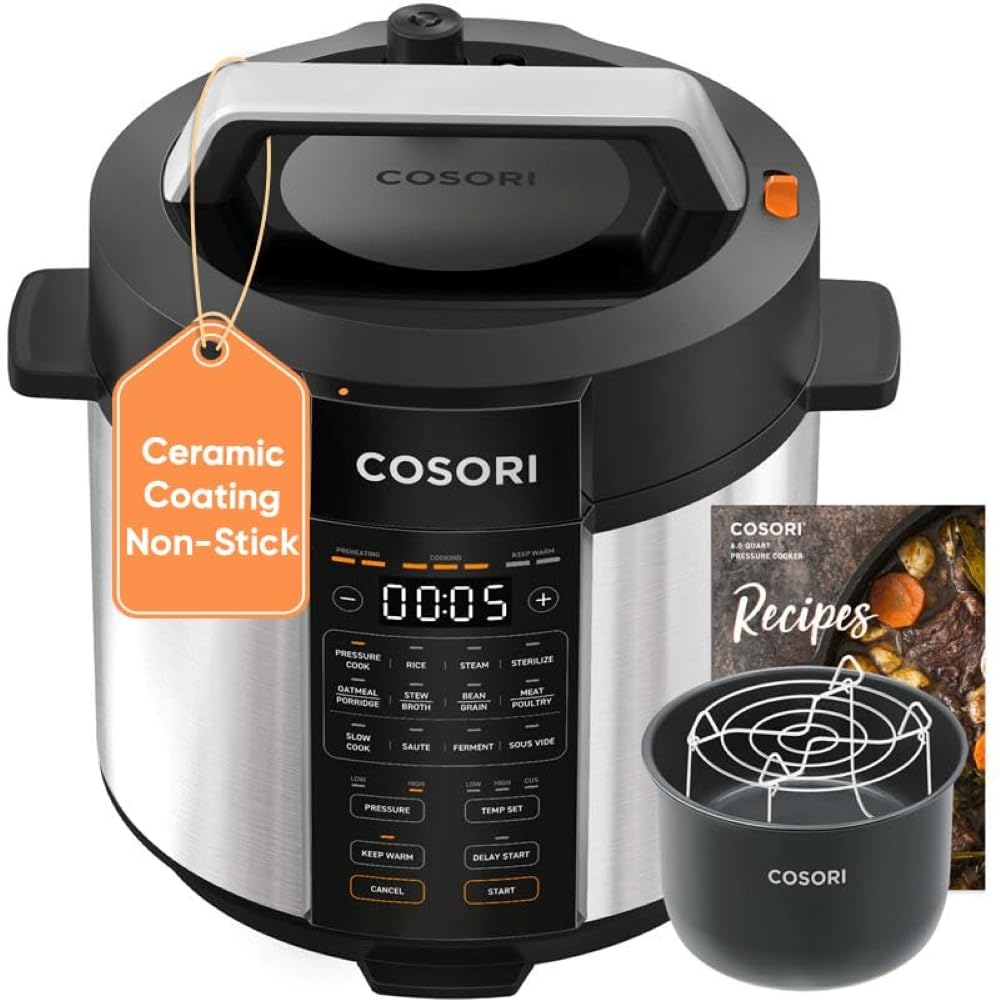
After three weeks of testing, the best electric pressure cooker for most families is the Cosori 6QT 9-in-1 — it nails even cooking, has the safest steam release I’ve tested, and costs a fraction of the premium competition.
That doesn’t mean the Cosori is right for everyone. The Instant Pot Rio is the trusted platform with the biggest recipe ecosystem. The Ninja HyperHeat cooks faster and sears better than any other unit in this test. The Breville Fast Slow Pro is a precision instrument for people who crave control.
Your kitchen, your budget, and your habits all factor in — so I’ve ranked all seven honestly, with the exact trade-offs spelled out.
I didn’t just unbox these appliances and boil a pot of water. I cooked jasmine rice, dried beans from scratch, pot roasts, soups, and weeknight chicken dinners.
I scorched one pot, got a face full of steam from another, and took detailed notes on every burn, splatter, and frustration — so you don’t have to learn the hard way.
Top Picks at a Glance
Here’s the full lineup ranked from best to worst. The order reflects cooking performance, safety, ease of cleanup, build quality, and value for money — not marketing claims.


Rankings account for cooking performance, safety, ease of cleanup, build quality, and value. The detailed breakdown below explains exactly why each cooker landed where it did.
How I Tested These Cookers (and What Actually Mattered)
I ran every cooker through the exact same five tests, using the same recipes, the same ingredients, and the same level of patience. Since each unit has its own personality, I also lived with them the way you would: weeknight dinners, rushed mornings, and lazy Sunday batch cooking.
The 5 Criteria That Decided the Ranking
- Cooking Accuracy: jasmine rice on the default preset, unsoaked dried beans, and a 3-pound chuck roast for pot roast.
- Speed: time from power-on to full pressure, plus total time to a finished meal from a cold start.
- Searing and Sautéing: a genuine Maillard crust on a dry, cold chuck roast — no extra oil, no shortcuts.
- Safety and Steam Release: valve design, lid lock clarity, vent direction, and how close my hands had to get to the steam.
- Cleanup: whether the pot wiped clean or needed scrubbing, how the lid survived the dishwasher, and how awkward the unit was to store.
A Note on My Process
All seven cookers were purchased at retail price through Amazon — no free units, no sponsorship, no early review samples. Affiliate links are marked throughout, but they don’t influence the rankings. If something frustrated me, I wrote it down and shared it.
Cosori 6QT 9-in-1 Is the Best Overall Pick
Now let’s walk through the ranking, starting with the one I’d buy with my own money. The Cosori arrived first, and it instantly felt more intentional than its price suggested.
The brushed stainless body shrugs off fingerprints, the ceramic-coated inner pot has a reassuring heft, and the lid locks with a satisfying click when the orange dots align. First impressions aside, it backed everything up once I started cooking.
Hands-On Test Results
My standard rice test — two cups of jasmine, default preset, zero soaking — came out perfect on the first attempt. No gummy layer on the bottom, no scorch marks on the ceramic coating.
The bean test was even more revealing: I ran a full dried bean cycle without pre-soaking, fully expecting foam to sputter out of the vent like it did on a couple of the budget units. It didn’t. The steam stayed where it belonged, and the beans came out tender from edge to center.
The biggest reason the Cosori sits at #1? The steam release design. The Seal/Vent button is positioned away from the valve, and the vent itself is angled 30 degrees backward.
When I quick-released a pot of beans while standing directly over the unit, the steam shot toward the back of the counter — away from my face and away from the upper cabinets. That one design choice made more difference to my daily comfort than any other feature on this list.
Cleanup is where the Cosori keeps pulling ahead. The 0.5-inch widened pot gap gives you room to slide a spatula around the rim without catching, and the ceramic pot wiped clean with a single pass of a sponge after sautéing.
The lid and accessories are dishwasher-safe, and the fingerprint-resistant housing still looked new at the end of three weeks.
Where It Falls Short
The honest limitations: searing power is adequate but not spectacular. I built a decent crust on chuck roast, but both the Ninja and Breville browned more aggressively.
The control panel uses buttons rather than a touchscreen — it’s intuitive enough, but if you’re coming from a screen-based unit, it takes a few minutes to adjust. And the included recipe guidance is thinner than the Instant Pot ecosystem.
You’ll be leaning on your own recipes, which is fine for most of us.
- Unbeatable price-to-performance ratio
- Safest manual steam release in this test
- Ceramic pot resists sticking and cleans up fast
- Fingerprint-resistant stainless housing
- 12 built-in safety features including double-layer anti-scalding lid
- Not the fastest to reach pressure
- Searing won’t replace your skillet
- Button controls instead of a touchscreen
- Recipe guidance is thinner than the Instant Pot library
Instant Pot Rio 6QT Wins on Trust and Ecosystem
As much as I wanted the Cosori to be the whole story, the Instant Pot Rio reminded me why this brand still defines the category. The matte black body feels dense and solid in a way the budget units can’t fake.
The 18/8 stainless steel pot with the tri-ply bottom has a reassuring weight, and the anti-spin design genuinely keeps the pot planted while you stir.
Searing a chuck roast in the Rio produced a deep, even fond without the pot warping or scorching. That’s the stainless steel advantage — it takes high heat better than any ceramic coating in this test.
The Easy-Release steam system is simple and predictable: press a button, steam vents at a steady rate, no twist valve to fiddle with. After a week of heavy use, the matte finish still looked fresh.
Where the Rio loses ground isn’t cooking quality; it’s value and cleanup. The stainless pot needs a bit of elbow grease after rice or beans — starch loves to cling to steel if you let it dry.
And at a higher price than the Cosori, you’re getting fewer functions: no sous vide, no ferment, no sterilize. Instant Pot’s claim of cooking up to 70% faster than slow cooking held up in my tests, but the Cosori was right there too.
What you’re actually paying for is the ecosystem.
Instant Pot has the largest recipe library, the widest accessory selection, and the deepest community support of any pressure cooker brand — the Instant Pot recipe library alone is an endless resource.
If you’re buying for a family member who has never used one, the Rio is the safest possible bet. That peace of mind is worth something real — just know that you’re paying for it.
- Build quality feels indestructible
- Best brand ecosystem and recipe support in the category
- Easy-Release steam system is simple and predictable
- Anti-spin tri-ply stainless pot performs beautifully for searing
- Dishwasher-safe lid and inner pot
- Fewer functions than similarly priced competitors
- Stainless pot needs scrubbing for starches
- No ceramic coating option at this price
- 12 lb base is not lightweight
Ninja HyperHeat 9-in-1 Is the Fastest Cooker Here
I wanted to roll my eyes at the Ninja’s “HyperHeat” branding — it sounds like a console name. Then I timed it. The 1200-watt heating system reached full pressure noticeably faster than every other cooker in this test, and white rice finished in about eight minutes.
Speed talk is cheap until you’re watching the clock on a Tuesday night with hungry kids.
The searing surface is the other headline. The wide 9.5-inch diameter gives you more room to brown meat than any competitor here, and it’s the only pressure cooker in this lineup that genuinely replaced my skillet for the browning step.
I got a deep, dark crust on beef that the others simply couldn’t match. The PFAS-free ceramic pot is the right call for high heat, and it wiped clean effortlessly.
A 4-pound chicken fit inside with room for a bed of vegetables, which gives the 6.5-quart capacity real flexibility for a family of 8–10. The SimpliServe pot goes straight from the base to the table, so serving dinner is one less transfer.
The sous vide claim needs a reality check. Yes, sous vide appears in the 9-in-1 function list, but this is a pressure cooker holding a low temperature, not a dedicated immersion circulator. It’s a bonus, not a reason to buy. Also, the Ninja is heavy — 15.9 pounds — and its footprint is wide.
Counter space is a real consideration here.
Let the Ninja’s pot preheat on the sauté setting for 60 seconds before adding oil. Wait until the oil shimmers, then add the meat. This simple habit gave me noticeably darker, more even crusts — it makes ceramic behave more like stainless steel for browning.
- Fastest to pressure in this test
- Best-in-test searing and browning power
- PFAS-free ceramic nonstick pot is easy to clean
- Big 6.5-qt capacity with a wide cooking surface
- Bulky and heavy at 15.9 lb
- Sous vide function is overbilled
- Short track record compared to category leaders
- Large footprint eats counter space
Breville Fast Slow Pro Is for Precision Obsessives
Unboxing the Breville feels like unpacking a lab instrument rather than a kitchen appliance.
The brushed stainless steel, the hinged lid, the full feedback LCD screen — everything says “precision.” In three weeks of testing, it delivered the most consistent, predictable results of any cooker on this list.
The dual sensors — one at the top of the bowl, one at the bottom — genuinely change how the cooker behaves. My rice was perfect every single time. Temperature stayed locked where I set it, and pressure never drifted.
The 8 adjustable pressure levels, from 1.5 to 12 psi, offer control that no other unit here comes close to.
The hands-free auto steam release is the cleverest system I’ve tested. The Breville reads what’s inside, decides whether to use Quick, Pulse, or Natural release, and handles everything without you touching a valve.
Having been burned by stray steam more than once, I genuinely loved never having to think about it.
But here’s the honest problem: most home cooks will never touch most of that precision. You’ll set the time, press start, and move on.
The ceramic-coated bowl is PFOA/PTFE-free and doubles as a serving dish, but it’s fragile at this price — I caught it with a metal spoon once and left a faint scratch.
Breville includes a stainless steamer basket and rack, so you can cook without touching the bowl, but there’s no stainless steel pot option.
- Unmatched precision and temperature control
- Best steam release system I’ve used — fully hands-free
- Premium build quality with a hinged lid and LCD
- Works effortlessly as both pressure cooker and slow cooker
- Very expensive for comparable everyday results
- Ceramic bowl feels delicate at this price
- Heavy and bulky
- Most of the precision features will go unused
Chefman 13-in-1 Brings Touchscreen Value
The Chefman is proof you don’t need to spend a fortune for a touchscreen. I expected a laggy, dim display at this price point; instead, I found a responsive panel that made the button-heavy budget units feel dated.
My soup, chili, and rice tests all came out well. The quick-release valve behaved predictably, and the locking lid has an integrated side holder plus a removable condensation cup that collects moisture before it pools on the counter — a small detail that even the more expensive Breville lacks.
The 13 one-touch functions cover the essentials: pressure cook, slow cook, sauté, steam, simmer, warm, plus presets for soup, stew, chili, poultry, rice, and beans.
Now the honest reservation: this model hasn’t been on the market long, and the reliability track record is thin. Mine worked perfectly for three weeks, it’s cETL approved, and it comes with a one-year warranty from Chefman.
But when a cooker performs well in testing and has a short history, I rank it on potential rather than proven durability.
The value question is also hard to ignore. For a modest step up in price, the Cosori adds a ceramic pot, sous vide, ferment, sterilize, and a safer steam vent design. The Chefman is a genuinely good budget cooker — it just happens to sit right below a class leader.
- Responsive touchscreen at an entry-level price
- Thoughtful condensation cup keeps the counter dry
- 24-hour delay start and keep warm
- 13 presets cover all the meal basics
- Limited long-term owner data so far
- Fewer advanced functions than the Cosori
- Touchscreen can scratch more easily than buttons
- No sous vide or ferment functions
DUMOS 16-in-1 Is the Ultra-Budget Surprise
I’ll be the first to admit my expectations were low when I unboxed the DUMOS. The housing feels lighter than the Instant Pot, the lid assembly is thinner, and the unit has a budget-tier wobble if you push it hard.
Then it cooked the best jasmine rice of the entire budget category — fluffy, separate, zero scorch. I reran the test just to make sure.
Beans came out tender. Yogurt worked. The 24-hour delay start let me load steel-cut oats the night before and wake up to a hot breakfast. The ceramic inner pot is the real story here — ceramic coating at this price is practically unheard of, and it wiped clean easily after every single cook.
The trade-offs are honest ones. The sealing ring had a faint silicone smell for the first two cooks; it faded completely afterward, but sensitive noses should expect it.
Build quality simply isn’t on the same level as the Instant Pot or Cosori, and DUMOS is a newer brand, so replacement parts and long-term support aren’t proven. I’d recommend this for a starter kitchen, a dorm room, or anyone on a firm budget — not for a family cooking seven nights a week.
- Unbeatable price for the feature list
- Ceramic inner pot at a budget price
- Genuinely good rice and beans
- Dishwasher-safe lid and sealing ring
- 24-hour delay start and keep warm
- Materials and lid feel budget-tier
- Faint silicone smell during the first two cooks
- Newer brand with thin replacement-parts network
- Not built for years of heavy daily use
Sweetcrispy 16-in-1 8QT Handles Big Batches
The Sweetcrispy exists for one reason: maximum capacity at a minimum price. The 8-quart pot swallowed a whole chicken and a double batch of chili with room to spare — something no other cooker in this test could manage. If you meal prep for a crowd, this is the unit.
The trade-off is physics. An 8-quart pot needs more energy to pressurize, and the Sweetcrispy was the slowest of the seven to reach pressure. That’s not a defect, just the nature of a big vessel. Results were good: beans and a whole chicken both cooked tender and even.
The practical dealbreaker for me was cleanup. The pot is 8.46 quarts, and it does not fit comfortably in a standard kitchen sink. I have a large farmhouse sink and still had to angle the pot to scrub the interior.
If your sink is average-sized, this pot will frustrate you every single time you use it.
Build quality matches the DUMOS: functional but budget-tier, and the “16-in-1” claim is mostly marketing math — it’s 12 presets, with no sous vide or ferment. For a small step up in price, the Cosori does everything better, just with less capacity.
Buy the Sweetcrispy if capacity is the absolute priority and your budget won’t stretch. Otherwise, the convenience trade-off is too steep.
- True 8-quart capacity at a budget price
- High-quality ceramic inner pot
- Big-batch meal prep made easy
- Comes with a recipe book
- Slow to pressurize
- Enormous footprint and heavy weight
- Pot won’t fit most kitchen sinks
- Budget-tier build quality
How to Choose the Right Electric Pressure Cooker
After three weeks of testing, my decision factors boiled down to five things: capacity, safety, pot material, preset reality, and long-term value. Here’s how to weigh each one in your own kitchen.
Capacity — Match the Pot to Your Table
A 6-quart pot is the sweet spot for most households of 3–5 people. It fits a 3–4 pound chicken, a standard pot roast, and a generous batch of soup.
If you cook for 6–10 people, meal prep weekly, or want to fit a larger roast, step up to a 6.5-quart (like the Ninja) or an 8-quart (like the Sweetcrispy). A 6-quart cooker fit a 4-pound chicken in my test, but it was snug; the 8-quart felt effortless.
Safety Features Are Non-Negotiable
Every cooker in this roundup has basic safeguards like overheat protection and a lid lock indicator. The real differentiator is steam release direction. The Cosori’s 30-degree backward vent, the Ninja’s stable release, and the Breville’s hands-free system are the three designs I’d trust most.
Some budget units aim steam straight up or forward — I got a face full of hot vapor from one of them, and that’s not an experience you want.
Regardless of which cooker you buy, overfilling is the #1 cause of clogged vents, burn warnings, and splattering during release. Keep at least one-third liquid in the pot and stay below the maximum fill line.
I learned this the hard way with a pot of split pea soup that bubbled over and gummed up the pressure release valve.
Inner Pot Material — Ceramic vs. Steel
Ceramic-coated pots wipe clean easily, resist sticking, and are the right pick if you hate scrubbing. Stainless steel handles high-heat searing without scratching, develops a better fond, and lasts longer — but it needs more elbow grease for starches.
The Cosori and DUMOS show how far ceramic has come. The Instant Pot shows why steel still has a place.
Presets Are Marketing, Control Is Real
A “16-in-1” label looks impressive, but most of those presets are the same five or six functions with different default times. What actually matters is whether you can adjust time and pressure manually, set a delay start, and walk away.
In my three weeks, the same four buttons covered 80% of my cooking: pressure cook, rice, sauté, and slow cook.
Budget vs. Long-Term Value
The budget options in this test are genuinely usable — the DUMOS performed shockingly well for the price. But you can feel the difference in build quality, and replacement parts are harder to find for newer brands.
If you plan to keep a pressure cooker for five years, the Cosori or Instant Pot justify their price with better construction and established support networks.
The Best Electric Pressure Cooker for Most People
I keep coming back to the same conclusion: the best electric pressure cooker for most people is the one that’s safe, easy to clean, and cooks consistently — not the one with the longest feature list.
The Cosori hits all three better than anything else in this test, at a price that feels almost unfair to the competition.
Here’s how I’d break it down by situation:
- Best Overall: Cosori 6QT 9-in-1 — safest steam release, easiest cleanup, best value.
- Best Brand Ecosystem: Instant Pot Rio 6QT — the most trustworthy name with the largest recipe universe.
- Best for Speed and Searing: Ninja HyperHeat — fastest to pressure, best browning.
- Best Premium Pick: Breville Fast Slow Pro — laboratory-grade precision for serious cooks.
- Best Budget Pick: Chefman 13-in-1 — touchscreen at a bargain price.
- Cheapest Dependable Option: DUMOS 16-in-1 — great rice and beans on a strict budget.
- Best for Big Batches: Sweetcrispy 8QT — true capacity at a low price.
If you buy one today, make it the Cosori. It’s the one I reach for when I’m cooking dinner for my family, and the one I’d recommend to a friend without pausing.
For everyone else — the Instant Pot loyalists, the speed chasers, the budget-constrained, the crowd feeders — there’s a correct answer on this list.
Frequently Asked Questions
Here are the questions I get asked most often about electric pressure cookers, answered straight from the testing kitchen.
Is a ceramic inner pot better than stainless steel?
For cleanup, yes — ceramic-coated pots wipe clean easily, and none of the ceramic models I tested stuck rice or scorched beans. For searing, no: stainless steel handles high heat without worrying about scratching the coating, and it develops fond better. If you sear a lot, steel is king.
If you hate scrubbing, go ceramic.
How long does an electric pressure cooker last?
Budget units like the DUMOS or Sweetcrispy typically give you three to five years of regular use, and newer brands have thinner replacement-part networks. A Breville or Instant Pot can easily last seven years or more because they’re built better and have replaceable sealing rings, lids, and pots.
A budget cooker that lasts three years is still decent value — just set expectations accordingly.
Can you cook frozen meat in an electric pressure cooker?
Yes, most units handle frozen meat — just add about 50% more cooking time and verify the meat reaches a safe internal temperature.
In my testing, the Ninja and Breville handled frozen chicken more reliably than the budget units, which sometimes threw a burn warning if the frozen meat sat against the pot’s bottom sensor too long.
What is the best electric pressure cooker for a beginner?
I’d hand a beginner the Cosori 6QT 9-in-1. The presets are forgiving, the angled steam release is the safest design I tested, and the ceramic pot cleans up fast — which matters when you’re still learning.
The Instant Pot Rio is a strong runner-up simply because it has the biggest recipe library anywhere, so beginners never run out of guidance.
Is pressure cooking healthy?
Pressure cooking requires less oil than sautéing, and the shorter cook times mean vegetables don’t get boiled into mush. I can’t make medical claims, but for my family, it’s the cooking method I feel best about on busy weeknights.
That said, everyone’s body is different — if you have specific dietary concerns, check with your doctor before making any big meal changes.
What’s the difference between quick release and natural release?
Quick release means you open the vent valve manually so steam bursts out and pressure drops fast — good for quick-cooking foods like vegetables or eggs when you’re worried about overcooking.
Natural release means the pressure falls on its own, slowly, over 10–15 minutes, while the pot keeps gently cooking the food. It’s required for large cuts of meat, beans, and anything that would foam during a fast release. The Breville automates this decision, which is one of its best features.
Can I use my Instant Pot inner pot in another brand’s base?
No. Even though several of these brands share a similar round shape and capacity, the pots are not cross-compatible. The heating elements, sensors, and lid locking mechanisms are calibrated differently, so using a pot from another brand could damage the unit or create unsafe pressure.
Stick with the pot that came with your cooker.

