 Reina
Reina As an Amazon Associate, I may earn a small commission from qualifying purchases at no extra cost to you. This helps me create more valuable, tested content for you.
Let me be honest with you. I love good espresso, but I used to dread cleaning my machine. That milk tube you can never fully see inside? The oily grime that builds up in places you didn’t even know existed? I’ve been there.
When I started looking for the easiest to clean automatic espresso machine, I wasn’t interested in fancy features or drink counters. I wanted one thing: a machine that gets me back to drinking coffee as fast as possible, not scrubbing parts in the sink.
After testing both the Philips 5500 Series and the De’Longhi Dinamica Plus side-by-side for several weeks, I can give you a straight answer. If your number one priority is cleaning speed — especially the milk system — the Philips 5500 with LatteGo is the clear winner.
Its milk system rinses in about ten seconds with no hidden tubes. The De’Longhi is a capable machine with more drink options, but cleaning it takes noticeably longer. Below I’ll walk you through exactly what I found, why the ranking shakes out this way, and which machine fits your habits better.
Top Picks at a Glance
Here is a quick look at how both machines compare on cleaning ease. I ranked them based on daily maintenance effort, milk system design, and overall hassle.

How I Tested Cleaning Ease
I didn’t just read the manuals and call it a day. I used both machines daily for two weeks straight. I made espresso, lattes, cappuccinos, and plain black coffee. And after every session, I cleaned them exactly as the instructions say.
My goal was simple: measure how much time and effort each machine actually demands from a real person on a normal morning.
I focused on three areas that matter most when you are trying to keep things simple. First, the milk system — this is the part people complain about the most. Second, the brew unit and drip tray — how easy are they to remove and wash.
Third, the self-cleaning and descaling cycles — does the machine help you or leave you guessing.
The Milk System
Milk residue turns sour fast. It also hides in tiny crevices. I paid close attention to how many parts each milk system has, whether those parts are dishwasher safe, and if any hidden tubes require manual scrubbing. The fewer nooks and crannies, the better.
The Brew Unit and Drip Tray
Both machines have removable brew units, which is good. But not all brew units are equally easy to pop out and rinse. I also considered how often the drip tray needs emptying and whether it can go in the dishwasher.
Self-Cleaning and Descaling
A machine that rinses itself saves you time. I checked whether each model has automatic rinse cycles, how long they take, and whether the descaling process is straightforward or requires a chemistry degree.
Cleaning Speed Comparison
Here is a quick snapshot of what I measured. These times reflect my own experience after repeated use, not the manufacturer’s best-case claims.
| Cleaning Task | Philips 5500 | De’Longhi Dinamica Plus |
|---|---|---|
| Milk system rinse | 10 seconds | About 3 minutes |
| Brew unit removal and rinse | Under a minute | Under a minute |
| Drip tray empty and rinse | 30 seconds | 30 seconds |
| Auto rinse cycle | Yes, prompt on shutdown | Yes, prompt on shutdown |
| Descaling difficulty | Easy, guided prompts | Easy, guided prompts |
The biggest difference is in the milk system. That three-minute gap every day adds up fast. Over a week, the Philips saves you about twenty minutes of cleaning time compared to the De’Longhi.
My Pick for the Easiest to Clean Automatic Espresso Machine
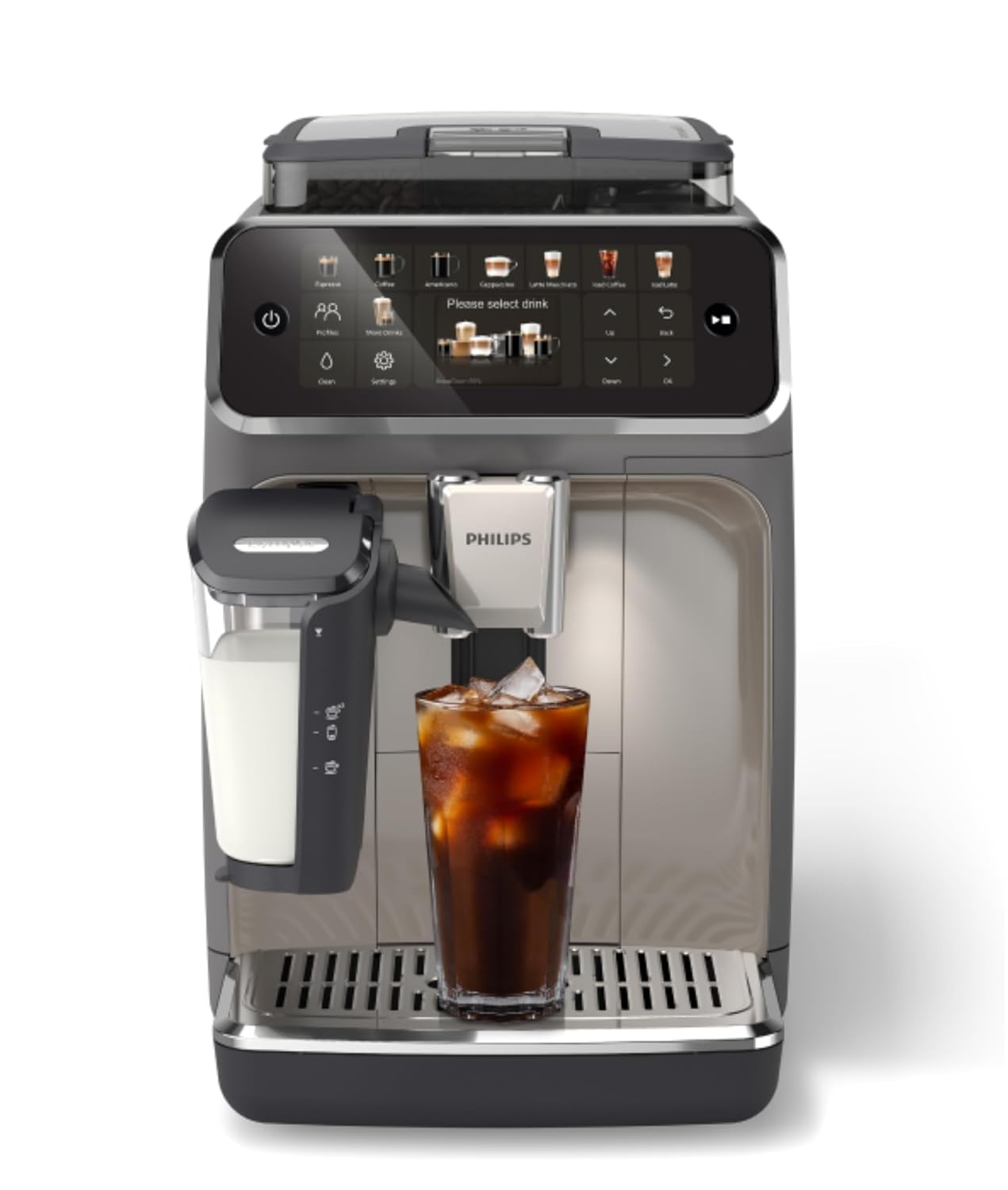
Philips 5500 Series with LatteGo
Specs: 20 presets | 1.8 L water tank | LatteGo milk system | QuickStart (3 seconds) | SilentBrew | Color display
The LatteGo system is the real deal. It has only three parts — a container, a lid, and a small silicone seal. No internal tubes. No hidden compartments where milk can sit and spoil. After you finish making your latte, you pop off the container, rinse it under the tap for ten seconds, and put it back.
That is it. If you prefer, you can put the parts in the dishwasher. I timed myself several times, and I never needed more than fifteen seconds from start to finish.
The brew unit is also easy to access. It slides out from the front panel after you open a small door. I rinsed mine once a week under warm water and let it air dry. No tools needed. The drip tray is large enough that I only emptied it every few days, depending on how many drinks I made.
One thing that surprised me was the QuickStart feature. The machine heats up in about three seconds. That sounds like a small thing, but it means you are not waiting around for the machine to warm up before you can run a rinse cycle. I used to walk away and forget. Now I just rinse and go.
The machine also prompts you to run a cleaning cycle when you shut it down. It takes less than a minute and flushes the internal pipes. The descaling process is guided through the display, so you are not left guessing what to do next.
I will say the machine is wide. It takes up more counter space than I expected. And the grinder chute can trap old grounds if you do not vacuum it out every couple of weeks. But those are minor compared to how easy the daily cleaning is.
Who should buy this: Anyone who hates cleaning milk tubes. If you have ever stared at a steaming wand and wondered what is growing inside it, this machine is for you. The ten-second rinse promise is real, and it makes a huge difference in your morning routine.
De’Longhi Dinamica Plus
Specs: 24 one-touch recipes | Built-in conical burr grinder with 13 settings | LatteCrema Hot System | 3.5 inch touchscreen | 4 user profiles
The Dinamica Plus is a solid machine. It makes excellent coffee with thick crema, and the touchscreen is genuinely pleasant to use. But when it comes to cleaning, it requires more hands-on work than the Philips.
The milk system uses a steam wand design. After each use, you need to run the automatic cleaning cycle, which flushes the wand with hot water. That takes a couple of minutes. You also need to wipe down the frother tip by hand.
There is a small part — the frother tip — that needs to be removed and cleaned separately every few days. If you skip that, milk residue builds up fast. I noticed a slight sour smell on the third day when I got lazy. That did not happen with the Philips.
The brew unit is easy to remove. It sits behind a side door, and you can rinse it under the tap without trouble. The drip tray is large and simple to empty. In those areas, the De’Longhi is almost as convenient as the Philips.
One thing I appreciated is the 24 drink recipes. You can make flat whites, iced coffees, and even regular coffee. The machine remembers your preferences and shows your most frequent drinks first. That is a nice touch. But you pay for that flexibility with extra cleaning time.
The descaling process is guided and straightforward. The machine tells you when it is time, and you follow the steps on the screen. No complaints there.
Who should buy this: If you want a wide variety of drinks and do not mind spending an extra two or three minutes cleaning the milk system, the Dinamica Plus is a capable machine. It is also a good choice if you prefer a more traditional steam wand feel.
Closing the Case: Cleaning vs. Customization
After all my testing, the choice comes down to a single trade-off. The Philips 5500 wins on cleaning speed by a wide margin. Its milk system is genuinely the easiest I have ever used.
The De’Longhi Dinamica Plus offers more drink variety and a slightly better reputation for crema thickness, but it asks for more of your time in return.
For most people, especially those coming from pod machines who want the convenience of fresh espresso without the maintenance hassle, the Philips 5500 is the better fit. You lose a few drink options, but you gain back minutes every day. And over the life of the machine, that adds up to hours.
If you are the type who likes dialing in your grind, experimenting with different milk textures, and having a full menu of drinks at your fingertips, the De’Longhi will reward that effort. Just know that the cleaning routine is more involved.
Frequently Asked Questions
How often do I need to clean the brew unit on a super-automatic machine?
Most manufacturers recommend rinsing the brew unit under warm water once a week. I found that doing this weekly keeps the coffee tasting fresh and prevents oily buildup. Both the Philips and De’Longhi brew units come out easily for this task.
Can I put the milk container parts in the dishwasher?
Yes, the Philips LatteGo milk container is fully dishwasher safe. I tested it multiple times with no issues. The De’Longhi milk frother tip and container are also dishwasher safe, but the wand itself needs manual wiping after each use.
Which machine has fewer hidden parts where milk can spoil?
The Philips 5500 with LatteGo has no hidden tubes or internal milk pathways. The milk only touches the container and the lid. The De’Longhi has a small frother tip and internal wand that require more careful cleaning to prevent sour residue.
How long does the descaling process take on these machines?
Both machines take about 15 to 20 minutes for a full descaling cycle. They both guide you through the process on the display, so you do not need to guess the steps. I found both equally simple to navigate.
Is the Philips 5500 quieter than the De’Longhi Dinamica Plus?
Yes, noticeably so. The Philips has SilentBrew technology with sound shielding that makes grinding about 40 percent quieter than older models. The De’Longhi is not loud by normal standards, but the Philips is definitely the more morning-friendly machine if noise matters to you.

