 Reina
Reina 
As an Amazon Associate, I may earn a small commission from qualifying purchases at no extra cost to you. This helps me create more valuable, tested content for you.
If you steam milk regularly and still find crust forming on your wand, you are likely missing a critical timing step.
The difference between a clean wand and one that smells sour or steams weakly comes down to a two-second window after you finish steaming.
I have worked with dozens of machines—from a Breville Bambino at home to a La Marzocco Linea in a café—and the same physics applies: milk residue dries and polymerizes on hot metal within seconds.
You have to purge and wipe before that happens.
This article gives you the precise routine, explains why your machine type changes the process, and shows you how to tell the difference between milk scale and hard water crust.
No fluff, just the method that works.
What Milk Buildup Really Is and Why It Matters
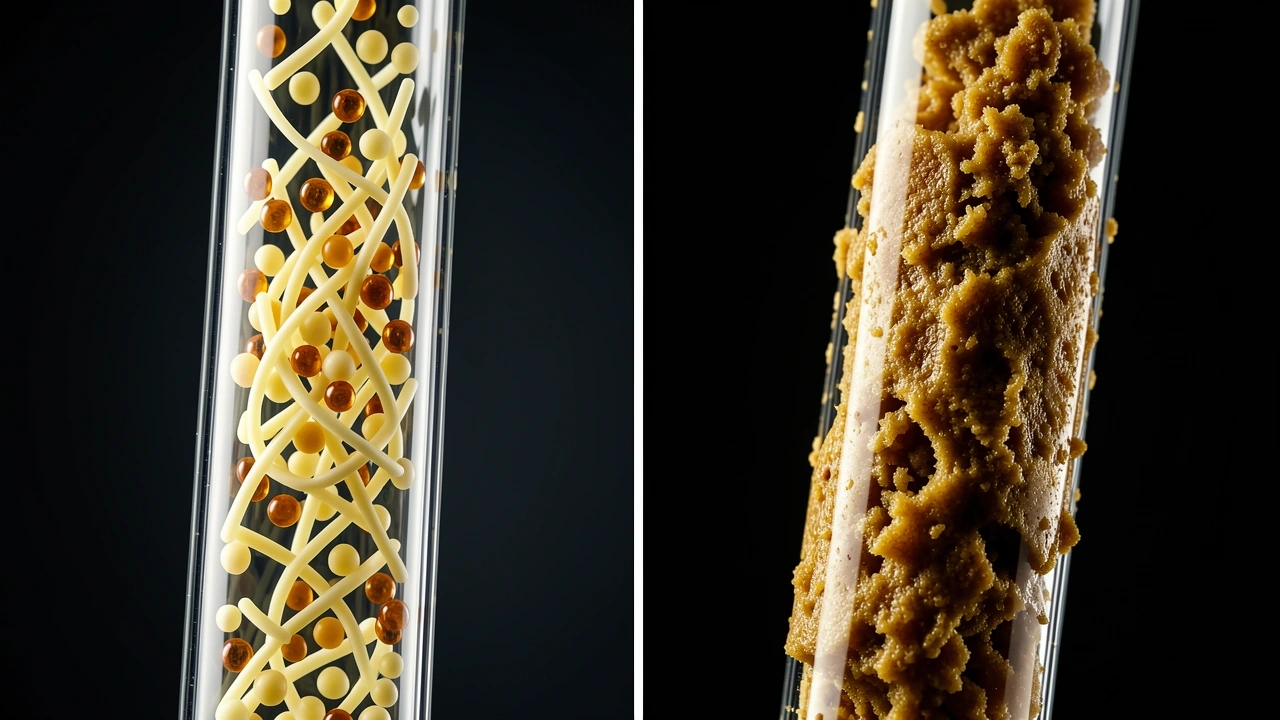
Milk contains two troublesome components. Proteins denature and bond to hot metal, leaving a yellowish or brown film. Fats oxidize and turn sticky, then combine with dried protein to form a hard crust.
Once that crust sets, wiping alone cannot remove it—you need a soak. Inside the steam wand tip, leftover milk gets sucked back when you lift the wand while the valve is still open.
That milk then bakes onto the internal surfaces of the tip holes. The result: weaker steam, off flavors in your next latte, and a stale smell that no amount of outside wiping fixes.
The buildup is not just cosmetic; it directly affects milk texture and hygiene. Bacteria love the warm, moist environment of a dirty wand.
The Core Daily Routine: Purge, Steam, Stop, Purge, Wipe
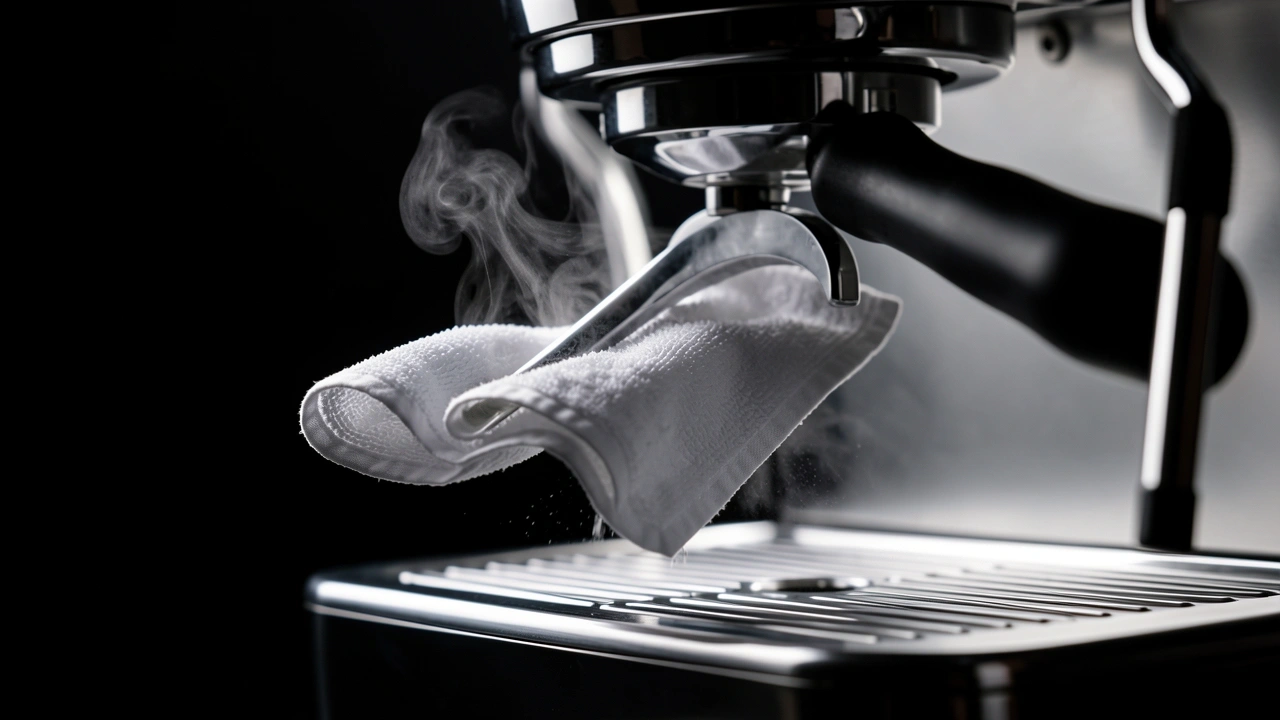
This sequence is not optional. I break it down into five actions, each with a specific purpose. Memorize the order, and do it every single time you steam milk.
Purge Before Steaming
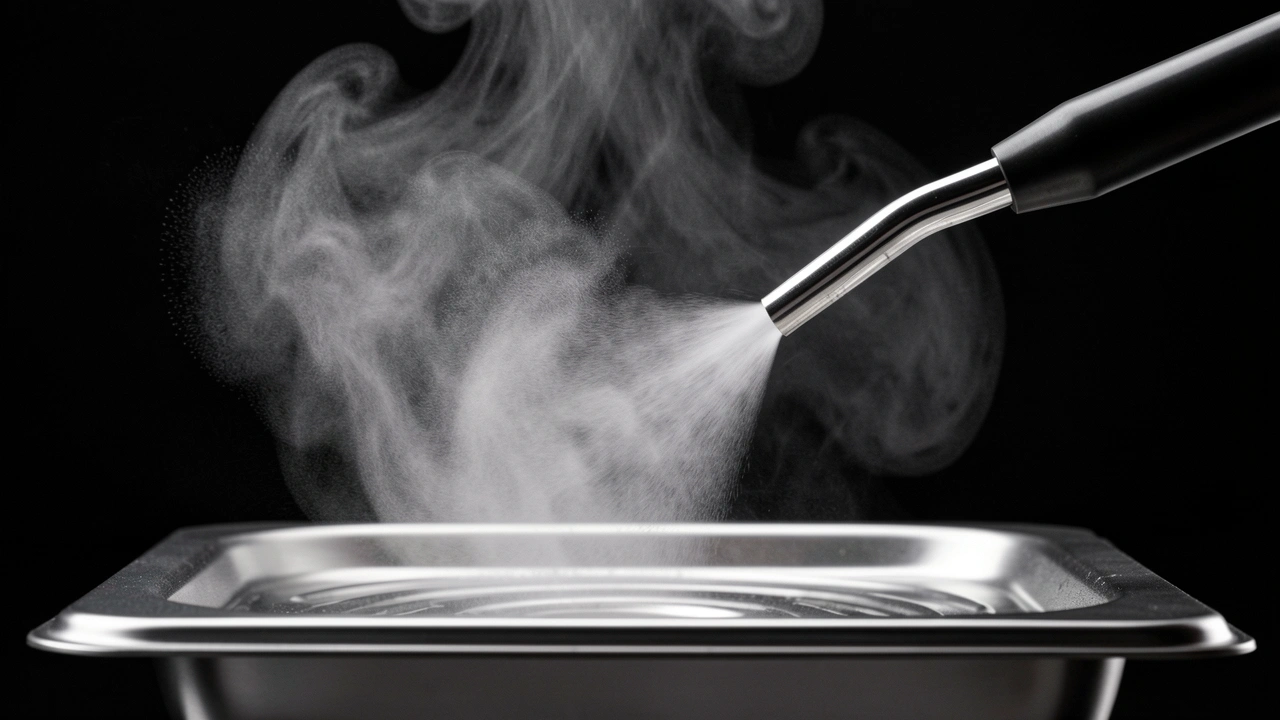
Turn on the steam for one second away from the pitcher. This clears condensed water from the wand. If you skip this, that cold water goes into your milk and weakens the foam structure.
Dry steam from the start gives you better microfoam and prevents the wand from dripping later.
Steam the Milk
Position the tip just below the surface until the milk stretches, then submerge to create a vortex. Keep the tip submerged during the entire steaming process.
Stop the Steam While the Tip Is Still in the Milk
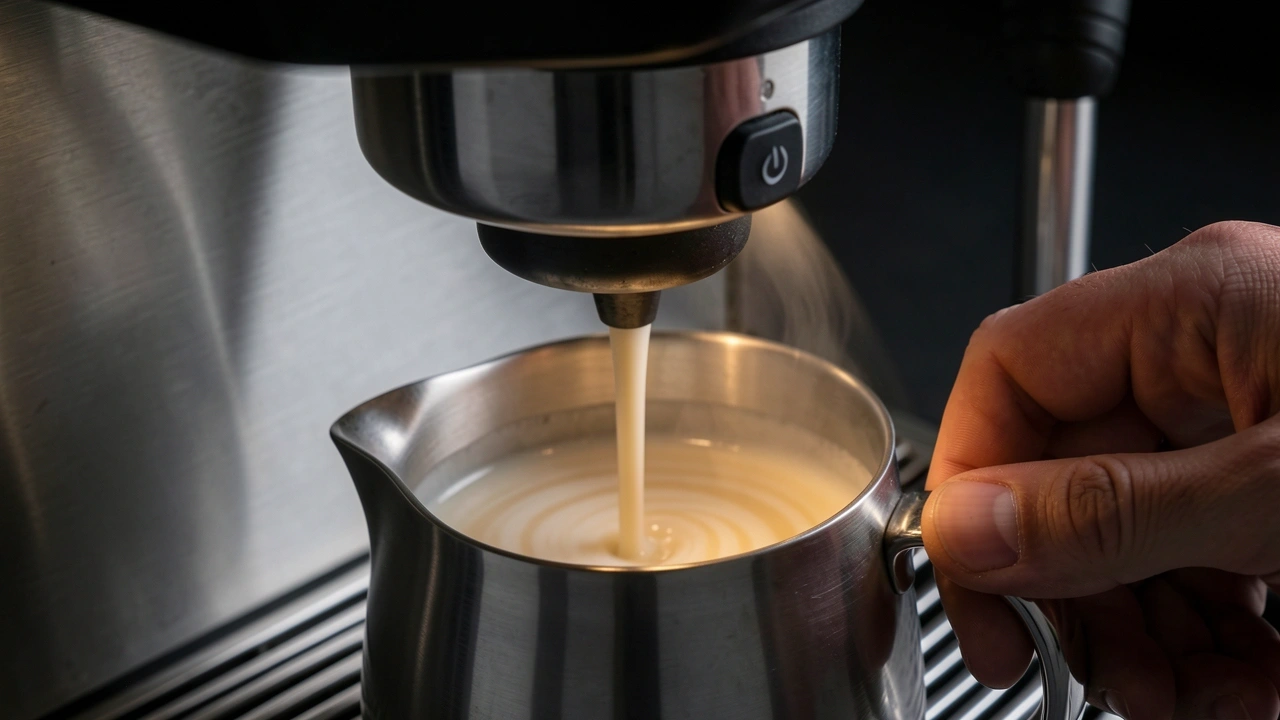
This is the most skipped step and the one that causes the most internal buildup. Close the steam valve while the tip is below the surface. Then lift the wand out. Why?
When you close the valve, pressure inside the wand drops instantly. If the tip is above the milk, air rushes in instead.
But if it is below the milk, the pressure differential sucks milk up into the tip holes. That milk then dries inside. Keeping the tip submerged until the last split-second of steam prevents suction.
I have taught this to baristas in training, and the ones who adopt it see zero internal crust.
Purge After Steaming
Immediately after lifting the wand, point it toward the drip tray and open the steam valve for two seconds. This blows out any milk that did get into the tip holes.
You will see a puff of steam and sometimes a few milk droplets. That is the milk that would have dried inside.
Wipe While the Wand Is Still Hot
Grab a clean, dry microfiber cloth and wipe the entire shaft from tip to base. The heat makes the milk film liquid again, so it wipes away easily.
Do not use paper towels—they leave lint that can block holes. Do not use a wet cloth—it does not absorb the film as well and can leave moisture that grows bacteria.
I keep a dedicated microfiber cloth next to my machine and wash it after each day’s use. Do that, and the wand stays shiny without any scraping.
The 3-Second Rule for Suction
Let me emphasize the timing. After you close the steam valve, you have roughly three seconds before the internal pressure equalizes.
If you lift the wand during those three seconds while the tip is still hot and the milk is still covering the holes, suction happens.
The fix is simple: close the valve, count one-Mississippi, then lift. If you jump the gun, milk rushes in. Practice this sequence until it becomes muscle memory.
It is the single most effective habit for preventing buildup.
Why Your Machine’s Valve Type Changes the Routine
Not all steam wands behave the same. Here is where many guides miss the nuance.
Solenoid Valve Machines
Many prosumer and commercial machines (like E61 group heads, Decent, and most dual-boilers) have an automatic solenoid valve that purges water back into the boiler after you close the steam.
This auto-purge clears the boiler backflow, but it does not clear the tip holes. You still need to do a manual purge after steaming.
If your machine does a loud whoosh a second after you stop steaming, that is the solenoid. Ignore it. Keep your finger on the steam knob and manually purge.
Thermoblock Machines
Single-boiler machines like the Breville Bambino, Dedica, or Delonghi Magnifica do not have solenoids. The only way to clear milk from the tip is to manually purge immediately after steaming.
In my experience with the Bambino, the auto-purge function that activates when you turn the steam off actually runs a short blast of water through the wand.
That helps, but I still do a two-second manual purge after that to ensure the tip holes are clear.
The “Dirty Cloth Trap”
Another oversight most routines miss: the cloth you wipe with. If you leave a wet cloth on the counter between uses, it becomes a breeding ground for bacteria.
When you wipe the wand with that cloth, you are essentially spreading bacteria back onto the metal. Use a dry microfiber cloth. Do not let it sit in water. Wash it daily.
I have seen baristas reuse the same soggy rag all shift, and the wand smells sour even though they wipe after every drink. The cloth is the culprit.
How to Tell Milk Residue from Hard Water Scale
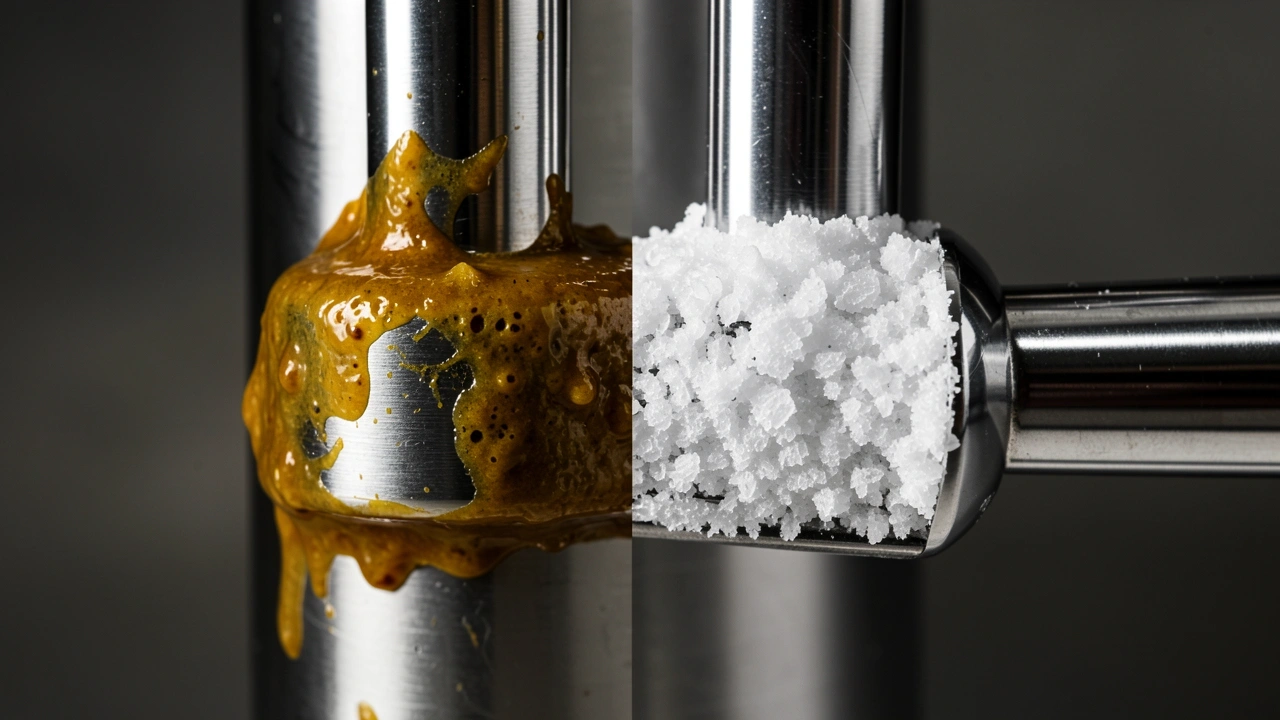
A white crust forms on the wand. Is it milk or limescale? Here is how to know.
| Characteristic | Milk Protein/Fat Buildup | Hard Water Scale (Limescale) |
|---|---|---|
| Color | Yellowish, brownish, or off-white | Bright white, chalky |
| Texture | Greasy or sticky when wet, hard when dry | Chalky, crumbly, rough |
| Soluble in | Alkaline cleaner (like Cafiza) or hot soapy water | Acid (citric acid, white vinegar – but check manual) |
| Smell | Stale, sour, yogurt-like | No odor |
| Location | On the shaft and inside tip holes | Around the tip holes and inside the boiler |
If you see white crust that does not come off with a hot wipe and smells like nothing, it is likely limescale.
You need to descale the machine following the manufacturer’s instructions, not just clean the wand. If the crust is yellowish and smells sour, it is milk residue that requires an alkaline cleaner soak.
The Weekly Deep Clean Protocol
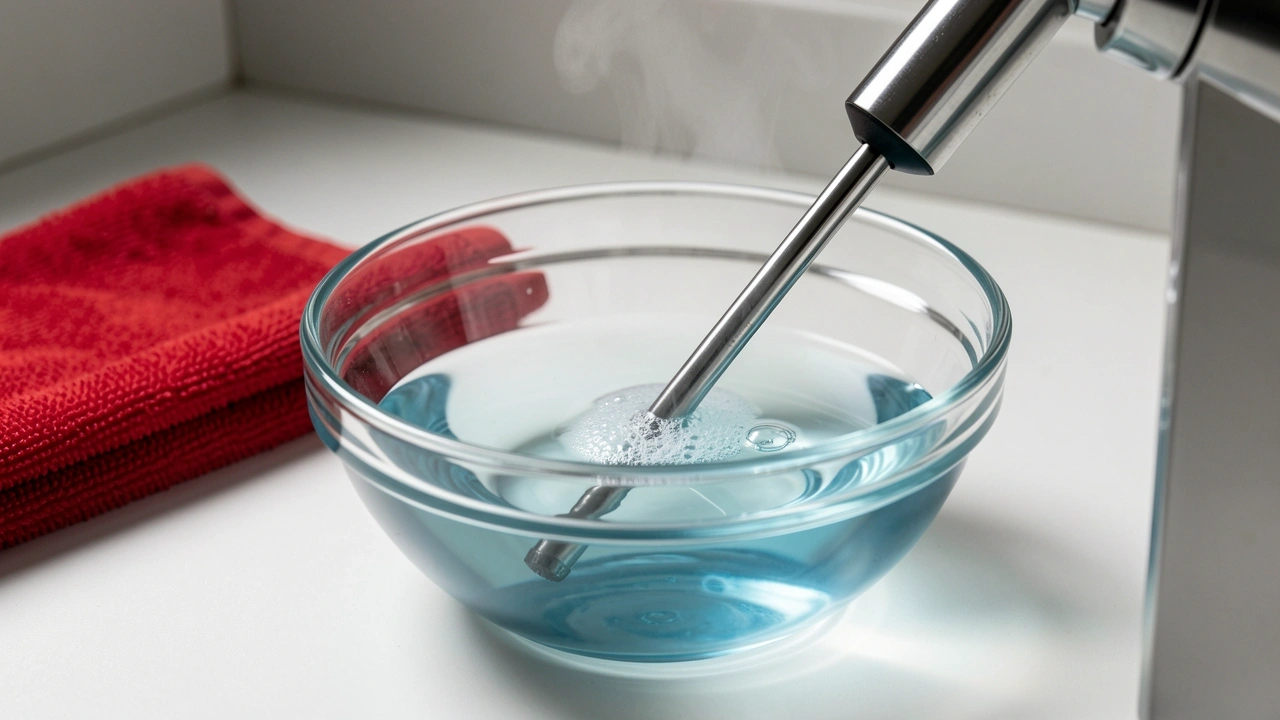
Even with perfect daily care, some buildup hides inside the tip. Once a week, or whenever you notice weaker steam or a slight smell, do this deeper clean.
- Remove the tip if your manual allows. Many prosumer tips unscrew. If yours does, take it off while the machine is off and cool. Soak the tip in a solution of hot water and a milk-cleaning powder (like Urnex Rinza or Cafiza) for 15 minutes. Rinse thoroughly and dry before reattaching. If your tip is fixed, do not force it—just wipe the outside and run a long purge.
- For fixed tips: Fill a small container with hot water and soak a cloth. Hold the cloth around the tip and open the steam for a few seconds to push steam through the cloth. This creates a steam-cleaning action. Then purge again into the drip tray.
- Check the wand base. Milk often pools at the joint where the wand meets the machine. Wipe that area with a dry cloth. If it is crusted, use a damp cloth.
- Run a milk-cleaning cycle if your machine has one. Some machines like the Decent or the Jura have a dedicated program. Use it as the manual directs, not any random solution.
If you see white crust that will not budge even after soaking, that is limescale. Descaling is a separate process—do not confuse the two.
Milk residue responds to alkaline cleaners; limescale needs acid. Using the wrong chemical can gum up the boiler.
What Not to Do
- Never stick a pin, paper clip, or wire into the tip holes. The holes are precisely drilled to control steam flow. Scratching them changes the steam stream and makes the milk texture inconsistent.
- Never use descaling solution to clean a milk buildup. Descaling solution is acidic and designed for minerals, not proteins. It can corrode the wand path if used incorrectly.
- Never leave the wand submerged in a pitcher of water or milk while the machine sits. That invites bacteria and can cause clogs.
- Never use abrasive scrub pads on the wand. They scratch the chrome, giving milk more places to cling.
Frequently Asked Questions
Can I use a paper towel instead of a microfiber cloth for the wipe?
Yes, but paper towels often leave lint that can block the tiny tip holes. Microfiber absorbs the milk film better and leaves no fibers.
If you only have paper towels, use a high-quality brand that does not shed, and be sure to inspect the holes afterward.
My wand has a silicone sleeve. Do I wipe that differently?
Yes. Wipe the outside of the sleeve daily with the same microfiber cloth. But the silicone traps milk underneath. Remove the sleeve once a week (if your model allows) and soak it in hot soapy water.
Rinse and dry thoroughly before putting it back.
Why does my milk smell sour after steaming even though I wipe?
That sour smell almost always comes from milk that has dried inside the wand tip or inside the steam boiler. Your daily wipe is not reaching the internal passage.
You need to do a deep clean with an alkaline cleaner. If the smell persists, the boiler itself may need flushing with a milk-cleaning solution. Some machines have a dedicated cycle for that.
Does purging before steaming affect milk texture?
Absolutely. Condensation water in the wand dilutes the milk and makes it impossible to get fine microfoam. The first few seconds of steam are wet.
By purging that water out before you start, you deliver dry steam from the beginning, which gives you the best foam structure.
How often should I deep clean if I steam two drinks a day?
Once a week is a good starting point. If you ever see crust forming on the tip after a few days, move to twice a week. The key is to deep clean before the buildup affects steam quality, not after.

