 Reina
Reina 
As an Amazon Associate, I may earn a small commission from qualifying purchases at no extra cost to you. This helps me create more valuable, tested content for you.
If you own a semiautomatic espresso machine, backflushing with a blind basket is non-negotiable for keeping your group head clean and your shots tasting fresh.
I learned this the hard way after a month of ignoring it. My espresso started tasting sour and oily, and I could see a dark film building up behind the dispersion screen.
That film is old coffee oils, and it will ruin your machine’s flavor and performance if left alone.
Here is the short version of what you need to do: Put your blind basket into the portafilter, add half a teaspoon of espresso machine cleaner, and run five cycles of 10 seconds on, then 10 seconds off.
Rinse thoroughly, then repeat with clean water. That is the core process. But to do it properly—without damaging your solenoid valve or leaving soap residue—you need to understand the details.
I will walk you through every step based on what I have done with my own machine and what I have learned from technicians.
The No-Nonsense How-To
This section gives you a direct, repeatable procedure. Follow these steps exactly for a standard 58mm group head machine like a Gaggia Classic, Rancilio Silvia, or La Marzocco Linea Mini.
Adjustments for other machines are covered later.
What You Will Need
- A blind basket (also called a backflush disc or blank basket). It is a solid disk that blocks the holes in your portafilter.
- Espresso machine cleaning powder (not descaler). I use Cafiza or a generic brand from a local supplier.
- A bowl of hot tap water to dissolve the cleaner before you start.
- A group head brush and a clean microfiber cloth.
The Step-by-Step Process
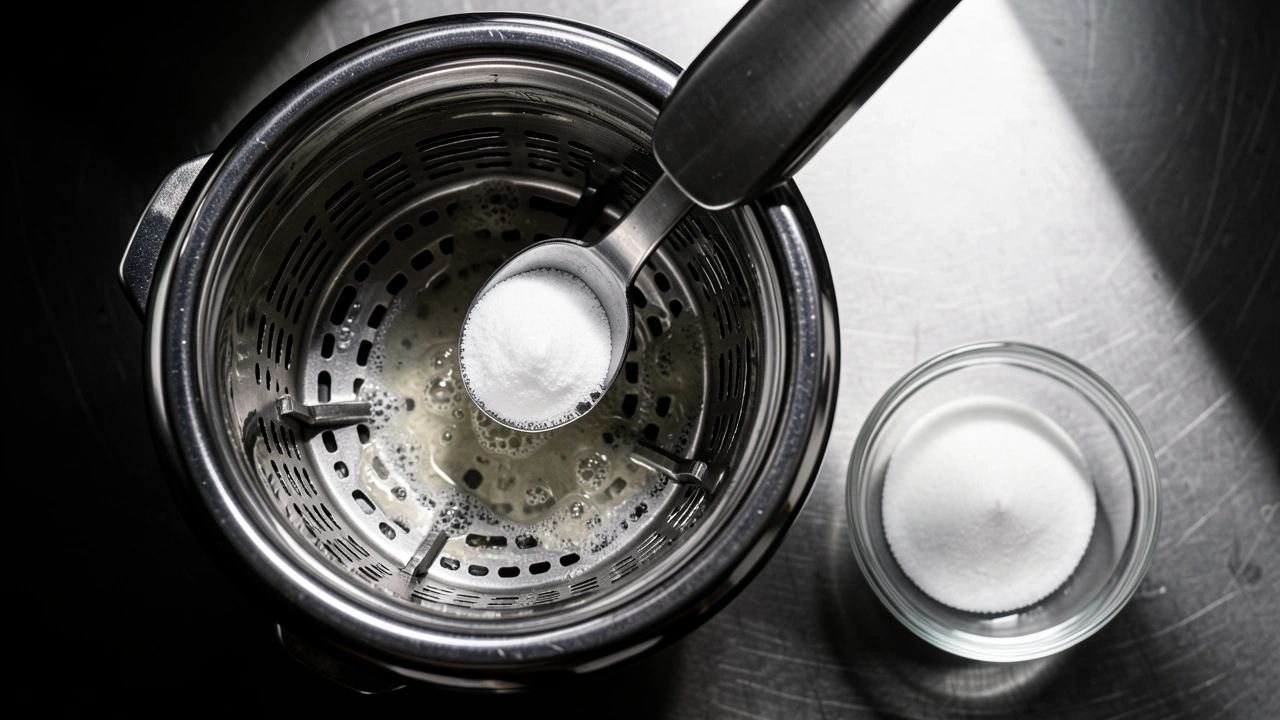
- Remove the regular basket. Take out the standard double or single shot basket from your portafilter. Insert the blind basket in its place. Make sure it seats snugly against the portafilter walls. A loose fit means water will leak and the backflush will not work.
- Dissolve the cleaner. In a small cup or bowl, mix half a teaspoon of cleaning powder with about two tablespoons of hot tap water. Stir until the powder is fully dissolved. Do not skip this step. I once dropped dry powder directly into the blind basket, and when I engaged the pump, it clogged the group head solenoid. Dissolving it prevents that.
- Pour the solution into the blind basket. Pour the dissolved cleaner into the blind basket. The basket should be about one-third full of liquid.
- Lock the portafilter into the group head. Insert the portafilter and turn it clockwise until it is secure. It should feel snug but not overtightened. If you force it, you can damage the gasket.
- Run the backflush cycles. Engage the pump for exactly 10 seconds. You will hear water moving, and then pressure will build as the blind basket blocks flow. After 10 seconds, turn off the pump and wait 10 seconds. Repeat this on-off pattern 5 times. During the off period, the three-way valve releases pressure, and the cleaner soaks inside the group head. This soak is where the cleaning happens.
- Remove and rinse. Take the portafilter out. You will see a dark, oily liquid in the blind basket—that is the dissolved coffee oils. Rinse the blind basket and portafilter under running water. Use a group head brush to scrub around the dispersion screen and gasket.
- Run rinse cycles with clean water. Lock the now-clean portafilter back into the group head. Run 2 more cycles of 10 seconds on, 10 seconds off, using only fresh water. This flushes out any remaining detergent. If you see bubbles in the drip tray, run one more rinse cycle.
- Season the group head. Remove the blind basket and put your regular basket back in. Pull and discard two shots of coffee. This ensures no water or soap residue gets into your next drink.
Why Backflushing Works
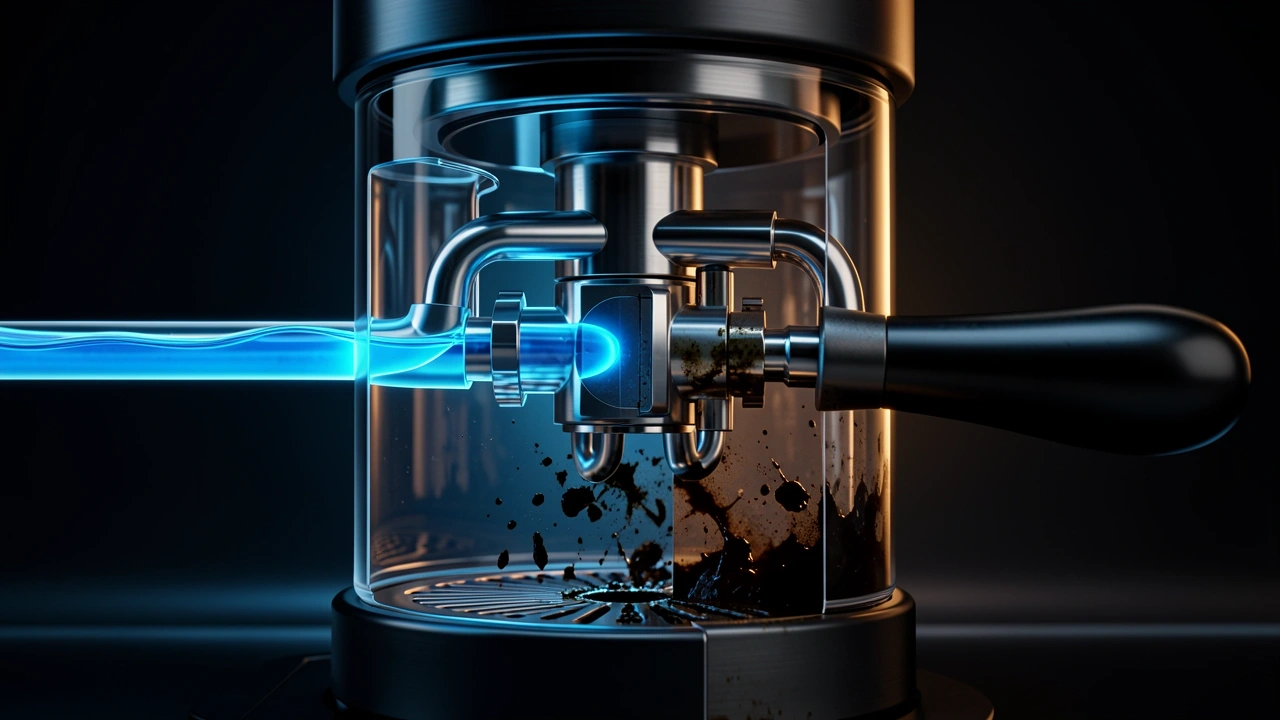
Backflushing is not just about cleaning the outer surface. The real benefit comes from pressurizing the group head.
When you block the flow with a blind basket, water is forced back through the three-way valve and out into the drip tray.
This reverse flow carries dissolved oils, coffee grounds, and cleaner out of the internal pipes.
Without a blind basket, the water just flows through the group and into your cup, leaving the internal passages untouched.
The key component is the three-way solenoid valve. On most machines, this valve opens when you stop the pump, releasing built-up pressure and draining water from the group head.
During a backflush, the pressurized water and cleaner circulate through this valve, scrubbing it clean. If you skip backflushing, oils can bake onto the valve, causing it to stick.
That leads to dripping from the group head after brewing, or even a total valve failure.
The cleaning powder contains detergents that emulsify coffee oils. Heat from the water helps this process. The 10-second off period gives the cleaner time to penetrate residues.
This is why a simple rinse cycle alone cannot replace a detergent backflush—oils are not water-soluble.
Avoiding Common Mistakes
Even experienced home baristas make these errors. I have made most of them myself.
Running the Pump Too Long
You will find online guides that say to run the pump for 20 seconds straight. Do not do that. Extended pump operation with a blind basket builds excessive pressure.
That stress can damage the solenoid valve or the pump itself. The 10-second on, 10-second off pattern is safer and more effective because it allows the cleaner to soak without straining the machine.
Using Too Much Detergent
Half a teaspoon is enough. More cleaner does not equal better cleaning. Excess powder can leave a soapy residue that alters the taste of your next shot.
Stick to the manufacturer’s recommended amount, which is usually about 2 to 3 grams.
Skipping the Dissolving Step
I already mentioned this, but it is worth repeating. Dry powder clumps up inside the group head. It can lodge in the dispersion screen holes or the solenoid valve.
Dissolving it first ensures the cleaner reaches every surface.
Backflushing Too Often
Backflushing with detergent should only happen once a week, or roughly every 30 to 50 shots. Doing it daily wears out the group head gasket faster and wastes cleaner.
You can do a water-only backflush daily to freshen the group head, but detergent backflushing is for deeper cleaning.
Not Rinsing Thoroughly
Detergent residue will make your espresso taste soapy. Always run at least two rinse cycles. If you see bubbles in the drip tray after the first rinse, run a third cycle.
Then always season with two blank shots before brewing.
How Long Should You Actually Run the Pump?
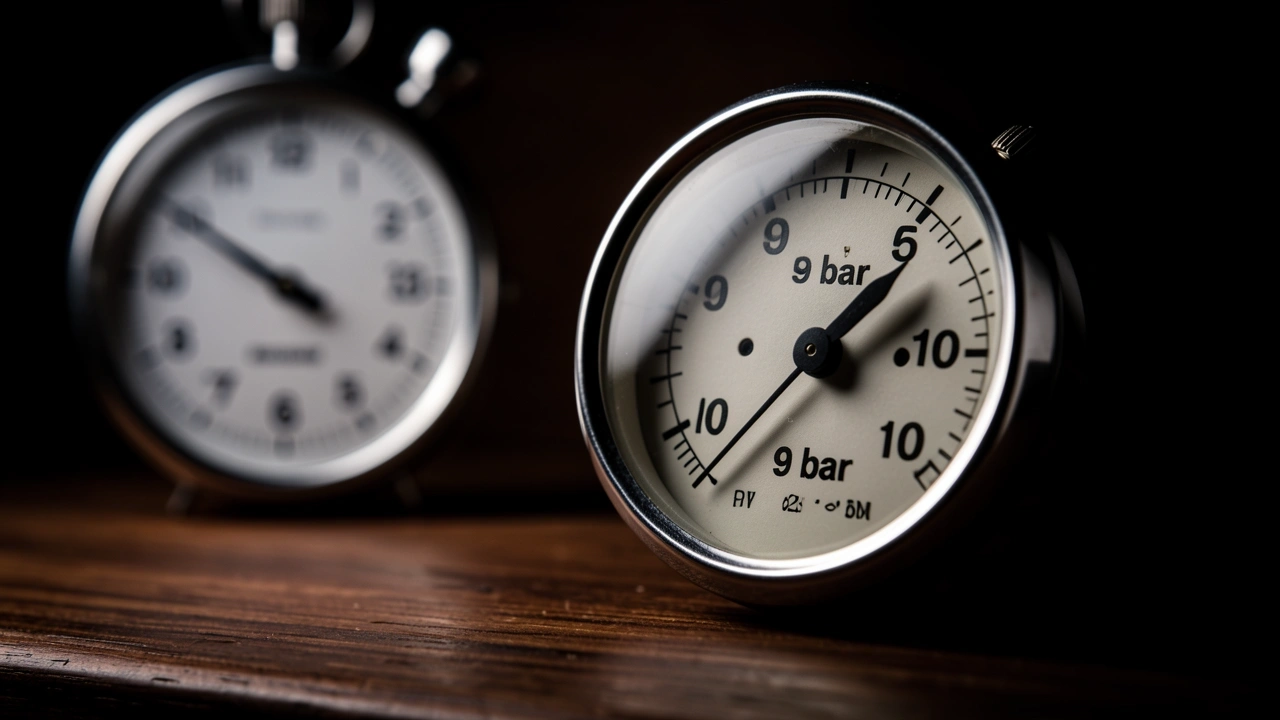
This is the most debated question in online forums. Some say 10 seconds, others say 20 or even 30 seconds. I have tested both methods, and I recommend sticking to 10-second bursts. Here is why.
The solenoid valve is sensitive. When you pressurize the group head, the valve is closed. The pump works against it.
In a 20-second run, the pressure can rise to over 12 bar, which is above the typical operating pressure of 9 bar.
This does not immediately break the valve, but repeated overpressure shortens its lifespan. Technicians at La Marzocco and other manufacturers recommend the 10-second cycle specifically to avoid this.
On the other hand, the cleaner needs contact time. During a 10-second off period, the valve opens and releases pressure. The cleaner then sits in the group head and internal passages.
This soak time is when the detergents dissolve the oils. Longer pump cycles do not improve cleaning—they just add mechanical strain.
So, stick with five cycles of 10 seconds on, 10 seconds off. This gives you 50 seconds of active pump time and 50 seconds of soak time. That is plenty for a thorough clean.
Detergent Do’s and Don’ts
Do Use the Right Cleaner
Only use products labeled for espresso machine backflushing. Common brands include Cafiza, Puly Caff, and Urnex. Do not use dish soap, vinegar, or descaler. Dish soap leaves residue.
Vinegar is too acidic and can corrode internal seals. Descaler is for removing mineral scale, not oils, and using it in a backflush can damage the group head.
Do Measure Accurately
Most brands recommend 1 to 2 grams per backflush. A half teaspoon is roughly 2 grams. If you have a scale, use it. Too little cleaner does not remove all oils.
Too much wastes product and risks residue.
Don’t Use Tablets or Pods in a Blind Basket
Some machine cleaner brands sell tablets that dissolve slowly. These are meant for soaking the portafilter, not for backflushing. Powder dissolves quickly and disperses evenly.
Tablets might not dissolve fully inside the group head, leaving chunks that clog the valve.
Check Your Machine’s Manual
Some machines, like the Gaggia Classic, come with a specific blind disc. Others require a standard blind basket. Always check the manual for the recommended cleaner and procedure.
For example, Lelit machines often specify a particular brand to avoid voiding the warranty.
Machine-Specific Advice
Not all espresso machines are the same. Here are adjustments for common types.
Domestic Machines with Vibratory Pumps
Gaggia Classic, Rancilio Silvia, and similar machines use vibratory pumps. These pumps are more sensitive to back pressure. Limit your backflush cycles to 8 seconds on, 12 seconds off to reduce strain.
Also, check the solenoid valve location—on some Gaggia models, the valve is inside the group head and prone to clogging if you use dry cleaner.
Commercial Machines with Rotary Pumps
La Marzocco, Synesso, and other commercial machines can handle the standard 10-second cycles. These machines have robust pumps and valves. However, they often have larger group heads.
You might need to run 8 to 10 cycles to fully clean a multi-group machine. The soak time remains the same.
Old Machines without a Three-Way Valve
Some vintage espresso machines, like early La Pavoni lever models, do not have a solenoid valve. They cannot backflush at all.
Trying to force water through a blind basket on these machines can burst internal seals. Check your machine’s spec sheet. If it lacks a three-way valve, do not attempt this procedure.
Alternative Methods When You Do Not Have a Blind Basket
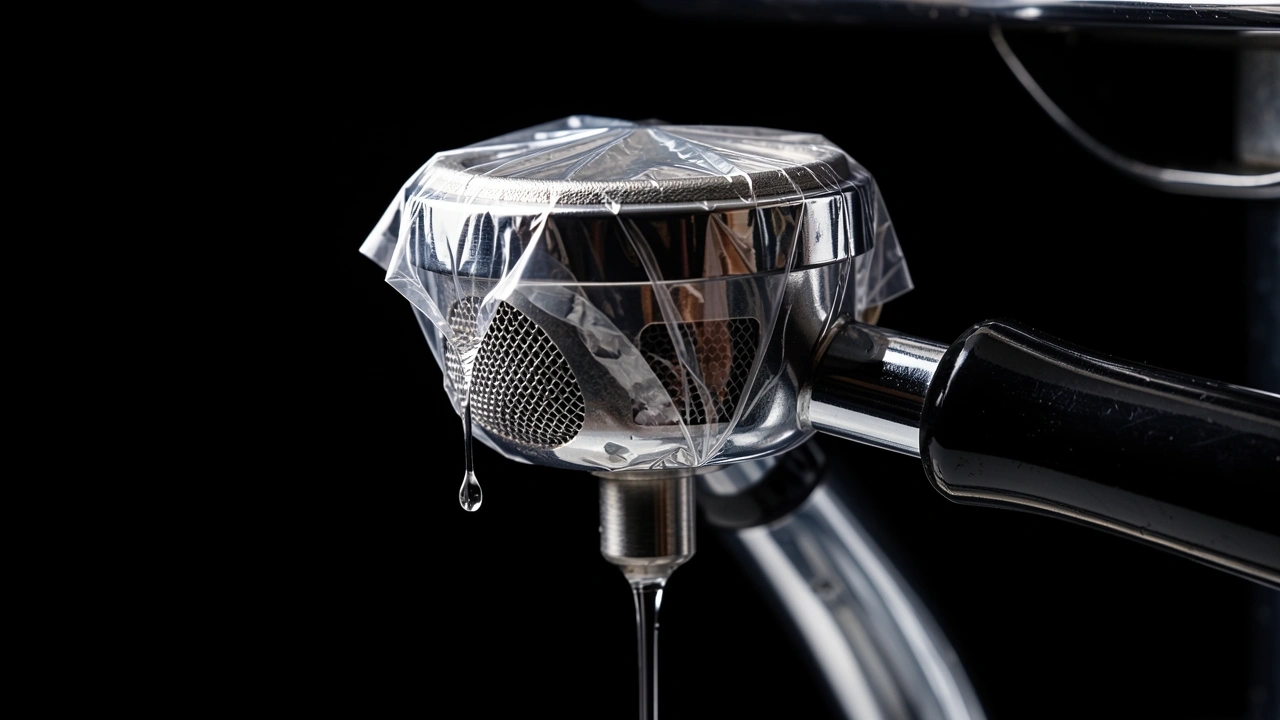
If you lose your blind basket or buy a machine that does not include one, you have a few workarounds. These are not ideal but acceptable for one or two uses while you order a proper basket.
One option is to use a single-dose basket (the bottomless kind) and seal the hole with a rubber stopper or a piece of plastic wrap.
In a pinch, I have wrapped a layer of plastic wrap tightly over the portafilter before locking it in. The plastic creates a semi-seal.
It leaked slightly but allowed enough pressure for a weak backflush. Remove the plastic immediately after—it is not heat-safe for long contact.
A better alternative is to buy a rubber backflush disc sold by some retailers. These are thin rubber circles that sit inside a regular basket.
They work acceptably but wear out faster than a metal blind basket.
The best option is to just buy a blind basket. They cost around $10 and are sold online or at any espresso supply store.
Using a makeshift seal is risky because a poor seal can fail suddenly, sending hot water spraying out. I learned this the hard way when a plastic wrap failed and soaked my counter.
Frequently Asked Questions
Can I backflush without a blind basket?
Yes, but it is not recommended. You can use plastic wrap stretched tightly over a regular basket, or buy a rubber backflush disc.
These methods do not create a perfect seal, so cleaning is less effective. They also carry a small risk of leaking hot water. Your best option is to buy a metal blind basket.
How often should I backflush with detergent versus water only?
Do a water-only backflush at the end of each day. This removes loose grounds and oils. Do a detergent backflush once a week, or every 30 to 50 shots.
If you brew dark roasts or drink multiple shots daily, bump the detergent backflush to every 30 shots. Light roasts produce less oil, so you can stretch it to 50 shots.
What happens if I backflush too long?
Running the pump for longer than 15 seconds under pressure can overheat the water, cause the pressure safety valve to activate, or damage the solenoid valve.
If you exceed 20 seconds on a vibratory pump machine, you risk burning out the pump. Short cycles are safer and just as effective.
Do I need to remove the dispersion screen before backflushing?
No. The dispersion screen (the metal disk with small holes) stays in place during a backflush. The pressure forces water through it, cleaning it in the process.
However, you should remove it once a month for a deep soak in detergent to remove caked-on residue that backflushing cannot fully loosen.
Final Checklist for Your Next Backflush
Before you start, run through this mental list to avoid any mistakes.
- Do you have a blind basket that fits your portafilter?
- Is your cleaning powder dissolved in hot water?
- Have you measured exactly half a teaspoon (or 2 grams)?
- Are you ready to run 5 cycles of 10 seconds on, 10 seconds off?
- Do you have a group head brush and a cloth handy?
- Will you run 2 to 3 rinse cycles with clean water?
- Are you going to season with two blank shots afterward?
If you answered yes to all of these, you are set. Your machine will stay clean, your espresso will taste fresh, and you will avoid expensive repairs.
I have been doing this routine for years, and I have never had a solenoid valve issue or a sour shot. It takes five minutes of your day once a week. It is worth it.

