 Reina
Reina 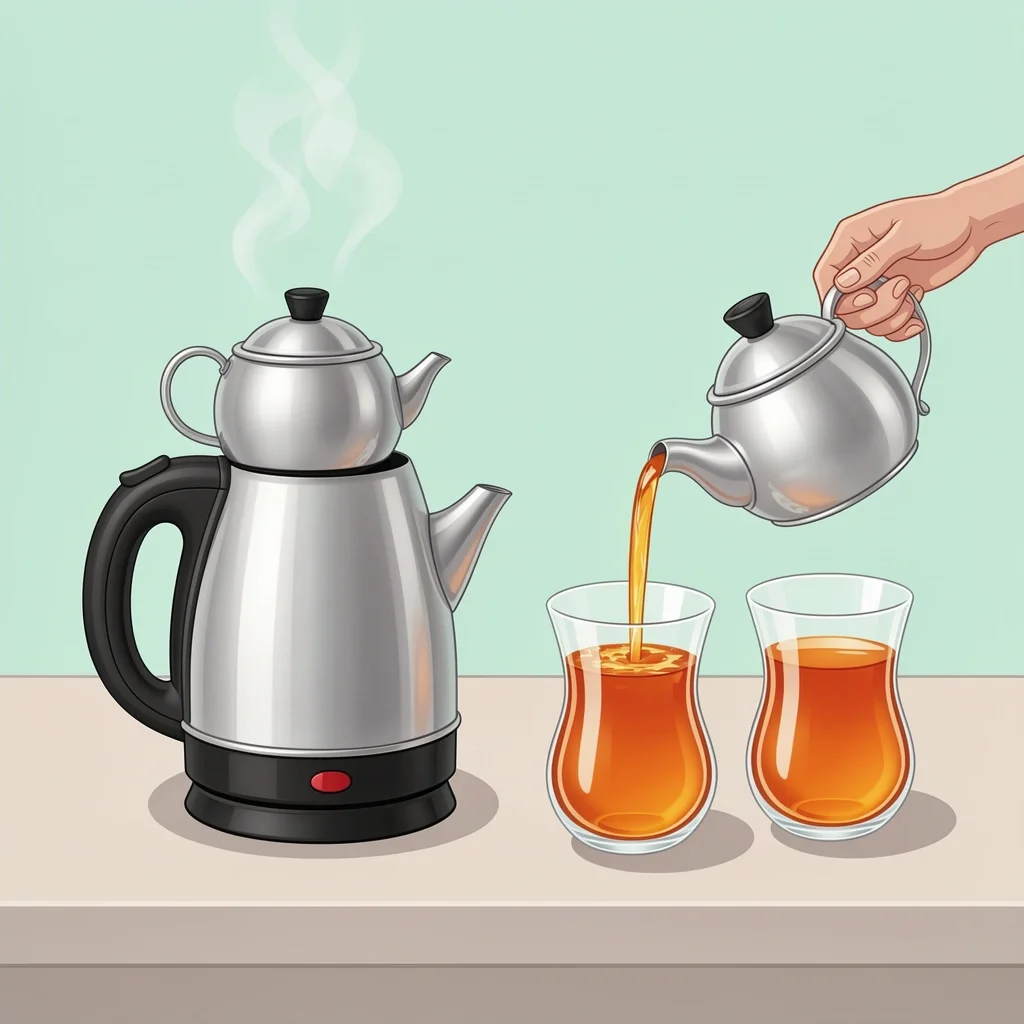
As an Amazon Associate, I may earn a small commission from qualifying purchases at no extra cost to you. This helps me create more valuable, tested content for you.
I remember the first time I tried to make Turkish tea at home. I had just returned from Istanbul, craving that rich, mahogany-colored brew served in tiny tulip glasses. The problem was, every recipe I read assumed I owned a double teapot, a çaydanlık. I didn’t. I only had a regular electric kettle and a small saucepan. I thought I was stuck, but after a few failed attempts, I figured out a method that works perfectly. This guide is exactly what I wish I had back then.
You can make authentic Turkish tea with a standard electric kettle. The secret is learning how to simulate the two‑pot brewing system that gives Turkish tea its smooth, non‑bitter taste. Let me show you how.
Yes, You Can. Here’s the Secret.
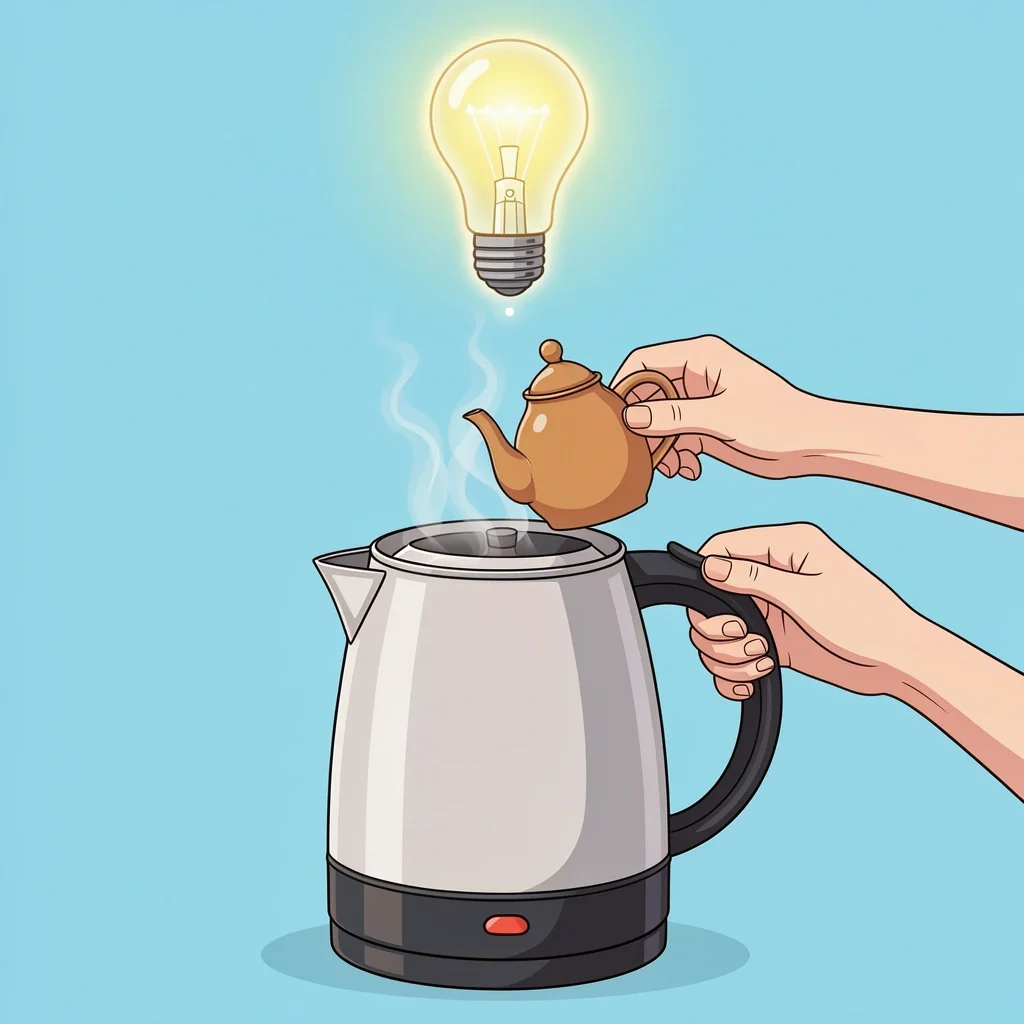
The core of Turkish tea is not the equipment but the method. A double teapot works because the lower pot keeps water hot while the upper pot steeps a very strong concentrate. The steamed heat from below keeps the concentrate warm without burning the leaves. With a standard electric kettle, you can re‑create this by using a separate heat‑safe container on top of the kettle after removing the lid.
This same technique works beautifully for making Indian chai in an electric kettle without the mess, as the gentle heat steeps the tea and spices perfectly without any boil-overs.
You only need one extra piece: a small stainless steel teapot or a saucepan that fits securely on the kettle’s base. That’s it. The rest is technique.
The Essential Equipment (For Standard Kettle Users)
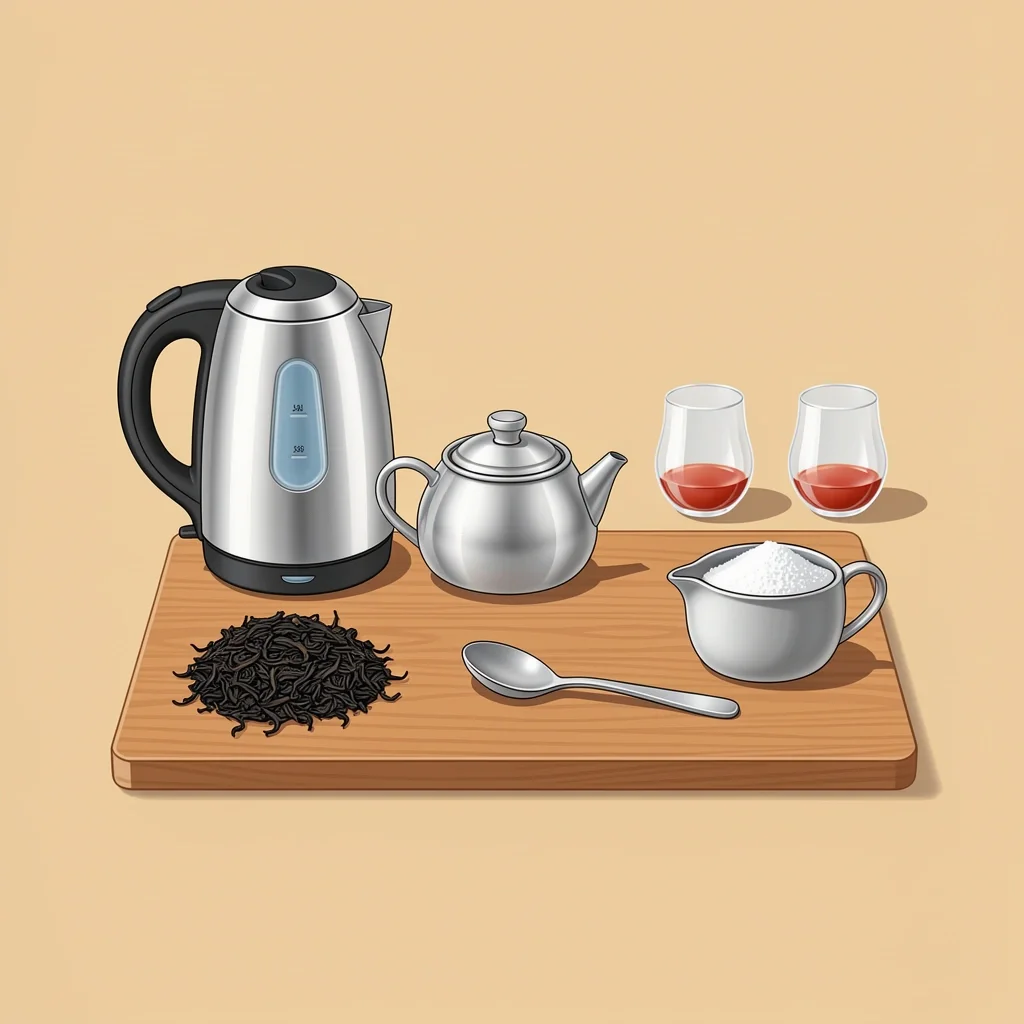
Unlike traditional recipes that list a double teapot, my list is tailored for what you already own. Here’s exactly what you need:
- Your electric kettle – Any standard kettle works. A variable‑temperature one is nice but not required. A simple on/off model will still brew excellent tea.
- A small, heavy‑bottomed teapot or saucepan – This is the critical piece. It must be stable when placed on the kettle’s base (after the lid is removed). Look for a pot with a wide, flat bottom. A tight‑fitting lid is essential to keep the concentrate hot.
- Turkish tea leaves – I recommend Çaykur brand, which you can find online or in Middle Eastern markets. The leaves are finely ground, which extracts flavor quickly at the gentle heat of the double‑boil method. If you can’t find Turkish tea, use a high‑quality, finely ground Assam or Ceylon.
- Tulip glasses – Not just for looks. The narrow bottom and wide rim let you see the color and judge the strength. They also keep the tea hot longer because of the small surface area.
- Small spoons and sugar cubes – Optional, but traditional.
I’ve tried using a regular glass teapot, but it cracked from the heat. Stick with stainless steel or a proper borosilicate glass teapot if you have one. Safety first.
The Step-by-Step Method: Brewing With Your Kettle
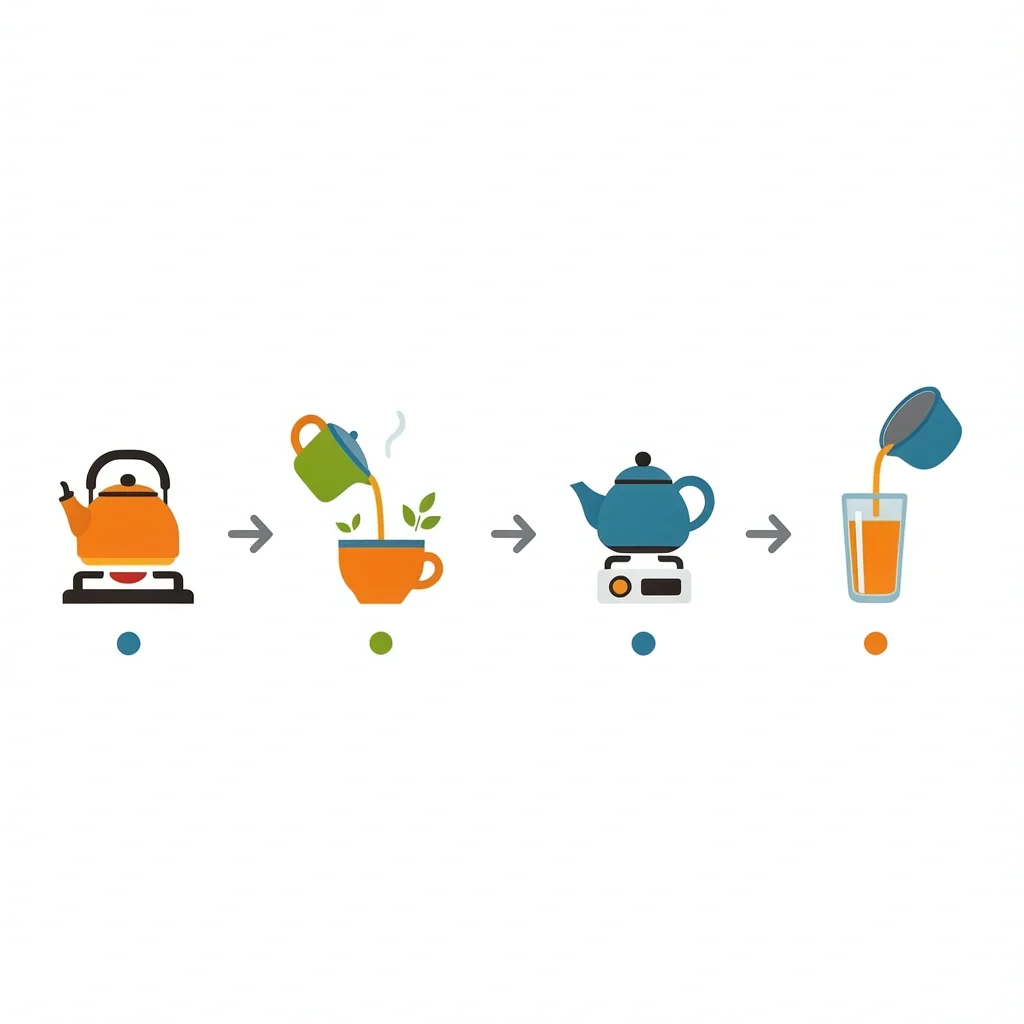
This is the method I use every morning. It takes about 15 minutes total, but the active time is only a few minutes.
- First boil and pre‑heat the pot. Fill your electric kettle and bring it to a full boil. While it’s heating, put 2–3 teaspoons of tea leaves into your separate teapot (or saucepan). Once the water boils, pour a few tablespoons of it into the pot, swirl it around, and discard the water. This pre‑heat prevents the temperature drop that would ruin the concentrate.
- First steep – create the concentrate. Pour about ½ cup of the boiling water over the tea leaves in the pre‑heated pot. Do not fill it to the top. The goal is a very strong, dark brew. Put the lid on and let it steep for 10–12 minutes.
- Double‑boil simulation. While the concentrate steeps, refill the kettle with fresh water to the max line and bring it to a boil again. Once it’s boiling, carefully remove the kettle’s lid. Place the small teapot (with the concentrate) directly on the kettle’s base where the lid was. The steam and radiant heat from the boiling water below will keep the concentrate warm. Cover the teapot with its own lid. Let it sit for 5–7 minutes. The kettle will continue to boil or stay very hot, depending on your model.
- Warm the glasses. While the second boil happens, pour a little hot water into each tulip glass, swirl, and discard. This pre‑warm ensures your tea stays hot when served.
- Serve. Fill each glass about ¼ to ½ full with the deep amber concentrate. Then top off with the clear hot water from the kettle. For a strong tea, use more concentrate; for a lighter tea, use less. Serve immediately with sugar cubes on the side.
Note on safety: If your pot feels unstable on the kettle, skip the “on the kettle” step. Instead, after the first steep, wrap the teapot in a tea cozy or place it on a low‑setting hot plate. The key is keeping the concentrate warm, not necessarily on the kettle.
The Golden Ratio: Finding Your Perfect Tea-to-Water Balance
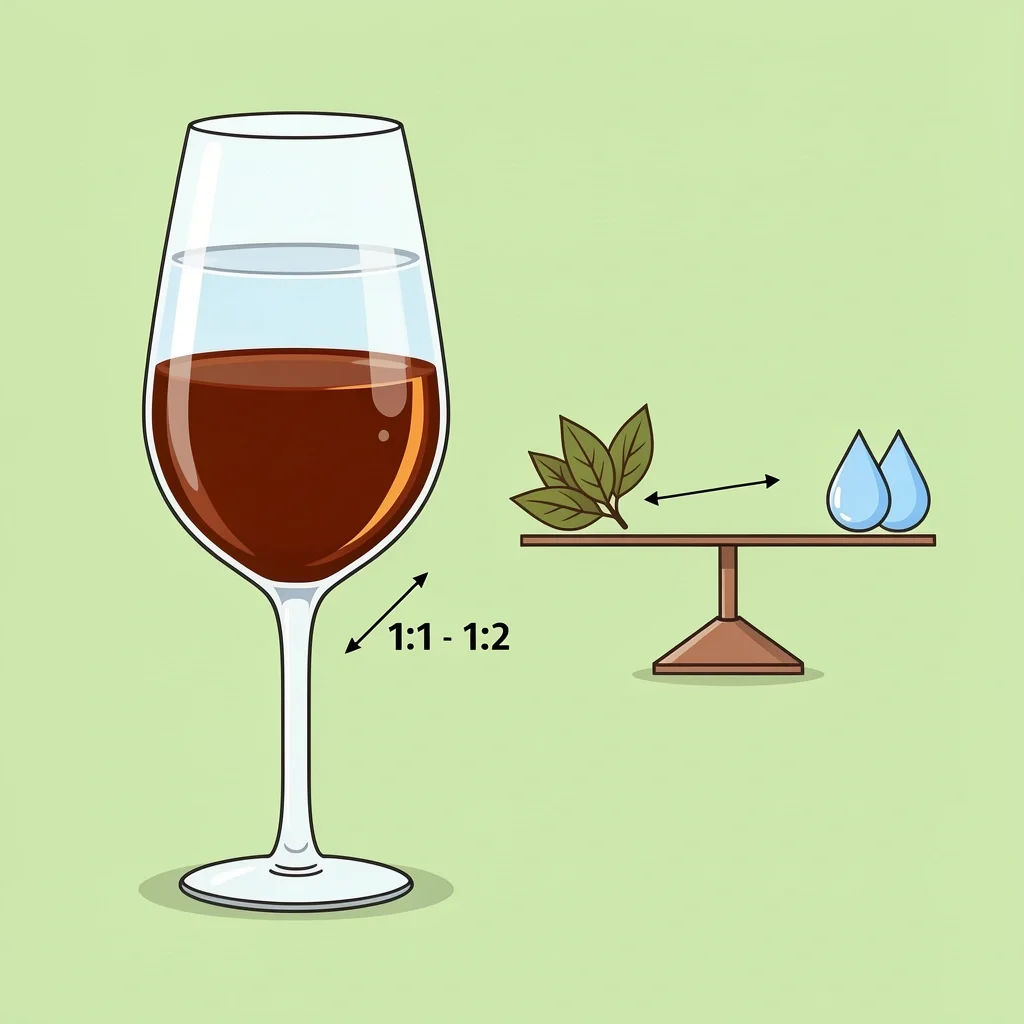
Turkish tea is not about a single recipe. It’s about ratios. The concentrate must be very strong because it gets diluted with hot water at serving. Here are three ratios I’ve tested, measured by the number of people you’re serving:
| Strength | Tea leaves (per 2 people) | Water for concentrate | Steep time |
|---|---|---|---|
| Light | 2 teaspoons | ⅓ cup | 8 minutes |
| Medium | 1 tablespoon | ½ cup | 10 minutes |
| Strong | 1 heaping tablespoon | ½ cup | 12 minutes |
When serving, adjust the fill level of the glass. For a light final cup, fill the glass ¼ with concentrate and ¾ with hot water. For a strong cup, fill half and half. I personally prefer a medium strength with a ⅓ concentrate fill.
Troubleshooting the Method
Even after following the steps, things can go wrong. Here are the most common problems I’ve faced and how to fix them.
My concentrate is bitter
This usually means you over‑steeped or the water was too hot. Since Turkish tea leaves are finely ground, they release bitterness if left too long. Reduce the steep time to 8 minutes or use slightly less tea. Also, make sure your pre‑heat step is done – a cold pot causes uneven extraction.
The tea is not hot enough for the second pour
The most likely cause is skipping the pre‑heat step. If the teapot is cold, the concentrate cools down too fast. Re‑heat the pot thoroughly before adding the leaves. Also, check that the water in the kettle is actually boiling when you place the pot on top. If your kettle has an auto‑shutoff, you may need to boil it again and keep it on.
The pot is unstable on the kettle
Some kettles have a small base. If your pot wobbles, do not force it. Use a different method: after the first steep, pour the concentrate into a thermos or insulate the teapot with a towel. Alternatively, use a small saucepan that has a flat, wide bottom. Safety is more important than authenticity.
My tea is cloudy
Cloudiness usually comes from hard water or over‑boiling. Use filtered water and avoid boiling the water in the kettle too vigorously. Also, ensure the kettle is clean – mineral deposits can cloud the tea.
Can I leave the concentrate in the pot for hours?
No. The taste will become stale and bitter. Turkish tea is meant to be drunk fresh. Brew a new batch if you’re serving guests later. I usually make enough for one session (about 2–3 glasses per person) and discard the rest.
Frequently Asked Questions
Does it work with an electric kettle that has a keep-warm setting?
Yes, it’s even better. After you boil the water for the second step, switch the kettle to keep‑warm mode. This provides steady, gentle heat to the concentrate above without the water boiling too hard. It’s the closest you can get to a traditional double teapot.
Can I make it with a regular, non‑stovetop teapot?
Yes, but the pre‑heat step is even more critical. Use a heavy‑duty ceramic teapot and wrap it in a tea cozy after the first steep. The cozy will hold the heat long enough for the concentrate to develop.
Why is my tea cloudy?
As mentioned, it’s usually from hard water or over‑boiling. Use filtered water and make sure the water in the kettle is not boiling too vigorously when you place the pot on top. A gentle simmer is better.
Is it okay to leave the tea concentrate in the pot for a few hours?
No, I don’t recommend it. The flavor degrades quickly. Brew fresh for each session. If you have leftover concentrate, you can refrigerate it and use it within a day, but the taste won’t be the same.
Can I use loose leaf tea from a regular supermarket?
You can, but the result will be different. Turkish tea is finely ground to maximize extraction at the lower, constant temperature of the double‑boil. A coarser cut will not yield the same depth of flavor. If you use regular black tea, steep it longer (12–15 minutes) and use a bit more leaves.
Now you have everything you need to enjoy authentic Turkish tea from your own kitchen, using only the equipment you already own. It’s a small ritual that brings a taste of Istanbul home. Give it a try, and don’t be afraid to adjust the ratios to your taste. That’s the beauty of Turkish tea – it’s meant to be personal.

