 Reina
Reina 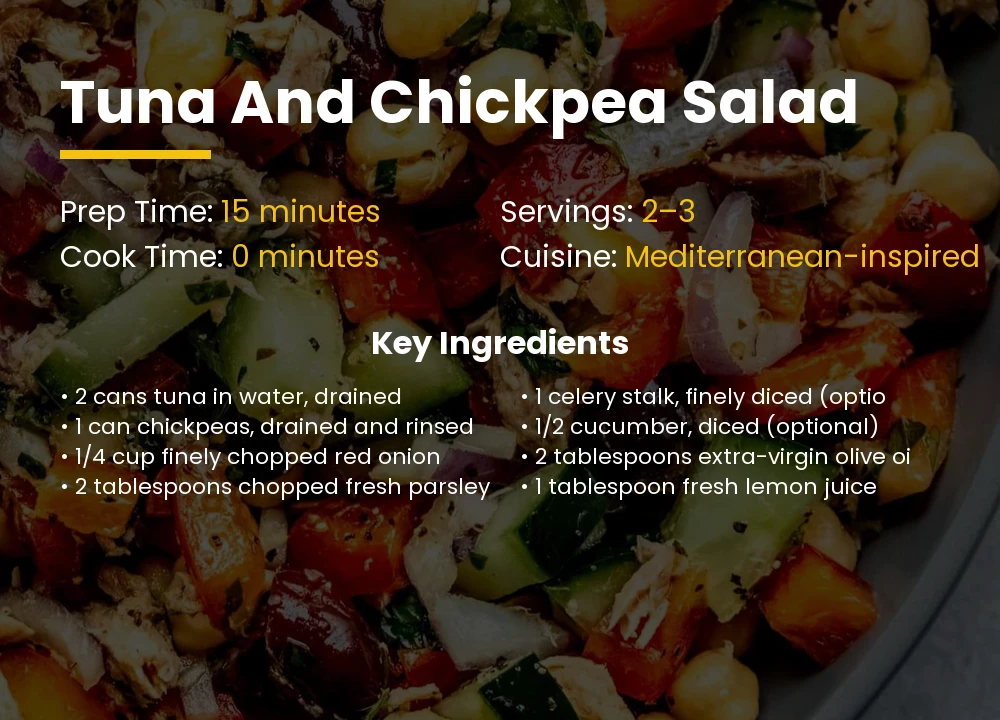
As an Amazon Associate, I may earn a small commission from qualifying purchases at no extra cost to you. This helps me create more valuable, tested content for you.
When the clock is ticking and I need a lunch that actually sticks to my ribs, I reach for this tuna and chickpea salad. It hits protein from fish and legumes, fiber from the chickpeas, and a bright lick of lemon to keep it fresh. The core trick is getting the dressing right so it clings without turning mushy. You can remix with whatever greens or herbs you have on hand, which makes this a kitchen staple rather than a one-off. This works when you respect the texture of the ingredients and keep the dressing emulsified rather than drowning the mix. If you’re missing a few aromatics, don’t sweat it—these tweaks still deliver.
Recipe
Recipe Details
- Prep Time: 15 minutes
- Cook Time: 0 minutes
- Servings: 2–3
- Course: Lunch
- Cuisine: Mediterranean-inspired
- Diet: High-Protein, Gluten-Free
Ingredients
- 2 cans tuna in water, drained
- 1 can chickpeas, drained and rinsed
- 1/4 cup finely chopped red onion
- 2 tablespoons chopped fresh parsley (or dill)
- 1 celery stalk, finely diced (optional)
- 1/2 cucumber, diced (optional)
- 2 tablespoons extra-virgin olive oil
- 1 tablespoon fresh lemon juice
- 1 teaspoon Dijon mustard
- 1/2 teaspoon honey or a pinch of sugar (optional)
- Salt and pepper to taste
- Optional additions: capers, olives
Instructions
- Prep the base: drain the tuna well and gently pat the chickpeas dry with a towel to remove excess moisture. The goal is to avoid a soggy salad, so dryness matters.
- Whisk the dressing: in a small bowl, whisk olive oil, lemon juice, Dijon, honey (if using), and a pinch of salt and pepper until the mixture looks glossy and emulsified. You should hear a faint sizzle of oil meeting acid as it comes together.
- Combine with texture: add tuna, chickpeas, onion, parsley (and celery or cucumber if using). Toss gently to coat, aiming to keep chickpeas intact for bite rather than turning the mix into a mash.
- Season and balance: taste for salt and acidity. If it tastes flat, a tiny extra squeeze of lemon or a splash more oil helps. If it’s too sharp, a touch more olive oil can round it out. This is where it either sings or falls flat.
- Let it rest: refrigerate 10–15 minutes to let flavors meld and the salad firm up a little. This is not mandatory, but it makes a noticeable difference.
- Serve: spoon over greens, or on a rustic slice of bread or a warm pita. It also travels well in a lunchbox if kept in a separate container from any greens or bread you plan to add later.
Nutrition
- Calories: ~350–420 kcal per serving
- Protein: ~28 g
- Fat: ~14 g
- Carbohydrates: ~18 g
- Fiber: ~6 g
- Sodium: ~400–520 mg (varies with canned products)
Cooking Method
No heat is required beyond optional quick chopping. This is a raw-assembly salad that relies on proper draining and a stable emulsion dressing to deliver the texture and flavor without turning soggy.
Tools Needed
- Can opener
- Large mixing bowl
- Small whisk or fork
- Chef’s knife
- Cutting board
- Colander or sieve
- Measuring spoons
Authority Sections
Pro Tips and Troubleshooting for Perfect Tuna and chickpea salad
This works: drain tuna very well and pat chickpeas dry. Excess moisture is the enemy of a crisp dressing; you’ll thank me when the dressing clings instead of sliding off. This works: keep some texture by folding in the chickpeas rather than mashing everything. If your dressing separates, whisk in a tiny extra spoonful of olive oil or a drop of water to re-emulsify. This doesn’t work: drowning the mix in dressing. Start with less and add as you go so you can see how the salad coats each bite. If you don’t have lemon, a splash of red wine vinegar can keep the brightness without changing the character of the salad.
Storage Guide and Reheating Instructions
This works best when you store components separately if you plan to assemble later. Keep the dressing in a separate container and mix just before serving to preserve texture. Refrigerate the assembled salad for up to 2 days in an airtight container; the chickpeas may soften with time, so a little extra lemon juice or olive oil at serving helps reclaim brightness. Reheating is not necessary and is not recommended for the classic cold version—heat changes the texture and can dull the freshness you’re after.
Best Serving Ideas and Pairings
Frequently Asked Questions
Can I make this ahead
Yes, but keep the dressing separate until serving. Mix just before you eat to prevent the chickpeas from soaking up too much dressing and getting mushy.
Can I use canned salmon or chicken instead of tuna
This works as a substitute. Salmon adds a different fat profile and flavor, while chicken will give a milder bite. Adjust seasoning to taste and keep the dressing bright to compensate.
Is this gluten-free
Yes. All the core ingredients are naturally gluten-free, so this fits a gluten-free meal plan as long as you use gluten-free additions if you add bread or wraps.
How long does it keep in the fridge
2 days is practical for flavor and texture. After that, chickpeas soften further and tuna can lose some brightness. If you’re meal-prepping, assemble dressing and protein separately and mix just before eating.
Can I freeze this
Not ideal. Freezing tends to change the chickpea texture and can make the tuna rubbery upon thawing. Best fresh or refrigerated for a day or two.
How can I reduce sodium
Rinse chickpeas well, choose low-sodium tuna, and skip added salt in the dressing. You’ll still get plenty of flavor from lemon, herbs, and capers or olives if you like them.
Can I veganize this
Use extra chickpeas and capers or olives and replace tuna with a plant-based tuna substitute if you want to keep the texture. The dressing remains your brightening agent, so keep lemon and oil balanced.

