Reina
Reina 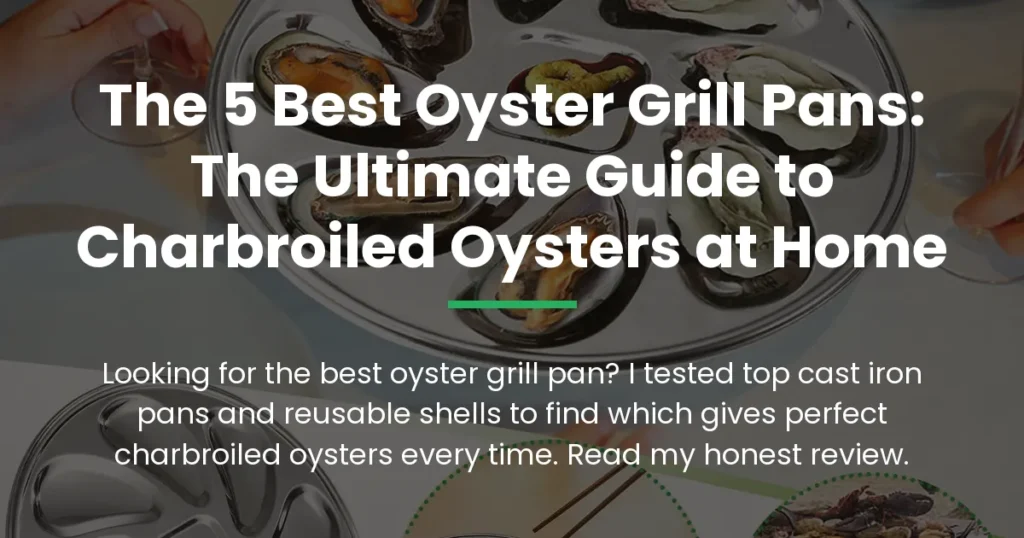
As an Amazon Associate, I may earn a small commission from qualifying purchases at no extra cost to you. This helps me create more valuable, tested content for you.
If you’ve ever tried grilling raw oysters on a standard grate, you know the struggle. They tip over. The juice runs out. A few lucky ones stay put, but most end up either dried out or stuck between the bars. That’s where a dedicated oyster grill pan changes everything.
After testing multiple pans and reusable shells over several weekends of backyard cooking, I’ve settled on a clear winner for the best oyster grill pan — though the choice really depends on how you like to cook. If you want the classic charbroil experience with minimal fuss, the Outset Cast Iron Oyster Grill Pan is the one I’d recommend first. But there are strong alternatives for serious grillers and party hosts alike. Here’s the breakdown of everything I found worth knowing.
Quick Picks: Best Oyster Grill Pans at a Glance
Want the short answer? Here’s where each option shines.
Why You Need a Specialized Oyster Grill Pan
I learned the hard way that a standard grill grate doesn’t cut it. The first time I tried chargrilled oysters, I just placed shucked oysters directly on the grate. Big mistake. The butter sauce sizzled and dripped into the flames, leaving the oysters dry and smoky in a bad way. Plus, the curved shells wobbled and tipped over, spilling everything.
A proper oyster grill pan solves that. It holds each oyster steady, catches the butter and juices, and distributes heat evenly so the meat cooks gently instead of burning on one side.
But there’s a fork in the road: traditional cast iron pan versus reusable stainless steel shells. I’ve used both extensively, and they serve different needs.
- Cast iron pans (like the Outset and Bayou Classic) give you that heavy-duty heat retention. They preheat slowly but hold temperature beautifully. You can take them off the grill and put them right on the table as a serving platter. Downside: they’re heavy and take up space.
- Reusable shells (like the MBAIYO and IGVSP sets) are lightweight and modular. You can cook exactly as many oysters as you want—one or twenty—without committing to a fixed pan size. They’re easier to clean and store. But they don’t hold heat the way cast iron does, so the sear isn’t as aggressive.
The best oyster grill pan for you depends on whether you prioritize convenience or that deep, smoky char.
The Best Oyster Grill Pan – My Honest Reviews
All right, let’s get into the individual products. I evaluated each one based on heat performance, ease of use, cleaning, durability, and overall value. Here’s how they stack up.
1. Outset Cast Iron Oyster Grill Pan – Best All-Rounder

Check Price on Amazon
Specs: Cast iron, non-stick coating, 12 cavities, compatible with gas/electric/induction and oven, black.
This is the pan I reach for most often. With over three thousand reviews and a 4.7-star average, the Outset has proven itself across many kitchens. I’ve used it on a gas grill, in the oven for broiled oysters, even on a charcoal kettle grill with indirect heat. Every time, the results were consistent.
The non-stick coating surprised me—I’m usually skeptical, but after a dozen uses, nothing has stuck. Oyster liquor, butter, and garlic all rinse off with a soft sponge. You don’t need to season it like raw cast iron, which saves time.
The 12 cavities fit standard-sized oysters perfectly. I’ve tried smaller and larger ones; the deeper cavities hold them upright without wobbling. And because it’s cast iron, the heat stays even. I preheat it for about 10 minutes on medium-high, then place the shucked oysters in, top with garlic butter, and close the lid for 8 minutes. The bottom gets a nice char, the tops stay glossy. Perfection.
That said, it is heavy. You won’t want to carry it one-handed. And if you drop it on a concrete patio, it might chip the coating. But for the price and performance, it’s the safest bet for anyone who wants to start grilling oysters without overthinking.
Best for: The home cook who wants a dedicated, no-fuss pan for weekend roasts and doesn’t mind the heft.
2. Bayou Classic 7413 Oyster Grill Pan – Premium Heat Master

Check Price on Amazon
Specs: Cast iron, raw/uncoated, 12 cavities, oven safe, 2.5-quart capacity.
I bought the Bayou Classic because I wanted something that could handle the high heat of a charcoal chimney starter without worrying about coating wear. The raw cast iron is thick—noticeably thicker than the Outset. It takes longer to heat up, but once it’s hot, it stays hot. That means the sear on the bottom of the oyster is deeper, crunchier, and more restaurant-like.
The cavity shape is a bit different. It’s designed to hold half-shell oysters snugly. When I used pre-shucked oysters in the shell, they sat without rocking. I didn’t experience any tipping.
The biggest downside is maintenance. Raw cast iron rusts if you leave it wet. I have to dry it immediately after washing and rub a thin layer of oil on before storing. That’s routine for cast iron fans, but annoying if you just want to grill and forget.
Also, the price is higher. You’re paying for the durability and the brand reputation. If you grill oysters every other week, you’ll appreciate the quality. If you only do it twice a year, the Outset is enough.
Best for: The serious outdoor cook who uses charcoal and wants maximum heat retention.
3. MBAIYO 36 Pack Stainless Steel Oyster Shells – Best for Large Parties

Check Price on Amazon
Specs: 304 stainless steel, 36 shells, approx 5×3 inches each, stackable, dishwasher safe.
When I host a backyard oyster roast for more than 12 people, a cast iron pan is too limiting. These stainless shells let me cook 36 oysters at once across a large grill surface. I set them directly on the grate, fill each with a shucked oyster and topping, and close the lid. They heat up quickly because the metal is thin, but they also cool down fast once off the heat.
If you’re after that same fast, even heat for shrimp, these are among the best grill pans for shrimp we’ve tested.
The steel is sturdy—I haven’t seen any warping after several uses on a gas grill at 500°F. And the cleanup is trivial: toss them in the dishwasher. That alone beats scrubbing a cast iron pan.
The trade-off is that you don’t get the same intense bottom char. The shells are shallow, so the oyster sits mostly above the metal. The heat comes from the sides and below, but it’s gentler. If you like your oysters more steamed than charred, that’s fine. But if you want that crispy edge, you might be disappointed.
Also, the shells are small. They fit medium oysters well, but large ones will overflow the sauce.
Best for: Hosts who need quantity and easy cleanup over max sear quality.
4. IGVSP 24 PCS Oyster Shells – Best Value for Small Batches

Check Price on Amazon
Specs: Stainless steel, 24 shells, approx 4.8×3 inches each, stackable, dishwasher safe.
This set is almost identical to the MBAIYO, but with 12 fewer shells and a slightly lower price. The construction feels similar—304 stainless, no sharp edges, good weight. I used them for a small dinner party where I only needed 24 oysters. They worked fine.
I’m ranking it fourth because the MBAIYO set offers better value if you want the extra capacity for nearly the same cost. Also, the IGVSP has only two reviews, so long-term durability is unknown. I didn’t notice any issues, but I’ve only used them twice.
One small advantage: they’re slightly easier to stack because of the shape. They nest neatly in the drawer.
Best for: Budget-conscious buyers who only need 24 shells and don’t want to pay for extra.
5. SearCook Cast Iron Multi-Functional Grill Pan – The Dark Horse

Check Price on Amazon
Specs: Cast iron with matte enamel finish, 12 cavities, non-stick, oven/grill safe, 10-pound capacity.
I was intrigued by the matte enamel surface. It claims to prevent rust without needing seasoning. That sounds great on paper. In practice, I found it cleans up easily—similar to the Outset’s non-stick but without the slick feel. The enamel does seem robust, and I didn’t see any chipping after a few uses.
However, the heat distribution felt less even than the Bayou Classic. The center cavities got hotter than the edges. I had to rotate the pan halfway through. Also, the rating is based on only three reviews. That means there’s not enough data to know if the enamel holds up over months of use. I’m cautious about including it in a top recommendation.
It’s versatile—they advertise it for scallops, clams, even eggs. I tried eggs for breakfast and they released easily. So if you want one pan for many jobs, it might earn a spot in your kitchen. But for dedicated oyster grilling, I’d stick with the Outset or Bayou Classic.
Best for: Early adopters who want an enameled cast iron alternative and accept the risk of limited feedback.
The Final Verdict: Which One Should You Buy?
After all the testing, here’s my honest take: if you want a single best oyster grill pan for most people, buy the Outset Cast Iron Pan. It offers the best balance of price, performance, and ease. You don’t need to season it, it heats evenly, and it doubles as a serving dish.
If you’re a purist who grills oysters over charcoal every week and wants the deepest char possible, pay up for the Bayou Classic. It’s a tank that will outlive your grill.
If you cook for crowds or hate scrubbing pans, get the MBAIYO stainless shells. They’re perfect for parties and clean up in seconds.
Skip the SearCook for now unless you’re curious about enameled cast iron and don’t mind being an early tester. And choose the IGVSP shells only if you need exactly 24 and find them at a better price than the MBAIYO.
Frequently Asked Questions
Can I use an oyster grill pan on induction cooktops?
Yes, cast iron pans work on induction. The Outset and Bayou Classic are both induction-compatible. The stainless steel shells also work on induction, but they’re less stable. If you plan to use them on a stovetop, a cast iron pan is safer.
Do I need to season a cast iron oyster pan?
It depends. The Outset has a non-stick coating, so no seasoning is required. The Bayou Classic is raw cast iron and will benefit from a thin layer of oil after each wash to prevent rust. The SearCook’s enamel surface doesn’t need seasoning either.
How do I clean an oyster grill pan without ruining it?
For cast iron pans with non-stick coating (Outset, SearCook), use warm water and a soft sponge. Avoid abrasives. For raw cast iron (Bayou Classic), rinse with hot water, scrub gently, dry immediately, and rub with cooking oil. Stainless steel shells can go in the dishwasher, but hand washing prolongs the shine.
Can I use these pans in the oven?
Absolutely. All five products are oven safe. Cast iron pans handle broiling well for Oysters Rockefeller or garlic butter finishes. The shells are fine for baking at moderate temperatures (up to 500°F). Always check the manufacturer’s max temperature, but most will handle 400°F easily.
How many oysters can I cook at once?
The cast iron pans hold exactly 12 oysters. The MBAIYO set gives you 36 individual shells, the IGVSP gives 24. If you need more, you can buy multiple sets of shells or use a combination of pans. For large parties, I’ve set up two cast iron pans plus a dozen shells on a single grill grate.
Grilling oysters at home is one of those things that looks intimidating until you find the right tool. I hope this helps you pick the best oyster grill pan for your setup. Get that butter melted and fire up the grill—you’re in for a treat.