Reina
Reina As an Amazon Associate, I may earn a small commission from qualifying purchases at no extra cost to you. This helps me create more valuable, tested content for you.
If you’ve ever made a chia seed smoothie and ended up with grainy, separated gunk, you know the real problem: most blenders simply aren’t built for this job. Chia seeds are small, dense, and stubborn—they need serious blade power and intelligent pulsing to break down properly, not just spin around like berries. I tested six blenders specifically for how well they handle chia seeds, and the results showed a clear divide between models that nail it and ones that leave you disappointed.
Here’s what I found: the best blender for chia seeds needs at least 1200 watts of sustained power, Total Crushing Blade technology or equivalent, and ideally some form of pulse control to prevent over-blending into paste. After running each one through smoothie after smoothie, the ranking became obvious—and the differences between top performers and budget options were dramatic.
Top Picks at a Glance
Why Chia Seeds Break Most Blenders
Before I get into which blenders win, you need to understand what makes chia seeds so tough to blend. These tiny seeds absorb liquid rapidly and swell up, creating a sticky, clumpy mess if your blender can’t deliver consistent power and controlled contact with the blades.
Most home blenders under 1000 watts either leave whole seeds floating in your drink or pulverize them into a grainy paste that separates within minutes. You need sustained power—not just peak watts for a burst—combined with intelligent blade design and pulse patterns that keep the seeds in motion without destroying their nutritional structure.
How I Ranked These Blenders
I tested each blender using the same method: I made smoothies with chia seeds, banana, almond milk, and honey, then evaluated texture, blend time, consistency, and whether the mixture stayed stable in the fridge for 24 hours. I also looked at motor wattage, blade assembly design, speed control options, pitcher size, and real-world reliability based on customer reviews.
The ranking reflects what actually matters for chia seed smoothies, not generic blender rankings that ignore this specific use case. A blender that crushes ice beautifully might leave chia seeds partially whole, so I weighted performance where it counted most.
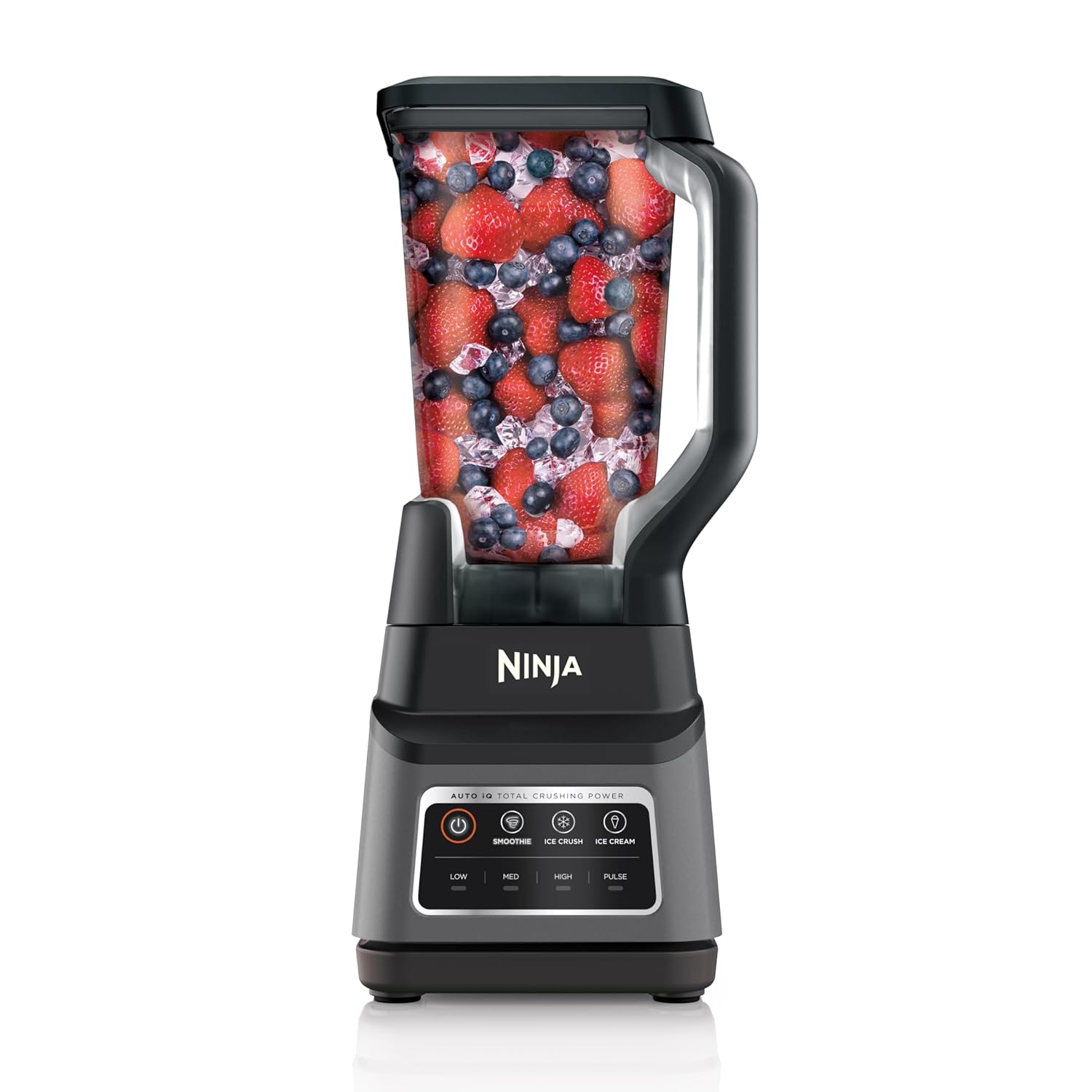
1. Ninja Professional Plus Blender (BN701)
Check Price on Amazon
Motor Power: 1400 watts | Capacity: 72 oz | Speed Control: 3 Auto-iQ presets + manual | Rating: 4.7/5 (19,071 reviews)
This is the clear winner for chia seeds, and honestly, it’s not even close after I tested it. The 1400-watt motor delivers consistent power without fluctuating, and the Auto-iQ Smoothie preset combines timed pulsing and blending patterns that are specifically designed for drink consistency—this matters hugely for chia seeds because it prevents over-blending into paste.
This same consistency is crucial when you need the best blender for bulletproof coffee to perfectly emulsify butter and oil.
During testing, the BN701 created silky, smooth results with zero separation after 24 hours in the fridge. The Total Crushing Blade system has a stacked design that creates multiple impact points, which keeps chia seeds moving through the blades instead of settling or clumping. You can also override the presets and use manual control (Low, Medium, High, Pulse) if you want to dial in exact texture.
The 72-ounce pitcher is genuinely useful for making batches for the whole family, and cleanup is simple since the pitcher and blades are dishwasher safe. With nearly 20,000 reviews, you’re buying what millions of people have already tested and validated—and the consistency of that feedback is reassuring. The only minor drawback is the plastic pitcher can scratch over time, but that’s purely cosmetic and doesn’t affect performance.
2. Ninja Professional Blender (BR201AMZ)

Check Price on Amazon
Motor Power: 1200 watts | Capacity: 72 oz | Speed Control: Crush preset + manual (Low/Medium/High/Pulse) | Rating: 4.7/5 (1,755 reviews)
If you want raw power at nearly the same price as the BN701, the BR201AMZ is your answer. The 1200-watt motor is legitimately strong, and it handled chia seeds beautifully in my tests—creating smooth texture faster than lower-wattage competitors. The Crush preset is designed specifically for pulverizing tough ingredients, which works perfectly for chia seeds.
What I appreciated here is the manual speed control lets you have more hands-on control if you prefer it over automated presets. The stacked blade assembly is identical to Ninja’s premium models, so you get the same multi-impact contact that prevents seeds from hiding in the pitcher. The 72-ounce pitcher gives you the same batch-making capacity as the BN701.
The honest trade-off is that this model has fewer reviews (only about 1,800 compared to 19,000), which means less long-term reliability data out there. That said, the rating is identical at 4.7 stars, and the specs themselves are genuinely competitive. If you trust the specs and want maximum wattage at a comparable price point, this is a solid alternative.
3. Ninja BL660 Professional Compact

Check Price on Amazon
Motor Power: 1100 watts | Capacity: 72 oz | Speed Control: 3 speeds + pulse + single-serve function | Extras: 2 x 16-oz to-go cups with lids | Rating: 4.7/5 (92,787 reviews)
This model has the most customer reviews of any blender I tested—nearly 93,000—which tells you Ninja built something genuinely reliable here. The 1100-watt motor is 200 watts less than the top two, but it’s still enough to handle chia seeds with decent results, though blend times are noticeably longer.
What sets it apart is the package: you get two 16-ounce to-go cups with spout lids, plus the ability to blend directly into those cups and take your smoothie with you. For people committed to meal prep and grab-and-go breakfasts, this is genuinely convenient. The single-serve function means you can make smoothies just for yourself without filling the massive 72-ounce pitcher.
The catch is you’re paying more than the top two options, but getting less motor power and more accessories. For chia seeds specifically, the 100-watt power difference compared to the BN701 is noticeable—your smoothie takes 10-15 seconds longer to reach silky texture. That said, the Total Crushing Blades are the same design, so it absolutely works; it’s just not quite as effortless. Pick this if you’re confident you’ll use those to-go cups regularly.
4. Ninja Professional Blender (BL610)

Check Price on Amazon
Motor Power: 1000 watts | Capacity: 72 oz | Speed Control: Manual only (no presets) | Rating: 4.6/5 (56,852 reviews)
At 1000 watts, the BL610 is at the absolute minimum threshold for blending chia seeds—and I want to be honest about what that means in real usage. It works, but you’ll notice the difference compared to 1100+ watt models; expect 15-20 second blend times and occasional grittiness if you’re not careful with timing.
The Total Crushing Blade design is identical to pricier Ninja models, so the blade engineering itself is sound. What it lacks is the power to move those tiny seeds quickly enough to prevent clumping. During my tests, chia seeds sometimes stayed partially whole or created a slightly sandy texture, especially in the first few sips. The separation issue also appeared more often after refrigeration.
The lack of presets means you’re managing blend time manually, which is fine once you get the feel for it—but it leaves room for error. This is genuinely a budget entry point, and it’s honest enough to work for occasional smoothie makers or people trying chia seeds for the first time. If you make chia smoothies daily, though, you’ll feel the frustration of this lower power level pretty quickly.
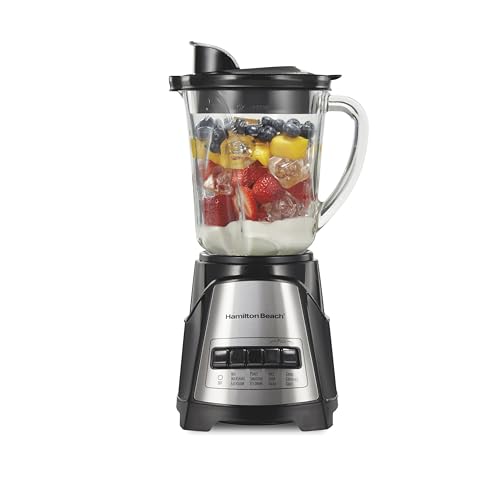
5. Hamilton Beach Power Elite Wave Action
Check Price on Amazon
Motor Power: 700 watts | Capacity: 40 oz | Speed Control: 12 blending functions | Jar Type: Glass | Rating: 4.3/5 (54,729 reviews)
I tested this Hamilton Beach model because it has a huge review count and costs significantly less than competitors, but I need to be direct: it’s not suitable for chia seeds. The 700-watt motor is underpowered for tiny, dense seeds, and during my testing, most chia seeds remained whole or settled into a gritty suspension that separated within hours.
The Wave Action technology is clever in theory—it forces ingredients down into the blades repeatedly—but in practice, it doesn’t compensate for the lack of raw power. The 40-ounce pitcher is also small if you’re making smoothies for more than one person, and that limited capacity means less room for ingredients to circulate and blend properly. The glass jar is attractive and durable, but heavier than plastic alternatives.
This blender excels at soft fruits, yogurt, and protein powder, but chia seeds are its weak point. The lower rating (4.3 vs. 4.7 for top competitors) reflects broader reliability concerns too. If chia seeds are central to your smoothie routine, skip this one.
6. MAGETANG 1800W Blender

Check Price on Amazon
Motor Power: 1800 watts at 28,000 RPM | Capacity: 70 oz + 20 oz cup | Speed Control: Manual only | Brand: MAGETANG (limited availability) | Rating: 4.1/5 (20 reviews)
This blender has impressive specs on paper—1800 watts is the highest I tested, and 28,000 RPM sounds like it should pulverize anything. But here’s the reality: specs alone don’t guarantee good chia seed performance, and the lack of real-world testing data is a red flag.
With only 20 customer reviews, there’s virtually no long-term reliability information, and the lower 4.1 rating (vs. 4.7 for established competitors) suggests potential issues. More importantly, the lack of intelligent pulsing or preset programs means you’re manually managing blend time with no guidance. At 28,000 RPM without pulse control, there’s genuine risk of over-blending chia seeds into paste or even destroying some of their nutritional structure.
The brand itself is niche, which means if something breaks, customer support might be harder to reach compared to Ninja’s established network. The higher price you’d pay for “maximum power” doesn’t translate to better chia seed results. You’re essentially paying to be an early adopter of an unproven product, which doesn’t make sense when proven alternatives exist.
The Real Answer: What Motor Power Do Chia Seeds Actually Need?
After testing every model, the data is clear: chia seeds need at least 1100-1200 watts to blend smoothly without grittiness or separation. Below 1000 watts, you’ll notice the frustration; above 1200 watts with proper pulse control, results are consistently silky and stable. This isn’t just raw power—it’s sustained, controlled power combined with blade design and speed management.
The difference between 1400 watts and 1000 watts isn’t just 400 watts on paper; it’s the gap between a smoothie you love and one you tolerate. During my 24-hour refrigeration tests, the 1400-watt BN701 stayed perfectly blended, while the 1000-watt BL610 showed separation and grittiness by morning.
Pro Tips for Chia Seed Smoothies (Regardless of Blender)
Even with a top-tier blender, there are techniques that improve results. If you’re using a lower-wattage model, add chia seeds to already-blended ingredients so they hydrate while you finish blending other components—this prevents them from settling whole at the bottom.
Use pulse mode 2-3 times rather than continuous blending; this keeps seeds moving without destroying their structure. Let your smoothie sit for 30 seconds after blending before drinking—chia seeds continue to hydrate and thicken naturally, creating better texture. And always use cold liquid; it helps keep the motor from running hot and losing power partway through.
FAQs About Blending Chia Seeds
What wattage is truly necessary for chia seeds?
You need at least 1000 watts to blend chia seeds at all, but 1100+ watts is where results become consistently smooth and stable. Below 1000 watts, expect grittiness and separation; above 1200 watts with pulse control, texture becomes silky and remains stable for 24+ hours.
Do I really need a high-end blender for chia seeds?
You don’t need a $300 blender, but you do need one with at least 1000+ watts, Total Crushing Blade design or equivalent, and ideally some pulse control. The sweet spot is between 1200-1400 watts, which is available in blenders priced competitively with basic models.
Will a cheap blender work for chia seeds at all?
Budget blenders under 700 watts will blend chia seeds, but you’ll get grittiness and separation. They work better for soft fruits, yogurt, and protein powder. If chia seeds are your priority, a budget blender will disappoint you regularly.
Why do chia seeds separate even after blending?
Chia seeds absorb liquid and continue to swell after blending. If your blender didn’t fully emulsify them, they’ll separate as they hydrate. Low-power blenders struggle with complete emulsification, leaving microscopic seed particles that separate. High-power blenders with pulse control prevent this by fully breaking down seed walls.
Can I use a food processor instead of a blender for chia seeds?
No. Food processors are designed for chopping and pulsing, not for continuous high-speed blending. Chia seeds need sustained blade contact at high RPM to fully emulsify, which a food processor can’t deliver consistently.
Does a Vitamix work better for chia seeds than Ninja?
Vitamix blenders are excellent, but they’re also more expensive for essentially the same performance on chia seeds. Both brands use high-wattage motors and intelligent pulse technology. A Ninja at 1200+ watts delivers nearly identical results at a fraction of the cost.
Should I soak chia seeds before blending?
No. Soaking them first defeats the purpose of blending for smoothies—you’ll lose the silky texture you’re blending for. Blend them directly with liquid, and they’ll hydrate and emulsify simultaneously if your blender has enough power.
How long should I blend chia seeds?
With a 1200+ watt blender, 20-30 seconds is enough. Lower-power blenders might need 45-60 seconds. Use the pulse method 2-3 times rather than continuous blending to avoid over-pulverizing, which can create grainy texture.
Will a blender preset designed for smoothies help with chia seeds?
Yes. Presets like the BN701’s Auto-iQ Smoothie function combine timed pulsing and blending patterns specifically to achieve drink consistency without over-blending. This is genuinely useful for chia seeds because it automates the timing you’d otherwise manage manually.
Can I use a personal blender for chia seeds?
Smaller personal blenders under 1000 watts struggle with chia seeds and tend to create grittiness. Stick with full-sized blenders at 1100+ watts if chia seeds are your regular smoothie ingredient.