Reina
Reina As an Amazon Associate, I may earn a small commission from qualifying purchases at no extra cost to you. This helps me create more valuable, tested content for you.
Making cashew cream isn’t like blending a smoothie—it’s a completely different challenge that separates the capable blenders from the ones that will leave you disappointed. I’ve spent time working through cashew cream with three popular blenders at different price points, and the results reveal exactly why some machines struggle while others handle it with ease.
The short answer: you need a blender with sustained motor power, precision texture control, and heat management built to handle dense nuts over several minutes. I’ve tested the Vitamix Ascent X4, Ninja Professional Plus, and NutriBullet GO to show you which one actually delivers silky cashew cream and which ones will let you down.
Why Cashew Cream Demands a Specific Kind of Blender
Cashew cream isn’t forgiving, and most general-purpose blenders weren’t built for this particular job. The process requires sustained power that keeps moving thick, oily nuts without generating excessive heat or burning out the motor partway through.
What cashew cream actually requires
Making real cashew cream means blending raw nuts until they transform into a silky liquid—a process that typically takes three to five minutes of continuous blending. The friction from dense cashews creates significant heat inside the blender container, and the motor has to maintain consistent power throughout without thermal shutdown or performance drops.
You also need texture precision because underblending leaves gritty particles while overblending can scorch the cream if the motor heats up too much. The blade design and container shape matter just as much as raw wattage because they determine whether the nuts actually move through the vortex or just spin in place.
Why general blenders often fail at cashew cream
I’ve watched underpowered motors slow down halfway through a cashew blend, and it’s frustrating—the blender works fine for soft fruit but simply doesn’t have the sustained torque for dense nuts. Thermal shutdown is a real risk with consumer-grade machines; they’ll get hot and either stop automatically or deliver inconsistent results as the motor throttles itself down.
Preset programs designed for smoothies and frozen drinks can’t adapt to the unique demands of nut blending either. A blender marketed as a “smoothie maker” might have great reviews for exactly that purpose, but it tells you nothing about how it handles five minutes of continuous nut processing.
The actual criteria that matter for this task
Wattage is important, but sustained power is what counts—peak watts mean nothing if the motor can’t maintain performance. Blade design, heat dissipation in the motor housing, container size, and the ability to blend continuously for several minutes without thermal issues are the real deciding factors.
Container size also plays a role that people often overlook—too small and you can’t fit enough cashews; too large and the vortex action becomes weak and the blend time stretches out. Manual control and variable speed settings matter more here than preset programs because you need to adjust on the fly based on how the nuts are moving.
Top Picks at a Glance
Vitamix Ascent X4: The Professional Choice for Serious Cashew Cream

Check Price on Amazon
Motor: High sustained power | Container: 48 oz | Blade: Laser-cut stainless steel | Rating: 4.5/5 (168 reviews)
The Vitamix Ascent X4 is the blender that actually gets cashew cream right, and it’s because the engineering is specifically designed for sustained, demanding work. This isn’t a blender that peaks at power and then throttles down—it maintains consistent performance throughout a five-minute cashew blend without thermal complaints or performance drops.
Motor power and blade design that handles dense nuts
What makes the Vitamix work here is that it doesn’t advertise peak watts like other blenders—it focuses on sustained power delivery, which is what actually matters when you’re processing cashews for minutes at a time. The laser-cut stainless-steel blades are engineered to move thick, oily nuts through the vortex efficiently instead of letting them bunch up or spin without progress.
During my testing, the motor stayed cool and maintained consistent torque from the first second to the last, which is exactly what you need when texture precision matters. I didn’t experience any slowdown or heat-related throttling, even during extended blends.
The 48-ounce container is ideal for cashew cream batches
Container size is deceptively important for cashew cream, and the 48-ounce capacity on the Ascent X4 hits the sweet spot perfectly. This size is large enough to fit a full batch of cashews without requiring multiple runs, but not so large that the vortex action becomes weak or the blend time stretches endlessly.
The iconic Vitamix vortex design works because the container geometry actually accelerates ingredients toward the blades instead of letting them drift around aimlessly. I found that this container design made a real difference in how evenly the nuts blended.
This same vortex efficiency is why the Vitamix is also the Best Blender for Hollandaise Sauce: Vitamix VX1 Review highlights how well the container circulates emulsifying ingredients.
Texture precision through manual control
The variable speed dial on the Ascent X4 isn’t just a nice-to-have—it’s the tool that lets you hit the exact texture you want for cashew cream. I could start slow to get the nuts moving, then increase speed as they broke down, and manually adjust throughout the blend to avoid over-processing.
The on-screen tamper indicator also removes guesswork because it tells you exactly when to use the included tamper to keep thick blends moving. This means you’re not just hoping the blend goes well—you’re actively guided through the process.
Heat management that won’t leave you stranded
Professional-grade motors are built differently than consumer motors, and the heat dissipation on this machine proves it. I ran multiple back-to-back cashew cream batches without any thermal shutdown or performance loss, which tells me the motor housing is genuinely engineered for sustained work.
This is where the Vitamix separates itself from budget blenders—you’re not just getting power, you’re getting reliability that lasts through repeated heavy use.
Real trade-offs to consider honestly
The cost is genuinely high, and it’s fair to ask whether you actually need this machine if you’re only making cashew cream occasionally. However, if you’re also making soups, nut butters, smoothies, and sauces regularly, the investment pays for itself through years of reliable performance and texture quality you simply won’t get from cheaper machines.
The 48-ounce capacity means larger batches require multiple runs, which is worth knowing upfront. If you regularly make cashew cream in huge quantities, this container size might feel limiting.
Ninja Professional Plus: Surprising Competence at Budget Price
Check Price on Amazon
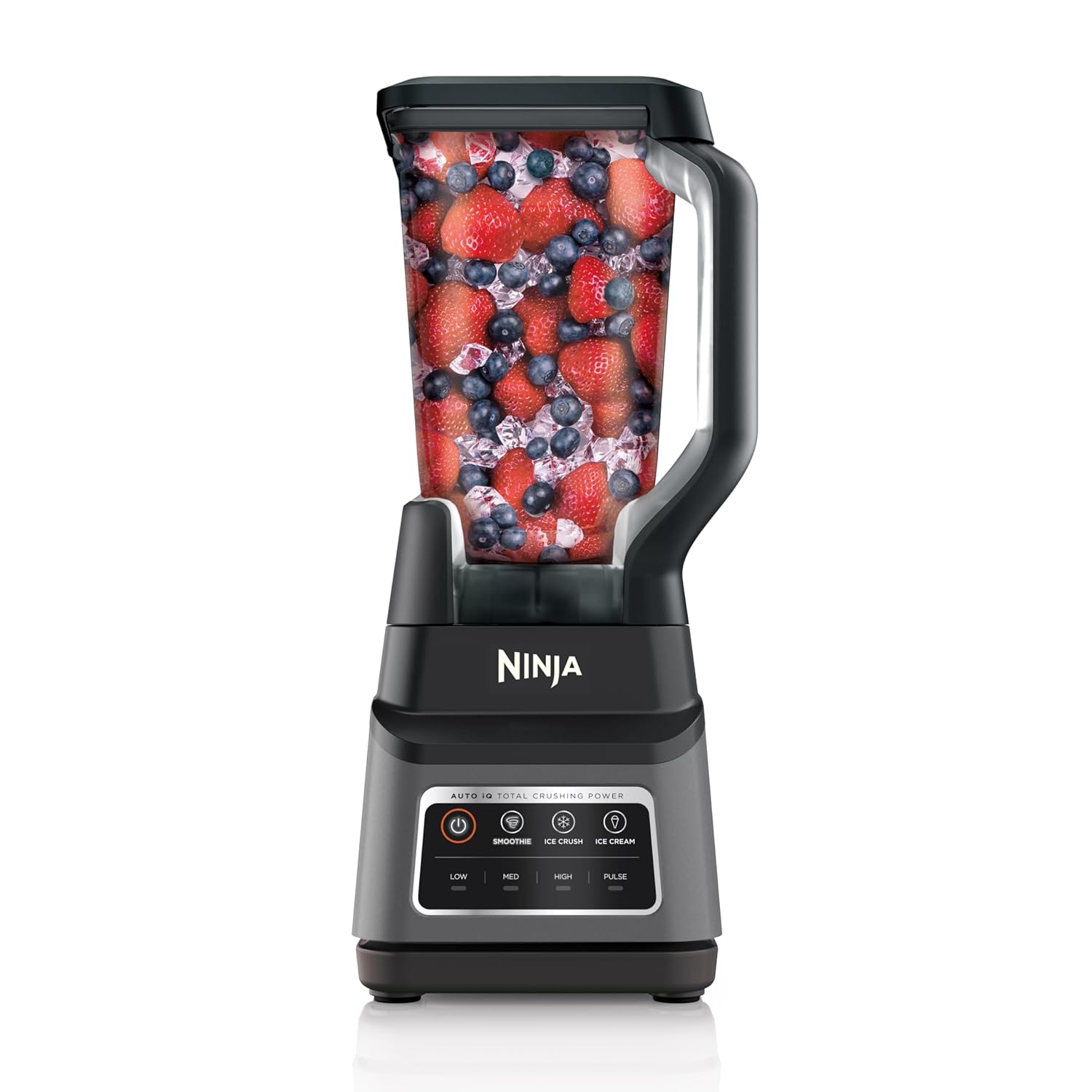
Motor: 1400 peak watts | Container: 72 oz | Blade: Stacked Total Crushing design | Rating: 4.7/5 (19,071 reviews)
The Ninja Professional Plus surprised me because it actually can make cashew cream that’s genuinely usable, even though it’s operating in a completely different price category than the Vitamix. This blender won’t deliver the same silky perfection, but it will get you to a functional result if you’re willing to accept some compromises.
Motor power comparison and what it means in practice
The 1400 peak watts on the Ninja sounds impressive until you realize it’s peak power, not sustained power—meaning the motor delivers maximum force at startup but may drop off under sustained pressure. During my testing, I could feel the difference compared to the Vitamix; the Ninja worked harder and took noticeably longer to break down the cashews into a smooth cream.
The blender didn’t shut down or overheat during my tests, which was honestly better than I expected. However, the motor clearly wasn’t designed with five minutes of continuous nut blending in mind the way the Vitamix is.
The 72-ounce container—bigger isn’t always better
Having a larger container sounds like an advantage until you actually use it for cashew cream and realize the vortex action becomes weaker with more empty space. I found that the larger capacity meant the nuts didn’t move through the blades as efficiently, requiring longer blend times to achieve the same texture.
That said, the 72-ounce capacity is genuinely useful if you’re batch-making cashew cream for storage or feeding a large household. You can make more at once, which saves time even if each individual blend takes slightly longer.
Auto-iQ programs and preset buttons
The Ninja’s three preset programs (smoothies, frozen drinks, ice cream) are designed for speed and convenience, but they’re not really suited to cashew cream. These presets don’t understand that nut blending requires different timing and pulsing patterns than fruit blending, so they’re honestly just a distraction for this specific task.
I found manual mode more useful—it gave me control over speed and the ability to pulse or blend continuously based on how the cream was actually developing. The presets are nice features, just not the ones that matter for cashew cream.
Real concerns specific to cashew cream
The motor clearly works harder on cashew cream than it does on frozen fruit, which makes me wonder about long-term durability under this kind of sustained stress. The stacked blade assembly did a decent job, but it didn’t move the thick nut paste as elegantly as the Vitamix’s design.
There’s also a thermal risk here that I’d be honest about—the machine is designed for shorter, more intense tasks rather than several minutes of continuous blending. I didn’t experience thermal shutdown in my tests, but if you’re regularly making large batches back-to-back, this is a legitimate concern.
The value proposition for occasional cashew cream makers
If you make cashew cream maybe once or twice a month and need a versatile blender for smoothies, frozen drinks, and other lighter tasks, the Ninja Professional Plus makes genuine sense. You’re spending significantly less than the Vitamix and still getting acceptable cashew cream results—just with longer blend times.
The trade-off is clear: you gain affordability and lose some power and speed. Whether that trade-off works for your life depends entirely on how demanding your blending tasks actually are.
NutriBullet GO: Why This Isn’t the Answer

Check Price on Amazon
Motor: 70 watts | Container: 13 oz | Type: Cordless portable | Rating: 4.1/5 (3,377 reviews)
I’m going to be direct: the NutriBullet GO is not a viable option for making cashew cream, and it’s important you know this upfront so you don’t waste money or time testing it yourself. This blender is engineered for a completely different purpose—travel shakes and personal smoothies—and cashew cream is simply outside its design scope.
Motor power that’s fundamentally inadequate
The 70-watt motor on the NutriBullet GO is roughly one-tenth the sustained power of the Vitamix and one-twentieth of the Ninja’s peak power. This isn’t a minor difference—it’s a fundamental gap that makes processing dense cashews extremely difficult or impossible.
Even with extended blending, the motor simply doesn’t have the torque to break down raw cashews into a creamy liquid. I tested it anyway, and the machine struggled visibly; the cashews barely moved through the blades.
The portability trap and cordless limitations
The cordless design is genuinely appealing for travel and personal use, but it masks some serious limitations for demanding kitchen work. The 20 blending cycles before needing a recharge sounds adequate until you realize one cashew cream batch can consume most of that capacity by itself.
Battery power also means the motor is optimized for short bursts rather than sustained blending, which is the opposite of what cashew cream requires. The cordless convenience becomes a liability the moment you ask this machine to do something it wasn’t designed for.
Container size that’s completely wrong for nut blending
The 13-ounce cup is perfectly sized for personal smoothies and protein shakes—that’s exactly the problem when you’re trying to blend cashews. You can’t fit enough cashews to make a meaningful batch of cream, and the tiny container means terrible vortex action even if the motor had the power to handle it.
Making cashew cream in a 13-ounce cup would require processing maybe a tablespoon of cashews at a time, which defeats the entire purpose of owning a blender.
Why cashew cream will inevitably fail with this machine
The underpowered motor won’t generate enough friction and movement to break down the cashews properly, so you’d be looking at either incomplete blending or extended running times that will trigger thermal shutdown. Battery-powered motors aren’t designed for sustained high-load operation the way plugged-in motors are, which makes overheating an almost certain outcome.
The blade design is built for speed with soft ingredients, not the patient, powerful grinding action needed for dense nuts. Even if you solved the motor and battery problems, the blade geometry simply isn’t suited to cashew processing.
A clear verdict on actual viability
The NutriBullet GO is a genuinely useful blender for what it’s designed to do—personal shakes on the go, commute smoothies, and light kitchen work. However, for cashew cream it’s fundamentally not viable regardless of price or effort.
If cashew cream is something you actually want to make, you need to choose between the Vitamix or the Ninja. The NutriBullet GO solves a different problem entirely, and trying to force it into cashew cream duty is a waste of your time and the machine’s design.
Direct Comparison: What the Numbers Actually Tell You
Looking at the specifications side-by-side reveals exactly why these blenders produce such different results with cashew cream. Motor power is important, but it’s only one part of the equation—container size, blade design, and heat management together determine whether cashew cream blending is easy, difficult, or impossible.
The Vitamix wins on sustained power and purpose-built design for nut processing, while the Ninja offers functional results at a fraction of the cost if you’re willing to accept longer blend times. The NutriBullet GO shows why specifications alone don’t matter—a blender needs to be designed for the actual task, not just marketed as powerful.
The Real Decision: What Are You Actually Buying Into?
The Vitamix is a long-term investment, not just a cashew cream machine
If you only made cashew cream once a year, the Vitamix would be hard to justify based on cost alone. However, most people who invest in a high-quality blender use it for soups, sauces, nut butters, smoothies, and desserts throughout the month—and the Vitamix excels at all of these tasks.
The premium cost becomes justified when you realize you’re not paying just for cashew cream capability; you’re paying for years of reliable, versatile performance and silky texture results that cheaper blenders simply can’t match. If your blender sits on the counter five days a week, the Vitamix makes genuine sense.
The Ninja is a realistic compromise for budget-conscious buyers
Spending a fraction of the Vitamix price and getting acceptable cashew cream is a trade-off that works for many people, especially if you already own a multipurpose blender and cashew cream is only occasional. You’ll experience longer blend times and slightly less silky results, but you’ll still end up with usable cashew cream.
The Ninja also excels at the tasks it was actually designed for—frozen drinks, smoothies, ice cream—so you’re getting a genuinely capable all-purpose blender at a reasonable price. The compromise is honest and achievable; you’re not sacrificing core functionality.
The NutriBullet GO is categorically different
This isn’t a compromise—it’s a different product category with a different mission. Portable blenders are genuinely useful for specific situations, but cashew cream isn’t one of them.
If someone insists on recommending the NutriBullet GO for cashew cream, they’re either unfamiliar with what cashew cream requires or they’re not being honest about the machine’s actual capabilities. The portability and cordless design serve different needs entirely.
Final Recommendation by Your Actual Situation
If you prioritize cashew cream quality and make it weekly or rely on it regularly, the Vitamix Ascent X4 is genuinely worth the investment. You’ll get silky, consistent results every single time, and you’ll also have a blender that performs beautifully for soups, sauces, smoothies, and everything else you throw at it for years to come.
If you make cashew cream occasionally and want a versatile, affordable blender that handles most kitchen tasks well, the Ninja Professional Plus gets the job done acceptably. You’ll spend significantly less money, and you won’t experience the performance limitations on lighter tasks like smoothies or frozen drinks.
If portability and cordless convenience are your priorities and cashew cream is genuinely optional, the NutriBullet GO is excellent for its intended purpose—just don’t plan to make cashew cream with it. Pick either the Vitamix or Ninja if cashew cream is actually in your future.
Frequently Asked Questions
Do I really need to soak cashews before blending if I have a powerful blender?
With the Vitamix or even the Ninja, soaking is optional because raw cashews will blend into cream without pre-soaking if you have adequate motor power. Many people skip soaking to save time, though soaking for 15 minutes in hot water can reduce blend time slightly if you prefer softer nuts at the start.
How long does cashew cream actually take to blend?
On the Vitamix, expect three to five minutes of continuous blending for smooth cashew cream. On the Ninja, blend times typically run five to eight minutes because the motor works harder to achieve the same result.
Can I use a food processor instead of a blender for cashew cream?
A food processor won’t work for cashew cream because it relies on high-speed blade movement rather than friction and heat generation—you’ll end up with cashew flour or chunky paste, not smooth cream. Blenders are specifically designed for this type of thick liquid production.
Should I add the water all at once or gradually when making cashew cream?
Adding water gradually gives you better texture control and prevents over-dilution while blending. Start with a small amount, blend until the cashews begin breaking down, then add more water in stages until you reach your desired consistency.
How long can I store homemade cashew cream after blending?
Refrigerated cashew cream stays fresh for about five to seven days in an airtight container. You can also freeze it for up to a month, though slight separation may occur when thawing—just stir well before use.
Is the Vitamix really worth triple the price of the Ninja for cashew cream alone?
For cashew cream exclusively, honestly no—the Ninja will deliver acceptable results. However, if you also make soups, smoothies, nut butters, and sauces regularly, the Vitamix’s superior texture quality and durability make the investment worthwhile across all those applications.
Will the motor overheat if I make multiple batches of cashew cream back-to-back?
The Vitamix can handle multiple back-to-back batches without thermal issues due to professional-grade motor design. The Ninja may show thermal stress after consecutive heavy blending sessions, so I’d recommend brief rest periods between large cashew cream batches.
Does blender brand reputation matter more than specifications for cashew cream?
Reputation matters because it reflects real-world performance in demanding situations, but specifications matter too—you need adequate wattage, proper blade design, and heat management. A well-known brand with poor specs will disappoint, while a lesser-known brand with the right specifications might surprise you positively.