Reina
Reina 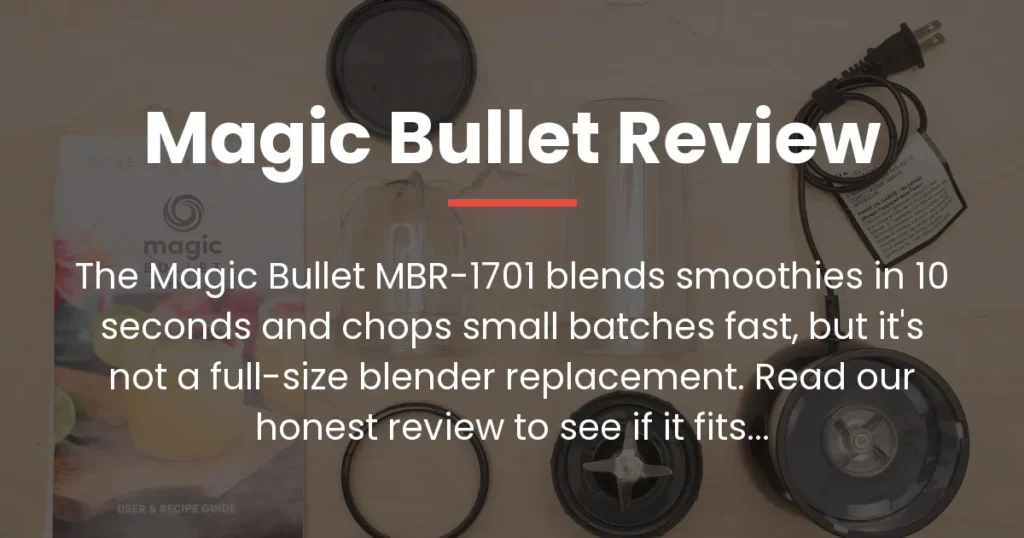
As an Amazon Associate, I may earn a small commission from qualifying purchases at no extra cost to you. This helps me create more valuable, tested content for you.
I’ve owned a Magic Bullet for about two years now, and I can tell you right up front—it’s not what the infomercial promises, but it’s also not the kitchen toy I expected it to be. When you type “magic bullet review,” you’re probably asking the same question I had: is this compact blender worth the counter space and money, or should I save up for something bigger?
The short answer is yes—if you understand what you’re actually buying. This isn’t a full-size blender that can handle family-sized batches or hot soup prep. Instead, it’s a fast, targeted tool that excels at small jobs and does them well.
Top Picks
What You’re Actually Getting
The 17-Piece Setup Explained
 Check Price on Amazon
The box comes with a power base, two different blades (one for chopping, one for blending), two short cups, four mugs of varying sizes, colored lip rings, two sealed lids, two vented lids, and a recipe booklet. That sounds like a lot, but honestly, you’ll use maybe half of these pieces regularly.
The power base is compact and lightweight—I can pick it up with one hand—and the see-through construction lets you watch what’s happening without lifting the lid. The cups are made from high-impact plastic, which means they won’t shatter if you drop them, but they also scratch easily if you’re not careful with storage.
Size and Counter Space Reality
The footprint is 13 inches wide and about 10.5 inches tall, so it fits nicely between my coffee maker and toaster without feeling crowded. If you have a small kitchen, this is genuinely manageable—it’s not like storing a full-size Vitamix or Ninja.
Weight-wise, it’s light enough that I can move it whenever I need to, but once it’s running, it stays stable on the counter with no wobbling or sliding. Storage took me a minute to figure out—I keep the base in a cabinet with the cups stacked inside it, and everything else in a small drawer, which saves real estate.
Speed and Performance: What Actually Happens in 10 Seconds
Where the Magic Bullet Really Shines
I use this thing for smoothies at least three times a week, and it genuinely blends a single-serving smoothie in about 10 seconds flat. I throw in frozen berries, protein powder, yogurt, and milk, press down, and everything comes out perfectly smooth with zero chunks.
The frozen fruit blending is where I first understood why people rave about this. My old blender would stall with frozen berries, but the Magic Bullet powers through like they’re nothing.
Beyond smoothies, I’ve used it for chopping tasks that normally take a knife—salsa, guacamole, minced garlic, and even pesto. You’re not using a food processor here; you’re using a fast, compact tool that replaces dicing and rough chopping for small batches.
Whipping cream took me by surprise—I expected it not to work, but it actually whips up fast in one of the mugs. I’ve also used it for making nut butter (though it takes a few rounds of breaking up clumps), mixing protein powder into liquids without lumps, and breaking up frozen coffee for iced drinks.
Where It Hits the Ceiling Hard
If you’re thinking about grinding whole grains or making almond flour, stop right there. This motor simply isn’t strong enough for those jobs—it’ll strain and potentially damage the motor if you push it.
The 2-cup capacity is the real constraint here. If you’re making a smoothie for yourself, perfect. If you’re blending for a family of four, you’ll be running this machine in multiple batches, which gets old fast.
Tougher ingredients like leafy greens are a mixed bag. I can blend spinach into a smoothie without problems, but if you’re trying to make a green juice or blend raw kale by itself, the blades don’t grip it the way they grip fruit. The greens wrap around the blade instead of getting cut.
Hot soup prep is completely off the table. This motor doesn’t generate enough friction to heat liquid, and the plastic construction means you shouldn’t put hot liquid in it anyway.
Durability and Real-World Lifespan
Build Quality at This Price Point
The motor on mine has held up consistently for two years of regular use—no changes in speed, no sluggishness. The blade assembly still feels sharp, though I do notice it takes slightly longer to pulverize ice now than it did when I first bought it, which is expected wear.
The plastic cups have scratched from daily use and the dishwasher, but those scratches are only cosmetic—they don’t affect function. The real question is whether the plastic will crack or cloud over time, and I haven’t seen that happen yet, but I’ve also been careful with storage.
The Honest Weak Points
Seal integrity on the lids is where I’ve noticed the first real sign of wear. After about 18 months, one of the sealed lids started leaking slightly when I’d transport a smoothie, which wasn’t a deal-breaker but definitely annoying.
The plastic construction is both a strength and a limitation. It keeps the price low and the weight manageable, but it also means this blender doesn’t have the longevity of something built with stainless steel or glass. Most users in the review section report getting 2–4 years of solid use before motor issues start, which is reasonable for the investment.
Ease of Use and Cleanup
Getting Results Is Genuinely Simple
The press-down mechanism is intuitive—you just put your ingredients in, place a cup on the base, press down, and hold it there. There’s no complicated button sequence or settings to learn.
The adjustable speed control dial doesn’t feel necessary for basic use, but it’s there if you want a gentler blend or a more aggressive chop. Honestly, I use the same setting for 90 percent of my tasks.
The learning curve is basically nonexistent. My partner picked this up and used it correctly the first time without me explaining anything.
Dishwasher-Safe Doesn’t Tell the Whole Story
The cups, mugs, and lids can technically go in the dishwasher, but I hand-wash them because the dishwasher scratches the plastic even faster. The blade assembly comes off easily enough, and I clean it by hand to protect both the blade and the seal.
Real cleanup time? About two minutes. Rinse the cup, wipe the blades, and you’re done. It’s faster than cleaning my full-size blender, which is genuinely one of my favorite things about it.
Value at This Price Point
What You’re Comparing Against
A full-size blender will run you anywhere from budget models at around 100 dollars to premium options at three times that. Those are better for larger batches and tougher jobs, but if you only blend a few times weekly, they’re overkill.
A food processor is better for serious food prep work, but it’s bulkier and takes longer to clean. Most people who own both say the Magic Bullet wins for quick, small jobs.
The cost-per-use math is interesting. If you make a smoothie three times weekly, this thing pays for itself in about five weeks of regular use.
Who Actually Gets Real Value from This
You get genuine ROI if you blend 3–4 times weekly but don’t need 64-ounce batches. You also win if you have limited counter space but want smoothies and quick prep tools available.
Anyone who hates dirtying up a full-size blender for a single smoothie will appreciate how fast this is to clean and store. The person juggling a Vitamix for family meals and something smaller for personal use definitely has room for this in their kitchen.
When You Should Skip It
If you’re cooking for a family of five and making bigger portions regularly, this will feel too small within two weeks. The capacity ceiling is real, and you’ll end up frustrated by constant batching.
Anyone serious about home cooking should invest in a food processor instead—it’s more versatile for actual meal prep. If you’re on an extremely tight budget, one good full-size blender does more than the Magic Bullet, so that might be the smarter single purchase.
What Real Owners Report
With over 5,300 reviews averaging 4.4 stars, this product has genuine staying power. The consensus clusters around three major themes: people love it for smoothies and small-batch blending, they appreciate the easy cleanup, and the compact size wins over full-size blender owners with limited space.
The most common complaint pattern is about durability after 2–3 years. Some users report motor issues or seal failures, but that’s also a small percentage of the total. Most people say they got solid use for multiple years before any problems started.
Longevity trends show that people who use it gently and hand-wash the parts report longer lifespans. Those who dishwash everything and store it roughly see earlier wear. For a product at this price point, even a 2-year lifespan represents solid value if you’re using it regularly.
Should You Buy the Magic Bullet MBR-1701?
Buy It If
- You make smoothies or protein shakes multiple times weekly
- Your kitchen is tight on counter space and storage
- You want to test blending habits before investing in a full-size model
- You hate cleaning bulky blenders and value speed and simplicity
- You chop small portions regularly and want to avoid dicing by hand
Skip It If
- You cook for a large household and need bigger batch capacity
- You’re serious about hot soup prep or grinding grains
- Your budget means buying just one blender, and you need full-size versatility
- You want a blender built to last a decade with minimal wear
- You already own a food processor and full-size blender that cover these jobs
The Bottom Line
The Magic Bullet MBR-1701 is a capable specialty tool, not a full blender replacement. It does small jobs fast, takes up minimal space, and cleans up in seconds—which is exactly what it promises.
Whether it fits your world comes down to honest kitchen habits. If you actually blend small portions regularly and have limited counter space, this is a solid investment that you’ll use. If you need a workhorse that handles family-sized batches and tough ingredients, you need something bigger.
The hype around this product exists because it genuinely delivers on what it’s designed to do. Just be clear about whether those specific jobs match your actual kitchen life before you buy.
Frequently Asked Questions
How long does the Magic Bullet motor typically last?
Most users report 2–4 years of consistent use before motor issues emerge, though some report longer lifespans with gentle handling and careful storage. The warranty covers manufacturer defects, but not normal wear and tear.
Can I use the Magic Bullet to make hot soup?
No. The plastic construction and motor aren’t designed for hot liquid blending, and the friction won’t generate enough heat to warm ingredients like a high-end blender can.
Is the Magic Bullet actually quieter than full-size blenders?
Yes, it’s noticeably quieter because the motor is smaller and less powerful. It won’t wake up your household at 6 a.m. the way a Vitamix might.
What’s the difference between the sealed and vented lids?
The sealed lids are meant to transport your drink without leaking, while the vented lids allow steam to escape if you’re using the blender with warm ingredients. Use sealed for transport, vented for blending and storage.
Can I grind coffee beans or nuts into flour with this?
You can grind coffee beans in small quantities, though it takes longer than a dedicated grinder. Grinding nuts into flour isn’t recommended—the motor will strain, and you risk overheating the motor or the nuts turning into nut butter instead of flour.
Is the Magic Bullet dishwasher-safe?
Technically yes, but hand-washing preserves the plastic and seals longer. The dishwasher accelerates scratching and can weaken seal integrity over time.
How does this compare to a Nutribullet?
The Nutribullet is stronger and better for tough ingredients like leafy greens and frozen fruit, but it’s also bulkier and more expensive. The Magic Bullet wins on simplicity and compact storage; the Nutribullet wins on raw power.
Will the Magic Bullet blend ice smoothly?
Yes, it handles ice and frozen fruit very well. Just don’t overload it with ice alone—mix it with liquid and other ingredients for the best results.