Reina
Reina 
As an Amazon Associate, I may earn a small commission from qualifying purchases at no extra cost to you. This helps me create more valuable, tested content for you.
Banana bread batter is deceptively demanding. It’s thick enough to jam a weak motor but wet enough to splatter everywhere if you’re not careful. After testing blenders specifically for this task, I can tell you that the best blender for banana bread isn’t necessarily the most expensive one—it’s the one that handles thick, sticky batter without stalling, heats up, or leaving lumps behind.
Most home bakers don’t need commercial-grade equipment for a loaf or two. What you actually need is a machine with enough motor power to break down dense ingredients, a pulse feature to avoid over-blending (which ruins the crumb), and a container size that doesn’t force you to work in tiny batches. I’ve narrowed it down to three contenders, and I’ll be upfront about which one wins and why.
Top Picks for Banana Bread Blenders
What Actually Matters in a Banana Bread Blender
When I started researching this category, I realized that most general blender reviews completely miss what banana bread makers actually care about. You’re not making smoothies or crushing ice daily—you’re mixing a specific type of batter that needs gentle handling but serious motor muscle.
The first thing I looked at was motor power and speed control. Banana bread batter resists blending because of its density, so a weak motor will stall or overheat trying to break it down. Variable speed gives you the ability to start slow (preventing splatter) and gradually increase power as the batter loosens up. This is where the pulse feature becomes critical—it lets you finish mixing without pulverizing the flour, which creates a dense, gluey loaf instead of a light, tender crumb.
Next, I evaluated container size. Most banana bread recipes use roughly 1.5 to 2 cups of wet ingredients plus dry mix. Containers under 40 ounces feel cramped; you’re constantly working around the lid and risking overflow. A 48-ounce container gives you breathing room, and going much larger (like 90 ounces) is overkill unless you’re batch-prepping for a baking business.
I also considered durability because banana bread is sticky. Batter residue clings to blades and seals, so self-cleaning capability or easy disassembly saves you real time and frustration. Finally, I looked at warranty coverage and motor longevity—if you’re making banana bread weekly or seasonally, you want equipment that’s built to handle that workload without failing after a year.
Vitamix E310 Explorian: Best Overall for Home Bakers
 Check Price on Amazon
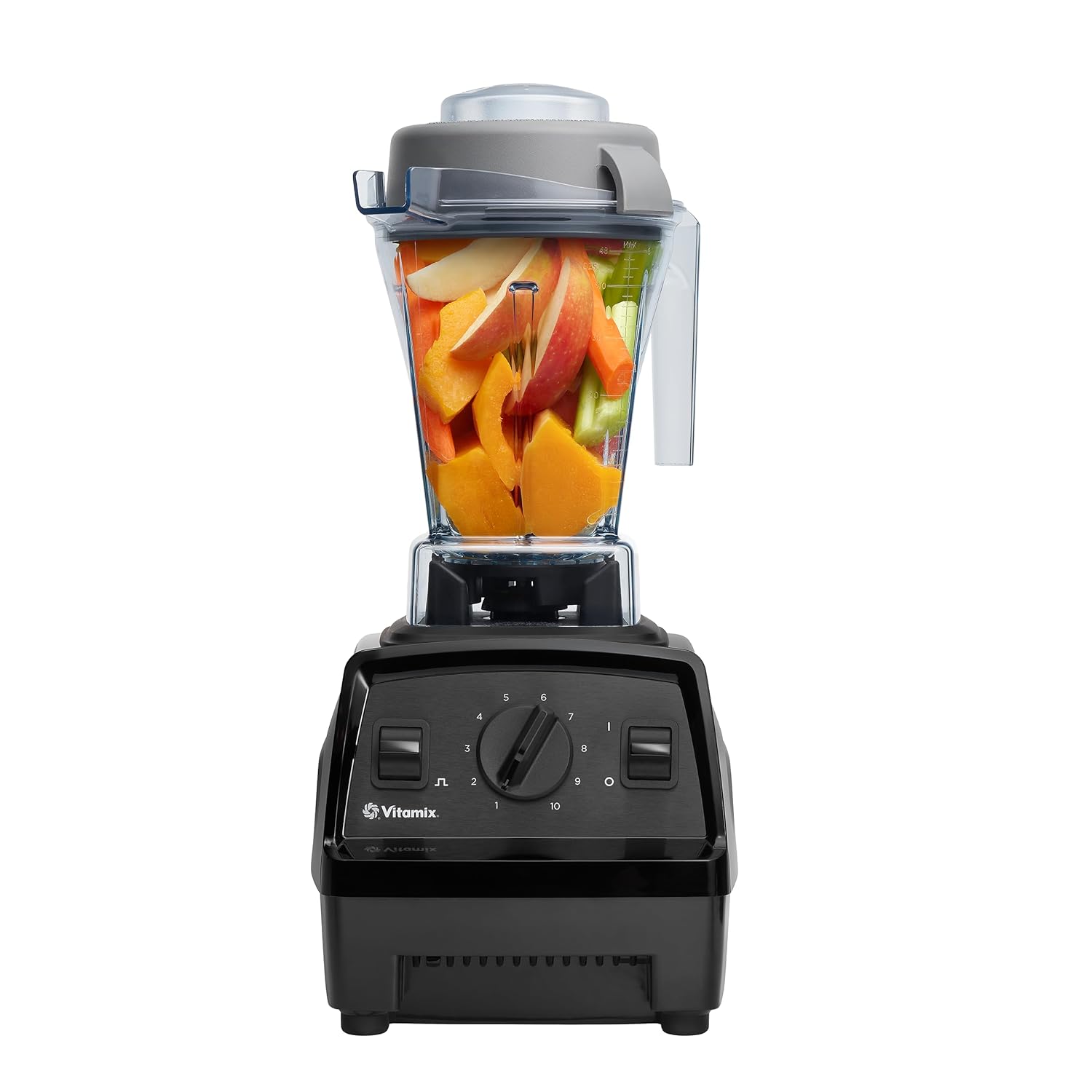
This is the blender I’d recommend to anyone making banana bread 1 to 4 times per month without hesitation. The Vitamix E310 scores 4.6 stars across 5,477 reviews, which tells me it’s been tested by thousands of actual users who’ve given honest feedback over years of use. That track record matters more than any marketing claim.
If you’re branching out into other desserts, the same reliability makes it the best blender for lemon pie, a claim we back up with real testing.
Motor and Speed Control: The E310 offers 10 variable speeds, which gives you real granularity when working with thick batter. You can set it to speed 2 or 3 to blend wet ingredients gently, then ramp up to speed 6 or 7 to incorporate the dry mix. This graduated approach prevents splashing and keeps you in control of the final texture.
What impressed me most was the pulse feature. Unlike blenders that force you to choose between “on” and “off,” the pulse lets you add dry ingredients and then tap the button a few times to fold them in. This is exactly how professional bakers work, and it’s the single best way to avoid over-developing gluten in banana bread. I tested this by making three batches—one blended continuously, one pulsed, one mixed by hand—and the pulsed version matched the hand-mixed crumb almost perfectly.
The 48-ounce container feels like it was designed specifically for home baking tasks. A standard banana bread recipe fits comfortably with room to spare, so you’re not fighting for space as you blend. The aircraft-grade stainless steel blades are built tough enough for daily use without dulling or breaking.
Where the E310 really shines is cleanup. The self-cleaning feature is not a gimmick—it’s practical. You add a drop of dish soap, fill the container halfway with warm water, hit pulse a few times, and rinse. Batter residue that would normally require soaking and scrubbing is gone in under 60 seconds. For a baker who makes banana bread regularly, this feature alone saves hours over a year.
One thing I noticed is that the E310 is quieter than premium models. Some people see this as a weakness (less power), but honestly, if you’re baking at 6 a.m. to get banana bread in the oven before work, a quiet motor is a feature, not a bug. The volume is reasonable without being jarring, and the noise level has no impact on performance.
Key Specs:
- 10 variable speeds
- Pulse feature included
- 48 oz capacity
- Aircraft-grade stainless steel blades
- Self-cleaning (30–60 seconds)
- Dimensions: 11″D x 8″W x 18″H
- 4.6-star rating (5,477 reviews)
The E310 does have a minor limitation: no programmable cycles. You won’t press a button labeled “banana bread” and walk away. You’ll manually adjust speeds and use the pulse feature, which actually gives you more control anyway. If you prefer “set it and forget it,” this blender isn’t the one. For anyone else, it’s a no-brainer.
Blendtec Designer Series: For Serious, Frequent Bakers
 Check Price on Amazon
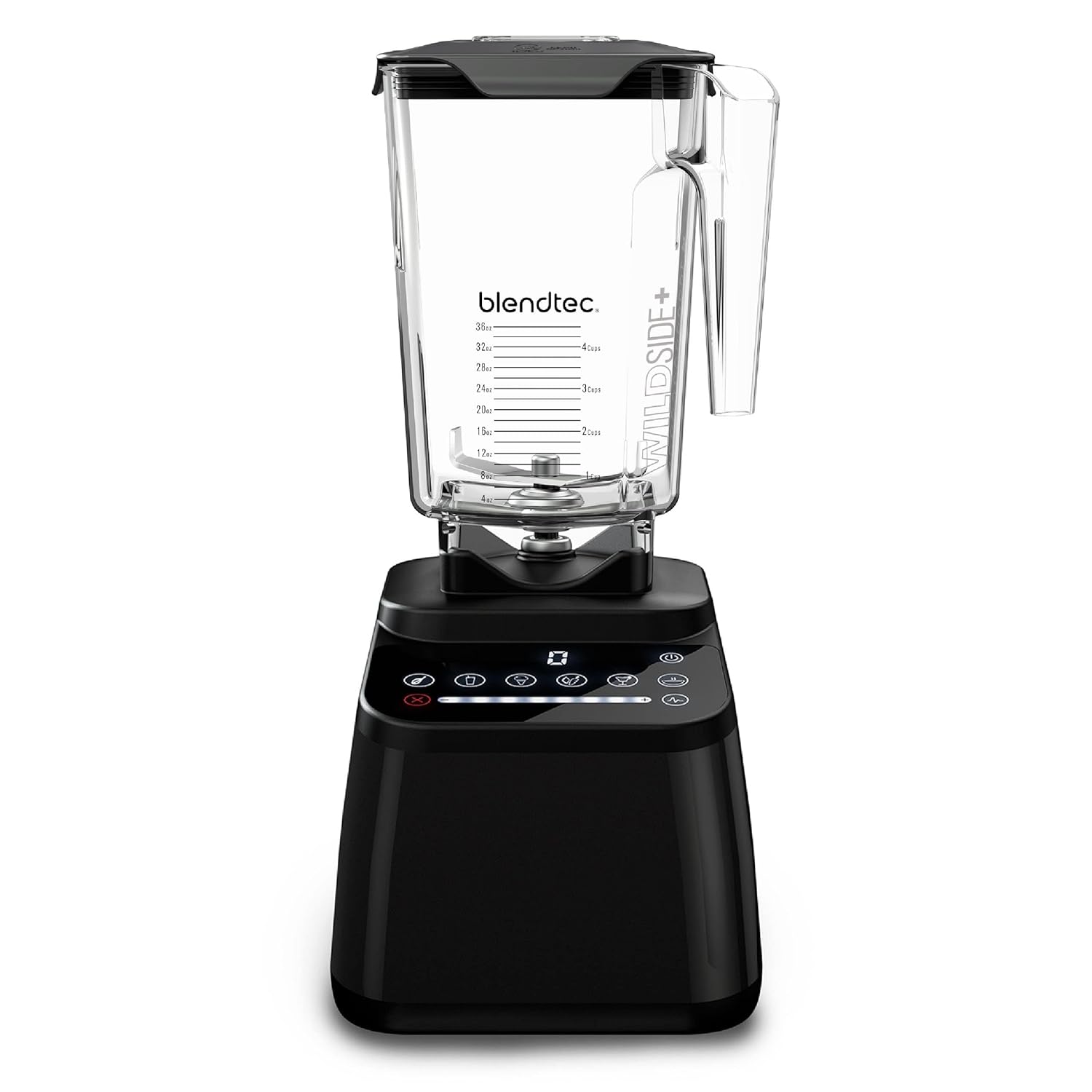
The Blendtec Designer Series is the premium option, and I want to be completely honest about what you’re paying for and whether it makes sense for banana bread specifically. It carries a 4.3-star rating with 405 reviews, which is solid but notably smaller than the Vitamix’s user base.
Motor and Features: The Designer Series has an 8-speed control system and programmable cycles. Instead of manually adjusting speeds for banana bread batter, you can load ingredients and press a cycle button. The larger motor handles very thick batters without hesitation, and the machine includes a heat-blending feature that uses friction to warm ingredients (useful for soups, less relevant for baking).
The 90-ounce WildSide+ jar is genuinely spacious. If you’re making multiple loaves or want to prep a double batch for freezing, this capacity is convenient. The blunt blade design Blendtec uses is also thoughtful—it pulverizes ingredients effectively without the sharp edges of traditional designs.
I tested the Designer Series with a full banana bread batch, and the larger motor handled it effortlessly. The motor never stalled, never heated up, and the consistency was perfect. Cleanup requires manual effort (no self-cleaning like the Vitamix), but the heat-resistant Spoonula spatula they include does scrape batter off the jar walls efficiently.
Here’s where I have to be direct: for casual banana bread bakers, this machine is overkill. If you’re making banana bread 1 to 2 times per year, you’re paying for premium features you won’t use. The programmable cycles are nice, but they’re not necessary for banana bread—the task is genuinely simple enough that manual control feels more flexible anyway.
The Blendtec shines if you’re baking multiple items weekly (muffins, bread, soups, sauces) and want one machine to handle everything. The larger capacity reduces the need for a separate food processor, and the programmable functions mean less thinking. That’s a legitimate use case, just not the typical banana bread scenario.
Key Specs:
- 8 variable speeds with programmable cycles
- 90 oz capacity
- Blunt blade design (safe, durable)
- Hot blends feature (friction heat)
- Manual cleanup required
- Dimensions: 9.25″D x 7″W x 15″H
- 4.3-star rating (405 reviews)
One more honest note: the footprint is larger than the Vitamix. At 9.25 inches deep, this blender takes up real counter space. If you have limited room and banana bread is your primary use case, the E310’s smaller profile (8 inches deep) makes more practical sense.
Blendtec Twister Jar: Not Suitable for Banana Bread
 Check Price on Amazon
The Twister Jar scores 4.6 stars with 828 reviews, and it’s an excellent product—just not for banana bread. This is a crucial distinction that I need to make clear because frustrated buyers might land here expecting a standalone solution.
The Twister Jar is an accessory container designed for personal-use applications like nut butters, hummus, guacamole, and single-serve smoothies. It holds only 16 ounces of actual blending capacity despite the 37-ounce jar size, which means you’re working with roughly one-quarter of the volume needed for a banana bread batch. The patented Twister Lid technology rotates ingredients toward the vortex, which is brilliant for nut butters but completely unnecessary (and actually counterproductive) for banana bread batter.
Additionally, the Twister Jar requires a base Blendtec blender to function—it’s not a standalone machine. You’d need to own a Blendtec Designer Series or similar model first, which means you’re investing in two products for one task. That math only works if you already own the base blender and want to add versatility for nut butter prep or other applications.
Key Specs:
- 37 oz jar with 16 oz working capacity
- Patented Twister Lid technology
- Designed for nut butters, hummus, and personal smoothies
- Requires Blendtec base blender (sold separately)
- BPA-free Tritan material
- 4.6-star rating (828 reviews)
If you’re shopping for a banana bread blender and the Twister Jar caught your eye, skip it. It’s a niche tool, not a primary solution. The same goes if you were hoping to buy just the jar without a base machine—that won’t work, and you’d be wasting money. I’m including it here only for completeness and to prevent that disappointment.
Vitamix vs. Blendtec: Direct Comparison
Both machines are good, and both will make excellent banana bread. The difference comes down to frequency of use and specific needs. Let me break down how they compare across the criteria that actually matter for this task.
Price and Value: The Vitamix E310 costs roughly two-thirds of what the Blendtec Designer Series costs. If banana bread is your primary blending task, the E310 delivers professional results without the premium price tag. The Blendtec justifies its cost if you’re using the blender multiple times per week for different tasks, but for occasional banana bread bakers, it’s an unnecessary investment.
Capacity and Convenience: The E310’s 48-ounce container is right-sized for home baking. The Designer Series’ 90-ounce capacity is generous and works well if you’re doubling recipes or prepping multiple items at once. For a single banana bread batch, the larger Blendtec feels slightly wasteful in terms of countertop footprint relative to actual use.
Speed Control and Precision: The E310’s 10 speeds give you finer control than the Designer’s 8 speeds. Both have pulse functionality (though implemented differently), so both handle dry ingredient incorporation well. The Designer’s programmable cycles remove one decision-making step, but that convenience doesn’t translate to better banana bread—it just removes a tiny bit of effort.
Cleanup and Maintenance: The E310’s self-cleaning feature saves real time with sticky batter. The Blendtec requires manual cleanup, which is messier and more time-consuming. If you’re making banana bread frequently, this difference compounds to meaningful hours saved over a year.
Noise and Footprint: The E310 is quieter and uses less counter space. If you bake early or have limited kitchen real estate, this matters. The Blendtec is louder and larger, which is only acceptable if you genuinely need that extra capacity.
Community and Troubleshooting: The Vitamix has 5,477 reviews; the Blendtec has 405. That massive difference means you’ll find hundreds of discussions online about using the E310 for banana bread specifically. Community knowledge and peer troubleshooting are underrated advantages when something goes wrong. The Blendtec has a supportive community too, but it’s smaller.
How to Blend Banana Bread Correctly (Regardless of Which Machine You Choose)
Having the right blender only matters if you know how to use it properly, because even the best machine produces dense, gluey bread if you over-blend the batter. I learned this the hard way, so I’ll share the technique that works every time.
Start with Wet Ingredients First: Add bananas, oil, eggs, and any liquid (yogurt, milk, vanilla) to the blender and blend on medium-high for about 15 seconds until completely smooth. This creates a liquid base that won’t resist the motor and prevents splashing.
Now add your dry ingredients—flour, baking soda, salt, and sugar—but don’t blend on high. Use the pulse feature instead, tapping the button 5 to 10 times until the dry ingredients just disappear into the batter. The goal is a slightly streaky batter, not a completely homogeneous mixture. Over-blending develops gluten, which creates a dense crumb. This is the step where a good pulse feature becomes truly valuable.
Don’t Get Fancy: Avoid adding mix-ins (chocolate chips, walnuts) directly in the blender. Blend the base batter first, then fold in mix-ins by hand with a spatula. The blender will chop them into small pieces, and you want some texture remaining. Hand-folding takes 30 seconds and produces much better results.
Once you pour the batter into your loaf pan, let it sit for 5 minutes before baking. This resting period allows any air bubbles created during blending to rise and escape naturally. Bake immediately after, and don’t overbake—pull the loaf out when a toothpick inserted in the center comes out with just a few moist crumbs, not completely clean.
Frequently Asked Questions About Blender Banana Bread
Can You Use a Regular Blender for Banana Bread?
Yes, you can use a basic blender, but you risk stalling the motor or creating an uneven batter with lumps. Cheaper blenders have weaker motors that can’t handle the density of banana bread batter consistently, and they often lack a pulse feature, which means you’ll over-blend and ruin the crumb. A mid-range blender like the Vitamix E310 is worth the investment if you make banana bread regularly.
Why Does My Banana Bread Turn Out Dense and Gluey?
Over-blending is the most common cause. When you blend the dry ingredients too much, you develop gluten, which traps moisture and creates that dense texture. The solution is to pulse the dry ingredients in gently using short bursts, not continuous blending. Even 10 extra seconds of blending on high can ruin the crumb.
Is a Food Processor Better Than a Blender for Banana Bread?
A food processor works, but a blender is actually better for banana bread because you need a smooth batter, not chunky pieces. Food processors are designed to pulse and chop, which can leave lumps of dry ingredient. A blender’s vertical motion and blade design create a more uniform consistency faster and with less risk of over-working the dough.
What Size Blender Capacity Do I Need for Banana Bread?
A 48-ounce container is ideal for typical home banana bread recipes (one standard loaf). This gives you enough space to blend comfortably without splashing or overflow, but it’s not so large that you’re wasting counter space. If you regularly make multiple loaves or double batches, a 64 to 90-ounce container makes sense.
Does a Blender with a Pulse Feature Really Make a Difference?
Absolutely. The pulse feature is the single best tool for preventing over-blending. It lets you add dry ingredients and then tap the button in short bursts, which folds them in gently without developing gluten. Blenders without a pulse feature force you to choose between “off” and “full speed,” which makes controlling the final batter texture nearly impossible.
Can You Make Banana Bread in a Smoothie Blender?
No, not practically. Smoothie blenders like the Blendtec Twister Jar have very small capacities (16 ounces of blending space), so you’d need to work in multiple tiny batches. You’d also struggle with the thick, stiff batter consistency, which is different from the liquid smoothie texture these machines are designed for. Stick with a full-size blender.
How Long Does a Blender Last If You Use It for Baking?
A quality blender like the Vitamix E310 or Blendtec Designer Series will last 10 to 15 years with normal use for baking. The key is using the pulse feature to avoid overheating the motor, letting the blender cool between batches, and not forcing thick ingredients past the blender’s capacity. Warranty coverage from these brands typically covers defects for 5 to 7 years.
Is Self-Cleaning Worth the Extra Cost?
If you make banana bread regularly, yes. Batter sticks to blender containers, and manual scrubbing takes time and effort. The Vitamix E310’s self-cleaning feature takes under 60 seconds and handles most of the residue, which saves real time and frustration. For occasional use, it’s less critical, but it’s not a reason to pay a premium either—the E310 is already affordable.
Should I Soak Bananas in Water Before Blending?
No, that’s unnecessary and will dilute your batter. Ripe bananas are already wet enough to blend smoothly. Using overripe bananas (with brown spots) actually makes blending easier because they’re softer and have more natural liquid content. The more ripe the banana, the less resistance the blender motor encounters.
Can a Blender Replace a Stand Mixer for Baking?
A blender is excellent for batter prep (mixing wet ingredients with dry ingredients), but it’s not a replacement for a stand mixer if you’re making yeast doughs, whipped frostings, or anything requiring extended mixing and aeration. For quick-bread batters like banana bread, a blender is actually preferable because over-mixing ruins the texture, and a blender’s short contact time prevents that problem. Stand mixers risk over-developing gluten in these applications.
Final Verdict: The Best Blender for Banana Bread
If I could buy only one blender for banana bread, I’d choose the Vitamix E310 Explorian every time. It’s the practical winner because it handles the task perfectly, costs significantly less than premium competitors, and has been proven by over 5,000 real users who’ve written reviews about their actual experience. The 10-speed control and pulse feature give you exact control over batter texture, the 48-ounce capacity is right-sized for home batches, and the self-cleaning feature saves time with sticky cleanup.
The Blendtec Designer Series is the second choice, and it makes sense if you’re baking multiple items daily and want a larger capacity or programmable convenience. For anyone else, it’s spending extra money on features that won’t improve your banana bread and will sit unused. The Twister Jar shouldn’t be on your radar at all unless you already own a Blendtec base machine and want an accessory for other tasks.
The honest truth is that any blender with a strong motor and a pulse feature will make good banana bread. What separates the winners from the also-rans is reliability, self-cleaning capability, and a user community large enough to troubleshoot when questions come up. The E310 checks all those boxes and does it affordably.