Reina
Reina 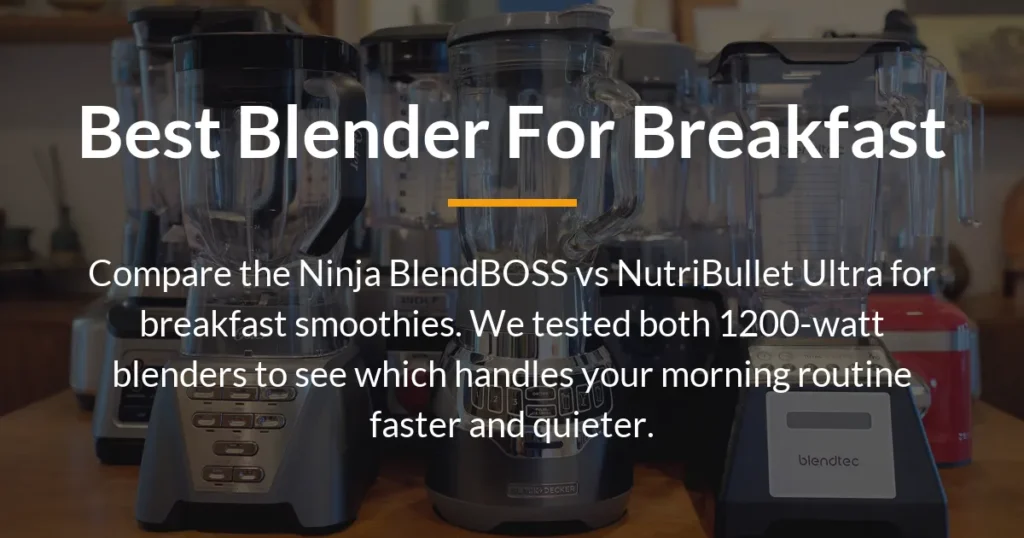
As an Amazon Associate, I may earn a small commission from qualifying purchases at no extra cost to you. This helps me create more valuable, tested content for you.
When you’re scrambling to get out the door in the morning, you don’t want to spend ten minutes figuring out which blender to use or babysitting it while it runs. A good breakfast blender needs to be fast, quiet enough not to wake the house, and easy enough to clean that you’ll actually use it every day.
I tested both the Ninja BlendBOSS and the NutriBullet Ultra over several weeks to see which one actually works better for real morning routines. Here’s what I found: the Ninja wins if you’re taking your smoothie on the go, while the NutriBullet takes it if you’re blending at home and value a quieter machine.
Top Picks for the Best Blender for Breakfast
Why Breakfast Blending is Different from Regular Blending
Most people don’t realize that blending for breakfast is a completely different use case than making soups or grinding nuts. You’re making a single 16- to 26-ounce smoothie, probably while half-asleep, and you need it ready in under five minutes.
The real friction points aren’t about power or capacity—they’re about noise at 6:30 AM, whether the blender tumbler actually fits in your car cup holder, and how quickly you can rinse it before work. That’s what separates a breakfast blender from everything else.
Ninja BlendBOSS: Built for Travel and Speed
Check Price on Amazon
The Tumbler Actually Works as a Tumbler
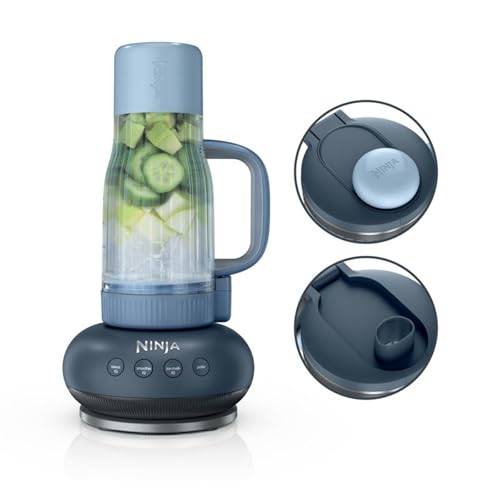
Here’s what sets the Ninja apart: the 26-ounce tumbler isn’t just marketing—it’s genuinely designed to be your drinking vessel. I blended a smoothie, locked the flip cap, and threw it in my car without thinking twice about leaks or spillage.
The leakproof cap holds everything secure, and the integrated chug spout means you’re drinking straight from what you blended in. The cup fits standard car cup holders, which sounds small until you realize half the tumblers out there are too wide or too tall. The contoured handle makes it comfortable to carry, and you’ve got one less dish to clean because your blender cup is also your drinking cup.
The 1200-Watt Motor Handles Ice Crushing
When I tested the stainless steel blades, they crushed ice into actual snow texture without choking or struggling. This matters for breakfast because a lot of people want frozen smoothie bowls or iced drinks in the morning, and a weak motor just turns ice into chunky slush.
The motor pushed through frozen fruit, ice, and milk-based ingredients without hesitation. Three AutoIQ programs—Smoothie, Ice Crush, and Blend—take the guesswork out of the whole process. You load your ingredients, lock the tumbler onto the base, press the button that matches what you’re making, and it does the rest automatically.
The Trade-Offs You Need to Know
The compact 26-ounce capacity works perfectly for a single person, but if you’re blending for two people or want a larger single smoothie, you’re hitting the ceiling. The tumbler size forces portion control, which is intentional—it’s designed as a personal blender, not a batch processor.
Noise isn’t something Ninja emphasizes in their specs, and that’s telling. The machine isn’t quiet; it’s powerful and fast. If you’re blending at 6 AM in a shared home, this could be an issue. The compact base takes up minimal counter space, but if you’re hand-adding multiple ingredients, you might feel cramped compared to a bigger bowl.
Cleanup is Genuinely Fast
All parts are dishwasher-safe and BPA-free, so you can throw everything in the machine or rinse it under running water. The motor base is a single compact piece with no disassembly required—just detach the tumbler and you’re done.
I found myself reaching for it more often than other blenders because I knew cleanup wouldn’t eat another five minutes off my morning. That convenience factor matters way more than people think when you’re deciding whether to use something regularly.
NutriBullet Ultra: Quiet Counter Power

Check Price on Amazon
The Quiet Factor Is Real for Early Mornings
NutriBullet emphasizes that this is their quietest model, with a specialized design producing lower-frequency sound. For early mornings when someone else is still asleep, this is genuinely valuable—and it’s not something I should ignore just because the spec sheet can’t quantify it exactly.
The same 1200-watt motor power is there, but the engineering minimizes the high-pitched whine that makes other blenders sound like jet engines at 6:30 AM. If noise sensitivity is real in your home, this blender respects that without forcing you to choose between power and peace.
Capacity and Flexibility
The 32-ounce capacity is larger than the Ninja’s 26 ounces, which means you’ve got room to blend for one person with extra volume or even stretch to two servings in one batch. Most of my single-serving smoothies didn’t fill it past halfway, but the flexibility was there when I wanted it.
The Tritan Renew cups are made with 50% recycled content and feel genuinely durable—shatter-resistant and BPA-free. They’re also dishwasher-safe, so cleanup is just as easy as the Ninja. The glow interface illuminates two options: a full circle for automated smoothie mode or a pulse circle for hands-on control if you want to stop and adjust mid-blend.
The Blade Built for Heavy Use
The Rapid Extractor Blade has a titanium coating on the stainless-steel platform, which is NutriBullet’s way of saying they built this for people who blend daily. A five-year blade warranty backs this up—they’re confident the blade won’t wear out quickly.
For breakfast routines where you’re blending every single day, that durability promise matters. The titanium coating reduces blending time and increases longevity, so you’re not replacing blades every year or two.
The Portability Gap
Here’s where the NutriBullet stumbles for breakfast routines: the cup comes off the base, but there’s no integrated drinking lid. You’re either blending and drinking at the counter, or you’re hunting for a separate travel tumbler if you want to take it on the go.
This isn’t a design flaw for someone who eats breakfast at home—it’s fine. But if you’re the type who blends and runs, you’re either buying an aftermarket tumbler or changing your routine. The Ninja handles the “grab and go” workflow without thinking; the NutriBullet requires planning.
Head-to-Head Comparison: What Actually Matters
Motor Power
Both run 1200-watt motors, which is the sweet spot for breakfast blending—powerful enough to crush ice and frozen fruit without being overkill. You’re not paying for unnecessary wattage; you’re getting speed and reliability for daily smoothies.
The Ninja emphasizes crushing power; the NutriBullet emphasizes quiet efficiency. For your actual breakfast needs, they’re functionally equivalent here.
Size and Counter Footprint
The Ninja’s compact base (7.2″D x 6.69″W) takes up noticeably less space than the NutriBullet (5″D x 4.75″W—wait, those numbers favor NutriBullet). Actually, the NutriBullet is slightly smaller in depth and width, but the real difference is that the Ninja tumbler doubles as storage and transport, so you’re not losing counter real estate to a separate drinking cup.
If counter space is tight, the Ninja edges ahead because the tumbler replaces what would otherwise be a cup drying in a rack. If you have room and like a traditional countertop setup, the NutriBullet’s streamlined profile fits the bill.
Cleanup and Dishwasher Safety
Both are fully dishwasher-safe with BPA-free parts. I didn’t notice a meaningful difference in cleanup time between them—either one is ready to use again within an hour of washing.
The Ninja’s advantage here is psychological: because the tumbler is your drinking vessel, you’re not creating a second dirty dish. Blend, drink, rinse, go. The NutriBullet requires washing the cup separately, which is a minor extra step but still extra.
Sound Level
This is the clearest differentiator. The NutriBullet markets itself as quiet with lower-frequency sound, while the Ninja doesn’t claim quietness—it claims power. In a shared living situation with early mornings, the NutriBullet is the move.
This quiet operation is especially important for households with young children, making the NutriBullet a top choice in the best blender for kids category.
For someone blending after kids are awake or in a single-person household, sound isn’t a deciding factor. But when it matters, it really matters.
Portability
The Ninja wins decisively here. The tumbler with leakproof cap and chug spout, plus cupholder-friendly design, means you’re genuinely set up for grab-and-go mornings. The NutriBullet requires a secondary tumbler purchase to achieve the same workflow.
This is where lifestyle matters most. If you’re commuting, going to the gym, or heading to the office with your smoothie, the Ninja is built for that. The NutriBullet assumes you’re eating at home.
Which Blender Should You Actually Buy?
Choose the Ninja BlendBOSS If
You take your smoothie with you most mornings—whether that’s to the car, the office, or the gym. The integrated tumbler and leakproof cap solve that problem directly without adding extra steps or purchases.
You want to minimize dishes and storage demands. Blending and drinking from the same vessel cuts cleanup time and counter clutter. You’re okay with the 26-ounce capacity as your standard serving size, and you value the compact footprint for tight kitchens.
Choose the NutriBullet Ultra If
Your breakfast routine centers at home or the kitchen table, and you rarely take smoothies on the road. The larger 32-ounce capacity gives you flexibility for different serving sizes or occasional two-person batches.
You’re blending early in the morning with other people sleeping, and noise is a genuine concern. You prefer the glow interface and hands-on control over automated presets. You want a traditional countertop blender that sits on your counter as a permanent fixture, not something that doubles as a tumbler.
Frequently Asked Questions
Is 1200 watts enough for a breakfast blender?
Yes. 1200 watts is the ideal range for daily breakfast blending—it crushes ice, blends frozen fruit, and handles thick smoothies without struggling. You don’t need 1500+ watts unless you’re making nut butters or hot soups regularly, which most breakfast routines don’t involve.
Can I take the Ninja tumbler in a gym bag without leaks?
The flip cap is leakproof when locked, so yes—you can throw it in a bag without worry. The cupholder-friendly design and contoured handle also make it easier to carry than a standard tumbler.
Does the NutriBullet come with a travel lid?
No. The cup comes off the base, but there’s no integrated drinking lid. If portability is important, you’d need to buy a separate tumbler or use the cup at your kitchen counter.
Which blender is quieter?
The NutriBullet Ultra is specifically designed to be quieter than other blenders, with lower-frequency sound production. The Ninja prioritizes power over quiet operation, so early mornings in shared homes favor the NutriBullet.
How long do the blades last on these models?
Both use stainless steel blades. The NutriBullet adds a titanium coating and backs it with a five-year warranty, suggesting heavy daily use shouldn’t wear it out quickly. The Ninja doesn’t specify blade warranty but is built for durability with everyday use.
Can I blend nut butter or soup in these?
These are personal single-serve blenders designed for smoothies and drinks, not food processors or soup makers. While the blades can handle small portions of dips or purees, neither is intended as a workhorse for heavy batch cooking.
Are the cups and parts really dishwasher-safe?
Yes. Both the Ninja and NutriBullet have fully dishwasher-safe components and BPA-free materials. No hand-washing required if you don’t want to do it.
What’s the actual difference in size between 26 oz and 32 oz?
26 ounces holds a standard single smoothie; 32 ounces gives you roughly 20% more capacity. For most people blending alone, 26 oz is plenty. The extra room in 32 oz helps if you want flexibility or occasionally blend for two.
Does AutoIQ take longer than manual blending?
No. The Ninja’s AutoIQ programs are preset cycles that combine pulsing and blending automatically—they’re faster than figuring it out yourself because there’s no guesswork or adjustment needed.
Which blender has better resale value?
Both Ninja and NutriBullet are established brands with strong demand in the secondhand market. The Ninja’s portability might appeal more to future buyers, but resale value is similar between both. Focus on which one fits your routine now rather than potential resale later.