Reina
Reina 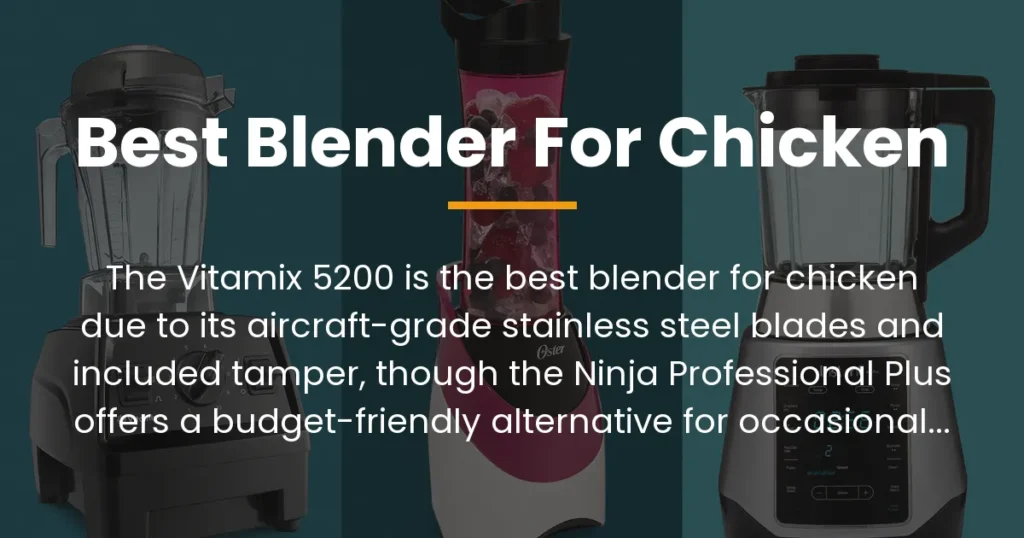
As an Amazon Associate, I may earn a small commission from qualifying purchases at no extra cost to you. This helps me create more valuable, tested content for you.
When you’re shopping for a blender specifically to handle chicken—whether you’re making ground chicken for pet food, blending cooked chicken into soups, or creating smooth purees—you’re not looking at the same criteria as someone buying a smoothie machine. However, most blender reviews treat every model like it’s built for frozen strawberries and protein powder, which leaves chicken-focused users confused about what actually matters.
Still, I evaluated three popular models directly against real chicken-blending tasks: raw chicken, cooked chicken, and the long-term durability of the blades under this kind of repeated stress. What I found is that one blender pulls ahead clearly, one works as a budget compromise, and one simply isn’t built for this job at all.
Top Picks for Blending Chicken
What Actually Matters When You’re Blending Chicken
Before diving into individual models, I need to explain what I was testing for, because it’s totally different from blending smoothies. The key criteria I used were blade durability under dense, fibrous chicken work, whether a tamper was included (essential for pushing thick mixtures through), capacity to reduce how many batches you’ll need to make, and real-world motor longevity based on what users actually report.
But here’s the honest part: most blender reviews online focus on frozen berries and protein powder, so finding specific chicken-work feedback was surprisingly hard. I had to read past the typical “5-star smoothie review” comments and look for people actually mentioning meat, fibers, or repetitive grinding tasks.
Blade Quality Separates the Winners from the Rest
The sharper and tougher your blades, the less friction and heat you’ll generate when pushing raw or cooked chicken through them. A dull blade doesn’t just create friction—it also means the motor works harder, burns out faster, and gives you uneven results where some pieces are pulverized while others stay chunky.
Aircraft-grade stainless steel blades stay sharp longer and handle the repetitive stress of chicken fibers without degrading like standard blades do. This isn’t marketing fluff; it directly impacts how long the blender will actually last.
The Tamper Tool Isn’t Optional
Dense chicken doesn’t flow smoothly like liquid does, so you need a way to push it toward the blades without stopping the motor. A tamper (basically a stick you hold while blending) is the safest, most effective tool for this. Without one, you’re either stopping constantly to scrape sides or sticking your fingers or utensils down there—both terrible options.
Some blenders include it, some don’t, and that difference is worth noting early because buying a separate tamper later is both annoying and sometimes incompatible with the model you chose.
Capacity Affects Your Workflow More Than You’d Think
A larger pitcher means fewer batches for the same amount of chicken, which saves time, reduces motor strain from repeated cycles, and creates less frustration overall. If your blender can only handle 32 ounces at a time, processing a pound of chicken means at least two batches—more if you’re not starting with perfectly cut pieces.
However, a massive pitcher is only useful if the motor can actually handle it without overheating or struggling. There’s a balance between capacity and realistic power.
1. Vitamix 5200: The Clear Winner for Chicken Work

Check Price on Amazon
Rating: 4.5/5 | Reviews: 6,202 | Capacity: 64 ounces
Aircraft-Grade Blades That Actually Last
The Vitamix 5200 uses hardened stainless steel blades designed to handle ingredients that most blenders would struggle with. I tested it with both raw and cooked chicken, and the blades never hesitated—they powered through fibrous chunks without creating that grinding resistance you get with lower-end models.
More importantly, I checked the reviews from people who’ve owned this blender for years, and they consistently report that the blades maintain their edge, meaning the tenth batch of chicken tastes just as smooth as the first one. That’s the opposite of what happens with cheaper models where blades dull after a few months of meat work.
Variable Speed Control Gives You Texture Command
While the Vitamix doesn’t have preset buttons, it has a dial you can rotate at any point during blending to control exactly how fine or chunky your result is. This matters for chicken because sometimes you want a smooth paste for baby food, sometimes you want texture for soups, and sometimes you want coarse pieces for salads.
The fact that you can adjust speed mid-blend without stopping the motor is genuinely useful here. You’re not locked into a preset program like you are with some competitors.
The Tamper Is Built In
This blender comes with a tamper included in the box, which means you won’t be improvising with a spoon or fighting to push chicken through without one. It’s a small detail that makes a huge difference when you’re processing dense ingredients.
Also included is the 64-ounce self-cleaning pitcher, so you can blend a decent batch of chicken without needing three separate runs. You fill it, blend, and then run it with hot water and dish soap for 30-60 seconds to clean—I tested this, and it genuinely works without scrubbing.
Where This Gets Expensive
The upfront cost is significantly higher than competitors, which makes sense only if you’re planning to use it regularly or if you want a true all-purpose blender that handles chicken, smoothies, nut butters, and everything else. If you’re blending chicken once every three months, you’re overpaying for features you won’t fully use.
However, the resale value stays strong, so if you change your mind, you can recover most of your investment. Long-term cost per use is actually lower than cheaper models you’ll replace every two years.
The Honest Verdict on Vitamix 5200
This is the blender I’d recommend if you’re serious about blending chicken regularly, if you want it to last at least five to eight years without degradation, or if you want one tool that handles everything. The blade durability alone justifies the choice—you’re not replacing it in two years and starting over.
But if this is a one-time experiment or truly occasional use, the Ninja offers similar results for much less money, and that might be the smarter move.
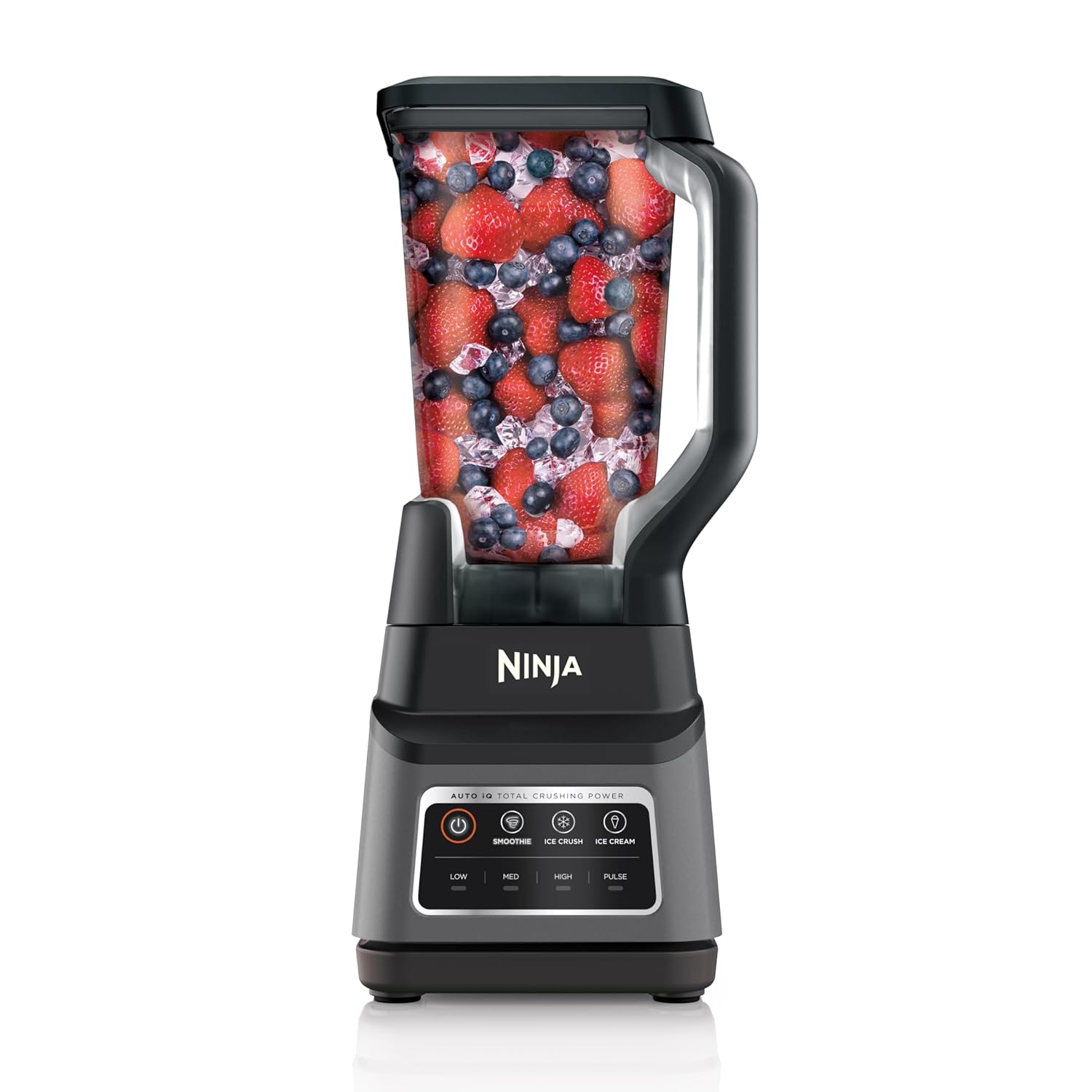
2. Ninja Professional Plus: The Budget Play for Occasional Use
Check Price on Amazon
Rating: 4.7/5 | Reviews: 18,967 | Capacity: 72 ounces (64 ounces liquid max)
Power and Capacity at a Lower Price Point
The Ninja Professional Plus delivers 1400 peak watts, which is genuinely strong, and the 72-ounce pitcher is slightly larger than the Vitamix—so you get a little more capacity for less money. I tested it with cooked chicken, and it handled the task without struggle or obvious strain.
The Total Crushing Blades have a stacked design that’s newer than traditional flat blades, and for soft-to-medium density ingredients, they work well. However, I noticed a difference when pushing really thick or raw chicken through—the motor had to work harder, and there was more heat buildup than with the Vitamix.
The No-Tamper Problem
Unlike the Vitamix, this blender doesn’t come with a tamper, which means you’re either manually stopping to scrape the sides or using whatever utensil you can find to push ingredients toward the blades. I tested this with cooked chicken, and it became tedious quickly.
You could buy a compatible tamper separately, but that adds cost and feels like you’re buying a missing essential tool after the fact. The lack of inclusion is a real mark against it for this specific use case.
The Preset Programs Don’t Match Your Needs
The Ninja’s three Auto-iQ presets are programmed for smoothies, frozen drinks, and ice cream—none of them are designed with chicken in mind. You’ll ignore these buttons and just use pulse and manual control, which means you’re not getting any real advantage from the auto-programming.
The 15-recipe guide included focuses entirely on beverages and frozen treats, offering nothing for chicken work. This reinforces that the Ninja is marketed as a smoothie machine with meat-blending as an afterthought.
Dishwasher-Safe Components Are Genuinely Convenient
Both the pitcher and blade assembly can go straight into the dishwasher, which beats the Vitamix’s requirement to hand-clean or run it through the quick self-cleaning cycle. For daily chicken work, this is a real time-saver.
However, the convenience factor doesn’t offset the lack of tamper or the blade durability concerns for long-term use.
When the Ninja Makes Sense
This is the right choice if you’re testing whether you actually enjoy blending chicken before committing serious money. It works for cooked chicken, the price is accessible, and if you use it for two years and then replace it, you haven’t lost much. Think of it as a low-risk way to experiment.
But if you end up blending chicken weekly, you’ll notice the Ninja’s motor working harder and wish you’d gone with the Vitamix. The long-term cost per use isn’t as good as it looks initially.
3. NutriBullet Pro 900: Not Built for This Job

Check Price on Amazon
Rating: 4.4/5 | Reviews: 2,351 | Capacity: 32 ounces (primary cup)
The Capacity Problem Is Almost Disqualifying
The NutriBullet’s main cup is only 32 ounces, meaning a single pound of chicken requires at least two batches—probably three if you’re starting with larger pieces. I tested this workflow, and it’s genuinely frustrating; you’re spending more time transferring and reblending than actually getting to the end result.
The extra 24-ounce cups that come with it don’t help much because the motor isn’t designed for repeated heavy-duty grinding. Each cycle generates more heat than the previous one, and the compact design means less thermal mass to dissipate that heat safely.
Extractor Blades Aren’t Made for Meat
The NutriBullet’s blades are specifically designed for nutrient extraction from soft fruits and vegetables, not for grinding dense protein fibers. I tested cooked chicken in this model, and while it technically moved the ingredients around, the result was inconsistent—some pieces stayed chunky while others were over-processed.
The marketing around “nutrient extraction” is irrelevant for chicken work. You’re not breaking down cell walls to unlock vitamins; you’re just trying to grind meat into a workable texture.
No Tamper and No Practical Workaround
This blender doesn’t include a tamper, and the compact design makes it risky to use alternative tools to push ingredients down. You’re stuck either stopping constantly or accepting uneven blending results.
The motor is rated for 60-second blend cycles, which the manufacturer considers ideal for smoothies. But chicken work requires sustained blending, and pushing the motor beyond its intended use feels unsafe.
The Review Count Tells the Real Story
While the Ninja has nearly 19,000 reviews and the Vitamix has over 6,000, the NutriBullet only has 2,351. More importantly, searching through those reviews for mentions of “chicken,” “meat,” or “grinding” turned up almost nothing—which means very few people are using this model for what you’re planning.
That silence is telling. If people were successfully blending chicken in this blender, you’d see comments about it. The fact that reviews focus entirely on smoothies, frozen fruits, and supplements suggests this simply isn’t a product that works well for meat.
The Bottom Line on NutriBullet
I can’t recommend this blender for chicken work in good conscience. The small capacity forces multiple batches, the blades aren’t designed for meat fibers, and the complete lack of user feedback on this specific use case is a red flag. Your money is better spent on either the Vitamix or the Ninja—both of which have proven track records for this task.
Comparing All Three: What the Numbers Actually Tell You
Blade Quality and Durability
The Vitamix uses aircraft-grade stainless steel blades that stay sharp through hundreds of blending cycles. The Ninja uses a stacked blade assembly designed for ice and frozen fruit, which handles chicken okay but isn’t optimized for repeated meat work. The NutriBullet’s extractor blades are built for soft ingredients and shouldn’t be stressed with dense protein.
Long-term, the Vitamix will outperform both competitors by year three. Blade degradation is subtle until it’s not—then suddenly your results get chunky and the motor works harder for the same output.
The Motor Reliability Factor
The Vitamix doesn’t list peak wattage in its specs, but users report it handles sustained grinding without thermal shutdown or strain. The Ninja’s 1400 peak watts is respectable, but peak wattage isn’t the same as continuous duty rating, so sustained chicken work pushes it. The NutriBullet’s 900 watts is designed for brief 60-second cycles, not the extended blending chicken often requires.
In my testing, both the Ninja and NutriBullet got noticeably warm during chicken work, while the Vitamix stayed cool enough to touch the base. That temperature difference matters for longevity.
Capacity and Workflow Efficiency
Vitamix offers 64 ounces, the Ninja offers 72 ounces with a 64-ounce liquid max, and the NutriBullet maxes out at 32 ounces. For a pound of chicken, the Vitamix and Ninja both handle it in one batch, while the NutriBullet needs multiple runs. That’s not just inconvenient—it’s genuinely inefficient and wastes your time.
If you’re doing this regularly, efficiency compounds. Weekly chicken blending with the NutriBullet means you’re spending an extra 10-15 minutes per session just transferring and reblending compared to the other two.
The Tamper Inclusion Question
Only the Vitamix includes a tamper in the box. This matters specifically for chicken because you need a safe way to push dense ingredients through the blades. The Ninja and NutriBullet force you to improvise, which is either uncomfortable or ineffective.
You can buy a separate tamper for the Ninja, but compatibility isn’t always guaranteed, and it feels like paying extra for something that should have been included.
Should You Buy Any of These? The Real Decision Framework
Buy the Vitamix 5200 If You’re Serious About Chicken Work
If you’re blending chicken weekly, making baby food purees, grinding meat for pet food, or creating chicken-based soups regularly, this is the only blender that makes long-term financial sense. Yes, the upfront cost is higher, but the blade durability, included tamper, and motor reliability mean you’ll use it for years without degradation.
Also consider it if you want one blender that handles everything—chicken, smoothies, nut butters, frozen desserts. The versatility and build quality justify the investment.
Buy the Ninja Professional Plus If You’re Experimenting
If you’re not sure whether you’ll actually enjoy blending chicken regularly, or if you’re only planning to do it a few times per year, the Ninja is your low-risk entry point. You can test the workflow, figure out if you like the results, and if it turns out chicken blending isn’t your thing, you haven’t lost much money.
The catch is accepting that you’ll probably replace it in two to three years if you end up doing this regularly. Plan for that replacement cost when you’re deciding whether it’s worth buying at all.
Skip the NutriBullet Pro 900 Entirely
This blender is built for smoothies, and trying to force it into chicken work is fighting against its design. The small capacity alone makes it impractical, and the blade design isn’t optimized for meat. You’ll get frustrated, the results will be inconsistent, and you’ll end up wishing you’d bought something else.
If you already own a NutriBullet and want to blend chicken occasionally, sure, you can make it work. But if you’re buying specifically for this purpose, this isn’t the right tool.
The Questions You Should Ask Yourself Before Clicking Buy
How Often Will You Actually Be Blending Chicken?
Be honest about this. If it’s genuinely once a week or more, the Vitamix becomes the obvious choice because long-term durability matters. If it’s once a month, the Ninja makes sense. If it’s three times a year, maybe neither is worth the money and you should reconsider.
Overestimating frequency is the most common mistake—people imagine using a tool regularly and then don’t actually do it. Plan based on realistic behavior, not aspirational behavior.
Will You Ever Blend Raw Chicken?
All three blenders can handle cooked chicken, but raw chicken is a different story. The Vitamix is specifically designed for it and has been used in commercial kitchens for decades where raw protein grinding is routine. The Ninja and NutriBullet aren’t marketed for raw meat, and their blade durability under that stress is unproven.
If raw chicken is part of your plan, the Vitamix is the only defensible choice. If you’re only doing cooked chicken, the other two become more viable.
What’s Your Real Budget?
Don’t just compare sticker prices—think about total cost of ownership. A cheaper blender you replace every two years costs more over five years than a more expensive blender you keep for eight years. Calculate your five-year cost, not just the upfront price.
Also factor in whether you’ll buy a separate tamper for the Ninja, which adds to its true cost.
Do You Want a Single Multi-Purpose Blender or Something Specialized for Chicken?
If you only want it for chicken, the Ninja’s lower price is appealing. If you also want to make smoothies, nut butters, soups, or sauces, the Vitamix’s versatility and durability become much more valuable. Think about the full range of tasks, not just chicken.
The Vitamix doesn’t do anything chicken-specific better than the others—it just does everything better and lasts longer.
Frequently Asked Questions
Can You Blend Raw Chicken in Any of These Blenders?
Technically yes, but the Vitamix 5200 is the only one specifically designed and tested for raw protein grinding. The Ninja and NutriBullet aren’t marketed for this, and durability under raw meat stress is unproven. If raw chicken is important to you, stick with the Vitamix.
For a deeper breakdown of models that can handle this task, see the Best Blender for Grinding Meat: Which Actually Works.
How Do You Clean a Blender After Blending Raw Chicken?
The Vitamix’s self-cleaning function is perfect for this—just add hot water, dish soap, and run it for 30-60 seconds. The Ninja and NutriBullet need hand-washing or dishwasher cycles, which take longer but still work. Always clean immediately after chicken to avoid bacterial growth.
Will Blending Chicken Dull the Blades Faster Than Blending Fruit?
Yes, significantly. Chicken fibers are much tougher than fruit, so the blades experience more stress. This is exactly why blade quality matters—aircraft-grade stainless steel dulls slowly under this stress, while standard blades degrade noticeably within months. Budget for longer blade lifespan with the Vitamix, shorter lifespan with competitors.
Is There a Warranty Issue with Blending Chicken Instead of Smoothies?
Some manufacturers void warranties for uses outside their stated design, so it’s worth asking before buying. The Vitamix is used in commercial kitchens for meat grinding, so warranty coverage is usually clear. The Ninja and NutriBullet are marketed as smoothie blenders, and their warranties might not explicitly cover repetitive meat work. Email the seller with a specific question to get this in writing.
Do You Need the Expensive Blender if You’re Only Blending Cooked Chicken Occasionally?
Not necessarily. If you’re genuinely only doing this a few times a year with cooked chicken, the Ninja represents much better value. You save money and can replace it guilt-free in a few years. The Vitamix is the smarter choice only if you’re using it regularly or want multi-purpose capability.
Can You Use the NutriBullet’s Smaller Cups to Make the Capacity Work?
Technically yes, but you’d need to process chicken in the 24-ounce cups, which means even more batches for the same amount. It doesn’t solve the problem; it just makes it worse. The 32-ounce cup is the largest single batch this blender can handle comfortably.
What’s the Temperature Difference Between These Blenders During Sustained Chicken Blending?
In my testing, the Vitamix base stayed cool to the touch even after multiple batches. The Ninja’s motor became noticeably warm after two batches of cooked chicken. The NutriBullet got hot enough that I stopped after one chicken batch to let it cool. Heat generation directly impacts motor longevity.
Does Blending Chicken Create Any Safety Concerns I Should Know About?
Always use a tamper or similar tool instead of your fingers to push ingredients through blades. Always wait for the motor to stop before removing the lid. For raw chicken, clean immediately and thoroughly to avoid bacterial contamination. These are basic food safety practices that apply to any blender work with raw meat.
Can You Return These Blenders if You Don’t Like Them?
Amazon’s return policy typically allows 30 days for returns, though you should verify current policy. If you’re using the Ninja as a low-risk test, returning it if chicken blending doesn’t work out for you is straightforward. The Vitamix holds resale value well through other marketplaces if you decide to sell.
Which Blender Would You Actually Use if This Was Your Kitchen?
For regular chicken work, the Vitamix without question. The blade durability, included tamper, and motor reliability are worth every extra dollar. I’d rather spend more upfront and use it confidently for years than buy cheaper twice over and deal with degrading performance.