Reina
Reina As an Amazon Associate, I may earn a small commission from qualifying purchases at no extra cost to you. This helps me create more valuable, tested content for you.
Finding the right blender for almond milk isn’t like picking any old kitchen tool—this actually requires specific capabilities that separate machines that work from ones that frustrate you. The best blender for almond milk needs serious motor power to crush fibrous almonds, precise speed control so you don’t overheat them, and container geometry designed to create proper emulsification. Without those three things, you’re just going to end up with gritty disappointment.
Here’s what really matters though: you’re not just buying blending power, you’re investing in consistency. The difference between a blender that nails almond milk and one that barely survives it comes down to motor reliability, heat management while processing, and whether the machine can handle daily use without complaining or breaking down.
Top Picks for the Best Blender
What Actually Matters When Making Almond Milk
Before you commit to a machine, you need to understand what separates successful almond milk from a disappointing batch. Almonds are fibrous and dense—they’re nothing like soft berries that blend easily. Your blender needs enough force to break them down completely without creating thick, gritty sludge that no straining can fix.
Temperature control during blending also affects your final taste and texture. When friction gets too high, the blending friction can actually scald the almonds, leaving behind a bitter flavor that no amount of water can salvage. This is why variable speed and pulse functions matter more for almond milk than they do for regular smoothie making.
Motor Power and Why It Stops Stalling
Look, most blenders claim “powerful motors,” but budget models typically max out around 1000 watts and struggle with almonds. A 2.2 horsepower motor—which is what both Vitamix machines deliver—handles this work without strain, effort-sounding noise, or the overheating that happens when smaller motors work too hard.
But the raw power itself isn’t the whole story. Consistency matters just as much. A weak motor produces gritty results one batch and creamy results the next because it can’t maintain steady blending speed when almonds get tough. Premium motors sustain their speed, which means your almond milk tastes the same whether you’re blending your first batch of the week or your fifth.
Speed Control Prevents Heat Damage
Variable speed control lets you start low and gradually increase, which prevents the blender from forcing almonds through at maximum velocity right away. This gentle approach creates better emulsification and keeps the temperature in that sweet spot where almonds release their natural oils without scorching.
Pulse function also gives you fine control over texture, which means you can stop at “creamy” instead of overshooting into “nut butter.” Most cheap blenders lack real pulse capability, so you’re basically guessing when to stop blending. Good pulse function gives you actual precision.
Container Shape Affects Blending Results
While motor power gets all the attention, the container’s design does most of the real work. Vitamix containers use precision-engineered geometry that creates what they call “the vortex”—a spiral motion that pulls ingredients toward the blades consistently.
Because almonds need to contact the blades evenly to blend smoothly, this vortex action ensures nothing gets stuck in dead spots where the blades can’t reach. A poorly designed container leaves clumps and forces you to add extra water (diluting your milk) or stop and stir manually, which defeats the entire purpose of owning a premium blender.
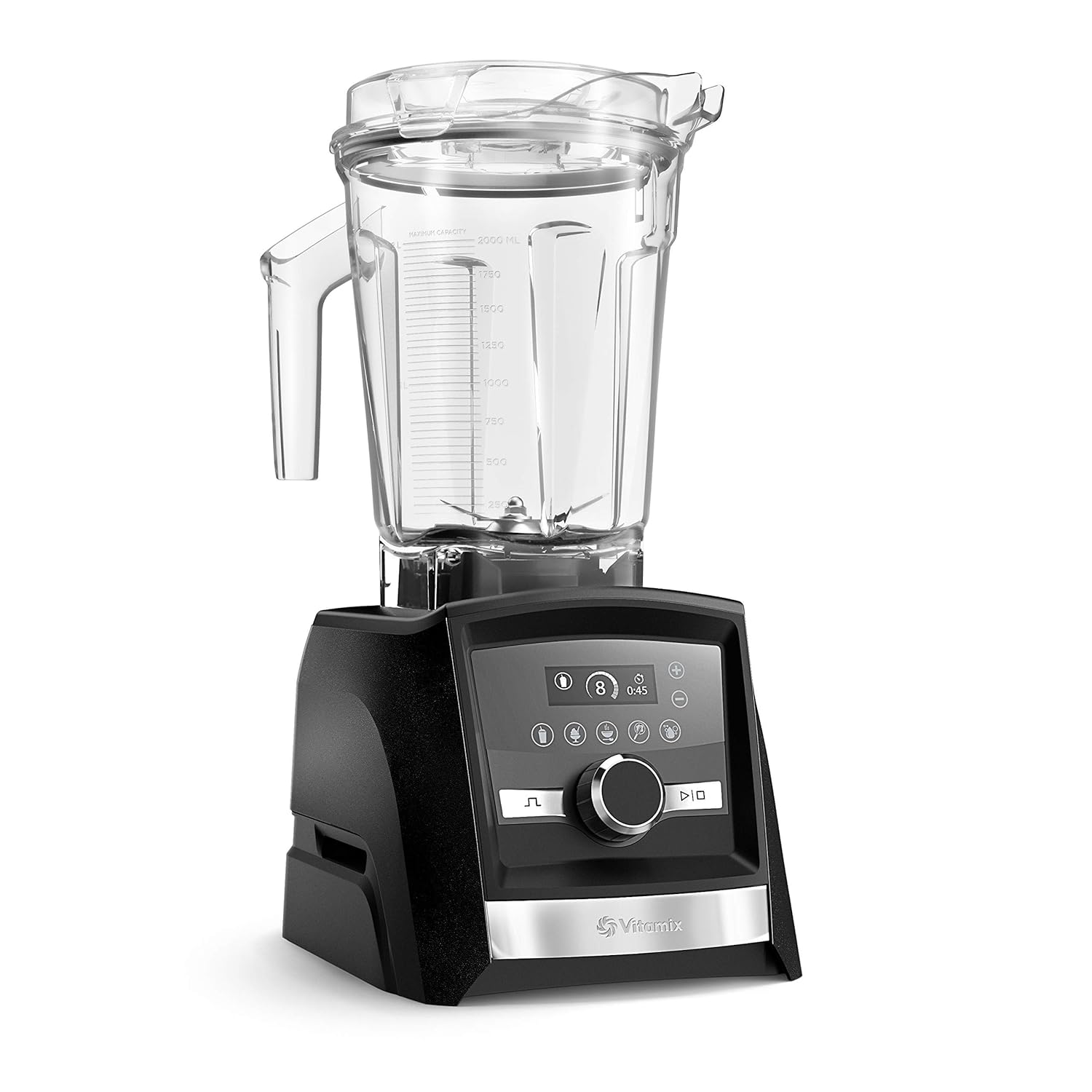
Vitamix A3500 Ascent Series Smart Blender
Check Price on Amazon
Motor Performance for Almond Milk Tasks
The A3500 brings the same 2.2 horsepower motor as Vitamix’s other professional models, which means it handles almond blending without any hesitation or heat buildup. The motor runs quiet despite the power—you won’t hear that strained whining sound that weak motors make when crushing tough ingredients.
What really sets this model apart though is its five pre-programmed settings, including one specifically for “Dips & Spreads” that works perfectly for nut milk because the blending motion mimics what you’d do by hand. The app connectivity reads your container size and adjusts blending time automatically, so over-processing becomes almost impossible.
Built-In Programs and Touchscreen Control
The touchscreen interface feels intuitive after you’ve used it twice—there’s basically no learning curve if you’re comfortable with smartphones. The programmable timer displays on-screen so you know exactly when your batch is done blending, which removes all the guesswork.
The self-cleaning function also saves real time: fill the container halfway with warm water and soap, run the cycle, and the machine cleans itself in seconds. If you’re making almond milk multiple times per week, this feature keeps your sink from looking like an almond factory exploded in it.
Smart Features Worth Considering
The app connectivity sounds fancy, but its practical value for almond milk specifically is moderate: it prevents over-blending and provides recipe access, but honestly the almond milk recipe is simple enough to remember after one batch. The real benefit is program consistency—knowing that your second batch will taste identical to your first because the machine runs the exact same cycle.
That said, if you’re skeptical about smart appliances and prefer keeping your kitchen tools simple, this connectivity might feel like unnecessary complexity. The touchscreen is washable and reliable, but some people simply prefer old-school buttons and dials.
Ratings and User Experience
The A3500 carries a 4.7-star rating across more than 2,100 customer reviews, which suggests consistent satisfaction across different use cases (not just almond milk). Users consistently report these machines lasting for years without needing repair or replacement.
The high review count means real people have tested this blender in everyday kitchens, not just in controlled labs. When thousands of people rate something highly, manufacturing consistency becomes statistically likely.
Where the A3500 Excels and Falls Short
The A3500 really shines if you make almond milk 3 or more times per week, because the programmable automation saves decision-making energy over time. The consistency of results matters more when you’re serving almond milk to multiple people or batch-making for meal prep.
However, if you make almond milk casually—say, once every two weeks—the smart features become overkill and the higher price tag feels unnecessary. The machine is also bulkier than simpler models and takes up more counter space because the wireless connectivity hardware adds volume to the base.
Vitamix VX1 Blender

Check Price on Amazon
Pure Power Without Complexity
The VX1 takes the opposite approach: same 2.2 horsepower motor, but zero smart features and no touchscreen confusion. What you get on the control panel are ten speeds plus a pulse button—that’s it, and that’s literally everything you need for almond milk.
But this simplicity is actually strategic, not lazy design. By removing the app connectivity and programmable settings, Vitamix eliminated potential failure points, which means the VX1 has fewer electronics to break down over years of daily use. The simpler the machine, the longer it typically lasts.
Manual Speed Control Gives You Real Authority
Because the VX1 puts control directly in your hands, you start at speed one and gradually increase to your desired intensity. This method teaches you how almonds actually blend, so after three or four batches you develop intuition about when to stop increasing speed.
Variable speed combined with pulse gives you the same texture control as the A3500—the only difference is you’re timing manually instead of letting a program do it. For almond milk specifically, manual timing isn’t a burden because the process takes less than one minute once you know your rhythm.
Container and Blade Design Match the A3500
Both Vitamix models use the same classic 64-ounce container with identical geometry, so blending quality is essentially identical between them. The laser-cut stainless-steel blades crush almonds with equal efficiency, and the vortex action works the same way.
This means choosing between the VX1 and A3500 isn’t about blending capability at all—it’s purely about whether you want automation or manual control. The almond milk your VX1 produces will be just as creamy and consistent as what the A3500 makes.
Self-Cleaning Function
The VX1 includes the self-cleaning function just like the A3500, so maintenance is equally quick and effortless. You still get that convenience factor without paying for smart home integration.
This level of included features (self-cleaning, precision geometry, powerful motor) at a lower price point explains why the VX1 attracts buyers who know what they want and don’t need a sales pitch. It’s straightforward engineering.
Ratings and Verified User Feedback
The VX1 carries a 4.9-star rating, though it has far fewer reviews (23 compared to the A3500’s 2,100+). This difference simply reflects the VX1’s relatively newer availability in the market, not lower quality.
What matters though: both models come from Vitamix with identical warranty coverage (five years) and the same reputation for durability. The lower review count for the VX1 just means fewer hands have used it so far, not that it’s less reliable.
Who Chooses the VX1 and Why
Generally, the VX1 appeals to people who already understand what they want from a blender and don’t need hand-holding through recipes and settings. If you’ve used a blender before or you like hands-on control, the VX1 feels comfortable immediately.
If your budget matters (the VX1 costs less than the A3500), you can spend those savings on quality almonds or a better nut milk bag for straining. Sometimes the smartest purchase means buying less machine and better ingredients instead.
Supporting Your Almond Milk with Quality Ingredients

Check Price on Amazon
Why Almond Quality Changes Everything
Once you’ve chosen your blender, ingredient quality becomes equally important to the machine’s capability. Cheap, old, or pre-blanched almonds blend differently than fresh, whole, raw almonds—and the difference shows up directly in your milk’s flavor and texture.
Almond Cow’s bee-friendly raw almonds deliver consistency that works well with premium blenders because whole almonds retain their natural oils, which help create emulsification during blending. Pre-blanched almonds require more water and produce thinner, less flavorful milk.
Product Specifications and Certifications
These almonds are non-GMO, kosher, vegan, and gluten-free—meaning they fit multiple dietary requirements without extra searching. The 3-pound package provides enough almonds for approximately 4 to 5 batches of homemade almond milk, depending on how concentrated you prefer your final product.
The packaging also protects almonds from oxidation, so they maintain freshness longer than loose almonds from bulk bins. This matters because stale almonds produce bland milk no matter how powerful your blender is.
Rating and User Satisfaction
These almonds carry a 4.7-star rating from 162 reviews, which shows consistent satisfaction from home almond milk makers who have tested them specifically for this purpose. When people rate almonds highly for milk-making, it means they’ve actually made the milk and verified the results.
Ingredient reviews tend to be more specific and trustworthy than equipment reviews because they reflect real blending outcomes rather than wishful thinking. Users consistently mention getting creamy, white milk when paired with good blenders.
Cost Per Batch and Value
Spreading the cost of almonds across 4 to 5 batches makes each batch affordable, especially compared to buying commercial almond milk multiple times per week. The investment in quality almonds stops being optional once you own a premium blender.
Buying premium almonds with a premium blender amplifies both investments—a powerful blender works best with quality ingredients, and quality ingredients deserve to be processed in a machine that honors their potential. This pairing creates almond milk that tastes noticeably better than either element alone could produce.
Head-to-Head: A3500 Versus VX1
Motor and Blending Power
Both machines have identical 2.2 horsepower motors with laser-cut stainless steel blades, so the key difference lies in control philosophy, not raw power. The A3500 gives you automated control while the VX1 keeps you in the driver’s seat—but the blending result is essentially the same.
If two machines produce identical almond milk quality, the question shifts from “which one blends better” to “which control style matches how you work.” That’s the honest comparison.
Speed of Workflow
The A3500 saves time only if you’re making multiple batches in one session or you find manual timing stressful. For single-batch almond milk sessions (which most people do), the VX1’s manual timing adds maybe 30 seconds of attention—hardly a game-changer.
But if you batch-make almond milk for the entire week, the A3500’s programmed settings mean you don’t have to think about timing five different batches. The automation compounds benefits when frequency increases.
Durability and Long-Term Reliability
Both models carry Vitamix’s industry-leading five-year warranty, suggesting confidence in durability from the manufacturer. The real difference emerges over years: the VX1’s simpler design means fewer electronic components that could fail, while the A3500’s touchscreen and wireless connectivity represent additional potential failure points.
Both machines are built to last a decade or more when maintained properly though, so warranty length becomes less important than your likelihood of needing it. Most failures come from neglect (not cleaning properly) rather than design flaws.
Price Difference and True Value
The VX1 costs approximately one hundred seventy dollars less than the A3500, and this gap represents the smart features premium: app connectivity, touchscreen, programmable settings, and wireless container recognition. Whether that premium justifies its cost depends entirely on whether you’ll actually use those features.
If almond milk is your only focus and you make it 1 to 2 times per week, the VX1 delivers identical results for substantially less money. If you make almond milk multiple times weekly or use the blender for smoothies, soups, and other recipes where programmable settings add real convenience, the A3500 becomes more valuable.
A similar approach applies when choosing the best blender for cashew cream, where motor power and blade design make a noticeable difference.
How to Actually Make Great Almond Milk
Learning the Right Ratios
Understanding ratios prevents the single biggest almond milk mistake: either too-thick paste or watery disappointment. Most recipes use one part almonds to three or four parts water, but your preference might fall anywhere on that spectrum depending on whether you like rich or lighter milk.
Every blender behaves slightly differently due to container geometry and motor characteristics, so your first batch might need adjustment. Write down what you did so batch two can improve from what you learned—this small act prevents endless experimentation frustration.
The Straining Step Takes Real Time
Although blending is the visible part of almond milk making, straining is where the actual work happens and where most people underestimate time requirements. No blender eliminates the need to pour your blended almond mixture through a nut milk bag or fine mesh strainer.
This straining step takes 5 to 10 minutes per batch because you’re separating liquid from solids manually—it’s impossible to rush without damaging the bag or wasting milk. Budget this time into your expectations so you’re not surprised by how long the full process actually takes.
Temperature Management Prevents Burned Flavor
The heat generated during blending matters more for almonds than for soft fruits because friction from blending tough fibers raises internal temperature quickly. If your blender gets too hot, the almonds scorch and leave a bitter taste that ruins the entire batch.
Because of this risk, let your blender cool between batches if you’re making multiple servings—just five minutes of sitting time prevents heat accumulation that could damage the next batch. Powerful motors generate more heat, so cooling breaks aren’t optional luxury, they’re safety maintenance.
Fresh Almonds Make Noticeably Better Milk
Old or stale almonds produce milk that lacks flavor and creaminess no matter which blender you use or how perfect your technique is. Buying almonds from reliable sources and using them within a reasonable timeframe (within a month or two of receiving them) ensures you’re working with ingredients that still have their natural oils intact.
Whole raw almonds (rather than pre-blanched varieties) contribute better flavor and emulsification potential during blending, which translates to noticeably better final milk. The extra cost of quality almonds becomes invisible once you taste the difference.
Frequently Asked Questions
Can budget blenders make almond milk?
Budget blenders technically can blend almonds, but results tend to be inconsistent and often gritty because weak motors can’t maintain steady blending speed. You’ll also deal with heat buildup that risks scorching almonds, and plastic containers might crack under the thermal stress. Most people who start with budget blenders eventually upgrade because the frustration outweighs the money saved initially.
How long does almond milk last after making it?
Homemade almond milk stays fresh in the refrigerator for 3 to 5 days, though most people drink it within 2 to 3 days before it starts separating or developing off-flavors. Shelf life is shorter than commercial milk because homemade versions lack preservatives, so make only what you’ll reasonably consume within a few days.
Do I need to soak almonds before blending?
Soaking almonds overnight in water softens their structure and makes blending easier, which means your machine works less hard and generates less heat. Soaked almonds also blend faster and create slightly creamier milk, though some people skip soaking if they’re making milk on a spontaneous schedule.
What’s the difference between a blender and a food processor for almond milk?
Blenders process ingredients with liquid through fast-spinning blades that create a smooth, emulsified result, while food processors chop dry or damp ingredients without creating the same liquid suspension. Almond milk requires a blender’s liquid-based processing to achieve that smooth, creamy texture—a food processor produces nut flour instead.
Can I use the same blender for both almond milk and hot soups?
Yes, both Vitamix models handle almond milk blending and hot soup making equally well because their durable motors and design handle both tasks safely. The A3500 has a dedicated hot soup program that automatically stops when the mixture reaches proper temperature, while the VX1 requires manual monitoring but handles it without issues.
Is cleaning these blenders difficult?
Cleaning is straightforward for both models: fill halfway with warm water and dish soap, run the self-cleaning cycle, then rinse and dry. For almond milk residue, this takes maybe one minute total, and the self-cleaning function handles most of the work automatically.
Will almond milk damage my blender motor?
No, almond milk won’t damage a properly maintained 2.2 horsepower motor like either Vitamix model has—these motors are specifically designed to handle tough, fibrous ingredients daily. Motor damage comes from overheating from lack of breaks or from mechanical failure unrelated to almond blending.
Can I make almond milk with blanched almonds instead of raw?
Yes, blanched almonds work fine, but they produce thinner milk with less natural creaminess because the blanching process removes oils from the almond skin. You’ll need to add more almonds or use less water to achieve the same richness as raw almonds provide.
How much almond milk can these blenders make in one day?
Both Vitamix models can technically blend multiple batches in one day without damage, but the practical limit is 5 to 8 batches before heat buildup becomes risky. Most home milk makers batch 2 to 3 times per session, then take a cooling break.
Is the app really necessary for the A3500?
The app is convenient but not necessary—the A3500 works perfectly well using only the touchscreen buttons and manual blending without ever connecting to your phone. The app mainly adds recipe access and automatically adjusts settings if you swap containers, but neither feature is essential.
Final Recommendation: Your Choice
Choose the Vitamix A3500 Ascent if automation appeals to you
The A3500 makes sense if you’re making almond milk three or more times per week and you value automation that removes decision-making from your routine. The programmable settings, app connectivity, and touchscreen give you consistent results without thinking about timing, which compounds benefits when frequency increases.
If you plan to use this blender for smoothies, soups, and other recipes beyond almond milk, the extra programs justify the investment because you’re buying a full-featured kitchen tool. This machine serves multiple purposes brilliantly.
Choose the Vitamix VX1 if simplicity and value matter more
The VX1 delivers identical almond milk quality at a lower price if you’re comfortable with manual speed control and timing. You’re not sacrificing blending capability—you’re just skipping smart features you might never use.
If almond milk is your primary use case and you make it 1 to 2 times per week, the VX1 produces excellent results without the automation overhead. Spend the price difference on premium almonds instead, and your milk becomes noticeably better.
Why not choose cheaper blenders
Cheaper blenders cost less upfront, but they struggle with almonds specifically: motors strain audibly, batches come out inconsistent or gritty, and heat buildup risks burning your almond milk. You end up frustrated and upgrading within months anyway, which wastes money.
Almond milk demands consistent, powerful blending—this isn’t where budget compromise makes sense. The blender cost spreads across hundreds of batches over years, so spending more initially saves stress and money long-term.
The bottom line
Both Vitamix models produce excellent, creamy, consistent almond milk that tastes noticeably better than commercial versions. The choice between them isn’t about blending quality—it’s about whether you want smart automation or simple manual control.
Pick the machine that matches how you want to spend time in your kitchen, buy quality almonds, and start making almond milk that actually tastes like something worth the effort. Either choice beats every budget alternative by a substantial margin.