Reina
Reina 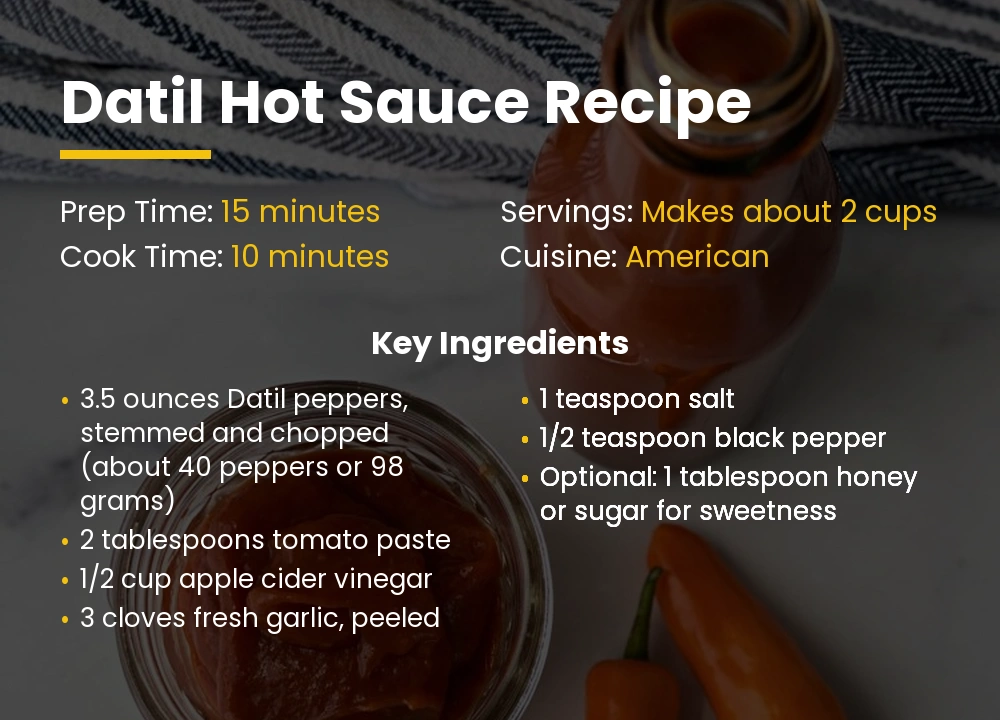
As an Amazon Associate, I may earn a small commission from qualifying purchases at no extra cost to you. This helps me create more valuable, tested content for you.
My first encounter with Datil peppers was in a bustling St. Augustine market, where a vendor handed me a small taste of his family’s hot sauce. The unique blend of fruity heat and tangy vinegar instantly captivated my senses.
That experience inspired me to recreate that flavor in my own kitchen, leading to this tested recipe. I will guide you through each step to make a sauce that balances fire with flavor.
This recipe uses about 40 Datil peppers, which provide a distinct heat profile compared to common chilies. You will learn how to handle these peppers safely and transform them into a versatile condiment.
Whether you are a hot sauce enthusiast or new to Datil peppers, this guide covers everything from selection to storage. Let’s begin by gathering the ingredients and tools for this project.
How to Make Datil Hot Sauce Recipe
Recipe Details
- Prep Time: 15 minutes
- Cook Time: 10 minutes
- Servings: Makes about 2 cups
- Course: Condiment
- Cuisine: American
- Diet: Vegan, Gluten-Free
Ingredients
- 3.5 ounces Datil peppers, stemmed and chopped (about 40 peppers or 98 grams)
- 2 tablespoons tomato paste
- 1/2 cup apple cider vinegar
- 3 cloves fresh garlic, peeled
- 1 teaspoon salt
- 1/2 teaspoon black pepper
- Optional: 1 tablespoon honey or sugar for sweetness
Instructions
- Wear gloves to handle the Datil peppers, as their oils can irritate skin. Remove stems and roughly chop the peppers.
- Combine the chopped peppers, tomato paste, apple cider vinegar, garlic, salt, and black pepper in a blender or food processor.
- Blend the mixture on high speed until it becomes a smooth, uniform puree. This should take about 2-3 minutes.
- Pour the puree into a small saucepan and bring it to a simmer over medium heat. Stir occasionally to prevent sticking.
- Let the sauce simmer for 10 minutes, allowing the flavors to meld and the raw edge of the garlic to cook out.
- Remove from heat and let it cool slightly. Taste and adjust seasoning, adding optional sweetener if desired.
- Once cooled, transfer the sauce to clean bottles or jars using a funnel. Seal tightly and store in the refrigerator.
Nutrition
- Calories: 15 kcal
- Protein: 0.5 g
- Fat: 0.1 g
- Carbohydrates: 3 g
- Sugar: 2 g
- Fiber: 0.5 g
- Sodium: 150 mg
- Cholesterol: 0 mg
Cooking Method
This sauce is made by pureeing raw ingredients and then simmering to develop depth. Simmering helps to reduce the liquid slightly and integrate the flavors.
The key is to avoid boiling vigorously, which can cause the sauce to separate or lose its fresh pepper notes. A gentle simmer for 10 minutes is sufficient.
Tools Needed
- Blender or food processor
- Small saucepan
- Measuring cups and spoons
- Cutting board and knife
- Gloves for handling peppers
- Funnel for bottling
- Clean glass bottles or jars with lids
Understanding Datil Peppers
The distinct flavor of this sauce comes from Datil peppers, which have a rich history in St. Augustine. Knowing their background helps appreciate the cultural significance behind your homemade condiment.
Datil peppers originate from St. Augustine, Florida, where they are a cultural staple with a history tied to Spanish settlers. They measure between 100,000 to 300,000 Scoville Heat Units, placing them in a similar range to habaneros and Scotch bonnets.
Unlike some chilies, Datils offer a fruity, slightly sweet flavor behind their intense heat. This complexity makes them ideal for hot sauces that aim for more than just spice.
When selecting peppers, look for firm, bright orange or yellow pods without wrinkles or soft spots. Freshness impacts both heat level and flavor quality in your final sauce.
If you cannot find fresh Datil peppers, you can substitute with dried ones or use a mix of habaneros and Scotch bonnets. However, the unique taste of Datils is worth seeking out for authenticity.
The Role of Key Ingredients
Apple cider vinegar provides the necessary acidity to balance the peppers’ heat and preserve the sauce. Its tangy flavor complements the fruity notes of the Datils without overpowering them.
Tomato paste adds body and a subtle umami richness that rounds out the sauce’s texture. It also contributes to the sauce’s signature color and helps mellow the sharpness of the vinegar.
Fresh garlic introduces a pungent aroma that becomes sweeter upon cooking. This ingredient is essential for building a layered flavor profile beyond mere heat.
Salt not only enhances all other flavors but also acts as a natural preservative. Using the right amount ensures your sauce is both tasty and shelf-stable for weeks.
Safety and Storage Guidelines
Always wear gloves when handling hot peppers like Datils to prevent skin irritation or accidental contact with eyes. Wash your hands and tools thoroughly after preparation.
For longer storage, you can process the filled bottles in a water bath canner for 15 minutes. This method seals the jars and allows the sauce to be kept at room temperature for up to a year.
If refrigerating without canning, the sauce will last for about 3 months. Ensure the bottles are clean and airtight to prevent contamination or flavor loss.
Using a pH meter can confirm the sauce’s acidity level is below 4.6, which is safe for water bath canning. This step is optional but recommended for absolute food safety.
Creative Variations and Uses
For a milder version, substitute some Datil peppers with yellow bell peppers to reduce heat while maintaining volume. You can also adjust the vinegar quantity to suit your taste for tanginess.
Incorporate additional spices like cumin or smoked paprika to create a smoky, complex sauce. These spices should be added during the simmering step to bloom their flavors.
This hot sauce pairs well with grilled meats, eggs, tacos, and even stirred into soups for an extra kick. Its versatility makes it a valuable addition to any kitchen.
Consider using the sauce as a marinade base by mixing it with oil and herbs. The acidity helps tenderize proteins while infusing them with heat and flavor.
Frequently Asked Questions
How long will this hot sauce keep?
When stored in a sealed bottle in the refrigerator, this Datil hot sauce will remain fresh for up to 3 months. For extended storage, process the jars in a water bath canner to preserve them for a year at room temperature.
Can I use other peppers instead of Datil?
Yes, you can substitute Datil peppers with habaneros, Scotch bonnets, or a mix for similar heat levels. However, the unique fruity flavor of Datils may be different, so adjust other ingredients to balance the taste.
Is this recipe vegan and gluten-free?
This recipe is naturally vegan and gluten-free, as all ingredients are plant-based and without gluten-containing additives. Always check labels on processed items like vinegar to ensure compliance.
How can I make the sauce less spicy?
To reduce spiciness, remove the seeds and membranes from the Datil peppers before chopping, or blend in some yellow bell pepper. Adding a sweetener like honey can also help counterbalance the heat.
What is the best way to bottle hot sauce?
Use clean glass bottles with tight-sealing lids, and employ a funnel to avoid spills. Sterilize the bottles by boiling them for 10 minutes before filling to ensure hygiene and longer shelf life.
Can I freeze Datil hot sauce?
Freezing is not recommended as it can alter the texture and cause separation upon thawing. Refrigeration or canning are better methods for preserving the sauce’s quality and consistency.